
Last Updated on September 10, 2026 by Daniel Globe
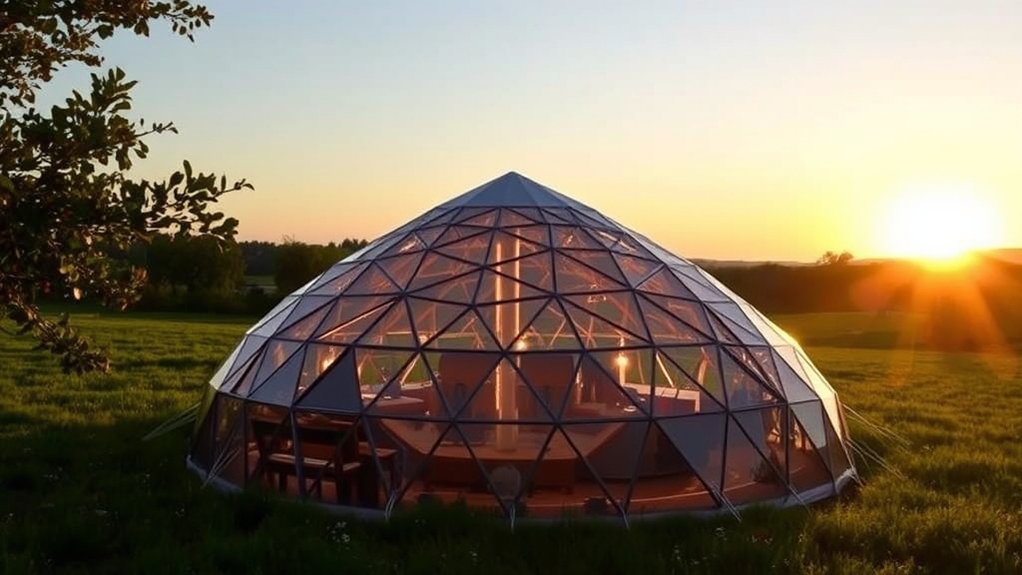
A geodesic tent is a dome-style shelter that uses several curved poles crossing at multiple points. Those crossings brace the frame and create a network of triangle-like sections, helping the tent spread wind and snow forces across the structure. This design can provide excellent stability, but actual performance still depends on the individual model, materials, anchoring, setup, and intended season.
Quick Answer
A geodesic tent uses several intersecting poles to create a heavily braced dome. It is usually more stable in changing wind directions and under snow than a simple two-pole dome, but it may also be heavier, more expensive, and slower to pitch. Strength varies by model, so there is no universal wind rating.
Key Takeaways
- The poles, not necessarily the fabric panels, create the geodesic pattern in a camping tent.
- More pole crossings generally improve bracing and help distribute wind and snow loads.
- “Geodesic” does not guarantee a specific wind speed, waterproof rating, season rating, or level of warmth.
- Fully geodesic tents are often chosen for exposed camps, winter trips, mountaineering, and expedition base camps.
- A simpler dome, semi-geodesic, or tunnel tent may be lighter and easier to pitch in moderate conditions.
Disclosure: As an Amazon Associate I earn from qualifying purchases. Some links on this page are affiliate links, at no extra cost to you.
Understanding Geodesic Dome Tents
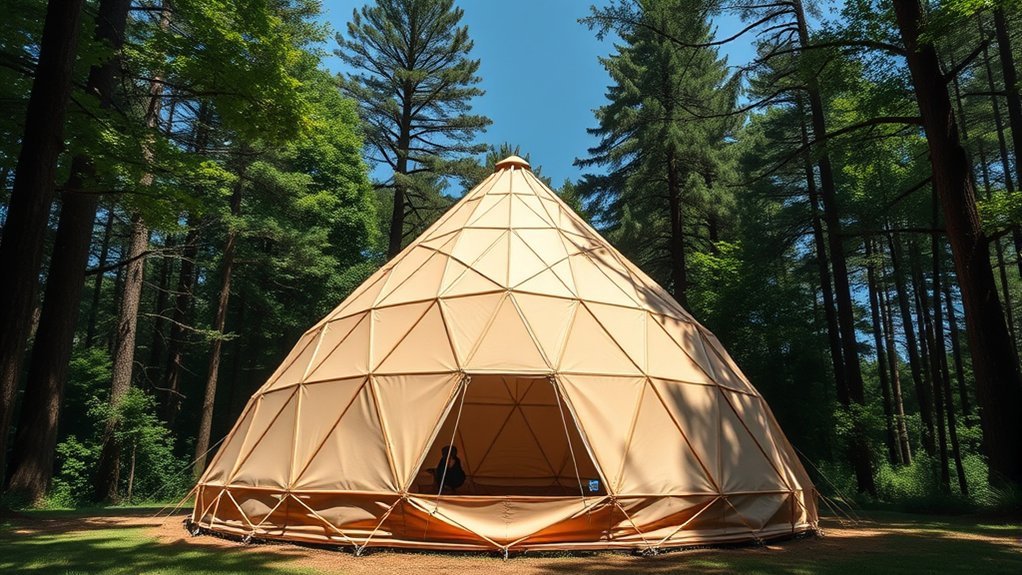
A geodesic camping tent is a type of dome tent with several poles that cross at multiple points. The crossings divide the frame into many small, braced sections. When wind pushes against one part of the shelter, the connected poles help carry that force into other parts of the frame.
This idea is related to the triangular geometry used in architectural geodesic domes. Triangles hold their shape more reliably than unbraced rectangles, which is why triangular patterns are common in trusses, towers, bridges, and domes. The Buckminster Fuller Institute explains how interconnected triangles help a dome spread loads through its structure.
Architect and designer R. Buckminster Fuller helped develop and popularize geodesic dome systems during the mid-20th century. However, he was not the sole originator of every geodesic concept. Modern tent makers adapted similar geometry by using flexible poles and tensioned fabric instead of rigid architectural struts and panels.
Note: Tent brands do not always use “geodesic” and “semi-geodesic” in exactly the same way. Examine the pole diagram and count the crossing points instead of relying only on the product label.
Geodesic vs. Dome, Semi-Geodesic, and Tunnel Tents
Several tent shapes can look similar when pitched, but their pole layouts and practical strengths differ.
| Design | Typical Frame | Main Strength | Main Tradeoff |
|---|---|---|---|
| Basic dome | Usually two main poles crossing once | Simple setup and good general-purpose space | Less bracing than a multi-pole geodesic frame |
| Semi-geodesic | Two or more poles with extra crossings or partial bracing | A balance of stability, interior room, and packed weight | Not as evenly braced as many full geodesic designs |
| Fully geodesic | Several poles crossing at multiple points | Strong multi-directional bracing for exposed conditions | More poles, weight, cost, and pitching steps |
| Tunnel | Several parallel pole arches | Excellent usable space for its weight | Usually depends more heavily on correct orientation and anchoring |
A tunnel tent can be very strong when its narrow end faces the wind and all anchors are secure. A geodesic tent is often less sensitive to a change in wind direction because its frame is braced around more of the shelter. That does not make either design automatically safer in every storm.
Structural Strength of Geodesic Tents
The main advantage of a geodesic tent is its interconnected frame. Several poles support one another instead of acting as separate arches. Each crossing helps limit how far one pole can flex before nearby poles begin sharing the load.
This construction can improve:
- Wind stability: The rounded frame presents fewer broad, flat surfaces to the wind.
- Snow-load support: Multiple pole crossings can help the roof resist deformation.
- Shape retention: The braced framework is less likely to flatten than a lightly supported dome.
- Multi-directional strength: The shelter can remain stable when the wind shifts.
- Pitching flexibility: Many models can stand before every guy line is attached, which can help on rocky sites.
For example, Hilleberg states that the multiple pole-crossing points on its Saitaris expedition tent improve snow-load handling. This is a model-specific construction claim, not a rating that applies to every geodesic tent.
A geodesic tent gains strength from the complete system: pole crossings, pole material, fabric tension, attachment points, stakes, guy lines, and a careful pitch.
Warning: No single wind-speed limit applies to all geodesic tents. Never assume a tent is safe in a forecasted storm because of its shape alone. Follow the manufacturer’s instructions, use every required anchor, and move to a safer shelter when conditions exceed your equipment or experience.
Triangular Design and Stability
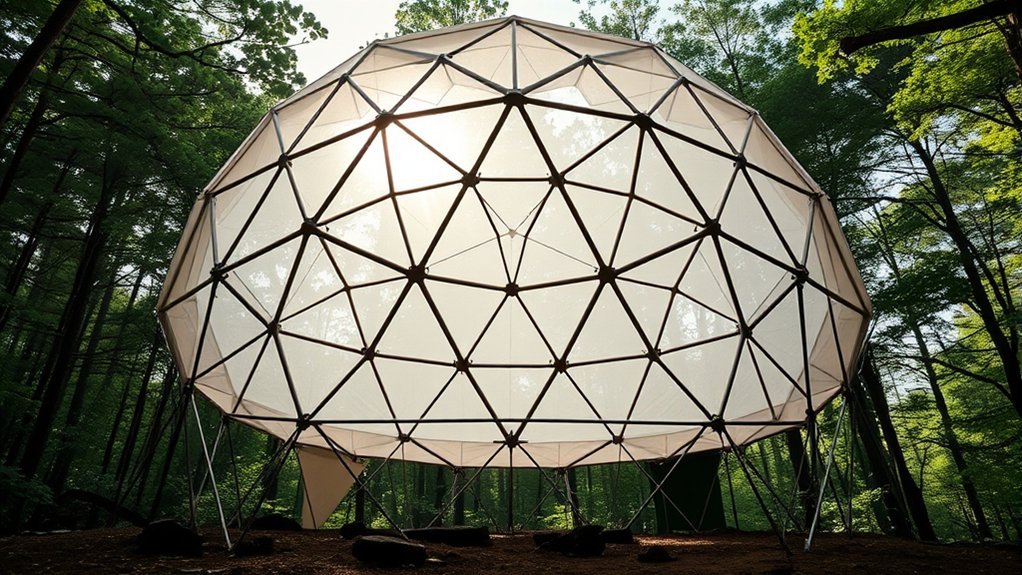
The poles of a geodesic tent form a series of triangle-like sections over the canopy. A triangle cannot easily change shape unless one of its sides bends, stretches, disconnects, or breaks. This makes a triangulated frame more rigid than an unbraced four-sided frame.
In a tent, the poles are curved and flexible rather than rigid building beams. The structure can still move in gusts, and some controlled flex may help it absorb short bursts of force. The goal is not to make the shelter motionless. The goal is to keep the frame within its designed shape and prevent one area from taking the entire load.
Stable geometry does not correct a poor campsite. A deep hollow may collect water, an exposed ridge may increase wind loading, and loose soil may not hold normal stakes. Choose the safest available location and use anchors suited to soil, rock, sand, or snow.
Aerodynamic Features Contributing to Strength
A geodesic tent normally has a rounded roof and sloping walls. Wind can flow over and around these surfaces more easily than it can flow around a tall shelter with broad vertical walls. The dome also presents a similar profile from several directions, which can help when gusts shift during a storm.
Aerodynamics are only one part of the design. A loose rainfly can flap, stretch, and strike the inner tent. Poorly tensioned fabric can collect water or snow. An open door can also turn the shelter into a scoop. Keep the canopy evenly tensioned, close unused doors, and adjust the pitch as weather changes.
Pro Tip: Attach and tension the guy lines before severe weather arrives. Run each line in the direction recommended by the manufacturer, use the strongest available anchor, and recheck the lines after fabric becomes wet or temperatures fall.
Even a freestanding tent should be anchored. “Freestanding” means the pole structure can hold its basic shape without stakes. It does not mean the shelter cannot move, roll, collapse, or blow away.
Robust Frame Materials and Durability
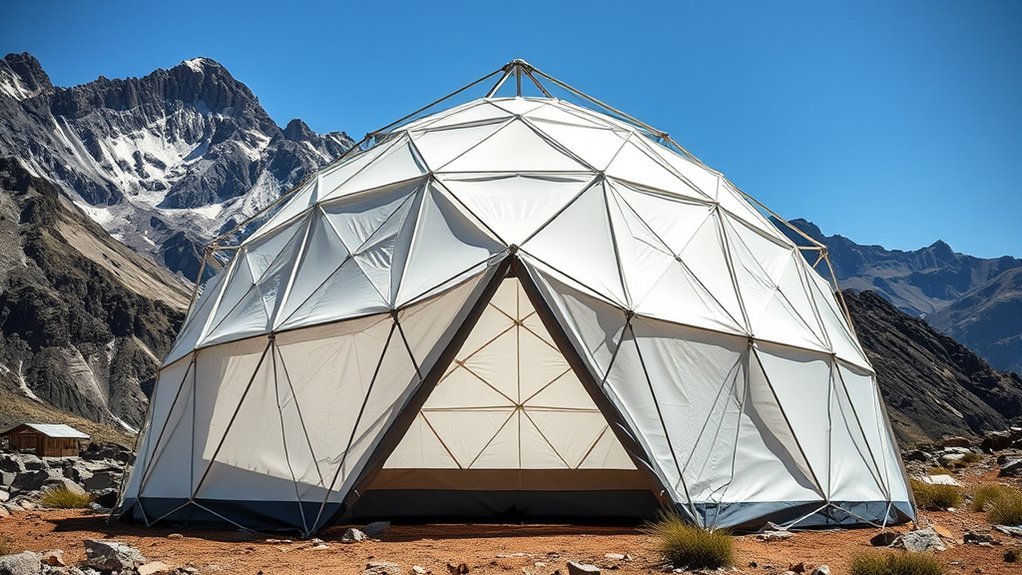
Geodesic strength depends on the quality and condition of every structural part. Portable camping tents commonly use aluminum or composite poles. Large event and glamping domes may use much heavier aluminum or galvanized-steel struts, but those structures belong to a different size and installation category.
| Component | Common Materials | What to Check |
|---|---|---|
| Portable tent poles | Aluminum alloys or flexible composite materials | Diameter, joint fit, bends, cracks, corrosion, and spare repair sleeve |
| Large dome frame | Heavy aluminum or coated and galvanized steel | Engineering documents, connector condition, corrosion, anchoring, and local requirements |
| Rainfly and canopy | Nylon or polyester with polyurethane, silicone, or other model-specific coatings | Tears, coating failure, UV damage, seam condition, and correct tension |
| Stress points | Reinforced fabric, webbing, clips, sleeves, and stitching | Loose stitching, abrasion, stretched webbing, broken clips, and damaged pole sleeves |
| Guy lines and anchors | Low-stretch cord, tensioners, stakes, snow anchors, or approved structural anchors | Cord wear, knots, tensioner grip, stake holding power, and anchor direction |
More poles do not automatically mean a better tent. Pole diameter, alloy, joint design, sleeve or clip placement, and the way the poles connect to the canopy all affect performance. A lighter, well-engineered model may outperform a poorly constructed tent with more poles.
Insulation Capabilities for Temperature Control
Most portable geodesic camping tents do not contain thick insulation. Their main jobs are to block precipitation, reduce direct wind exposure, and create a protected sleeping area. The tent may feel warmer than the open air because it reduces moving air and holds some body heat, but it should not be treated like an insulated building.
Your sleeping pad, sleeping bag or quilt, clothing, food, hydration, and campsite selection usually have a much greater effect on overnight warmth. A sleeping pad also limits heat loss into the ground, which the tent floor alone cannot do effectively.
Four-season tents often use more solid inner fabric and less open mesh than warm-weather tents. This can reduce drafts and blowing snow, but it may also hold more moisture. Open and adjust the vents whenever conditions allow.
Large glamping or event domes can sometimes accept insulated liners, rigid panels, flooring systems, heaters, or cooling equipment. The thickness and performance of those systems are specific to the dome manufacturer and installation. They should not be applied to backpacking tents as a general specification.
Note: “Four-season” describes the conditions a tent is designed to handle. It is not an insulation or temperature rating. Check the manufacturer’s intended-use statement and build your sleeping system for the expected low temperature.
Waterproof and Weather-Resistant Properties
Geodesic geometry can help a shelter hold its shape in poor weather, but geometry does not make fabric waterproof. Rain protection comes from the rainfly or waterproof wall, floor coating, seam construction, door design, vents, and the quality of the pitch.
Some manufacturers publish a hydrostatic-head rating in millimeters. This laboratory measurement shows how much water pressure a fabric resists before leakage begins. It can help compare similar fabrics, but it does not account for every seam, zipper, worn coating, wind-driven raindrop, puddle, or setup error.
When comparing tents, check:
- The separate waterproof specifications for the rainfly and floor
- Whether critical seams are taped, bonded, welded, or require manual sealing
- How low the rainfly reaches toward the ground
- Whether doors can be opened without rain falling into the sleeping area
- Whether vents remain protected during rain
- The manufacturer’s care and repair instructions
Weatherproof Materials Used
Modern tent fabrics commonly use woven nylon or polyester with a waterproof coating or laminate. The exterior may also receive a durable water-repellent treatment that helps water bead and roll away. The exact construction varies, and silicone-treated fabric may require a different repair product from polyurethane-coated fabric.
| Feature | What It Does | Important Limitation |
|---|---|---|
| Hydrostatic-head rating | Measures fabric resistance to water pressure in a laboratory test | Does not rate the complete shelter or guarantee performance after wear |
| Waterproof coating or laminate | Forms the main barrier against water passing through the fabric | Can be damaged by age, moisture, dirt, heat, abrasion, or improper cleaners |
| Water-repellent finish | Helps water bead on the outer surface | May need renewal and is not the same as the waterproof barrier |
| Seam treatment | Reduces leakage through needle holes and joined fabric | Method and repair product must match the fabric and original construction |
| UV-resistant design choices | Help slow sun damage | No lightweight tent fabric is immune to long-term UV exposure |
Structural Design Benefits
The frame and weatherproof materials work together. A well-pitched geodesic tent may provide the following benefits:
- Sloping surfaces that encourage rain to run off
- A rounded profile that reduces large unsupported fabric areas
- Multiple support points that help keep the rainfly away from the inner tent
- Reinforced pole crossings and guy points that spread force
- A self-supporting basic frame that can simplify initial placement on firm or rocky ground
Water can still enter through an open door, failed seam, damaged floor, poorly placed footprint, or rainfly that touches the inner canopy. Keep doors closed during wind-driven rain and make sure the fly remains evenly separated from the inner tent.
Maintenance and Care Tips
Regular care protects the coatings, seams, poles, zippers, and anchor points. Always begin with the instructions supplied by the tent manufacturer.
| Task | When to Do It | Safe Method |
|---|---|---|
| Inspect fabric and seams | Before important trips and after severe weather | Look for holes, peeling tape, loose stitching, worn coatings, and leaks |
| Clean the tent | When visibly dirty or after exposure to salt, sand, sap, or heavy dust | Hand-clean gently with water and a manufacturer-approved product; do not machine wash or dry unless expressly permitted |
| Repair seams | When a seam leaks or its original treatment fails | Use a compatible seam sealer and follow its curing instructions |
| Inspect poles | During setup and before remote trips | Check joints, shock cord, cracks, bends, corrosion, and the repair sleeve |
| Service zippers | When dirty, rough, or difficult to operate | Remove grit gently and use only a suitable zipper-care product |
| Dry and store | After every trip | Dry completely and store loosely in a cool, dry place away from direct sunlight |
The NEMO tent-care guide recommends gentle cleaning, full drying, and careful storage. For leaking seams or worn coatings, use the correct product for the tent’s fabric rather than a generic household sealant.
Advantages and Disadvantages of Geodesic Tents
| Advantages | Tradeoffs |
|---|---|
| Strong, highly braced frame | Extra poles can increase weight and packed size |
| Good resistance to wind from changing directions | More complicated pole layouts may take longer to learn |
| Multiple crossings can support snow better than a simple dome | The added structure often costs more |
| Often freestanding or largely self-supporting | Safe storm use still requires suitable stakes and guy lines |
| Useful on exposed, rocky, alpine, and winter sites | May provide less floor-space efficiency than some tunnel tents |
| Can retain its shape when one area is loaded | More pole sections create more parts to inspect and repair |
A geodesic tent is often unnecessary for sheltered summer campgrounds. A lighter basic dome may be easier to carry, while a tunnel tent may provide more living space for the same packed weight. Choose the structure for the conditions you realistically expect rather than the most extreme trip imaginable.
How to Choose a Geodesic Tent
Use the following factors to compare real models:
Season and Intended Use
Check whether the tent is designed for three-season trekking, all-season touring, winter camping, mountaineering, or expedition base camps. Two tents with similar dome shapes may use very different fabrics, vents, pole diameters, and snow-protection features.
Pole Layout
Look at the pitching diagram. Count the main poles, crossing points, unsupported fabric areas, and guy-line attachment points. More crossings generally provide more bracing, but construction quality matters more than the number alone.
Weight and Packed Size
Geodesic tents can have an efficient strength-to-weight structure, but they are not always lighter than ordinary tents. Compare minimum weight, packed weight, pole length, and how the load will be divided among group members.
Interior Space and Doors
Check floor dimensions, peak height, wall angle, vestibule size, and the number of entrances. Steep walls create usable sitting room, while two doors can provide a safer exit when one side faces strong wind or drifting snow.
Ventilation
Look for vents that can remain open during rain or snow. A strong closed canopy can trap moisture from breathing, damp clothing, and cooking. Good ventilation reduces condensation, but it cannot always remove it completely in cold, humid weather.
Repair and Parts Support
Confirm that the tent includes a pole-repair sleeve and that replacement poles, segments, clips, and fabric patches are available. Practice fitting the sleeve before a remote trip.
Manufacturer Evidence
Give more weight to detailed construction information, model-specific test descriptions, manuals, and clear intended-use statements than to an unsupported wind number in a marketplace listing.
Setting Up a Geodesic Tent for Wind and Snow
- Choose a protected site. Avoid dead trees, avalanche paths, flood channels, cornices, and the most exposed point on a ridge.
- Prepare the surface. Remove sharp debris. On snow, compact the platform and allow it to firm before pitching.
- Lay out the tent carefully. Prevent loose fabric and poles from blowing away while you work.
- Follow the pole sequence. Insert or clip each pole in the order shown by the manufacturer. Do not force a pole into the wrong sleeve.
- Anchor the basic frame promptly. Use stakes or anchors designed for the surface.
- Attach all storm guy lines. Spread them in the recommended directions and tension them evenly.
- Adjust the rainfly. Keep it taut and separated from the inner canopy.
- Manage vents and doors. Keep vents clear of drifting snow and avoid leaving a door open toward the wind.
- Inspect during the storm. Retension lines and remove accumulating snow before the frame becomes heavily loaded.
Warning: Do not rely on a tent as guaranteed protection during severe storms, avalanche danger, falling branches, flooding, lightning exposure, or other life-threatening conditions. Leave the site or use a more secure shelter when doing so is safer.
MSR advises that guying a tent improves stability in windy or extreme conditions. The precise anchor layout should come from the manual for your model.
Versatile Applications of Geodesic Tents
Geodesic structures appear in several outdoor settings, but a two-person expedition tent and a walk-in event dome are not interchangeable products.
Camping and Expeditions
Portable geodesic tents are well suited to uses where structural stability is more important than minimum weight. Common examples include:
- Winter camping
- Alpine and mountaineering trips
- Exposed coastal camps
- Polar travel
- Long-term expedition base camps
- Rocky sites where a self-supporting frame helps during setup
The North Face describes its 2-Meter Dome Tent as an expedition shelter with geodesic pole architecture, two-layer fabric, a removable floor, and an adjustable roof vent. Those features illustrate how a large expedition model combines structure, weather protection, and ventilation.
Outdoor Events and Festivals
Large geodesic domes can provide open interior space for exhibitions, dining, performances, hospitality areas, workshops, and temporary displays. Their modular frames may also support lighting, liners, flooring, and climate-control equipment when the structure is designed for those loads.
Public-use domes require more than camping-tent instructions. Depending on their size and location, they may need engineered foundations or ballast, permits, fire and occupancy planning, marked exits, wind-management procedures, inspections, and professional installation.
Warning: Never use camping-tent wind claims to plan a public event dome. Follow the structural engineer’s documents, local building and fire requirements, evacuation plan, and installer instructions.
Sustainable Living Solutions
Geodesic domes can be used for glamping accommodations, classrooms, temporary community spaces, and purpose-built greenhouses. Their enclosed volume and modular form may support efficient use of materials in some projects.
However, a geodesic shape is not automatically sustainable. Environmental impact depends on the frame material, fabric or panels, foundation, transportation, heating and cooling needs, repairability, expected lifespan, and end-of-life disposal. A durable dome used for many years may have a different impact from a lightweight temporary structure that is replaced often.
Greenhouse and residential applications should use products designed for those purposes. A normal camping tent does not provide the ventilation, structural certification, fire performance, or long-term weather durability required of a permanent occupied building.
Maintenance and Long-Term Performance
A geodesic tent can last for many seasons when it is pitched correctly, cleaned gently, dried fully, and repaired before small problems grow.
- Inspect pole joints, shock cord, clips, sleeves, and hubs before remote trips.
- Carry the supplied pole sleeve and a small model-compatible repair kit.
- Remove sand and grit from zippers rather than forcing the slider.
- Repair small tears before wind enlarges them.
- Do not store the tent wet, tightly compressed, or in a hot vehicle.
- Limit unnecessary long-term sun exposure because ultraviolet light weakens fabrics.
- Replace damaged structural parts with approved components rather than improvised permanent substitutes.
- Review the complete shelter after every severe storm.
For waterproofing repairs, the REI tent-waterproofing guide recommends identifying whether the problem involves seams, the waterproof coating, or the outer water-repellent finish. The repair material must be compatible with the tent fabric.
Frequently Asked Questions
How do geodesic tents compare with traditional tents in weight?
Geodesic tents are not automatically lighter. Their braced structure can provide excellent strength for its weight, but extra poles, sleeves, clips, guy lines, and stronger fabrics often make a four-season geodesic model heavier than a similarly sized three-season dome or tunnel tent.
Can geodesic tents be customized for specific needs?
Some large event and glamping domes can be ordered with different covers, doors, liners, floors, windows, and utility systems. Portable camping tents usually offer fewer structural changes, although manufacturers may sell compatible footprints, mesh inner tents, extra poles, storage systems, and repair parts. Do not alter a structural component without manufacturer approval.
What are the best uses for geodesic tents?
Portable geodesic tents are especially useful for winter camping, mountaineering, exposed coastlines, rocky terrain, and expedition base camps. Large engineered domes can serve events, exhibitions, glamping sites, and other temporary installations. The model’s stated purpose remains more important than the shape alone.
How easy are geodesic tents to set up and take down?
Setup difficulty varies. Color-coded poles and clips can make a modern model straightforward, but a full geodesic tent normally has more pole sections and crossings than a basic dome. Practice at home, learn the correct pole order, and keep the instructions available until the process is familiar.
Are geodesic tents suitable for year-round camping?
Only models designed and rated for year-round or four-season use should be treated that way. Some dome and semi-geodesic tents are made for snow-free three-season trips. Check the fabric coverage, pole system, ventilation, snow protection, and manufacturer’s intended-use statement.
Are geodesic tents completely freestanding?
Many can hold their main shape without stakes, although vestibules may still need pegging. Every tent should be anchored in outdoor use, and all recommended guy lines should be deployed when wind, snow, or unstable weather is possible.
Do geodesic tents have a standard wind rating?
No. There is no universal wind rating that applies to every geodesic tent. Performance depends on the complete model, condition, setup, guy-line layout, anchors, ground, wind direction, gust pattern, precipitation, and user decisions. Use manufacturer-specific information and conservative judgment.
Conclusion
A geodesic tent uses several crossing poles to create a highly braced dome. This framework can provide excellent stability in exposed wind, winter weather, and changing conditions. It is not an automatic guarantee of a particular wind speed, waterproof rating, temperature, or season rating.
Choose a tent by examining its full pole layout, materials, intended use, ventilation, weight, repair support, and manufacturer guidance. For ordinary summer camping, a simpler shelter may save weight and setup time. For mountaineering, winter travel, or an exposed base camp, the added structure of a well-designed geodesic tent can be worth the extra cost and weight.
Sources
- Buckminster Fuller Institute: Geodesic Domes — triangular geometry, load distribution, and the development of geodesic dome systems
- Hilleberg Saitaris — manufacturer example of a self-supporting dome with multiple pole crossings and snow-load capability
- The North Face 2-Meter Dome Tent — expedition geodesic construction, pole architecture, and ventilation features
- MSR Frequently Asked Questions — guy-line use, tent stability, and ventilation guidance
- NEMO Equipment Tent Care Guide — cleaning, repair, drying, zipper care, and storage
- REI: How to Waterproof a Tent — seam, coating, water-repellent-finish, and fabric-compatible repair guidance
