
Last Updated on August 26, 2026 by Mason Reed
Storing food correctly while tent camping protects your meals, your gear, local wildlife, and everyone who uses the campsite after you. The right method depends on where you camp: some locations provide food lockers, some require an approved bear-resistant canister, some permit certified coolers or vehicle storage, and others allow a properly constructed food hang. Always check the exact campground or backcountry regulations before your trip.
Quick Answer
The safest way to store food while tent camping is to follow the rules for your exact campground. Use provided food lockers or an approved bear-resistant container when required, and hang food only where hanging is allowed. Keep food, trash, toiletries, cookware residue, pet food, and other scented items out of your tent and secured whenever unattended.
Key Takeaways
- Check campground or backcountry food-storage rules before choosing a locker, canister, cooler, vehicle, or food hang.
- Treat trash, toothpaste, sunscreen, soap, medication, pet food, dirty cookware, and other scented items much like food in bear country.
- Use only bear-resistant equipment approved for the area and follow its locking instructions exactly.
- Keep perishable food at 40°F (4.4°C) or colder and keep raw meat separated from ready-to-eat food.
- Never keep food or other wildlife attractants in your tent.
At a Glance
| Time Required | About 10–20 minutes to organize and secure a campsite once your storage method is ready |
| Difficulty | Easy with a locker or canister; moderate when an approved food hang is required |
| Tools Needed | Approved locker, bear-resistant canister or cooler, or permitted hanging system; sealed food containers; cooler and ice for perishables |
| Cost | Varies; campground lockers may be provided, while approved personal storage equipment must be purchased or rented |
Warning: There is no universal food-storage distance or food-hanging specification for every campsite. Some parks prohibit hanging entirely, while others require specific containers, lockers, heights, horizontal clearances, or storage distances. Local regulations always override general advice.
Disclosure: As an Amazon Associate I earn from qualifying purchases. Some links on this page are affiliate links, at no extra cost to you.
Know Which Animals You’ll Encounter and Plan Accordingly
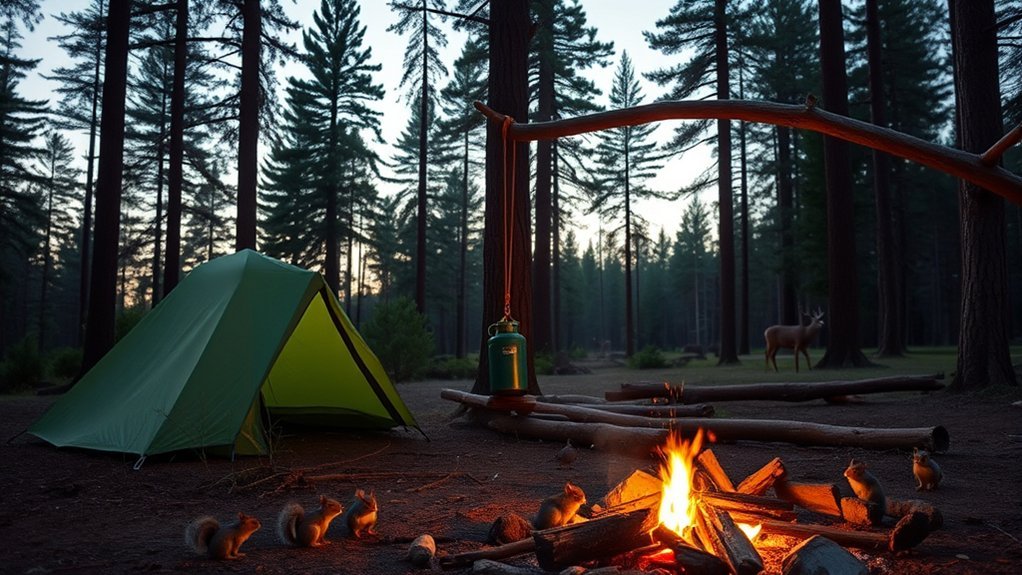
Before your camping trip, identify the wildlife common to the area and read the site’s current food-storage rules. Bears may receive the most attention, but raccoons, mice, squirrels, marmots, ravens, coyotes, and other animals can also raid poorly stored food.
The National Park Service food-storage guidance stresses that bears may investigate much more than ordinary food. Drinks, garbage, toothpaste, soap, sunscreen, insect repellent, cosmetics, medications, pet food, cooking equipment, and other scented items may all need secure storage.
Contact the campground, park office, Forest Service district, BLM field office, or other land manager before leaving home. Ask whether the site provides a food locker and whether a specific bear-resistant container is required. Checking first is safer than arriving with a hanging system or cooler that is not permitted.
Tie Up Your Food
A food hang can be useful only where the land manager allows it. Do not assume that hanging is permitted simply because trees are available. For example, Yosemite National Park requires approved bear-resistant food storage in the wilderness and does not permit hanging food.
Where hanging is allowed, use the measurements specified by that exact park or forest. Different locations publish different requirements. Some require a certain height above the ground and a separate horizontal distance from the trunk or supporting structure.
- Use strong cord long enough for the hanging method required at your destination.
- Choose a live, sturdy branch that can support the load without breaking.
- Keep food, garbage, toiletries, and other regulated scented items together in the approved storage system.
- Do not improvise a hang when the area requires a canister, locker, pole, or cable instead.
Pro Tip: Look up the food-storage page for your exact campground before packing. A screenshot or saved copy of the rule is useful when you will not have cell service at the campsite.
Bring a Bear Canister When Backpacking
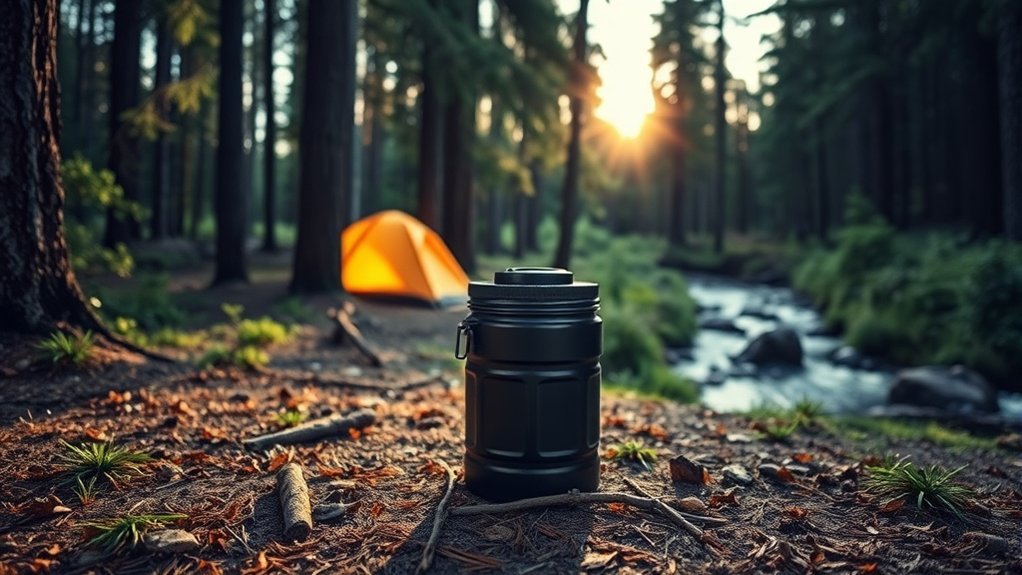
In many backcountry areas, an approved bear-resistant canister is required or strongly recommended. Check the land manager’s approved-product list because owning a container described as “bear resistant” by a seller does not automatically mean it satisfies local regulations.
Canister Benefits
A hard-sided bear-resistant canister can protect both wildlife and your food without depending on the availability of a suitable hanging tree. It can also be simpler to use correctly in rain, darkness, alpine terrain, or areas where hanging is prohibited.
- Reliable storage: A properly closed approved canister creates a strong physical barrier against wildlife.
- No suitable tree required: This is especially useful above treeline and in areas with small or weak branches.
- Regulation compliance: Some parks require specific approved canisters for overnight backcountry trips.
Proper Usage Guidelines
Put all regulated attractants inside the canister, including packaged food, trash, toiletries, sunscreen, lip balm, insect repellent, medication, and other scented items required by the local authority. Close and lock the canister whenever you are not actively using its contents.
Place it on stable, level ground at the distance required by your destination. Guidance varies significantly: some NPS locations specify around 100 feet from camp, while others use much greater distances. Never substitute a generic number for the rule at your campsite.
Keep the canister away from cliffs, steep slopes, rivers, lakes, and other places where a bear could roll or knock it away. Do not attach rope, straps, or other items unless the manufacturer and local rules specifically direct you to do so.
Use a Bear-Resistant Cooler for Car Camping
For car camping in bear country, an ordinary hard cooler may not qualify as secure wildlife storage. When your campground permits a cooler as the primary storage container, choose one that appears on the current Interagency Grizzly Bear Committee bear-resistant products list or satisfies the campground’s equivalent requirement.
Models such as the YETI Tundra 45 and Pelican ProGear Elite 45 have been associated with IGBC bear-resistant configurations, but the important detail is how the cooler is secured. Certified coolers commonly require specified padlocks or bolts. An unlocked cooler should not be assumed to be bear-resistant.
Bear-resistant certification does not mean a container is impossible for every bear to breach; correct locking and use are part of the protection.
Never assume that a certified cooler can remain outside unattended at every campground. Some parks still require coolers to be placed in food lockers or secured in another approved location when the campsite is unoccupied. Follow the campground’s posted rules.
Also Bring Bear Spray Where Recommended and Allowed
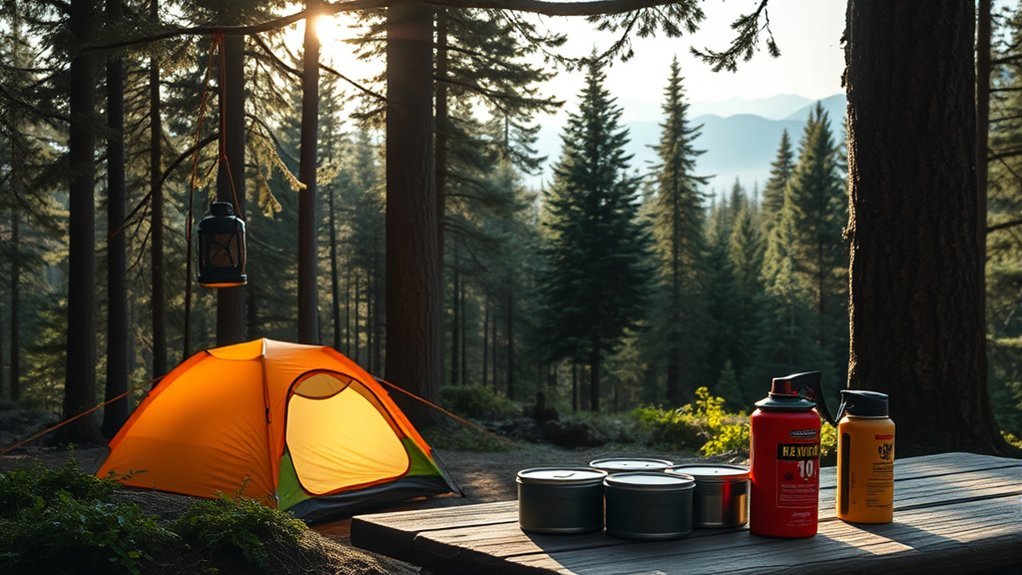
Bear spray can be an important last-resort defensive tool in bear country, but it does not replace secure food storage, situational awareness, or local wildlife rules. The National Park Service advises carrying bear spray where it is recommended and allowed and keeping it readily accessible rather than buried in a backpack.
A frequently cited 2008 Alaska study examined 83 bear-spray incidents. Spray stopped the bear’s undesirable behavior in 92% of brown-bear incidents, 90% of black-bear incidents, and 100% of the small number of polar-bear incidents in that dataset. Among people carrying spray during close-range encounters, 98% were uninjured. Those findings should not be converted into a universal “93% success rate” or directly compared with a separate firearms dataset as if the studies used identical events and definitions.
Learn how to carry and deploy the product before entering bear country, check its expiration date, and follow both the label and destination-specific rules. Bear spray should generally be used against an aggressive or charging bear rather than simply because a bear is visible.
Don’t Leave Crumbs Lying Around
Small scraps may look harmless, but they can teach wildlife to search human campsites for food. Clean eating and cooking areas promptly and secure garbage just as carefully as unused food.
Inspect Tent Thoroughly
Before settling in for the night, check your tent for candy, snacks, wrappers, crumbs, gum, drink powder, or other attractants. Use a headlamp to inspect pockets, sleeping gear, and storage compartments.
- Remove all food and food packaging from the tent.
- Do not keep snacks in a jacket pocket beside your sleeping bag.
- Store toiletries and other regulated scented items with your food.
- Clean spills instead of allowing food residue to remain on camping gear.
Check Personal Belongings
Check backpacks, daypacks, children’s bags, jacket pockets, cup holders, and reusable shopping bags for forgotten food. A single wrapper or snack can be enough to interest rodents or other wildlife.
Also clean the cooking area. Wash dishes promptly where regulations permit, collect food particles, wipe tables, and secure dirty cookware when the site requires it. Do not burn garbage, grease, tea bags, or food scraps in a campfire as a substitute for proper disposal.
Food Storage Methods
The best storage method depends on the site. Use the highest-priority option required or provided by the land manager:
- Campground food locker: Use the provided locker whenever the site requires it. Secure food, coolers, trash, toiletries, and other listed attractants inside.
- Approved bear-resistant canister: Common for backpacking and required in some wilderness areas.
- Certified bear-resistant cooler: Suitable only where the campground permits it and only when locked exactly as required.
- Vehicle storage: Use only where local rules permit food to remain in a vehicle. Some locations require lockers instead.
- Food hang: Use only when hanging is allowed and follow that destination’s exact specifications.
Note: Do not submerge food bags in a stream as an improvised wildlife-storage method. Secure food using an approved land-based method, and keep bear canisters away from water where animals could knock or roll them into it.
For raccoons, rodents, and other smaller animals outside bear country, hard-sided containers and secure campground lockers are much more dependable than leaving food in a tent or thin fabric bag. Never intentionally feed wildlife.
Hanging Food Safely
If your destination specifically allows or requires a food hang, follow its published method rather than relying on one nationwide formula. Hanging requirements can differ in height, horizontal clearance, type of tree, approved poles, and distance from sleeping areas.
Choose Suitable Tree Branch
Select a healthy, sturdy branch that can support the food bag and meet the dimensions required by the land manager. The branch should allow the bag to remain well away from the trunk and other surfaces an animal could climb or reach from.
Do not use dead branches, weak limbs, or locations where the bag would hang over a trail, tent, cooking area, stream, or fragile vegetation. If no suitable tree exists, use another approved storage method instead of making a low or ineffective hang.
Secure Food Properly
Use strong cord and a durable bag, but remember that a waterproof or odor-resistant bag by itself is not a substitute for a required bear-resistant container. Hoist the bag using the specific technique required in the area, then secure the rope so the load cannot slide down.
Check the hang after setup and after strong wind or storms. Never leave regulated attractants elsewhere because they did not fit in the food bag.
Distance From Tent
Keep cooking, eating, and food storage away from your sleeping area according to local regulations. Published recommendations vary: some areas specify roughly 100 feet, while others require or recommend 70–100 yards or another distance.
That variation is why “always store food exactly 100 feet from the tent” is not reliable universal advice. Use the campground’s posted measurement.
Bear Country Precautions
Bears have an exceptional sense of smell and may investigate food as well as trash, toiletries, pet food, dirty cookware, sunscreen, soap, insect repellent, and other scented items. Proper storage protects campers while helping prevent bears from becoming conditioned to human food.
In bear country:
- Secure attractants immediately when you arrive.
- Never store food in your tent.
- Never leave food unattended unless it is secured according to local rules.
- Keep the canister, cooler, locker, or hanging system properly closed.
- Cook and eat away from your sleeping area where the site’s rules direct you to do so.
- Pack out garbage and leftover food.
- Check current bear alerts before entering the area.
The National Park Service’s 2026 bear-safety reminder advises visitors to give bears space, secure food and scented items, carry bear spray where recommended and allowed, and never run from a bear.
Campground Cleanliness
A clean campground reduces opportunities for wildlife to obtain human food. Animals that repeatedly receive food from campsites can lose their natural caution around people, creating problems for visitors and wildlife alike.
- Pick up crumbs, spilled food, and packaging after every meal.
- Store or dispose of garbage immediately.
- Clean grills, dishes, cookware, and tables after use.
- Do not bury food scraps.
- Do not use a campfire as a garbage disposal.
- Secure pet food and pet bowls when they are not being used.
- Check the site one last time before going to bed or leaving camp.
Keep Perishable Food Cold and Safe to Eat
Protecting food from wildlife is only half of camping food safety. Perishable food also needs temperature control. The USDA Food Safety and Inspection Service advises keeping cold food at 40°F (4.4°C) or below.
Bacteria grow rapidly between 40°F and 140°F. As a general food-safety rule, do not leave perishables in that temperature range for more than two hours, or more than one hour when the outdoor temperature is above 90°F.
- Start with food already refrigerated or frozen.
- Use plenty of ice, frozen gel packs, or another reliable cold source.
- Keep the cooler shaded and open it only when necessary.
- Consider separate drink and food coolers so the perishable-food cooler stays closed longer.
- Keep raw meat and poultry sealed and below ready-to-eat foods to reduce cross-contamination.
- Use a cooler thermometer when practical.
- If the cooler has lost its cold source and you cannot confirm that perishable leftovers remained safely chilled, discard them.
Frequently Asked Questions
How Can I Identify Bear Tracks at My Campsite?
Bear tracks generally show five toes, although not every toe or claw registers clearly in poor ground conditions. Grizzly/brown-bear tracks tend to have toes arranged in a straighter line with longer front claws, while black-bear toes tend to form more of an arc and their claws are usually shorter. Do not rely on print size or fur color alone to identify the species. Report signs of active bears to campground or park staff when appropriate.
What Should I Do if I See a Bear Nearby?
Do not run or approach the bear. Stay calm, keep your group together, give the bear space, and slowly increase your distance when it is safe to do so. Have bear spray ready where recommended and permitted. Because the correct response to an attack can depend on the bear’s behavior and circumstances, learn the current guidance for the species and destination before your trip and report serious encounters to park staff.
Can I Store Food in My Tent if It’s Sealed?
No. Sealed packages can still be wildlife attractants, and a tent is not an approved food-storage container. Store food, garbage, toiletries, and other regulated scented items in the locker, bear-resistant container, vehicle, or hanging system required by your campsite.
What Types of Food Attract Animals the Most?
Do not assume only strongly scented or high-calorie foods are a concern. Wildlife can investigate almost any food, drink, wrapper, garbage, pet food, grease, or scented personal-care product. Store every regulated attractant securely instead of trying to decide which foods smell strong enough to be risky.
Is It Safe to Use Scented Products While Camping?
Ordinary toiletries are not automatically prohibited, but many scented products count as wildlife attractants in bear country. Store toothpaste, soap, sunscreen, lip balm, insect repellent, deodorant, cosmetics, medications, and similar items with your food whenever local rules require it. Choosing an unscented product does not replace proper storage.
Conclusion
The best way to store food while tent camping is to use the method required for your exact destination rather than relying on one universal rule. A campground locker or approved bear-resistant container is usually more dependable than improvising a food hang, and hanging should be used only where it is permitted.
Keep food, trash, toiletries, pet supplies, and other attractants out of your tent, maintain a clean campsite, and keep perishable food cold enough to remain safe to eat. A few minutes spent checking local regulations and securing your campsite can prevent damaged gear, lost food, dangerous wildlife encounters, and animals becoming conditioned to human food.
Sources
- National Park Service — Bear Safety: Storing Food — food, scented-item, canister, vehicle, trash, and campground storage guidance.
- National Park Service — 2026 Bear Safety Reminder — current bear-encounter, storage, and bear-spray guidance.
- Interagency Grizzly Bear Committee — Bear-Resistant Products — certification standards and proper use of bear-resistant containers and coolers.
- USDA Food Safety and Inspection Service — Food Safety While Hiking and Camping — cooler temperature, perishables, cross-contamination, and outdoor food-safety guidance.
- Smith et al. — Efficacy of Bear Deterrent Spray in Alaska — peer-reviewed bear-spray incident data.
- Smith et al. — Efficacy of Firearms for Bear Deterrence in Alaska — peer-reviewed firearm incident data used to correct the original comparison.
