

Last Updated on September 27, 2026 by Caleb Warren
Starting an electric scooter rental business takes more than buying scooters and placing them around town. You need a location where people want short rides, permission to operate, reliable equipment, and a plan for daily maintenance. The challenge is building a service that riders trust while keeping operating costs below rental revenue.
Quick Answer
To start an electric scooter rental business, research local demand, choose a business model, calculate startup costs, and secure the required permits and insurance. Buy commercial-grade scooters, establish charging and maintenance procedures, and launch with fleet-management software. Test demand with a manageable fleet before expanding into additional neighborhoods or cities.
Last checked: September 27, 2026. Key industry figures and safety information were verified against official sources.
At a Glance
| Difficulty | Advanced: requires permits, financial planning, equipment maintenance, and customer support. |
| Tools Needed | Commercial scooters, approved charging equipment, fleet-management software, maintenance supplies, and a rider payment system. |
Disclosure: As an Amazon Associate I earn from qualifying purchases. Some links on this page are affiliate links, at no extra cost to you.
1. Validate Your E-Scooter Market
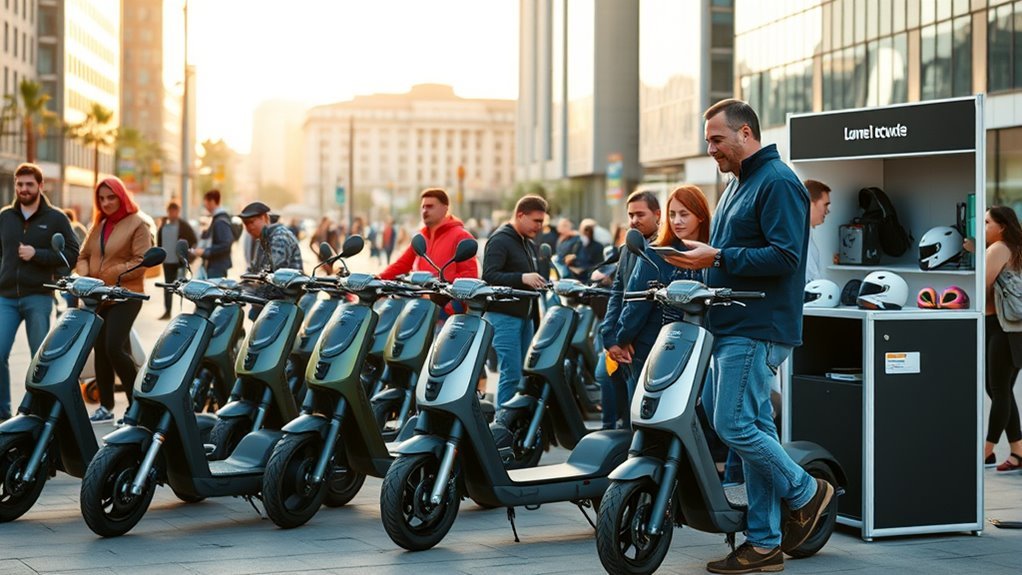
Start by finding places where scooters solve a real transportation problem. Look for short trips between transit stations, workplaces, campuses, hotels, and residential neighborhoods.
Demand for shared micromobility is established, but national growth does not guarantee that your chosen neighborhood will be profitable.
The North American Bikeshare and Scootershare Association (NABSA) reported at least 237 million shared micromobility trips across North America in 2025. At least 403 cities had a shared bike or scooter system.
These figures cover both bicycles and scooters. They demonstrate the size of the broader market, not the financial performance of an individual scooter operator.
Research Local Demand Before Buying Scooters
Begin with a map of potential service areas. Identify where riders start their journeys, where they want to go, and whether safe riding routes connect those locations.
- Identify target riders. Consider commuters, students, tourists, and residents making short neighborhood trips.
- Study travel patterns. Look at transit connections, employment centers, popular destinations, and existing bike lanes.
- Evaluate competing services. Compare Lime, Bird, and other operators where they are available. Review their coverage, pricing, parking arrangements, and customer feedback.
- Interview potential customers. Ask how often they would rent, what trips they would make, and what price would influence their decision.
- Investigate operating restrictions. Determine whether the city permits new operators and whether service areas or fleet sizes are limited.
- Test actual demand. Use permitted pilot operations or another lawful small-scale test before making a major investment.
Some riders prefer premium scooters with greater comfort, while others prioritize affordable access. Your offer should reflect the needs of the people who will actually use it.
An earlier market figure cited scooter availability in 177 cities across the United States and Europe. However, that figure needs a defined reporting period before it can be used as a current market measure.
Measure Demand by Scooter, Not Just by Population
Population density alone cannot predict revenue. A busy neighborhood might have strong demand but limited legal parking or unsafe routes.
Measure utilization as the average number of completed trips per available scooter per day.
The NACTO 2025 shared micromobility report recorded 58 million shared e-scooter trips in its member cities. Average scooter utilization in September 2025 was 2.9 trips per scooter per day.
This is a useful reference point, not a guaranteed target for your new fleet. Demand changes with location, weather, pricing, competition, and operating hours.
2. Choose the Right Scooter Fleet
Commercial rental scooters must withstand repeated use, outdoor conditions, and frequent maintenance. Choose models based on total ownership cost rather than purchase price alone.
A scooter that costs less initially may become more expensive if replacement parts are unavailable or repairs keep it out of service.
Prioritize Commercial-Grade Equipment
Look for these features when evaluating manufacturers:
- Durable construction: A strong frame, reliable folding or fixed-handlebar assembly, and components designed for repeated use.
- Replaceable batteries: Compatible battery packs that allow trained staff to restore availability without replacing the entire scooter.
- Weather resistance: Components suitable for the operating conditions specified by the manufacturer.
- Serviceable parts: Readily available tires, brakes, lights, controllers, and charging components.
- Fleet connectivity: Compatible tracking and management hardware.
- Rider safety: Effective brakes, suitable tires, lighting, and clear operating instructions.
The original planning target of at least three months before major replacement pressure should be treated as a minimum warning threshold, not an ideal scooter lifespan.
Ask manufacturers for warranty terms, replacement-part availability, maintenance documentation, and expected service life under commercial use.
Check Electrical and Battery Safety
Battery safety is essential because commercial fleets charge and store multiple devices.
The U.S. Consumer Product Safety Commission recommends choosing micromobility products designed, manufactured, and certified to applicable safety standards.
For electric scooters, verify relevant electrical-system certification, including UL 2272 where applicable. Ask manufacturers for documentation covering the scooter, battery, and charging equipment.
Warning: Never use unapproved replacement batteries or incompatible chargers. Follow manufacturer charging instructions, supervise charging operations, and remove damaged batteries from service. Arrange safe battery disposal through an appropriate recycling or hazardous-waste facility.
Test the Scooters Before Ordering at Scale
Request sample units and test them on routes similar to your planned operating area. Include hills, uneven pavement, turns, and normal stopping conditions.
Evaluate braking, acceleration, ride comfort, battery performance, locking mechanisms, and maintenance access.
Also test the process for replacing a battery, locating a scooter, and reporting a fault. These routine tasks affect how efficiently your team can operate.
Buy additional units only after the equipment meets your safety and service requirements.
3. Handle Permits, Insurance, and Safety
You must establish the business and secure permission to operate before placing rental scooters in public spaces. A general business registration does not automatically authorize scooter sharing on city streets.
Municipalities can control operator eligibility, fleet size, parking, reporting, and service areas. Some operate competitive programs rather than accepting every new applicant.
Complete the Legal Setup
- Choose your business structure and register it with the appropriate state authority.
- Obtain the tax identification and business registrations required for your operations.
- Contact the municipal transportation department about scooter-sharing authorization.
- Review permit applications, operating agreements, fleet limits, and reporting obligations.
- Arrange commercial insurance that satisfies local requirements.
- Confirm that your charging and storage location complies with applicable property and fire-safety requirements.
- Prepare rider terms, privacy policies, maintenance procedures, and incident-response protocols.
For example, the San Francisco Municipal Transportation Agency’s scooter-sharing program uses permits and sets limits on deployment. It also enforces operating conditions and parking requirements.
This illustrates why you should confirm that your target city is accepting new operators before purchasing a fleet.
Understand Insurance Requirements
Discuss commercial general liability, potential injury claims, property damage, employee coverage, and equipment losses with an insurance professional.
Your city may require specific coverage limits, additional insured parties, or contractual indemnification.
Ask the insurer to confirm that the policy covers your actual rental model, rather than assuming ordinary business insurance includes scooter-sharing operations.
Build Safety Into the Rental Process
Riders need clear instructions before their first trip. Explain braking, acceleration, helmet use, parking, permitted riding areas, and how to report a damaged scooter.
Your software should communicate local speed restrictions and prevent rentals of equipment flagged as unsafe.
Traffic rules vary by jurisdiction. For example, Portland’s official scooter rules prohibit sidewalk riding and require helmets. The city also requires riders to lock rental scooters to approved infrastructure after use.
Do not assume rules in one city apply throughout the United States.
Protect Pedestrian Access
Poor parking creates hazards for pedestrians, wheelchair users, and people with visual impairments.
Establish approved parking locations and make them clear in your rider app.
For a practical example, the SFMTA mobility-device parking guidelines prohibit blocking accessible paths, curb ramps, crosswalks, entrances, and other pedestrian facilities.
Where required, use designated parking areas, lock-to systems, parking photographs, and staff inspections to reduce violations.
Note: Have a qualified local attorney and commercial insurance professional review your operating model, permits, customer agreements, and coverage before launch. Requirements depend on the jurisdiction and business structure.
4. Set Up Software and Daily Operations
Fleet-management software helps you track scooters, process rentals, manage repairs, and respond to customers. Choose a system that supports both your current fleet and the requirements of your operating city.
The software should connect rider activity with operational records so your team knows which scooters are available, charging, damaged, or awaiting maintenance.
| Function | What to Track | Why It Matters |
|---|---|---|
| Fleet management | Location, battery, repairs | Keeps units available |
| User app | Rentals, support, data | Simplifies service |
| Daily checks | Condition, charging, issues | Prevents disruptions |
Choose the Essential Software Features
A practical rental platform should support:
- Rider registration and payment processing.
- Vehicle location and battery monitoring.
- Rental start, completion, and payment records.
- Maintenance alerts and fault reporting.
- Customer support and refund management.
- Approved parking areas and restricted operating zones.
- Reports on scooter availability, trips, revenue, and operational costs.
Ask vendors about data ownership, payment fees, ongoing licensing costs, hardware compatibility, and support arrangements before signing a contract.
Some cities require standardized mobility data reporting. The Open Mobility Foundation maintains the Mobility Data Specification, which supports data exchange between mobility providers and public agencies.
Confirm your city’s required reporting format and version rather than assuming any tracking platform will qualify.
Establish a Daily Maintenance Routine
A clear inspection process helps identify problems before riders encounter them.
- Review the fleet dashboard and identify unavailable scooters.
- Inspect brakes, tires, lights, handlebars, and visible damage.
- Remove unsafe units from the rental system.
- Charge or replace approved batteries as needed.
- Redistribute scooters according to demand and permitted parking areas.
- Record repairs, replacements, and unresolved faults.
- Confirm that repaired scooters pass inspection before returning them to service.
Maintain a service history for each scooter. Include recurring faults, parts replaced, inspection results, and periods when the vehicle was unavailable.
This information helps you identify models that cost more to maintain than expected.
Track the Metrics That Affect Profit
Do not evaluate performance using total revenue alone. A large fleet can generate substantial sales while losing money through repairs, labor, and unused equipment.
Track these operating measures:
- Trips per scooter per day: Completed rentals divided by available scooters.
- Revenue per available scooter: Rental revenue divided by scooters available for service.
- Fleet availability: The proportion of your fleet ready for customers.
- Maintenance cost per scooter: Parts and repair labor allocated to each vehicle.
- Customer acquisition cost: Marketing spending divided by new paying customers.
- Repeat usage: The share of customers returning for additional rides.
Review these results by neighborhood and time period. Strong demand in one area should not hide poor performance elsewhere.
5. Market and Scale Your E-Scooter Business
Your marketing strategy should focus on people who have a practical reason to rent. Start with the neighborhoods and destinations identified during market research.
Promote convenience, clear pricing, safe riding, and dependable scooter availability. Then use actual rental data to decide where additional marketing or fleet capacity makes sense.
Build Local Partnerships
Consider partnerships with cafés, campuses, hotels, gyms, and other businesses near popular travel routes.
A hotel might help visitors discover your rental service, while a campus partnership could introduce students to a convenient transportation option.
Make sure promotional arrangements and scooter placement comply with municipal rules and property-owner requirements.
Use social media to explain how rentals work, share genuine user testimonials, and answer common safety questions.
Set Prices Using Real Operating Costs
Your pricing should cover both the cost of each trip and the expenses of keeping the overall fleet available.
Common rental structures include an initial unlock charge, a time-based rate, or a subscription that reduces the cost of frequent use.
Before choosing prices, calculate:
- Average revenue collected per completed ride.
- Payment-processing charges.
- Charging and battery replacement costs.
- Maintenance and field-service labor.
- Insurance, permits, software, and storage expenses.
- Equipment replacement and financing costs.
Compare different prices against actual trip frequency. Lower prices can increase demand, but additional rides are valuable only when they cover their associated costs.
Calculate Break-Even Before Expanding
Break-even occurs when revenue covers all business expenses. You need to distinguish recurring operating break-even from recovering your initial investment.
The U.S. Small Business Administration’s break-even guidance uses this formula:
Break-even rides = Fixed costs ÷ (Average revenue per ride − Variable cost per ride).
Use costs and revenue from the same period. The amount left after variable costs is your contribution toward fixed expenses.
If the contribution is zero or negative, completing more rides will not cover your fixed costs under that pricing structure.
The original planning assumption that maintenance could consume 30-40% of expenses may be useful as a stress-test scenario. It should not replace repair quotes or actual fleet records.
Likewise, allocating at least 30% of your budget to marketing is not a universal requirement. Base your marketing allocation on customer acquisition cost, available capital, and repeat business.
Expand Only After the Pilot Demonstrates Demand
Review your pilot results before purchasing more scooters.
Expansion makes sense when your existing service area demonstrates stable utilization, reliable equipment, manageable support needs, and an operating margin that can support additional investment.
Estimate how expansion would affect staffing, charging capacity, storage, insurance, and permit obligations.
Pro Tip: Compare the performance of different neighborhoods before increasing your total fleet. Moving an underused scooter to a permitted location with stronger demand may improve revenue without requiring another vehicle purchase.
Key Takeaways
- Local demand and permission to operate matter more than national market growth.
- Commercial-grade scooters, compatible batteries, and available spare parts help control downtime.
- Parking compliance and rider safety must be part of daily operations.
- Track revenue and expenses per scooter, not just total bookings.
- Use a small, lawful launch to test pricing and demand before committing more capital.
Frequently Asked Questions
How Much Does It Cost to Start an Electric Scooter Business?
A preliminary startup estimate is $7,000 to $97,000, depending on fleet size and operating scope. This is not a verified national industry benchmark. Build your own budget using equipment quotations, city fees, insurance, charging facilities, maintenance, software, staffing, and working capital.
Are Scooters Good for Autistic Kids?
Scooter activities may help some autistic children practice movement, balance, and outdoor participation. Individual sensory and motor needs vary, so choose age-appropriate equipment and provide suitable supervision. A pediatric occupational therapist can help assess individual needs. Commercial rental e-scooters are not automatically appropriate for children.
How Profitable Are Electric Scooters?
Profitability depends on rental demand, pricing, fleet utilization, maintenance, insurance, and labor costs. Projections of $84,000 to $210,000 in annual net profit and a 115-day break-even period are not verified as typical industry results. Calculate profitability using realistic revenue, operating expenses, and equipment replacement costs.
Do I Need a License for an Electric Scooter in the USA?
Licensing requirements vary by state and jurisdiction. Some locations do not require an ordinary driver’s license for qualifying scooters, while others do. California, for example, requires motorized scooter riders to hold a valid driver’s license or permit. Business operators may also need separate municipal authorization to provide rentals.
Can I Start an Electric Scooter Rental Business With a Small Fleet?
Yes, a small fleet can help test demand and operating procedures before a larger investment. However, the city must permit your proposed operation, and insurance, software, storage, and staffing costs still apply. A small fleet is not automatically profitable because fixed expenses are spread across fewer vehicles.
What Is the Biggest Operating Challenge for a Scooter Rental Business?
Maintaining a safe, available fleet while controlling costs is a major operating challenge. Scooters need inspections, charging, repairs, and redistribution. Operators must also manage parking complaints, customer support, and local permit conditions. Accurate fleet data helps identify problems before they become recurring expenses.
Conclusion
A successful scooter rental operation starts with verified local demand, legal authorization, safe equipment, and a realistic financial plan. Keep your initial operation manageable, measure performance carefully, and address maintenance problems before expanding.
Your next step is to confirm that your target municipality allows new scooter-sharing operators. That decision determines whether you can move forward with fleet purchases, insurance, and launch planning.
Sources
- North American Bikeshare and Scootershare Association: 2025 shared micromobility ridership and participating cities.
- NACTO Shared Micromobility Trends: Scooter trips, utilization, and operating considerations.
- San Francisco Municipal Transportation Agency: Commercial scooter-sharing permits and operator requirements.
- U.S. Consumer Product Safety Commission: Electric scooter safety, battery charging, and product certification guidance.
- Portland Bureau of Transportation: Local scooter riding, parking, and helmet requirements.
- SFMTA Mobility Device Parking Guidelines: Accessible parking and pedestrian-path requirements.
- Open Mobility Foundation: Mobility Data Specification and version guidance.
- U.S. Small Business Administration: Break-even analysis and financial planning.
- California Department of Motor Vehicles: Motorized scooter classification, licensing, and riding requirements.
