
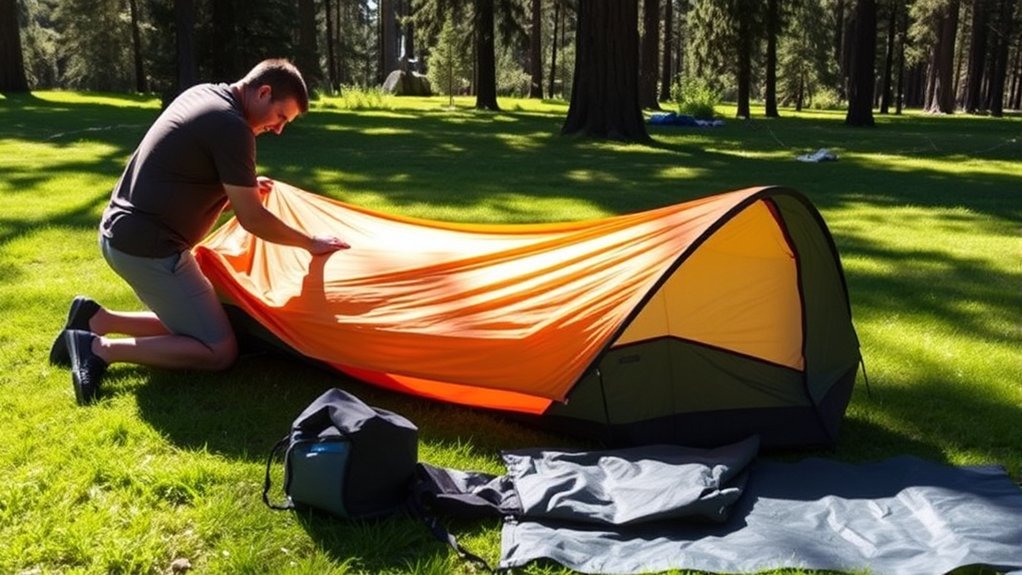
Last Updated on July 27, 2026 by Daniel Globe
Rolling a tent neatly can make campsite pack-down faster, but there is one rule to remember before you start: follow the packing instructions for your specific tent. Some manufacturers recommend folding and rolling around the pole bag, while others prefer stuffing to avoid repeated crease lines. For tents designed to be rolled, the basic method is to clean and dry the fabric, fold it to the width of the storage bag or pole set, push out trapped air, and make an even roll that slides into the sack without forcing. Get that right and your tent will be easier to transport and ready to pitch at your next campsite.
Quick Answer
To roll a tent, first check its packing instructions, then clean and dry it, fold the body and fly to the width of the bag or pole set, and make a firm, even roll while pushing out trapped air. Never force the bundle into its sack or store the tent wet or tightly compressed long-term.
Key Takeaways
- Check the manual first: zipper position, folding pattern, and whether to roll or stuff can vary by tent.
- Measure before rolling: use the stuff sack or folded pole set as a guide for the width of the bundle.
- Let air escape: partially open doors if your manufacturer recommends it, or roll toward the designated open end of the folded fabric.
- Protect the fabric: keep bare stakes, sharp hardware, dirt, and grit away from mesh and waterproof coatings.
- Dry it promptly: a tent may have to travel wet, but it should be unpacked and dried completely as soon as practical.
- Store it loosely: for long-term storage, use a breathable oversized bag or other manufacturer-recommended method rather than leaving the tent tightly compressed.
At a Glance
| Time Required | About 2–5 minutes after some practice |
| Difficulty | Easy for most conventional tents |
| Tools Needed | Tent stuff sack, pole and stake bags, and a clean flat surface |
| Cost | Free — no extra gear is normally required |
Disclosure: As an Amazon Associate I earn from qualifying purchases. Some links on this page are affiliate links, at no extra cost to you.
Why Proper Tent Packing Matters
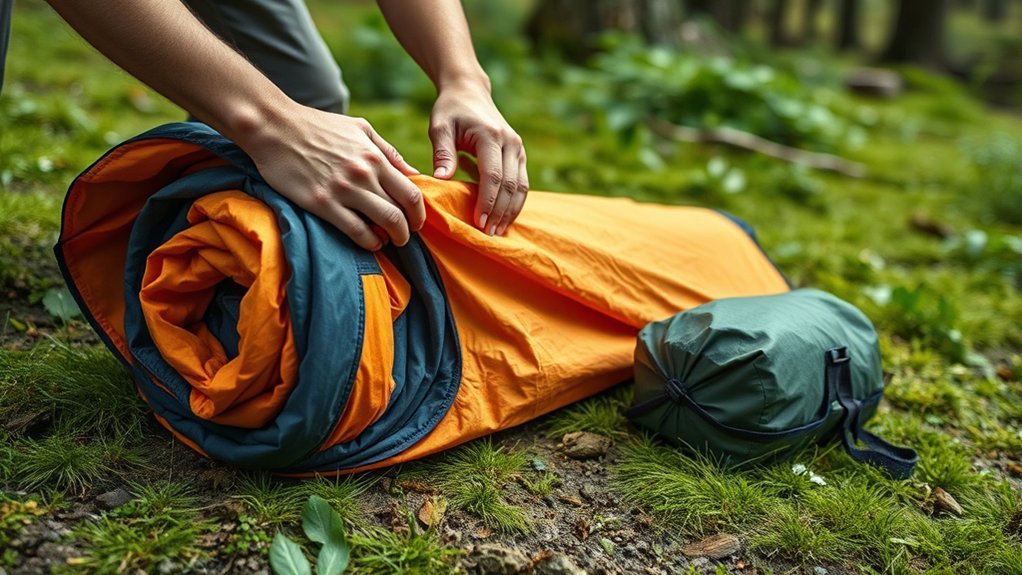
A neat roll makes a tent easier to fit into its original bag and helps keep the fly, body, poles, and stakes organized. More important for tent life, though, is avoiding grit, sharp hardware, forced compression, moisture, and careless pole handling.
There is no single folding pattern that works for every tent. A conventional dome or backpacking tent may be designed to fold to the length of its pole set and roll around the pole sack. Another manufacturer may recommend stuffing the fabric instead. Pop-up tents, inflatable tents, and shelters with permanently attached frames can require completely different pack-down techniques.
Note: Treat your tent’s manual as the final authority. The rolling method below is intended for conventional tents whose manufacturers permit or recommend folding and rolling.
Step-by-Step Tent Rolling Process
For a tent that is meant to be rolled, the easiest system is to clean and prepare every component, fold the fabric to the correct width, remove trapped air, and finish with a bundle that slides into the sack instead of being forced through the opening.
1. Prepare, Dry, and Size the Fold
- Clean the area: use a clear patch of ground, footprint, tarp, or other clean surface so the fabric does not collect stones, pine needles, sand, or mud.
- Shake out debris: remove dirt from the tent body and rainfly before folding them. Grit left against coated fabric can act as an abrasive during transport.
- Dry what you can: shake off condensation and give the fly and body time to air-dry before packing whenever conditions allow.
- Secure loose parts: gather guylines neatly and put stakes in their protective stake sack. Never roll bare stakes directly against tent fabric or mesh.
- Check the zipper instructions: some tents are packed with doors partly open so air can vent. Others are zipped closed and rolled toward an open end of the folded fabric.
- Match the packed width: place the empty stuff sack or folded pole set beside the tent. Fold the body and rainfly lengthwise until the strip is slightly narrower than the usable length of the bag or poles.
Pro Tip: If you regularly fold and roll the same tent, vary the exact fold lines when practical. Repeated hard creases in identical locations can concentrate wear on fabric and coatings over time.
2. Roll the Tent Evenly
Once the tent is folded to the right width, focus on an even roll rather than extreme compression.
- Create a core if your tent uses one: when the manufacturer’s method calls for it, place the pole bag at one end and roll the fabric around it. The pole sack provides a straight guide and helps keep the finished bundle uniform.
- Keep sharp items covered: stakes may be included only when they are fully inside a protective stake sack and the packing instructions allow them to be rolled with the tent.
- Roll steadily: smooth wrinkles and use your hands or forearms to press excess air ahead of the roll. Avoid grinding the fabric into dirt or putting a knee directly onto delicate mesh.
- Give trapped air somewhere to go: use the door opening or rolling direction recommended for your tent. If the fabric balloons, pause and push the air toward the intended opening before continuing.
- Keep the edges aligned: tuck loose fabric inward as you roll so the final bundle remains slightly narrower than the sack opening.
3. Make the Final Packing Adjustments
- Brush or wipe dirt from the floor as the final sections become exposed.
- Check that buckles, clips, and guylines are tucked away rather than hanging outside the roll.
- Slide the finished bundle into the bag instead of ramming it in. A correctly sized roll should require firm guidance, not excessive force.
- If the rainfly is wet while the tent body is dry, keep the wet component separate when practical so it does not soak the dry inner tent or other gear.
- If your original bag is genuinely too tight, first check the manufacturer’s packing instructions before using aggressive compression.
What to Do if the Tent Will Not Fit Back in the Bag
A tent that suddenly seems too large for its stuff sack usually has one of three problems: the folded strip is too wide, too much air is trapped inside, or bulky accessories are sitting in the wrong place.
- The roll is too wide: unroll it and make the original lengthwise fold slightly narrower.
- The bundle feels spongy: re-roll it while moving air toward the manufacturer’s recommended opening.
- One section bulges: redistribute the fly, footprint, or accessory bags instead of tightening the roll around one lump.
- The sack opening is being stretched hard: stop and re-roll. Forcing the bundle can tear seams, damage the stuff sack, or snag mesh.
- It never fits despite repeated attempts: check the tent manual or manufacturer’s packing instructions. The model may use a different folding sequence, separate component storage, or a stuffing method.
Should You Roll or Stuff a Tent?
There is no universal winner. Some tent makers teach owners to fold the fly and body to pole-set width and roll them into a tidy cylinder. Others prefer stuffing because random folds avoid creating the same crease lines on every trip.
For that reason, do not switch methods based only on generic camping advice. Lightweight nylon, polyester, silicone-treated fabrics, polyurethane-coated fabrics, and specialty shelter materials can all have different care recommendations. Use the packing technique supplied with your model whenever it is available.
If both methods are permitted, rolling gives you a predictable cylinder that is easy to fit in a car or pack. Stuffing can be faster and lets soft tent fabric fill irregular space in a backpack, but the poles and stakes then usually need their own protected location.
Tips for Efficient Packing
Good pack-down technique begins before the tent fabric reaches the ground. Remove poles carefully, organize small parts, and keep dirt away from coated surfaces.
- Push poles out of sleeves: pushing is less likely than pulling to separate sections inside a sleeve or snag the fabric.
- Collapse shock-corded poles from the middle: working outward helps distribute tension along the internal cord instead of repeatedly loading one end.
- Bag poles and stakes separately: loose metal components can snag mesh or puncture a floor.
- Bundle guylines: loosely coil or secure them before folding so they do not knot around clips and poles.
- Do not chase the smallest possible bundle: the goal is a safe fit in the intended bag, not maximum compression at the expense of fabric, seam tape, or zippers.
What if You Have to Pack the Tent Wet?
Sometimes rain, dew, or an early departure makes a dry pack-down impossible. In that situation, remove as much water as practical and treat the packed tent as temporary transport, not storage.
Shake off water, wipe accessible surfaces, and keep wet components away from dry sleeping gear when possible. On a backpacking trip, a wet fly may be carried in an exterior or otherwise separated pocket while dry gear stays protected inside the pack.
As soon as conditions improve, unpack and air the tent. When you get home, set it up, hang it, or drape it in a ventilated area until every layer is completely dry.
Warning: Do not confuse temporarily carrying a wet tent with storing one wet. Extended damp storage promotes mildew and can accelerate deterioration of polyurethane waterproof coatings.
Long-Term Tent Storage
How you carry a tent for a weekend is different from how you should store it for weeks or months. Tent manufacturers commonly emphasize dryness, ventilation, moderate temperatures, and avoiding prolonged tight compression.
- Dry every component completely: this includes the tent body, rainfly, footprint, pole sack, stake sack, and shock cord where applicable.
- Store loosely: use a large breathable mesh or cotton bag, loose roll, hanging arrangement, or other method recommended by your tent manufacturer rather than leaving the shelter tightly packed for months.
- Keep it cool and dry: avoid hot attics, car trunks, or damp storage areas. A climate-stable indoor gear closet is safer than a space with major heat or humidity swings.
- Keep it away from prolonged UV exposure: tent fabrics and coatings age faster when left in strong sunlight for extended periods.
- Inspect before the next trip: check seam tape, waterproof coatings, zippers, pole shock cord, clips, stakes, and guylines before relying on the shelter again.
Sea to Summit’s gear-care guidance notes that damp storage can contribute to hydrolysis in polyurethane coatings and recommends storing tents dry and loosely packed. NORTENT’s coating guide likewise identifies moisture, heat, repeated folding, abrasion, and poor storage conditions as factors that can reduce coating life.
Warning: A damp polyurethane-coated tent can develop mildew and coating breakdown that may leave the fabric sticky, flaky, or peeling. Early coating failure can sometimes be cleaned and recoated with the correct product, but advanced deterioration may require a replacement rainfly or tent. Always follow the tent manufacturer’s repair instructions.
Benefits of a Well-Packed Tent

- Predictable packed size: an even roll is easier to place in a backpack, roof box, gear bin, or car trunk.
- Better organization: keeping the body, fly, poles, and protected accessories together reduces the chance of leaving a component behind.
- Less forcing and snagging: a correctly sized bundle is less likely to catch mesh or strain the stuff sack opening.
- Faster next setup: organized components are easier to unpack and identify when you reach the next campsite.
- Cleaner gear: preparing the tent on a clean surface reduces the amount of grit stored against coated fabric.
Frequently Asked Questions
Can I roll my tent without removing the stakes?
No. Remove the stakes before folding or rolling the tent. Clean them and place them in their designated protective sack. Bare stakes rolled against the tent can puncture the floor, snag mesh, or damage coated fabric.
What should I do if the tent is wet?
Shake off as much water as possible and keep the wet fabric away from dry sleeping gear when practical. It is acceptable to transport a tent wet when conditions leave no alternative, but unpack it and dry every component completely as soon as you can. Never leave it wet for long-term storage.
Is there a specific order for packing tent accessories?
Follow your tent’s instructions. For many roll-packed tents, the body and rainfly are folded to the same width and the pole bag is used as a rolling core. Stakes should stay inside their protective sack. A dirty or wet footprint may be better kept separate from cleaner tent fabric until everything can be dried and cleaned.
Can I use a compression sack instead of the original bag?
Use one only if your tent manufacturer permits it. Moderate compression during transport may be acceptable for some tents, but leaving a tent tightly compressed for long periods can keep materials sharply folded, reduce ventilation, and stress some seam tapes or coated fabrics. Long-term storage should normally be loose and dry.
Is it better to roll or stuff a tent?
Neither method is universally better. Some manufacturers teach folding and rolling, while others recommend stuffing to avoid forming the same crease lines repeatedly. Follow the instructions for your particular tent and fabric.
Should tent doors be open or closed when I roll it?
It depends on the tent. Some manufacturers tell users to leave doors partly unzipped so air can escape, while others specify closing the zippers and rolling toward an open end of the folded tent or fly. Use the procedure in your model’s instructions rather than forcing one zipper rule onto every tent.
Why won’t my tent fit back into its bag?
The folded strip may be too wide, trapped air may be making the bundle bulky, or accessories may be creating a lump. Unroll it, narrow the fold slightly, redistribute the components, and roll again while moving air toward the intended opening. Do not force the bundle through the sack opening.
Conclusion
Rolling a tent is simple once you know the packing method your specific shelter was designed to use. For roll-packed tents, clean and dry the fabric, size the fold to the bag or pole set, protect sharp hardware, move trapped air toward the correct opening, and make an even bundle without forcing it into the sack. Just as important is what happens after the trip: unpack anything damp, dry it completely, and store the tent loosely in a cool, dry place. Those habits will leave your shelter organized and ready for the next memorable journey.
Sources
- Sea to Summit: How to Clean, Fix and Store Your Camping and Hiking Gear — supports drying, loose storage, hydrolysis, and waterproof-coating care.
- NORTENT: Understanding Waterproof Ratings in Tents — explains polyurethane coatings and how moisture, heat, abrasion, folding, UV exposure, and storage conditions affect coating longevity.
- REI Expert Advice: How to Waterproof a Tent — supports inspection, repair, polyurethane recoating, seam care, and complete drying before repacking.
