
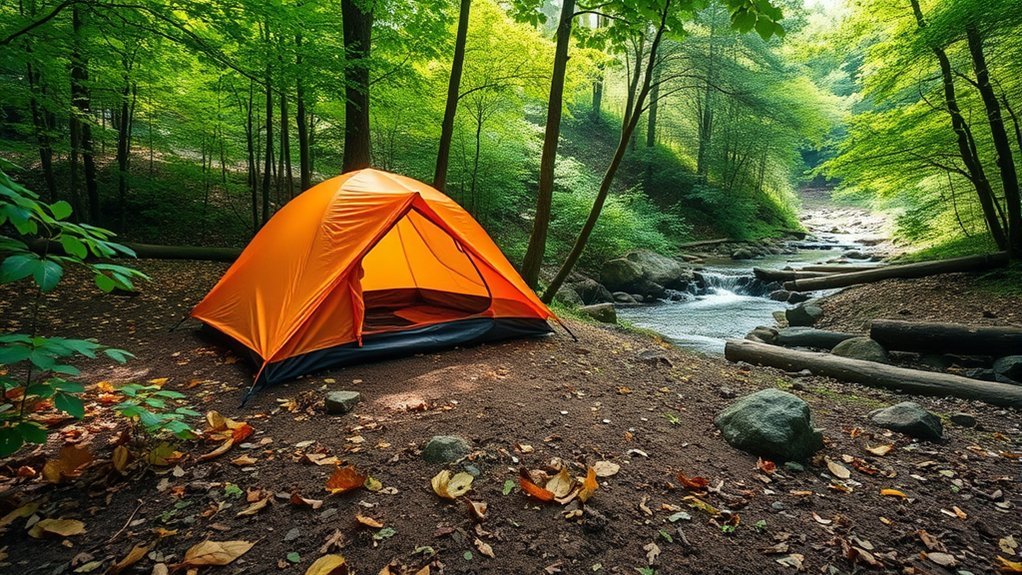
Last Updated on July 29, 2026 by Mason Reed
Choosing a campsite in rainy weather is about more than finding the highest patch of ground. The safest spot is level or nearly level, outside visible drainage routes, free of overhead hazards, and close to a clear route to higher ground. Check the forecast and local rules first, then inspect the site before unpacking your tent.
Quick Answer
Choose a level or nearly level site on slightly elevated, durable ground. Avoid depressions, dry washes, ravines, riverbanks, steep slopes, flood debris, and damaged trees. Place your head uphill, orient the tent away from wind-driven rain, tuck the footprint fully beneath the floor, and identify an escape route to higher ground.
Key Takeaways
- Check the local forecast, flood alerts, lightning risk, and conditions upstream before selecting a site.
- Use an established tent pad or another durable, vegetation-free surface whenever possible.
- Choose ground that is level but not sunken, and never pitch in a wash, ravine, drainage channel, or floodplain.
- Look up for dead branches and inspect nearby trees, rocks, and slopes before unpacking.
- Keep the footprint inside the tent’s floor outline, tension the rainfly, use guylines, and keep protected vents open.
- Leave immediately for higher ground if water rises, becomes muddy, or begins carrying debris.
At a Glance
| Time Required | About 5–10 minutes to inspect a site before pitching |
| Difficulty | Easy, but conditions can require relocating |
| Tools Needed | Weather forecast, headlamp, tent instructions, stakes, guylines, and optional footprint or tarp |
| Cost | $0 with existing gear; optional rain-protection equipment varies |
Disclosure: As an Amazon Associate I earn from qualifying purchases. Some links on this page are affiliate links, at no extra cost to you.
Why Campsite Drainage Matters in Rain
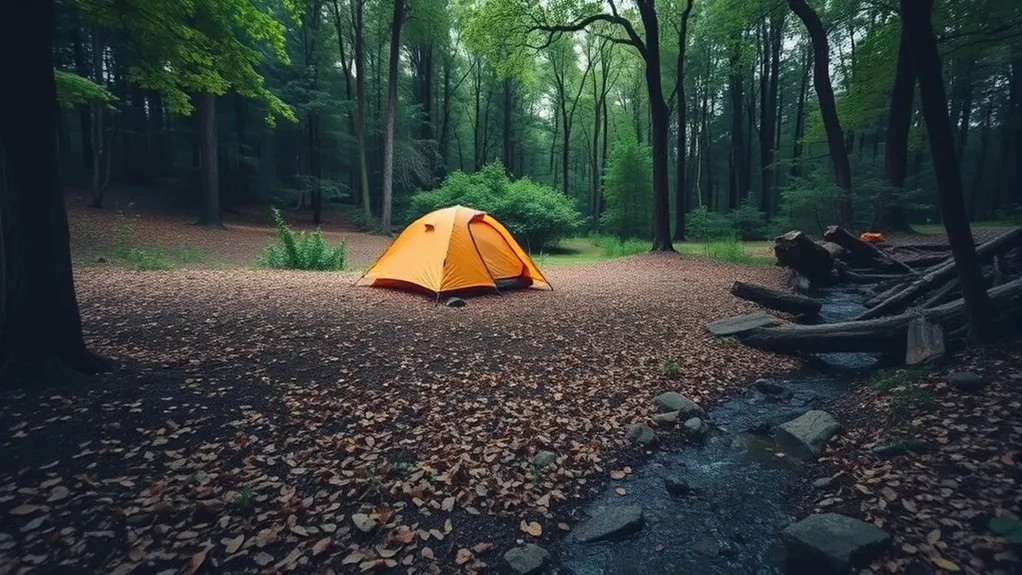
A tent floor can resist moisture, but it cannot make a poor campsite safe. Water follows gravity, collects in depressions, and moves through channels that may be dry when you arrive. A shallow dip can turn into a puddle, while a ravine or dry creek bed can carry dangerous runoff from rain that fell miles upstream.
The National Park Service recommends a large, level tent area that is not in a low or sunken location. The agency also advises campers to avoid ravines that may flood and to inspect the area for dead trees and branches.
Good drainage also protects the land. In popular areas, use an established campsite or tent pad rather than clearing a new space. On dispersed trips, select a durable surface and keep your camp compact.
Check Weather and Local Rules Before You Pitch
Review the local National Weather Service forecast before leaving and again before setting up camp. Look for flood watches, flash-flood warnings, thunderstorms, heavy-rain forecasts, and wind advisories. In canyon country or near a watershed, check conditions upstream because distant rain can send water through a dry drainage.
Also confirm the campground or land-management rules. Designated campgrounds may require you to use a marked tent pad. Backcountry permits may specify approved zones, food-storage methods, group limits, or minimum distances from water.
Note: The common 200-foot guideline is primarily intended to protect lakes, streams, and riparian vegetation. It does not prove that a location is outside a floodplain. Follow local rules and move farther away whenever terrain, watermarks, forecasts, or rising water indicate a hazard.
Choosing the Right Location
Walk around the site before unloading gear. Study the terrain from several directions, look above your tent area, and identify the route you would use to reach higher ground in darkness.
Elevation and Slope Considerations
Look for a level or nearly level bench that sits slightly above the surrounding ground. The goal is not to camp on the highest point. Exposed ridges and peaks can receive stronger wind and create greater lightning exposure, while steep hillsides can be uncomfortable and may carry runoff or debris.
- Avoid depressions: Skip bowl-shaped areas, tire ruts, compacted hollows, and low spots between rises.
- Stay out of drainages: Never pitch in a ravine, gully, dry streambed, wash, culvert outlet, or obvious runoff channel.
- Use only a slight incline: When the ground is not perfectly level, position your sleeping area with your head on the uphill side.
- Check the escape route: Make sure you can move uphill without crossing a creek, steep bank, or road that may flood.
Drainage Patterns and Ground Conditions
Soil type can offer clues, but it should never be your only test. Gravel may drain quickly, while clay and heavily compacted ground often hold water. However, sand can flood, loose gravel can sit in an active wash, and any surface can become saturated after prolonged rain.
| Ground Condition | What It May Mean | Decision |
|---|---|---|
| Established gravel tent pad | Durable surface that may drain well if it is not sunken | Usually suitable after checking for puddles and runoff |
| Firm, dry, level ground | May offer stable tent placement | Suitable if outside drainage and flood routes |
| Clay, mud, or saturated soil | Slow drainage, poor stake holding, or active saturation | Choose another site |
| Sand or loose gravel in a channel | Possible wash, streambed, or flood-deposit area | Avoid, even when completely dry |
| Compacted depression | Water may collect faster than it can soak in | Relocate to level ground above it |
| Wet meadow, moss, or lush plants | Moist conditions or fragile vegetation, not proof of good drainage | Do not use as a drainage indicator or tent pad |
Press a boot into the ground and look for water rising around the sole. Check whether nearby puddles have an outlet. If the site is already soft, shiny, muddy, or holding water before the heaviest rain arrives, keep looking.
Natural Shelter and Overhead Hazards
A hill, healthy stand of trees, or other natural feature may reduce wind exposure, but natural shelter must not introduce a greater hazard.
- Look up: Do not pitch beneath dead branches, cracked limbs, hanging tops, or trees leaning toward the tent.
- Inspect the trunk: Avoid visibly damaged, hollow, burned, uprooted, or unstable trees.
- Check nearby slopes: Stay away from loose rocks, eroded banks, landslide scars, and gullies carrying debris.
- Protect vegetation: Use existing tent pads and vegetation-free durable surfaces instead of clearing thick plants.
- Avoid isolated high points: A lone tall tree, open ridge, or exposed summit is not safe shelter during a thunderstorm.
Recognizing Signs of Good Drainage
Good drainage is shown by the shape and condition of the whole site, not by one plant or soil label. A suitable tent area is level enough to sleep on, slightly higher than nearby ground, and outside every visible path water would take.
Positive signs include:
- An established tent pad that is not dished or sunken
- Firm ground without standing water or deep boot impressions
- A gentle route for surface water to pass around—not through—the tent area
- No silt lines, driftwood, leaf piles, or debris caught above the current water level
- No channels entering the tent pad from uphill
- Enough durable space for the tent, stakes, and guylines without trampling plants
Warning signs include freshly deposited sand, flattened grass pointing in one direction, muddy streaks, exposed roots, cut banks, water stains on rocks or trees, and debris lodged above a creek. These can show where water has flowed before.
Pro Tip: Before pitching, imagine pouring a bucket of water on the ground uphill from the tent. If that water would run through the sleeping area, vestibule, or door, move the tent.
Areas to Avoid During Wet Weather
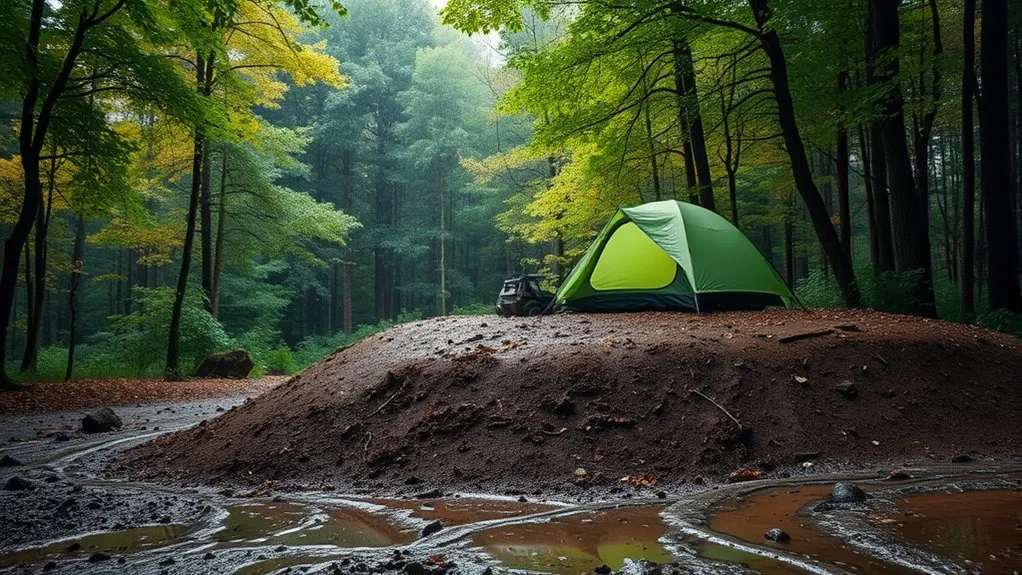
Some locations remain unsafe even when the ground looks dry. Heavy rain can arrive upstream, rivers can rise overnight, and stormwater can follow routes that are difficult to see after dark.
The National Weather Service warns that six inches of fast-moving water can knock a person off their feet. Never enter floodwater to save equipment.
Avoid:
- Dry washes and streambeds: They can become fast-moving channels even when rain is not falling at camp.
- Low ground beside streams or rivers: Water can rise while campers are asleep.
- Floodplains and high-water zones: Look for silt, driftwood, eroded banks, stranded debris, and watermarks.
- Ravines and narrow canyons: They can concentrate runoff and leave few escape routes.
- Steep hillsides: Rain may loosen rocks, soil, branches, and other debris.
- Exposed ridges and summits: They increase exposure to wind and lightning.
- Damaged tree stands: Wind and saturated soil can bring down limbs or entire trees.
- Sites that require alteration: Do not dig drainage trenches, cut vegetation, or build berms. Choose a better site instead.
Where dispersed camping is allowed, the Leave No Trace Center for Outdoor Ethics recommends camping at least 200 feet from lakes and streams and using established campsites, rock, gravel, or dry grass where appropriate. Local rules always take priority.
Warning: Do not stay in a questionable site because the tent is already pitched. Rising water, muddy or rapidly changing streamflow, floating debris, a flood warning, or runoff entering camp means it is time to leave for higher ground immediately.
Setting Up the Tent for Rain
After selecting safe ground, pitch the tent according to its manufacturer’s instructions. A correct setup helps the rainfly shed water, keeps fabric layers separated, and prevents a groundsheet from directing water beneath the floor.
Position and Orient the Tent
- Place the tent on level or nearly level ground, with your head toward the uphill side if there is a slight incline.
- Study the prevailing wind and expected rain direction before laying out the tent.
- When the tent design allows, place its narrower or structurally strongest side toward the wind.
- Face doors and open vestibules away from wind-driven rain.
- Keep the entrance out of the runoff path and avoid creating a low pocket directly outside the door.
Use a Footprint Correctly
A footprint or groundsheet protects the tent floor from abrasion and mud. It must be slightly smaller than the tent floor or folded completely underneath it. No edge should extend beyond the floor, because exposed material can catch rain and direct it under the tent.
Clear only loose sticks, stones, and pinecones that could puncture the floor. Do not scrape vegetation, excavate the ground, or dig a trench around the tent.
Secure the Rainfly, Guylines, and Vents
- Stake every required corner and vestibule point.
- Attach the rainfly correctly and tension it evenly.
- Use the tent’s guyout points before the wind and rain become strong.
- Keep the rainfly separated from the inner tent to improve airflow and reduce dripping condensation.
- Open protected vents when the design and rain direction allow.
- Recheck the rainfly after it becomes wet because some fabrics stretch and begin to sag.
Tent manufacturer Big Agnes recommends a taut pitch, proper guyline use, and ventilation to help shed water and reduce condensation during rain.
Additional Tips for Staying Dry
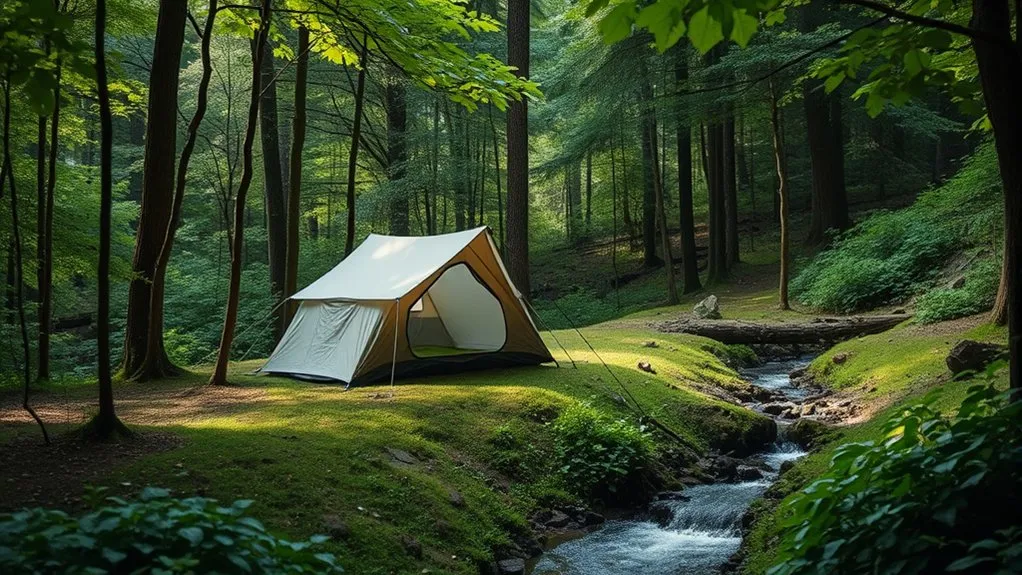
A safe site does most of the work, but a few setup and packing habits can prevent wet clothing, pooled water, and damaged equipment.
Choose Elevated Campsites Carefully
Choose slightly elevated ground rather than the absolute highest point. A good site balances drainage with protection from wind, lightning exposure, and falling debris.
- Seek a level bench or gentle rise: Water should pass around the site without crossing the tent floor.
- Avoid valleys and depressions: They collect cool air, moisture, and runoff.
- Respect water setbacks: Stay at least 200 feet from lakes and streams where Leave No Trace guidance applies, then move farther away when flood evidence or regulations require it.
- Inspect the surface: Choose firm, durable ground rather than mud, saturated vegetation, or loose material in a channel.
Utilize Tarps Effectively
A properly pitched tarp can create a dry transition or living area. Anchor it securely and give it a clear slope so water runs away from the tent, entrance, walking route, and cooking location.
- Pitch the lowest edge toward the direction where runoff can drain safely.
- Do not create a sagging center where water can pool.
- Use healthy anchor points and avoid dead branches or unstable trees.
- Keep tarp runoff from flowing onto neighboring campsites or trails.
- Check tension after the fabric becomes wet or the wind changes.
- Use reflective cord or visible markers where guylines cross walking areas.
Warning: Never operate a stove, heater, charcoal grill, or fuel-burning lantern inside a tent. If cooking beneath a tarp is permitted, keep the area open on all sides, maintain the stove manufacturer’s clearances, separate flames from fabric, and place the cooking area away from the sleeping tent. Enclosed combustion can cause fire or carbon-monoxide poisoning.
Pack Waterproof Gear
- Pack liner or rain cover: A waterproof pack liner protects critical contents even if the backpack fabric becomes soaked.
- Dry bags: Separate sleeping clothes, insulation, electronics, medication, maps, and fire-starting supplies.
- Rain clothing: Carry a waterproof shell and rain pants suited to the expected conditions.
- Footwear: Use footwear appropriate for mud and wet trails, and keep a dry pair of socks reserved for sleeping.
- Headlamp: Choose a weather-resistant model with a manufacturer rating suitable for rain, and store spare batteries in a dry bag.
- Absorbent cloth: Keep a small towel or cloth near the door for wiping condensation and wet equipment.
Keep wet jackets, muddy boots, and soaked packs in the vestibule or another protected area instead of pressing them against the tent walls. Do not block ventilation openings.
What to Do if Water Starts Rising
- Move immediately: Go to known higher ground. Do not delay to pack the tent or organize equipment.
- Leave gear behind: Equipment can be replaced; time lost collecting it cannot.
- Do not enter floodwater: Never walk, swim, or drive through moving water.
- Avoid channels: Do not escape by following a creek, wash, ravine, or flooded road.
- Alert others: Warn nearby campers and contact campground staff or emergency services when it is safe to do so.
- Stay informed: Monitor official alerts and remain on high ground until the danger has passed.
The National Weather Service advises campers to move to higher ground immediately when flooding occurs and never enter floodwater on foot or in a vehicle.
Note: A tent is not safe lightning shelter. When thunder is heard, use a substantial enclosed building or hard-topped vehicle when one is accessible. The National Weather Service advises waiting at least 30 minutes after the last thunder before returning outside.
Frequently Asked Questions
What gear is essential for camping in rainy conditions?
Bring a waterproof jacket and rain pants, a properly fitted tent footprint, full rainfly, stakes, guylines, pack liner, dry bags, weather-resistant headlamp, spare dry socks, and a small absorbent cloth. A securely pitched tarp can provide an additional open-air dry area.
How can I waterproof my tent effectively?
Inspect the rainfly, floor, seams, and seam tape before the trip. Repair damaged fabric and use a seam sealer compatible with the tent material. Follow the tent manufacturer’s instructions because silicone-treated and polyurethane-coated fabrics may require different products. Pitch the rainfly taut and allow the tent to dry completely before storage.
What are good food-storage practices in wet weather?
Keep food in sealed waterproof bags or containers, but also follow every local wildlife-storage rule. A campground may require a bear-resistant locker, certified canister, approved hang, or locked hard-sided vehicle. Keep food, trash, scented products, and cooking equipment out of the sleeping tent.
How do I keep my clothes dry while camping?
Store sleeping clothes and insulation in a dry bag inside a pack liner. Wear quick-drying synthetic or wool layers and reserve one dry base layer and pair of socks for sleeping. Hang damp clothing only where it is sheltered and will not drip into the tent or block ventilation.
What should I do if my campsite floods unexpectedly?
Leave the tent and equipment and move to higher ground immediately. Do not walk or drive through floodwater. Warn nearby campers, contact campground staff or emergency services when possible, monitor official alerts, and do not return until the water has stopped rising and authorities indicate the area is safe.
Is camping 200 feet from water always safe from flooding?
No. Two hundred feet is a widely used Leave No Trace minimum for protecting lakes, streams, and riparian areas. Floodplains and flash-flood paths can extend much farther. Follow local regulations and evaluate elevation, high-water evidence, drainage routes, upstream weather, and current alerts.
Which direction should a tent face in the rain?
There is no universal compass direction. Put your head uphill on a slight incline, keep doors away from wind-driven rain, and orient the tent’s strongest or narrowest side toward the prevailing wind when the manufacturer recommends it. Make sure vestibule runoff drains away from the entrance.
Conclusion
A dry campsite begins with a safe location, not extra waterproof gear. Check the forecast, use established or durable ground, avoid every visible drainage route, inspect trees and slopes, and plan how you will reach higher ground. Once the site passes those checks, pitch the tent with a tucked footprint, taut rainfly, secure guylines, and protected ventilation. If water starts rising, leave the equipment and move uphill immediately.
Sources
- National Park Service: Finding and Setting Up a Campsite — campsite hazards, low-ground avoidance, tent placement, food separation, and footprint setup
- Leave No Trace: Travel and Camp on Durable Surfaces — established campsites, durable surfaces, vegetation protection, and the 200-foot water guideline
- National Weather Service: Flood Safety for Camping and Hiking — upstream flooding, warning signs, higher-ground evacuation, and floodwater hazards
- National Weather Service: Lightning Safety Outdoors — safe shelter, tent limitations, and the 30-minute waiting rule
- U.S. Consumer Product Safety Commission: Portable Heaters and Camping Equipment — carbon-monoxide risks from fuel-burning camping equipment
- Big Agnes: Tent Setup and Rain Tips — guylines, rainfly tension, ventilation, and wet-weather adjustments

