

To reduce heat inside your tent during the day, choose a breathable tent with proper ventilation and large mesh openings. Set up in a shaded campsite and orient your tent away from direct sunlight. Maximize airflow by using all available vents and openings. Reflective materials, like tarps, can help deflect sunlight. Stay hydrated with plenty of cool water and consider lightweight sleeping gear for added comfort. There’s even more to discover about staying cool while camping.
Choose a Breathable Tent
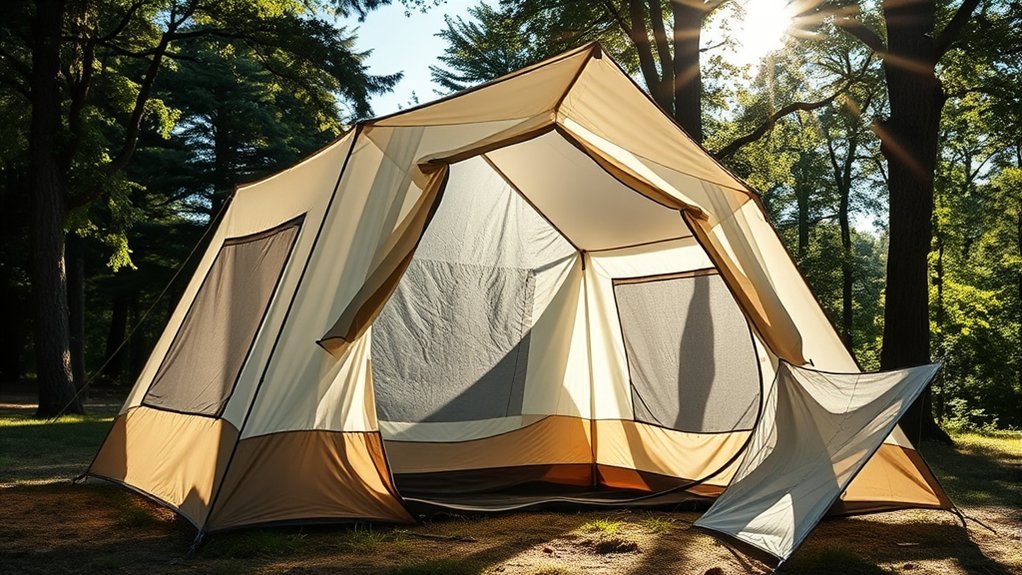
When you’re camping in hot weather, choosing a breathable tent is vital to keep the interior cool. Look for tent materials like canvas that promote better ventilation compared to synthetic options. A well-ventilated tent can greatly reduce heat buildup, making your camping experience more comfortable.
Opt for tents with large mesh windows or panels that enhance airflow. Built-in roof vents and zippered side openings are essential ventilation features that allow you to adjust air circulation, preventing heat accumulation inside. If rain isn’t in the forecast, consider a tent with a removable rainfly to maximize airflow and reduce temperature further.
Larger tents typically heat up slower and offer improved air circulation, making them ideal for summer camping. By choosing the right tent, you can create a revitalizing oasis amidst the summer heat and enjoy the freedom of the outdoors without discomfort.
Seek Out a Shaded Campsite
When you’re picking a campsite, look for natural shade from trees or nearby forest cover to cut tent temperatures by 10-15 degrees. Elevating your tent on higher ground can help you catch cooler breezes and avoid heat traps. Also, plan your tent’s placement based on the sun’s path to maximize shade and reduce direct sunlight exposure.
Natural Shade Options
Finding a shaded campsite can greatly lower temperatures inside your tent, making your camping experience much more comfortable. To maximize natural shade from vegetation, consider these options:
- Choose mature trees: They can lower temperatures by 10-15 degrees compared to direct sunlight.
- Research shaded pathways: Use campsite maps to find areas with dense forest cover or those near water sources.
- Utilize the landscape: Position your tent near rocks or hills for additional shade and windbreaks.
Elevation and Water Considerations
To keep your tent cool, consider both elevation and proximity to water sources. Higher elevations offer significant elevation benefits, as cooler air temperatures help reduce heat build-up inside your tent. Aim for a campsite that’s elevated to take advantage of this natural cooling effect. Additionally, positioning your tent near lakes or rivers can enhance cooling through water evaporation. The moisture in the air will create a more comfortable atmosphere. Avoid low-lying areas, as they tend to trap heat and humidity, making your tent feel stifling. Finally, think about the sun’s movement to maximize shade during peak heat hours, ensuring your tent remains a revitalizing retreat from the day’s heat.
Tent Placement Strategies
Selecting a shaded campsite is one of the most effective ways to keep your tent cool. By being strategic about your tent placement, you can greatly reduce heat buildup. Here are three key strategies to ponder:
- Use mature trees: They can lower tent temperatures by 10-15 degrees, providing necessary shade.
- Assess the terrain: Position your tent on higher ground where cooler air settles, avoiding heat pockets.
- Orient wisely: Face the tent entrance away from the morning sun to allow cooler breezes to flow inside.
Additionally, take advantage of natural windbreaks like hills or rocks to enhance airflow. Always plan your tent footprint based on the sun’s movement to maximize your comfort throughout the day.
Utilize Proper Tent Orientation
To keep your tent cooler, make sure to position the entrance away from the morning sun. Orient the tent to catch prevailing breezes, which will enhance airflow inside. Also, take advantage of natural shade features, like trees, to further reduce heat exposure.
Face Tent to Breeze
Positioning your tent to face the prevailing breeze can greatly enhance airflow and lower internal temperatures on hot days. By aligning your tent with the breeze direction, you can optimize airflow dynamics and create a revitalizing environment. Here are three tips to maximize cooling:
- Entrance Placement: Verify the tent entrance faces the breeze for natural ventilation.
- Chimney Effect: Allow cooler air to enter through lower openings while hot air escapes from upper vents.
- Evening Breezes: Orient your tent towards evening breezes to enjoy cooler temperatures as the sun sets.
Utilizing natural features like hills or trees can also shield your tent from harsh sunlight while maintaining airflow. Embrace these strategies for a comfortable camping experience!
Position Away From Sun
When you set up your tent, facing it away from the morning sun can greatly improve your comfort during hot days. Proper tent orientation helps keep temperatures cooler as the day heats up. Consider the sun’s movement; positioning your tent to maximize shade during peak hours is key. Choose higher ground for placement, as it tends to be cooler and prevents hot air from settling in. Steer clear of low-lying areas, which can trap heat and raise the temperature inside your tent. By strategically orienting your tent away from the morning sun, you not only enhance your comfort but also create a more enjoyable outdoor experience. Embrace these simple adjustments for a liberating camping adventure.
Utilize Natural Shade Features
Maximizing the shade around your tent is a smart way to keep the interior cool. Utilizing natural shade features can greatly reduce the internal temperature by 10-15 degrees Fahrenheit. Here are three effective strategies:
- Position your tent under tree canopies to take advantage of the shade benefits they provide throughout the day.
- Orient the entrance away from the morning sun to minimize heat exposure as the day progresses.
- Choose higher ground for your tent since heat rises, making these spots cooler compared to low-lying areas.
Maximize Airflow With Vents and Openings
To keep your tent cool, make sure to utilize all available vents, windows, and doors. This creates a cross-breeze, considerably reducing heat accumulation. Employ ventilation techniques like the “chimney effect” by opening both lower and upper vents. This invites cooler air in from the bottom while letting hot air escape from the top, enhancing air circulation.
Position your tent to face prevailing breezes for ideal airflow. Even slight adjustments can make a big difference in cooling. If your tent has multiple mesh panels, take full advantage of them; they facilitate better ventilation and air circulation, keeping the interior cooler during sweltering days.
Incorporating openings at different heights improves airflow dynamics, promoting continuous air movement throughout the tent. By maximizing these vents and openings, you’ll create a revitalizing environment, allowing you to enjoy your outdoor adventure without the discomfort of excessive heat.
Use Reflective Materials Outside the Tent
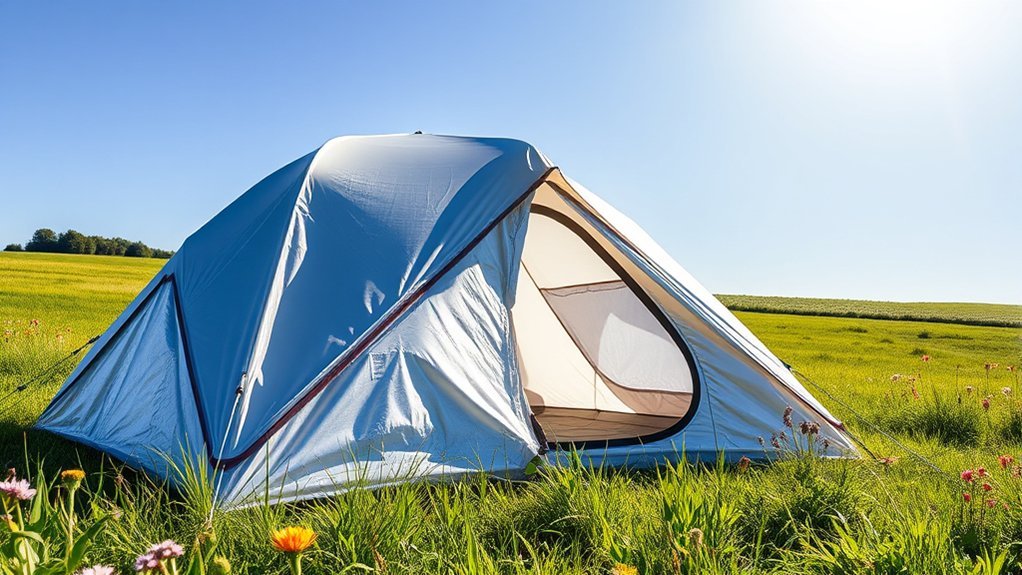
Using reflective materials outside your tent can greatly lower the interior temperature, making your camping experience much more comfortable. By implementing effective cooling strategies, you can enjoy a cooler retreat even in blazing sun. Here are three ways to utilize reflective materials:
- Install a reflective tarp above the tent to deflect sunlight, potentially lowering the interior temperature by up to 20 degrees Fahrenheit.
- Use a reflective sunshade at the tent entrance to block hot air while allowing ventilation, keeping the inside fresh.
- Combine reflective materials with natural shade from trees or structures to enhance cooling effects and create a much more pleasant environment.
With these simple adjustments, you’ll markedly reduce heat buildup inside your tent, allowing you to enjoy the outdoors without feeling overwhelmed by the sun’s intensity.
Stay Hydrated to Combat Heat
Staying hydrated is essential, especially when camping in hot weather, as it helps regulate your body temperature and prevents heat-related illnesses. Aim to drink at least 2 to 3 liters of water daily. To make this easier, use insulated water bottles or hydration packs to keep your water cool. This way, you’ll find it more appealing to drink regularly throughout the day.
Consider adding electrolytes to your water to help replenish minerals lost through sweat and enhance hydration efficiency. This is a vital hydration tip, as maintaining your electrolyte balance can greatly impact your overall comfort and energy levels.
Store your water bottles in shaded or cooler areas, which can help keep them invigorating and encourage you to drink more often. Staying on top of your hydration not only combats heat but also keeps you feeling vibrant and ready to enjoy your outdoor adventures.
Consider Lightweight Sleeping Gear
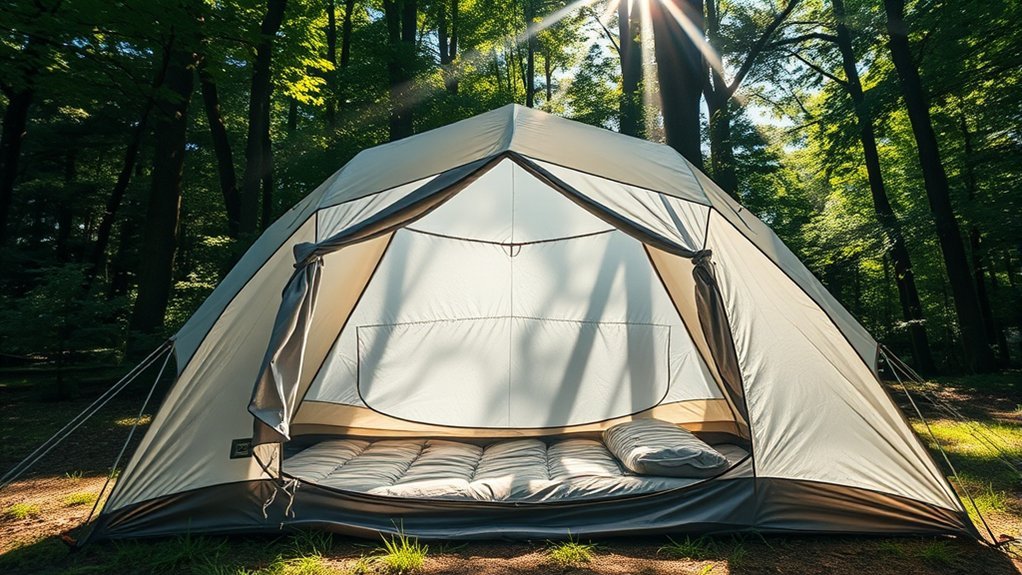
When camping in hot weather, choosing lightweight sleeping gear can markedly enhance your comfort and help keep temperatures down inside your tent. By opting for breathable sleeping bag materials and compact gear, you’ll create a cooler sleeping environment.
Choosing lightweight and breathable sleeping gear can significantly improve your comfort while keeping your tent cool during hot camping trips.
Consider these three items to boost your camping comfort:
- Lightweight Sleeping Bags: Select bags made from breathable materials that regulate temperature and minimize heat retention.
- Sleeping Bag Liners: Use liners for added comfort without the bulk, allowing for better airflow while you rest.
- Sleeping Pads with High R-Values: Choose pads that insulate without adding weight, elevating you off the warm ground.
You might also consider cotton sheets instead of heavier sleeping bags. They enhance airflow and keep you cooler during hot days, ensuring a more enjoyable camping experience.
Disassemble the Tent During the Day
Keeping your tent disassembled during the day can greatly enhance your comfort in hot weather. When you take down the tent, you allow for improved airflow, preventing heat buildup from the greenhouse effect of direct sunlight. This simple act can markedly lower internal temperatures, especially in larger tents. Plus, disassembly helps protect your tent from UV damage, prolonging its lifespan.
Frequently Asked Questions
What Type of Tent Material Is Best for Hot Weather?
For hot weather, choose tents made from breathable fabrics with reflective coatings. These materials help keep the interior cooler and enhance ventilation, ensuring you stay comfortable during your outdoor adventures without feeling trapped in the heat.
How Can I Create Shade Around My Tent?
Position your tent strategically under trees or large structures. Use shade materials like tarps, reflective blankets, or mesh canopies to block direct sunlight, keeping your space cooler and more comfortable throughout the day.
Should I Use a Ground Tarp to Reduce Heat?
Using a ground tarp can help reduce heat by providing ground insulation, keeping your tent cooler. For instance, campers in summer often find relief with tarps, enjoying a more comfortable experience under their tents.
What Time of Day Is Hottest Inside a Tent?
Mid-afternoon’s usually the hottest time inside a tent, with heat retention peaking. Guarantee proper tent ventilation during this period to minimize discomfort and keep your space more enjoyable. Stay cool and liberated from the heat!
Can I Use a Fan Inside My Tent for Cooling?
Yes, a fan can cool your tent effectively. Place it near an opening for airflow, and consider battery options for convenience. This setup helps circulate air, making your camping experience more comfortable and enjoyable.
Conclusion
Just like a tree stands tall and resilient against the blazing sun, you can create your own oasis inside the tent. By choosing breathable materials, finding shade, and maximizing airflow, you’ll keep the heat at bay. Reflective surfaces act as your armor, while staying hydrated shields you from fatigue. When the sun’s at its peak, consider dismantling your shelter. With these simple strategies, you can transform your tent into a cool sanctuary, ready for adventure at any moment.
