

Last Updated on August 26, 2026 by Mason Reed
Staying warm in a tent at night depends less on one trick and more on your entire sleep system. A weather-appropriate sleeping bag, an insulated sleeping pad, dry clothing, smart campsite selection, and enough food and water work together to reduce heat loss. Good ventilation matters too, because damp insulation can make a cold night much harder to manage.
Quick Answer
To stay warm in a tent at night, use a sleeping bag suited to the forecast, sleep on an insulated pad with enough R-value, wear dry non-cotton layers, choose a sheltered and well-drained campsite, keep tent vents working, eat and hydrate, and use only safe, non-flame warming methods inside the tent.
Key Takeaways
- Your sleeping bag, sleeping pad, and sleep clothing work as one system; upgrading only the bag may not solve a cold night.
- Choose sleeping bags by appropriate standardized temperature ratings and sleeping pads by tested R-value, not simply by thickness or whether a pad is inflatable.
- Keep sleep clothing and insulation dry and ventilate the tent according to its design instead of sealing every vent.
- Avoid exposed ridges and low depressions where wind, water, or cold-air pooling can make conditions worse.
- Never use candles, charcoal, camp stoves, or ordinary fuel-burning camping appliances inside a tent for warmth.
- Know the warning signs of hypothermia. Persistent shivering, confusion, poor coordination, unusual drowsiness, or slurred speech require more than another blanket.
At a Glance
| Time Required | About 15–30 minutes to prepare your campsite and sleep system, plus a pre-trip weather check |
| Difficulty | Easy for cool-weather camping; advanced planning and experience are needed for severe winter conditions |
| Tools Needed | Weather-appropriate sleeping bag, insulated sleeping pad, dry base layers, warm socks and hat, water, food, and an optional hot-water bottle or approved warmer |
| Cost | No extra cost if your existing sleep system matches the conditions; otherwise the cost varies by the gear that needs upgrading |
Disclosure: As an Amazon Associate I earn from qualifying purchases. Some links on this page are affiliate links, at no extra cost to you.
Check the Forecast and Your Sleep System First
Before deciding how to stay warm in a tent at night, check the expected overnight low, wind, precipitation, and any sudden weather changes for your exact camping area. The National Park Service recommends researching possible weather conditions before camping because the season and location determine what equipment you need.
Think of your sleeping bag, sleeping pad, and sleep clothing as one system. A warm sleeping bag can still feel cold if the ground is pulling heat through a poorly insulated pad. Likewise, an excellent pad cannot compensate for a sleeping bag that is unsuitable for the forecast.
Pro Tip: Test unfamiliar cold-weather gear close to home or in mild conditions before depending on it during a remote trip. People vary greatly in how warm or cold they sleep.
Pick a Good Campsite
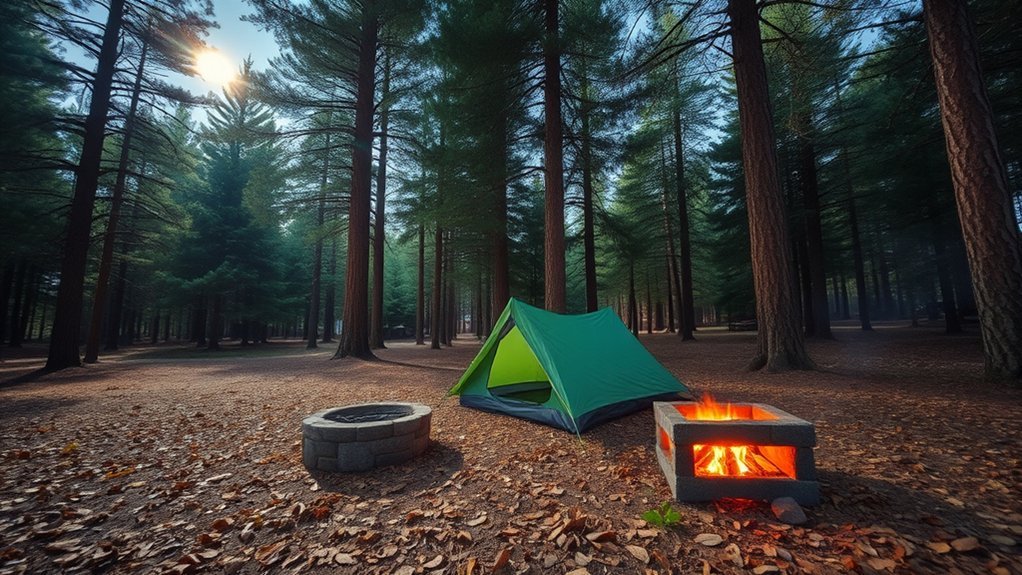
When choosing a campsite, look for shelter from strong wind without placing your tent beneath dead trees or unstable branches. The National Park Service campsite guidance recommends a level tent site that is not in a low or sunken area and advises campers to avoid exposed high points and other hazards.
Do not assume that the lowest elevation will always be the warmest place to sleep. At night, cold air can drain downhill and collect in valleys and depressions. A sheltered, well-drained location partway out of a low basin may be more comfortable than either an exposed ridge or a deep hollow.
Prioritize dry, durable ground. Wet soil, standing water, and melting snow can increase moisture around your shelter and gear. Morning sun can be useful for drying the campsite and warming you after sunrise, but it should not be treated as nighttime insulation.
Fight Condensation
Condensation happens when warm, moisture-filled air meets colder tent fabric. Breathing, damp clothing, wet boots, cooking moisture, and humid outside air can all contribute. The goal is not to make your tent airtight; it is to manage moisture while keeping weather protection intact.
Pitch the tent correctly and use its vents according to the manufacturer’s instructions. Keep high vents open when conditions allow, and avoid blocking designed airflow with sleeping bags or gear. The MSR tent manual notes that appropriate ventilation, pitching on dry ground, and keeping damp items out of the sleeping area can reduce condensation.
In very humid weather, some condensation may be unavoidable. Keep your sleeping bag from touching wet tent walls when possible, store wet clothing separately from dry sleep clothing, and wipe heavy droplets away before they soak insulation.
Note: Closing every vent may feel warmer for a few minutes, but trapped moisture can leave your tent and insulation damper. Follow your tent’s ventilation design instead of sealing the shelter completely.
Bring a Warm Sleeping Bag
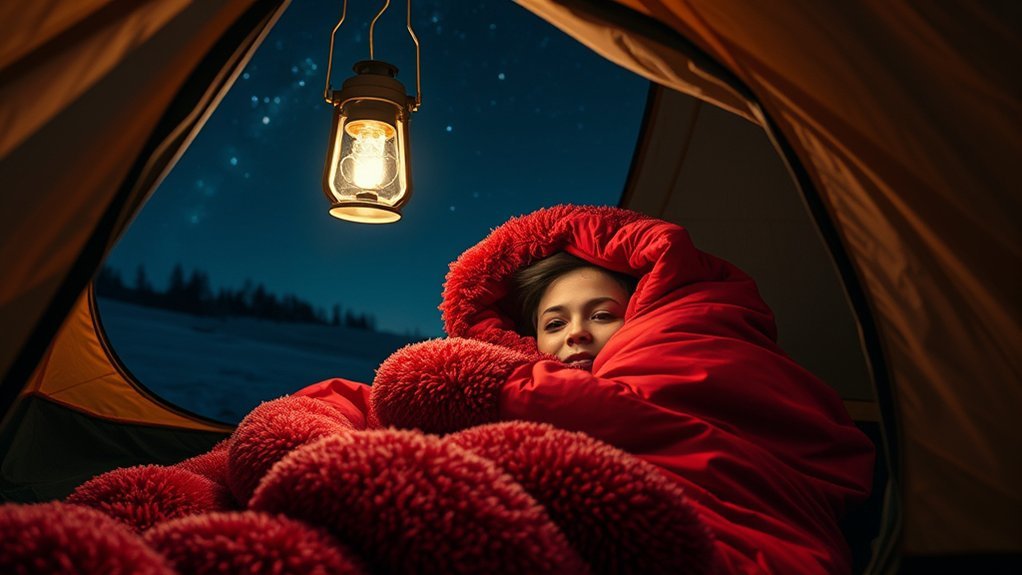
Choose a sleeping bag that is appropriate for the coldest temperature you realistically expect, with extra margin if you know you sleep cold. Do not rely on a single printed number without understanding what that number represents.
Temperature Rating Importance
For applicable adult sleeping bags, ISO 23537-1:2022 provides standardized thermal testing requirements. Standardized ratings are useful because they allow more meaningful comparisons between suitable sleeping bags.
- Comfort rating: The more useful reference for many people who tend to sleep cold.
- Limit rating: More appropriate for a warmer sleeper and should not automatically be treated as everyone’s comfort temperature.
- Personal variation matters: Age, metabolism, fatigue, clothing, food intake, wind, humidity, shelter, and sleeping-pad insulation can change how warm you feel.
- Add a margin: If the forecast approaches the edge of your system’s capability, use warmer equipment rather than expecting liners or clothing to rescue an inadequate bag.
- Keep the bag dry: Moisture reduces the effectiveness of many insulation systems.
Mummy Shape Benefits
A mummy-shaped sleeping bag can be efficient in cold weather because its tapered shape reduces unnecessary interior volume. A fitted hood, draft collar, and zipper draft tube can also reduce heat loss when used correctly.
The fit should be close enough to avoid excessive empty space but not so tight that your body compresses the insulation. Compressed insulation traps less air and may provide less warmth. If the bag has a hood, cinch it comfortably around your head and face while keeping your mouth and nose outside the bag so moisture from your breath does not build up inside the insulation.
Using Sleeping Bag Liners
A sleeping bag liner can add insulation and keep the inside of your bag cleaner, but do not assume every liner adds a fixed number of degrees. Actual improvement depends on the liner, sleeping bag, pad, clothing, sleeper, and weather.
Some manufacturers publish estimated gains for specific thermal liners, but even manufacturer guidance notes that real-world results vary. Treat a liner as a useful supplement, not as a substitute for a bag and pad already suited to the expected conditions.
- Choose a liner designed for warmth if cold-weather use is your priority.
- Check the specific manufacturer’s performance guidance rather than applying one temperature claim to all fleece or synthetic liners.
- Keep the liner dry.
- Avoid stuffing so much material inside the bag that you compress its loft or restrict circulation.
- Use a liner mainly to fine-tune an already suitable sleep system.
Add Layers to Your Sleeping Bag
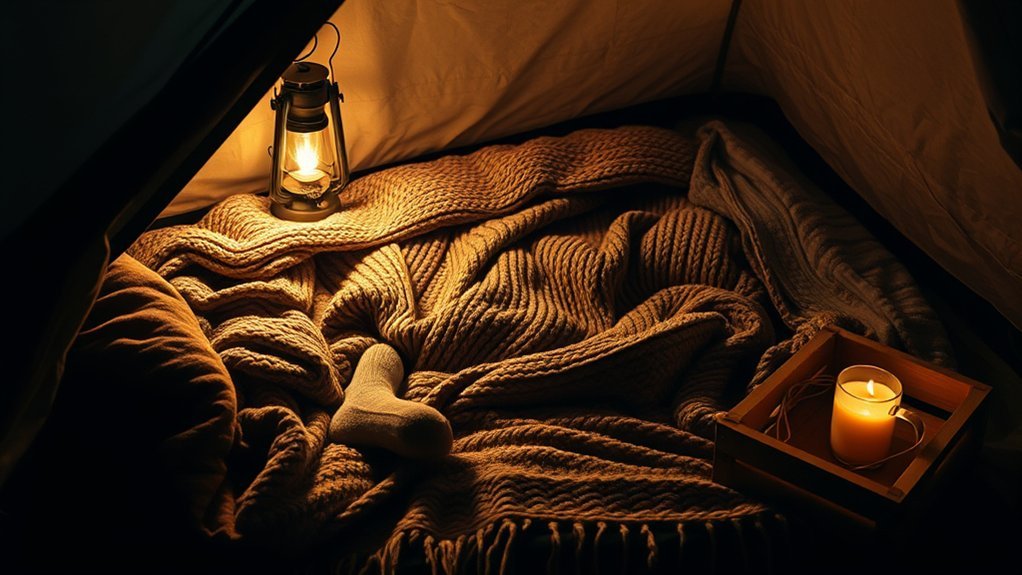
If your sleeping bag is appropriate for the conditions but you want a little more comfort, additional dry insulation can help. A thermal liner, compatible overbag, or dry blanket can increase the amount of still air around your sleep system.
Be careful where you place extra insulation. Packing bulky clothing tightly inside a mummy bag can compress the bag’s loft or make the fit restrictive. Loose, dry items can sometimes fill small empty spaces, but if you have a large blanket or quilt, draping it over the sleeping bag is often more practical as long as it stays dry and does not excessively compress the bag underneath.
Keep tomorrow’s clothing dry rather than sacrificing every dry garment as bedding. Having a dry layer available in the morning is an important cold-weather safety buffer.
Use an Insulated Sleeping Pad
An insulated sleeping pad reduces conductive heat loss into the ground. In cold conditions, this can be just as important as the sleeping bag because the insulation beneath your body is compressed while you sleep.
Compare pads by R-value rather than assuming one construction type is automatically warmer. ASTM F3340-22 provides a standardized method for measuring the thermal resistance of camping mattresses, including inflatable, self-inflating, reflective, and closed-cell foam designs.
- Higher R-value: Indicates greater resistance to heat flow through the pad.
- Match the conditions: Colder ground generally calls for more insulation.
- Do not judge by thickness alone: A thick uninsulated air mattress can perform very differently from an insulated pad.
- Check for leaks: An inflatable pad that loses air may become uncomfortable and may not perform as intended.
- Stacking can help: A closed-cell foam pad beneath another sleeping pad is a common way to add insulation and provides backup if an inflatable pad is damaged.
A sleeping-pad R-value is a measure of thermal resistance, not a promise that the pad will make your bed a specific number of degrees warmer.
Dress in Warm Layers of Clothing
What you wear to bed matters, but more clothing is not automatically better. Start with clean, dry base layers made from wool or suitable synthetic materials that manage moisture. Avoid going to sleep in clothing that became sweaty or wet during the day.
Add a dry fleece or other insulating layer if necessary. Wear warm, dry socks and a comfortable hat or beanie when conditions call for them. Clothing should fit well without being tight enough to restrict circulation, especially around your feet, waist, wrists, and ankles.
A waterproof or wind-resistant shell is useful around camp, but you usually do not need to sleep in a stiff waterproof shell unless conditions or an emergency require it. The goal inside your sleeping bag is dry, breathable insulation rather than trapping unnecessary moisture.
The National Park Service advises managing layers before you become soaked or cold and removing or venting layers before sweating heavily in cold conditions.
Make Sure You’re Warm Before You Go to Bed
Going to bed already chilled forces your sleep system to work harder. Before getting into the bag, change into dry layers and do a small amount of movement such as an easy walk, gentle squats, or light stretching until you feel comfortably warm.
Engage in light activity and dress in dry layers to stay warm before bed.
Do not exercise hard enough to sweat. Moisture from perspiration can make you colder later. Once warm, get into your insulated sleep system rather than standing around and cooling down again.
- Change out of damp hiking clothing.
- Put on dry base layers and dry socks.
- Add a warm hat if needed.
- Do a little light movement without becoming sweaty.
- Have a snack or warm nonalcoholic drink if you need energy or hydration.
- Make sure the sleeping pad has not partially deflated.
Warning: Exercise is not a substitute for treatment when someone shows signs of hypothermia. Confusion, poor coordination, slurred speech, unusual drowsiness, or worsening cold symptoms require immediate attention and safer shelter or medical help.
Eat and Drink Things That Warm You Up
Your body needs energy and water to function properly in cold conditions. Warm food and drinks are comforting, while adequate calories and hydration support the body’s normal heat production. Do not rely on a hot drink as a replacement for insulation.
Warm Beverages for Comfort
Warm drinks can be especially welcome before bed. Good options include:
- Herbal tea: A caffeine-free option if caffeine interferes with your sleep.
- Hot chocolate: Provides fluid plus carbohydrates and calories.
- Warm broth: Adds fluid and can provide sodium and calories depending on the recipe.
- Warm water with lemon or honey: A simple option when you do not want a full drink mix.
- Avoid alcohol: Alcohol can produce a temporary sensation of warmth while interfering with the body’s normal defenses against cold.
Nutrient-Dense Meals Matter
Cold-weather camping can require substantial energy, especially when hiking, carrying equipment, traveling on snow, or setting up camp. Eat enough for your activity level instead of following an arbitrary number of meals.
Meals containing carbohydrates, fat, and protein can provide sustained energy. Oatmeal, nut butter, rice dishes, pasta, soups, stews, cheese, nuts, and other calorie-dense foods are practical options depending on your trip and dietary needs.
Ginger, cinnamon, cayenne, and other spices can make a meal feel warming and enjoyable, but they should not be treated as protection against dangerous cold.
Hydration Supports Heat Retention
People sometimes drink less in cold weather because they do not feel as thirsty, but hydration still matters. The National Park Service specifically includes hydration in its hypothermia-prevention guidance.
- Drink regularly throughout the day instead of waiting until bedtime to catch up.
- Use insulated or wide-mouth bottles when freezing is possible.
- Keep backup water from freezing whenever practical.
- Warm soups and drinks can contribute to fluid intake.
- Continue eating enough food to replace energy used during cold-weather activity.
Add a Heat Source
A safe supplemental heat source can make your sleeping bag more comfortable, but this is the section where caution matters most. The safest strategy is still a properly rated sleep system rather than trying to heat the entire tent.
Warning: Never use candles, charcoal, a camp stove, or an ordinary fuel-burning heater or lantern inside a tent for warmth. The U.S. Consumer Product Safety Commission warns that fuel-burning camping equipment can create deadly carbon monoxide in enclosed spaces, and flames can ignite tents and sleeping bags.
| Heat Source | How to Use It More Safely |
|---|---|
| Hot Water Bottle | Use a bottle designed for hot water, close it securely, wrap it if necessary, and avoid prolonged contact with very hot surfaces against bare skin. |
| Hand and Toe Warmers | Follow the product instructions and avoid prolonged direct skin contact, especially if sensation is reduced. |
| Electric or Heated Blanket | Use only equipment intended for your power source and environment, keep electrical components dry, inspect wiring, and follow the manufacturer’s instructions. |
Sharing a tent with another person can make the interior feel somewhat less cold, but do not count on shared body heat as your main insulation plan. Each camper should still have an adequate sleeping bag and pad.
A hot-water bottle placed near your torso or feet can provide localized warmth without introducing combustion into the tent. Make sure the bottle cannot leak onto your sleeping bag.
What to Do If You Wake Up Cold at 2 A.M.
If you wake up shivering or uncomfortable, deal with the cause instead of trying to ignore it until morning.
- Check for moisture. Change any damp sleep clothing and move wet gear away from your sleeping area.
- Check the sleeping pad. Make sure it has not leaked or slid away from underneath you.
- Protect your head and feet. Add a dry hat and dry, non-restrictive socks if needed.
- Add dry insulation. Use a liner, blanket, overbag, or spare dry layer without crushing your sleeping bag’s loft.
- Eat or drink if appropriate. A small snack and warm nonalcoholic drink can provide energy and comfort if you are fully alert.
- Use a safe warmer. A properly sealed hot-water bottle or correctly used warmer can help.
- Reassess your condition. If shivering is severe or you develop confusion, poor coordination, slurred speech, or unusual drowsiness, treat the situation as a potential cold injury rather than a comfort problem.
Know the Warning Signs of Hypothermia
Cold camping becomes a medical issue when your body loses heat faster than it can replace it. The National Park Service lists warning signs such as shivering, exhaustion, stumbling, impaired judgment, confusion, and slurred speech. Hypothermia can occur in cool, wet, and windy conditions even when temperatures are above freezing.
If someone may be hypothermic, get them out of wind and precipitation, remove wet clothing when dry replacements are available, add dry insulation, and seek appropriate medical help. Handle a severely cold or confused person carefully. Give warm nonalcoholic fluids only if the person is fully alert and able to swallow safely.
Warning: Confusion, loss of coordination, slurred speech, extreme drowsiness, reduced responsiveness, or cessation of shivering despite severe cold can indicate serious hypothermia. Move toward emergency care rather than relying on camping warmth tricks.
Frequently Asked Questions
Can I Use My Regular Clothes as Sleeping Layers?
Yes, if they are clean, dry, comfortable, and appropriate for cold conditions. Wool or suitable synthetic layers generally manage moisture better than cotton. Avoid tight clothing that restricts circulation and do not sleep in garments that became wet or sweaty during the day.
How Can I Prevent My Water From Freezing Overnight?
Use an insulated, preferably wide-mouth bottle and start with warm water when appropriate. Keep the bottle protected from the cold rather than leaving it exposed outside the tent. Make sure the lid is tightly closed before placing a bottle near bedding so a leak cannot soak your sleep system.
What Materials Are Best for Tent Insulation?
Rather than trying to insulate the tent walls, prioritize insulation beneath and around your body. An appropriately rated sleeping bag plus a camping pad with enough tested R-value is usually more important. A closed-cell foam pad can also be stacked beneath another pad for additional ground insulation.
Is It Safe to Use a Candle for Heat?
No. Do not use a candle as a tent heater. Tents, sleeping bags, clothing, and other camping materials can burn, and an open flame creates an unnecessary fire risk. Use adequate insulation, a hot-water bottle, or another non-flame warming method instead.
How Do I Choose the Right Sleeping Bag Temperature Rating?
Start with the lowest temperature expected on your trip and look for a standardized ISO-rated sleeping bag when possible. Cold sleepers should pay particular attention to the comfort rating. Add a reasonable personal margin, and remember that your pad, clothing, humidity, wind, fatigue, and metabolism also affect comfort.
Should I Close All the Tent Vents to Stay Warmer?
Usually no. Completely sealing ventilation can trap moisture from breathing and damp equipment. Use the vents and rainfly configuration recommended by the tent manufacturer. Some condensation can still occur in humid conditions, but appropriate airflow helps manage it.
What Sleeping-Pad R-Value Do I Need for Cold Camping?
The colder the ground and overnight conditions, the more pad insulation you generally need. Rather than choosing by thickness or pad type, compare ASTM-tested R-values and the pad manufacturer’s intended temperature or season guidance. For demanding winter conditions, use equipment specifically designed for that environment.
Conclusion
Staying warm in a tent at night is mostly about preventing heat loss before you become cold. Start with the forecast, choose a safe campsite, use a sleeping bag and insulated pad suited to the conditions, change into dry layers, manage condensation, and keep yourself fueled and hydrated.
Supplemental warmth such as a hot-water bottle can improve comfort, but it cannot replace an inadequate sleep system. Most importantly, keep flames and inappropriate fuel-burning appliances out of your tent and recognize when severe cold has crossed from discomfort into a possible hypothermia emergency.
Sources
- U.S. National Park Service — Finding and Setting Up a Campsite — campsite placement, terrain, wind, drainage, and camping safety.
- ISO 23537-1:2022 — current thermal testing and labeling requirements for applicable adult sleeping bags.
- ASTM F3340-22 — standardized thermal-resistance testing for camping mattresses and sleeping pads.
- MSR Tents and Shelters Manual — tent condensation, ventilation, and flame safety.
- U.S. Consumer Product Safety Commission — Portable Heaters & Camping Equipment — carbon-monoxide and enclosed-tent heating hazards.
- U.S. National Park Service — Hypothermia — cold-injury prevention, symptoms, hydration, food, and response guidance.
