
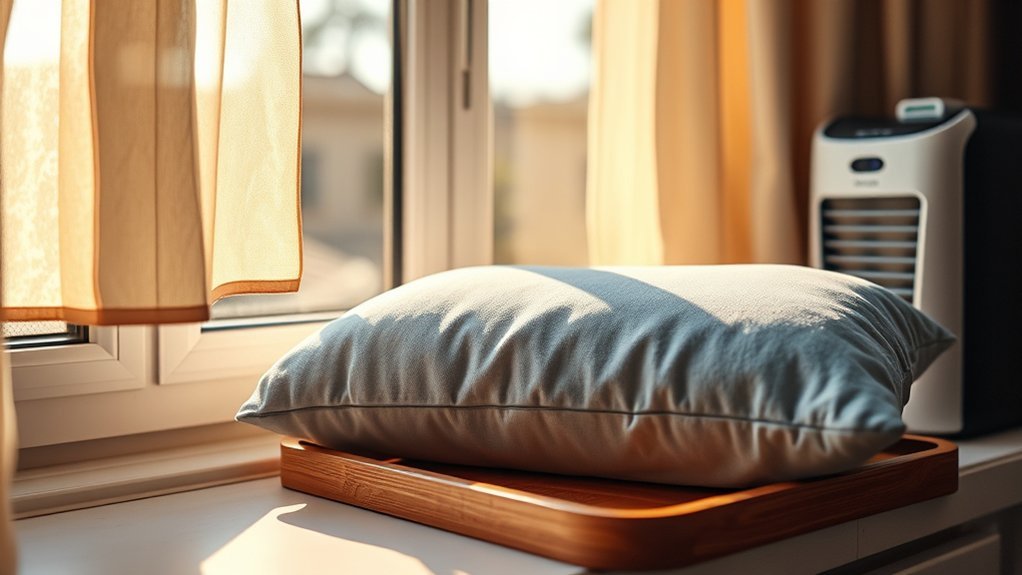
To prevent mildew in your travel pillow, make certain it’s always dry before storage. Air out the pillow after each use and store it in a cool, dry place with good ventilation. Use breathable materials for pillowcases and avoid airtight storage options that trap moisture. Regularly inspect your pillow for dampness or musty odors, and clean it according to specific guidelines. Adopting these practices can enhance your pillow’s lifespan and promote a healthier sleeping environment. You’ll discover more useful tips ahead.
What Causes Mildew in Travel Pillows?

Mildew in travel pillows can quickly turn your comfortable accessory into a breeding ground for unpleasant odors and allergens. This issue primarily arises from moisture accumulation due to sweat, oils, and humidity during use. If you neglect to wash and air out your pillows after each trip, dirt and moisture will foster mildew growth. Additionally, storing pillows in damp or poorly ventilated areas increases the risk of mold formation. Failing to dry your pillows completely before storage can trap moisture, creating an ideal environment for mildew. To guarantee mildew prevention and maintain pillow hygiene, make it a habit to clean your travel pillow regularly with appropriate methods and materials. This practice not only extends the life of your pillow but also enhances your travel experience.
Why Keeping Your Travel Pillow Dry Matters
Keeping your travel pillow dry is essential to prevent mildew growth that can compromise your health and comfort. By ensuring proper airflow and using effective drying techniques, you can greatly reduce moisture accumulation. This not only enhances your sleeping experience but also extends the life of your travel pillow.
Mildew Growth Prevention Tips
To guarantee your travel pillow remains comfortable and hygienic, it is crucial to keep it dry, as moisture fosters an environment ripe for mildew growth. Here are some effective mildew prevention tips to enhance your travel hygiene:
- Air it out: After each use, air your travel pillow to eliminate moisture, especially after exposure to sweat or humidity.
- Choose proper storage: Store your pillow in a cool, dry place, away from direct sunlight to prevent mold development.
- Use a breathable pillowcase: A moisture-wicking travel pillowcase can help reduce the risk of mildew while adding a protective layer.
Importance Of Airflow
Proper airflow is essential for maintaining the hygiene and longevity of your travel pillow. Without it, moisture accumulates, creating a breeding ground for mildew and unpleasant odors. By implementing effective ventilation strategies, you can enjoy numerous airflow benefits. Always verify your pillow dries completely after use, as mildew thrives in dampness. Store your travel pillow in a well-ventilated area, allowing for continuous airflow that inhibits mildew formation. Regularly airing out your pillow, especially after trips, helps maintain its freshness and prevents trapped moisture. Additionally, consider using breathable storage options, like mesh bags, to enhance airflow further. By prioritizing airflow, you protect your travel pillow from mildew, guaranteeing a comfortable and hygienic travel experience.
Proper Drying Techniques
Effective drying techniques are essential for preventing mildew in your travel pillow. Moisture trapped inside can promote fungal growth, so proper moisture management is key. Here are three effective drying methods to keep your pillow fresh:
- Air Drying: Allow your pillow to dry naturally in a well-ventilated area. This guarantees all materials, including memory foam, are thoroughly dried.
- Avoid Direct Sunlight: While drying, keep your pillow out of direct sunlight to prevent material damage.
- Check for Dampness: Regularly inspect your pillow for any lingering moisture before packing it away.
Best Storage Practices to Prevent Mildew Growth
To prevent mildew growth in your travel pillow, always make sure it’s completely dry before storing it. Opt for a ventilated area, storing the pillow flat or loosely rolled with the valve open to promote air circulation. This simple practice can greatly reduce the risk of moisture buildup and keep your pillow fresh.
Products Worth Considering
Maximize Travel Space with self-filling design - We know how cumbersome luggage and bulky travel pillows can dampen the excitement when you embark on a journey. That's why we designed this innovative stuffable neck pillow. No filler, featuring a central zipper, allowing you to stuff it with clothes or towels, freeing up valuable space in your suitcase and sparing you from lugging around a clunky pillow. When not in use, it can be folded neatly into its attached storage pouch.
【Perfect Fit】Specially designed for memory foam travel neck pillow. Large enough to easily fit a pillow, eye mask, earplugs and small travel blanket for a less unwieldy travel experience
Luxurious Comfort: Stuffable neck pillow is made of soft and high quality velvet material, provide you a comfortable touch for a blissful travel experience. Say goodbye to bulky travel pillows and hello to the convenience of the stuffable travel pillow. Get yours today and experience a whole new level of travel comfort.
Ensure Complete Dryness
Ensuring your travel pillow is completely dry before storing it is essential for preventing mildew growth. Residual moisture can lead to mold, especially in certain travel pillow materials prone to moisture retention. Here are three tips to maintain dryness:
- Air it Out: After each use, place your pillow in a well-ventilated area to allow trapped moisture to escape.
- Check Regularly: Inspect your pillow frequently for any signs of moisture or mildew, addressing issues promptly.
- Choose Storage Wisely: Avoid tightly packing your pillow in a stuff sack; instead, store it flat or loosely rolled with the valve open to promote air circulation.
Store In Ventilated Area
After making certain your travel pillow is completely dry, how you store it plays an essential role in preventing mildew growth. Prioritize ventilation importance by placing your pillow in a well-ventilated area. This guarantees proper air circulation, reducing moisture buildup that fosters mildew. Avoid airtight containers or compressed bags; these trap humidity and create a breeding ground for mold. Instead, find storage solutions that keep your pillow dry but not in direct sunlight, which can cause heat damage. Regularly inspect the storage area for dampness, and consider adding silica gel packets or moisture absorbers to control humidity levels. By following these steps, you’ll effectively minimize the risk of mildew and extend your travel pillow’s lifespan.
How Regular Cleaning Improves Travel Pillow Hygiene
Regular cleaning of your travel pillow not only enhances hygiene but also contributes greatly to your comfort during use. By establishing a routine, you can markedly improve the longevity and freshness of your travel pillow. Consider these essential practices:
Regularly cleaning your travel pillow boosts hygiene and comfort, extending its life and freshness for your journeys.
- Wash pillow covers after every trip on a gentle cycle with cold water and mild detergent to eliminate allergens and odors.
- For travel pillow materials like memory foam, wipe down inserts with a damp cloth, allowing them to air dry completely to prevent moisture buildup.
- Regularly air out your pillow before storage, ensuring it’s dry to avoid trapped moisture that can lead to mildew.
Incorporating these cleaning frequencies into your travel routine will keep your pillow fresh and hygienic.
Products Worth Considering
Classic style:360 ° all-around support for your neck, head, and chin, Make your travel and rest easier
Classic style:360 ° all-around support for your neck, head, and chin, Make your travel and rest easier
Ergonomic Memory Foam Support: High-density, ergonomic memory foam adapts to your neck and head shape, reducing stiffness and improving sleep quality for comfortable rest wherever you travel.
Choosing the Right Cleaning Products for Your Travel Pillow
When it comes to keeping your travel pillow in top condition, choosing the right cleaning products is essential. Opt for mild detergents that won’t damage the fabric types or filling materials. If you have a down pillow, consider using specialized down soap, like Grangers Down Wash, which cleans effectively while preserving insulation. Steer clear of harsh chemicals such as bleach or fabric softeners, as they can degrade your pillow’s materials and shorten its lifespan. Always check the manufacturer’s care instructions for specific recommendations on cleaning agents. Additionally, consider using a gentle fabric refresher or odor absorber after washing to maintain freshness without risking damage. Regular cleaning frequencies will keep your travel pillow mildew-free and in great shape.
Products Worth Considering
USE THEM ANYWHERE: SinkSuds were designed to be taken anywhere and used anywhere; they are a travel must have! Wash clothes on-the-go no matter your amenities – sink, bathtub, or washer.
Great for Travel, Camping & Emergencies
USE THEM ANYWHERE: SinkSuds were designed to be taken anywhere and used anywhere; they are a travel must have! Wash clothes on-the-go no matter your amenities – sink, bathtub, or washer. Phosphate free and biodegradable.
How to Air Out Your Pillow for Better Ventilation
Keeping your travel pillow clean is just the first step in preventing mildew; proper ventilation is equally important. To enhance pillow ventilation and manage moisture effectively, follow these steps:
- Air it out: Place your pillow in a well-ventilated area for a few hours after each use, especially in humid conditions.
- Dry before storing: Make sure your pillow is completely dry before putting it away, as trapped moisture can lead to mold.
- Store wisely: Avoid tightly packed stuff sacks; keep your pillow loosely rolled or flat with the valve open to promote airflow.
Additionally, periodically sprinkle baking soda on the pillow while it airs out to absorb odors, further enhancing your moisture management strategy and guaranteeing a fresh sleeping experience.
Why Pillow Protectors Are Great for Keeping Mildew Away
A quality pillow protector can be your best defense against mildew, acting as an essential barrier that prevents moisture accumulation. One of the key pillow protector benefits is its ability to block dampness that fosters mold growth. Made from breathable materials, these protectors allow airflow, minimizing sweat and humidity buildup. Regularly washing your pillow protector is a simple mildew prevention method that greatly reduces allergens, bacteria, and odors, enhancing your sleep environment. Many options are waterproof or water-resistant, providing additional protection against spills and sweat. By keeping your travel pillow clean, a protector also extends its lifespan, reducing the need for frequent washing that can wear out the pillow material over time. Enjoy healthier sleep with this practical solution!
Products Worth Considering
High Quality and 100% Waterproof: Our waterproof pillow protector are certified standard 100 by OEKO-TEX which means they are third-party tested to ensure the product is no harm to human health, meets the requirements of consumers for healthy life. And 100% waterproof membrane laminated to prevents bodily fluids, pollen, and other something harmful to your health that grow into the fibers of your pillow.
Pillow Protectors Set of 2: These pillow protectors are tailored to fit Toddler-sized pillows, each measuring 13 x 18 inches. (Please note, this set includes pillow covers only, not the pillow inserts.)
Down Featherproof - Our pillow covers will block feathers, protect you from feathers poking through
Signs of Mildew in Travel Pillows and When to Replace Them?
Mildew can be a sneaky problem in travel pillows, and recognizing its signs early is essential for maintaining a healthy sleep environment. Here are some key indicators to watch for:
- Musty Odor: A persistent, unpleasant smell often signals mildew.
- Visible Mold Spots: Black or green patches on the fabric or foam indicate mold growth.
- Dampness: If your pillow feels soggy, it may harbor mildew.
Utilizing effective mildew detection methods can help you stay on top of these signs. If you notice any of these symptoms, it’s vital to clean or replace your pillow immediately. Remember, the recommended replacement frequency is every 1-2 years, especially if you’ve dealt with moisture issues. Regular maintenance can help prevent mildew formation.
Products Worth Considering
Convenience and Hygiene Combined: allowing for easy removal and washing. The best way to replace an old pillowcase is to buy a new one so it can be easily replaced and cleaned. Keep your neck pillow case fresh and ready for your next adventure.
COMPACT TOTE - Reduces ALL Cabeau Memory Foam pillows to half the original size. (*Does not fit our Evolution X neck pillow.)
Comfort and Style: Our luxurious neck pillows will give you unrivalled comfort and style. Designed for maximum relaxation, our U-shaped neck pillows provide optimal support and comfort while on the go(neck pillow cover only)
Expert Tips for Travel Pillow Maintenance
Proper maintenance of your travel pillow can greatly extend its lifespan and prevent mildew from becoming a recurring issue. Start by regularly cleaning your pillow’s cover and wiping down inserts to eliminate sweat and moisture. After each use, air out your pillow to reduce humidity—make certain it’s completely dry before storing. Store it flat or loosely rolled with the valve open in a cool, dry place, away from direct sunlight, to preserve the integrity of the pillow materials. Occasionally sprinkle baking soda on memory foam inserts to absorb odors and keep them fresh. Finally, always follow specific cleaning instructions for your pillow type to maintain travel hygiene and guarantee effective care.
Frequently Asked Questions
Can I Use a Regular Pillowcase on My Travel Pillow?
Yes, you can use a regular pillowcase on your travel pillow. Just make certain it fits well. Choosing the right pillowcase types helps maintain travel pillow hygiene, preventing moisture buildup that leads to mildew and odors.
How Often Should I Air Out My Travel Pillow?
You should air out your travel pillow at least once a week. Regular travel pillow maintenance greatly reduces mildew risk—studies show that 60% of pillows harbor bacteria without proper care. Follow these mildew prevention tips for freshness.
Is It Safe to Use Bleach on My Travel Pillow?
Using bleach on your travel pillow isn’t safe; it can damage the fabric. Instead, consider bleach alternatives like vinegar or baking soda for effective pillow cleaning. These options are gentler and maintain your pillow’s integrity.
Can I Store My Travel Pillow in a Suitcase?
Yes, you can store your travel pillow in a suitcase, but make certain it’s dry. About 30% of mold growth occurs in damp environments, so practicing moisture control is essential for keeping your pillow fresh.
What Material Is Best for Travel Pillows to Avoid Mildew?
For travel pillows, choose memory foam combined with breathable fabrics. These materials help wick moisture away, reducing mildew risk. You’ll enjoy comfort and cleanliness, ensuring your travels are invigorating and free from unwanted odors.
Conclusion
By following these preventative measures, you can greatly reduce the risk of mildew in your travel pillow. Curiously, studies show that 50% of all travel pillows harbor bacteria and mold if not properly maintained. Keeping your pillow dry, clean, and well-ventilated not only enhances your comfort but also safeguards your health. With these expert tips in mind, you can enjoy your travels without worrying about mildew ruining your journey.