
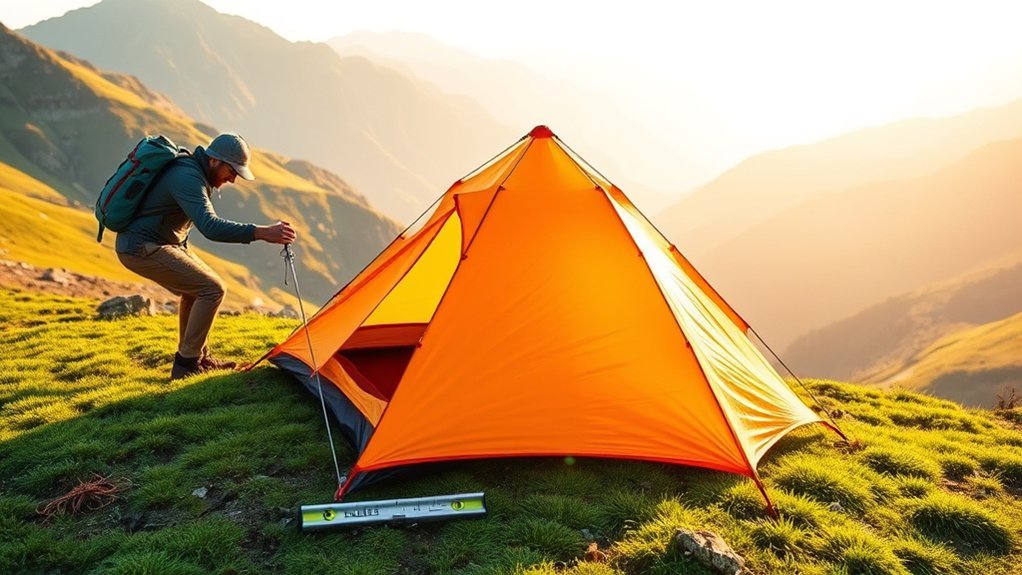
When pitching a tent on a slope, first assess the area for a level spot and position your tent perpendicular to the slope for stability. Use natural materials like pine boughs for support under the corners. Incorporate personal gear, such as backpacks, to level the tent further. Always lay a sleeping pad for comfort and to reduce sliding. These tips can help you enjoy a restful night’s sleep despite the incline. There’s more to exploring effective setups!
Assessing the Slope: Finding the Right Spot

When you’re looking for the perfect spot to pitch your tent on a slope, it’s essential to assess the terrain carefully to guarantee a comfortable night’s sleep. Start your slope evaluation by scanning the area for a level patch that minimizes steepness. Steep inclines can turn your dream camping trip into a sleepless night, so steer clear of those. Even slight slopes can disrupt restless sleepers, so aim for as flat a surface as possible.
Take the time for a thorough terrain inspection—walk around, feel the ground beneath your feet, and search for hidden dips or bumps that might not be obvious from a distance. Trust your instincts; safety and comfort should be your top priorities. By finding the right spot, you’ll create a peaceful sanctuary for relaxation, allowing you to fully enjoy your outdoor adventure without the worry of rolling away in the night.
Optimal Tent Orientation for Stability
To guarantee your tent remains stable and secure on a slope, pitch it perpendicular to the incline. This orientation dramatically enhances tent weight distribution, reducing the risk of sliding down during the night. By aligning your tent this way, you ascertain a more balanced setup that promotes comfort and stability, allowing you to sleep soundly without constant adjustments.
Consider the slope angle as you set up; steeper inclines demand more attention to your orientation to avoid potential mishaps. This strategic positioning not only simplifies your setup but also minimizes the materials you’ll need for support. Embrace the natural contours of the terrain, and let them work to your advantage. When you respect these principles of tent placement, you open the door to a liberating experience in the great outdoors, where restful nights and adventurous days await.
Products Worth Considering
Includes 4 durable steel stakes designed to anchor trampolines and canopies securely, even in windy conditions.
Quality: Our 5-inch 11 gauge Garden stakes are made of high-strength galvanized steel and are hard and strong. Specially designed silver white Garden Stakes are available for outdoor decoration and landscape garden decoration.
Using Natural Materials for Support
When you’re setting up your tent on a slope, choosing natural materials like pine boughs or grass can make all the difference in stabilizing your setup. By strategically placing these supports, you can create a more level sleeping surface, enhancing your comfort and safety. Let’s explore effective techniques for prop placement that not only streamline your setup but also utilize the resources around you.
Products Worth Considering
Extended & Reinforced Design: 24-inch I shape rebar stakes features thick 0.47-inch diameter and comes in a 20-pack bundle. The extended length provides deeper anchoring and stronger pull resistance, ideal for high winds and tough terrain
Upgraded Heavy Duty Camping Stakes: Made of high-quality forged S45C steel, completely get rid of the snapping and bending, more durability, they are corrosion resistance
【Tent Stakes Kit】- Stakes set includes 8 pack forged steel tent pegs (8in long/2oz each) and a carry bag. Tent stakes are available in rocky place desert snowfield and grassland.
Choosing Natural Materials Wisely
Choosing the right natural materials for support can make a significant difference when pitching your tent on a slope. Look for pine boughs or grass to create a stable base that minimizes sliding. By strategically placing these natural materials under your tent’s corners, you enhance its stability, allowing for a more restful night. You can also use extra clothing or backpacks alongside these support techniques to bolster your setup without adding too much weight. Always assess the availability of natural materials in your surroundings to guarantee they provide adequate support. With the right approach, you can reduce setup time and enjoy the freedom of camping on uneven terrain, all while staying comfortably level in your tent.
Effective Prop Placement Techniques
While pitching your tent on a slope may seem intimidating, effective prop placement can considerably enhance its stability. Start by choosing lightweight natural materials like pine boughs or grass to create a level base, minimizing the need for bulky packing materials. Assess the slope’s angle considerations—this will guide your prop types. Place your chosen materials strategically under the tent’s foot to prevent sliding at night. You can even use extra clothing or personal items as additional support, further stabilizing your setup. By utilizing your surroundings wisely, you’ll find you can pitch with minimal effort, ensuring a comfortable sleeping position. Embrace nature’s resources, and discover the freedom of a well-placed tent on any slope!
Incorporating Personal Items for Stability
Pitching a tent on a slope can be tricky, but incorporating personal items like backpacks and sleeping bags can greatly enhance stability. When selecting your personal items, consider their bulk and weight. Heavier items can provide better support for the lower side of your tent, allowing you to utilize effective weight distribution techniques. Prop up the tent’s lower edge with these items, and you’ll create a more level sleeping surface without relying heavily on natural materials, making your setup quicker and less labor-intensive.
Ensure you secure these items well to prevent any shifting during the night; nothing disrupts your rest like an unexpected slide! Strategically placing your gear not only stabilizes your tent but also optimizes your comfort, giving you the freedom to enjoy the great outdoors without the worry of rolling downhill. Embrace this method, and you’ll find a more restful sleep awaits you under the stars.
Products Worth Considering
Aerospace Grade Aluminum Alloy Shell: The roof top tent shell is cast in all aluminum alloy, including the corners. Therefore, the tent is more than sturdy and durable, not easy to deform, and can bear up to 660 pounds. Tent can still maintain good stability even in severe weather such as huge wind and rain
Material: A cross woven fabric on the outside,inner is natural rubber. The diameter of the bungee cord is 4mm, bungee cord can stretch twice the original length
Ultimate Weather Protection Crafted with 320G blackout gray fabric and a 420D waterproof oxford rainfly, this tent handles even the heaviest rain with its 10,000 mm waterproof rating. Enjoy comfort and privacy in all weather conditions, with UV50-protected materials designed to maintain a clean and pleasant interior.
Tips for a Comfortable Night’s Sleep
To guarantee a restful night on a slope, focus on your sleeping arrangement and tent orientation. Position your tent perpendicular to the incline to reduce sliding and enhance stability. A well-chosen spot can transform your experience. Test the terrain for potential sliding before settling in, ensuring you won’t wake up rolling into your gear.
Inside, lay down your sleeping pad first—it’s your cushion against the uneven ground. Follow that with your sleeping bag, ensuring it’s snugly set up to avoid any discomfort. If you’re a restless sleeper, consider elevating your head slightly by using extra clothing or gear under your sleeping pad. This way, your feet won’t push against the tent, keeping you cozy.
Lastly, don’t forget to embrace the outdoors! With the right setup, you’ll fall asleep to the soothing sounds of nature, feeling liberated and recharged for your adventures ahead.
Products Worth Considering
【Extra Wide & 3" Thick Sleep Support】 The self inflating pad for camping is up to 78*27*8 inches, after inflating keeps you away from the uneven ground and hard rocks. The innovative egg-shaped air cells and built-in pillow are designed to relieve back and neck pressure, allowing you to freely adjust your body balance and comfort, whether on your back or your side, ensuring maximum comfort and warm for your sleep all night!
【Innovation Design】Just Want to sleep comfortably anywhere? MOXILS sleeping pad innovation design is made special with body mapping technology.No need to suffer with a cheap, flimsy, and undersized outdoor sleeping pad! This quality portable camping pad is perfect,great sturdy and super comfortable - great for any sleep position!
EXTREME COLD PROTECTION - R VALUE 11: Engineered for true winter conditions. With an ASTM-tested R value of 11, the Arctic R11 delivers serious insulation for sub-zero camping and snow conditions where standard mats fail.
Adjusting Your Setup for Changing Conditions
As you settle in for the night, keep a close eye on the weather and the surrounding terrain. Changes in moisture or shifting soil can impact your tent’s stability, so don’t hesitate to adjust your setup as needed. Regularly checking your tent’s orientation will help guarantee you stay comfortable and secure, no matter what Mother Nature throws your way.
Products Worth Considering
STRONG LIGHTWEIGHT TARP POLES: Our aluminum alloy tarp poles are lightweight and durable. Each canopy pole can support up to 60 lbs of weight, while weighing only 1.1 lbs. The tent tarp poles come with a zipper bag equipped with straps, making it easy for you to carry them.
Easy to set up and highly portable this quick-assembly beach tent features a automatic pop-up mechanism, enabling swift setup and fold-down within 30 seconds. Weighing only 5.5 pounds with a compact storage size of 32 x 5 inches, it is exceptionally convenient to carry and store.
STRONG LIGHTWEIGHT TARP POLES: Our aluminum alloy tarp poles are lightweight and durable. Each canopy pole can support up to 60 lbs of weight, while weighing only 1.1 lbs. The tent tarp poles come with a zipper bag equipped with straps, making it easy for you to carry them.
Monitor Weather Changes
While you’re enjoying the great outdoors, it’s important to keep an eye on the weather, as conditions can change rapidly and impact your camping experience. Start with thorough weather forecasting before your trip—understanding potential temperature fluctuations and rain forecasts is key. If rain looms, orient your tent’s entrance away from the wind to reduce water entry.
| Weather Condition | Action Needed |
|---|---|
| Rain Expected | Face tent away from wind |
| High Winds | Secure guylines and stakes |
| Temperature Drop | Add insulation or adjust tent |
| Heavy Rain | Consider relocating tent |
Stay vigilant about changes, and don’t hesitate to move your tent if conditions worsen. Embracing the elements makes for a better night’s sleep.
Assess Terrain Variability
Evaluating terrain variability is essential when pitching a tent on a slope, as even a slight incline can considerably impact your comfort and stability. Start with a thorough terrain analysis; assess the steepness of the slope and check for natural features like rocks or vegetation that can provide added support. Weather conditions also play a significant role; windy or rainy weather can intensify the slope’s challenges, making a sheltered location critical. Pay attention to drainage patterns, too, since water runoff can create uneven ground, compromising your tent site’s suitability. Finally, stay vigilant and monitor for any changes like soil erosion or shifting ground during your stay, as these factors may require adjustments for ultimate comfort and safety.
Adjust Tent Orientation
After evaluating the terrain variability, the next step is to adjust your tent orientation for ideal comfort and stability. Position your tent perpendicular to the slope; this tent positioning enhances stability and minimizes the risk of sliding down the hill. By orienting your tent this way, you’ll also reduce the need for excessive support materials, making your setup quicker and easier. Take advantage of natural materials like pine boughs or grass to prop up the tent, ensuring less bulk and weight. Always assess steepness before pitching—slight inclines are manageable, but steep slopes can disrupt your sleep. Remember, if you’re a restless sleeper, prioritize comfort by adjusting your setup based on these slope considerations.
Frequently Asked Questions
What Type of Tent Is Best for Sloped Camping?
For sloped camping, consider dome tents or lightweight backpacking tents. Their design offers stability and headroom, allowing you to enjoy your adventure without worrying about rolling downhill. These tents provide comfort and security on uneven terrain.
Can I Pitch a Tent on Rocky Terrain?
Yes, you can pitch a tent on rocky ground, but guarantee stability. Clear sharp stones, use extra stakes, and consider a footprint to protect your tent. With careful setup, you’ll enjoy a cozy camping experience.
How Do I Prevent Water From Pooling in My Tent?
To prevent water from pooling in your tent, choose a well-drained site and use water drainage methods like creating a slight trench around the perimeter. This’ll keep your space dry and comfortable during your adventures.
Should I Use a Footprint on a Slope?
Yes, using a footprint on a slope is beneficial. It protects your tent from abrasions and moisture, ensuring better insulation. Just consider the slope’s angle; a footprint helps maintain stability and comfort while you sleep.
How Can I Secure My Tent Against Wind?
To keep your tent from doing the cha-cha in the wind, use windbreak techniques like natural barriers, and employ tent anchoring methods such as stakes or guy lines. Your camping experience deserves stability, not a wind dance!
Conclusion
Pitching a tent on a slope might seem tricky, but with the right techniques, you can enjoy a level night’s sleep. Did you know that nearly 30% of campers struggle with uncomfortable sleeping conditions due to improper tent placement? By evaluating your site and using natural materials for support, you can guarantee a cozy experience under the stars. So, next time you’re camping on a slope, remember these tips and rest easy, knowing you’re prepared for any challenge!