
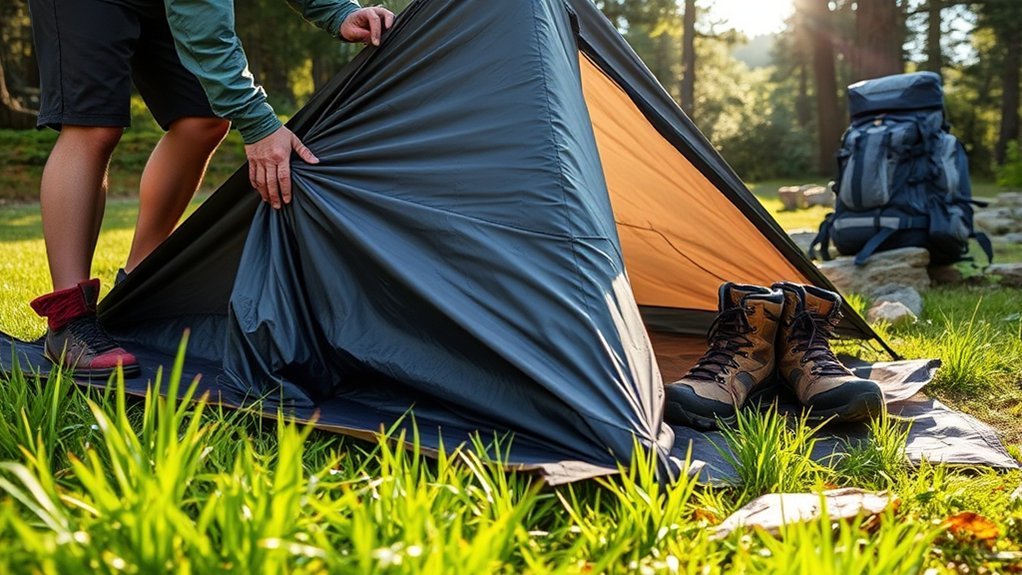
To pack up a wet tent without dampening your gear, first shake off excess water and wipe it down with a travel towel. Fold the tent with the damp groundsheet on the outside and place it in a waterproof stuff sack or heavy-duty trash bag. Store the packed tent between layers of dry gear to minimize moisture transfer, and guarantee you’ve got airflow by not packing too tightly. There’s more to learn about keeping your gear dry in various situations.
Why You Shouldn’t Store A Tent Wet

When you store a tent wet, you risk serious damage that can compromise its longevity and performance. The waterproof coatings designed to keep you dry deteriorate over time when exposed to moisture, reducing their effectiveness. Prolonged dampness invites mold and mildew, which not only damages the fabric but can also pose health risks. Additionally, seam tape may peel away, heightening the chance of leaks during your next adventure.
Don’t forget about the metal components; they’re susceptible to oxidation and weakening in wet conditions, which could lead to structural failures. To guarantee your tent remains in top condition, proper tent maintenance is essential. Always dry your tent thoroughly before storage in a dry, airy environment. By taking these precautions, you can extend the life of your gear and enjoy many more liberating outdoor experiences without worry.
Tips On How To Dry Out A Wet Tent
To effectively dry out a wet tent, start by airing it out in morning sunlight, as this natural heat helps evaporate moisture quickly. If the sun’s shining, consider re-pitching your tent during the day to guarantee thorough tent drying. Use a travel towel or microfiber cloth to wipe down wet surfaces; this can greatly reduce moisture retention. Don’t forget to shake off excess water from all tent components vigorously, and inspect corners for hidden moisture before packing.
For ideal moisture management, always dry your poles and stakes separately. This prevents them from retaining moisture, which could compromise their integrity over time. By following these simple steps, you’ll keep your camping gear in top shape, ready for your next adventure. Embrace these practical tips, and you’ll feel liberated from the worry of damp gear!
Products Worth Considering
Premium Material: Professional microfiber drying towels are crafted from an advanced blend of 87% polyester and 13% polyamide. They are ultra soft and comfortable, ensuring a gentle touch on your vehicle's surface. With an extra-large size of 31 " x 24 ", they perfectly fit SUVs, RVs, trucks, and boats, significantly reducing drying time and making car drying jobs a breeze
Streak-Free, Spot-Free Drying: With SMINDER’s car drying towels advanced 1200 GSM microfiber and twisted-loop technology, you’ll enjoy a flawless finish every time. Just one pass and your car is 100% dry, streak-free, and water spot-free. The microfiber towels for cars absorb up to an entire gallon of water, making them perfect for efficient, high-performance drying.
ENORMOUS SIZE (MIC721) - A gigantic 36" x 25" towel for rapid drying of even the largest vehicles.
Deep-Drying Tents & Camping Gear On Tour
While on tour, taking advantage of rest days to deep-dry your tent and camping gear can make a significant difference in their performance and longevity. Look for sunny, breezy spots at campsites or hostels to maximize drying time. Re-pitching your tent in the sun or placing gear in well-ventilated areas can effectively combat moisture retention. Be cautious with drybagging; improperly managed drybags can either keep your tent damp or let moisture in from the environment.
How To Protect A Packed Tent From Rain While Riding
Even the best-planned outdoor adventures can encounter unexpected rain, so it’s crucial to know how to protect your packed tent while riding. Start by encasing your wet tent in a waterproof stuff sack or a heavy-duty trash bag. This acts as a moisture barrier, keeping dampness from seeping into your other gear. When packing, fold the inner tent with the damp groundsheet on the outside, protecting the inner material from moisture absorption.
Position the packed tent in a designated spot in your pack, ideally between layers of dry gear. This minimizes contact with wet items and promotes airflow. Avoid packing too tightly; a looser method facilitates airflow and helps prevent moisture build-up. Finally, if you have a tent cover, use it to shield your packed tent from rain. Following these steps guarantees a dry and enjoyable adventure, no matter the weather!
Products Worth Considering
Space-saving: Keep your load more manageable with our military compression sack sleeping bag. This military compression stuff sack has easy-to-pull slings to reduce its volume and make the sleeping bag compression sack more compact and easy to carry. With such a sleeping bag compression stuff sack, you can save crucial space for other vital items you need for your adventures
LARGE CAPACITY: 36 x 13 x 13 Inches, with storage capacity of 26Gal, ideal for travel or storing foldable strollers and sports gear.
Free up 40% additional space: Frelaxy Compression Stuff Sack is an incredibly simple and practical solution to space-saving, they will give you more space to pack what you need and give you an unprecedented portable experience.
What’s The Best Way To Pack Away An Ultralight Tent?
Packing away an ultralight tent effectively guarantees your gear stays dry and organized for your next adventure. Start with tent folding: fold the inner tent with the damp groundsheet facing outwards to reduce moisture contact. Shake off excess water vigorously to minimize retained moisture. If you can, delay packing until the last moment to utilize any available sun for drying.
Consider rolling your tent with its poles inside, which keeps it compact and facilitates easier packing. Use a trash bag as a pack liner to protect dry items while keeping wet gear accessible.
Here’s a quick summary of the process:
| Step | Action |
|---|---|
| 1. Shake | Vigorously shake off excess water |
| 2. Fold | Fold the inner tent with damp side out |
| 3. Roll | Roll with poles inside |
| 4. Delay | Wait until the last moment if possible |
| 5. Pack liner | Use a trash bag for moisture management |
This method guarantees hassle-free travels!
Long-Term Tent Care For Cycle Tourers
To keep your tent in top shape for future tours, make sure it’s completely dry before storing it. Regularly check for any damage and store it in a dry, airy space to prevent mold. Remember, keeping it separate from damp gear is key to preserving both your tent and other equipment.
Proper Drying Techniques
A well-cared-for tent is essential for your cycling adventures, especially after a wet night. Start your day by airing out your tent in the morning sunlight; this maximizes drying and enhances tent ventilation. Use a travel towel or microfiber cloth to wipe down surfaces and shake off excess water from the tent and its components. If you can, re-pitch the tent during the day, focusing on double-skin designs where moisture often hides. Regularly inspect and deep-dry your tent during rest days to maintain waterproof capabilities and structural integrity. Finally, store your tent in a dry, airy environment, keeping the carry sack open to promote airflow and prevent mold or mildew. Proper moisture management now leads to better adventures later.
Long-Term Storage Tips
When you’re preparing for long-term storage of your tent, verifying it’s completely dry is essential to prevent mold and mildew. Focus on tent maintenance by storing it in a dry, airy environment. Keep the carry sack open to promote airflow, which helps maintain ideal storage conditions. Regularly check your tent for hidden moisture, particularly in corners and absorbent areas, to preserve its integrity. When packing, avoid sealing it in a tight bag, as this can trap moisture and lead to deterioration. Instead, consider using a breathable storage bag that protects your tent while allowing it to stay dry. By following these tips, you’ll verify your tent’s ready for your next adventure, free from unwanted surprises.
Preventing Mold Growth
Even with careful long-term storage practices, cycle tourers need to be vigilant about preventing mold growth in their tents. Storing a wet tent invites mold and mildew, which can damage the fabric and waterproof coatings over time. To combat this, always dry your tent thoroughly before storage, ideally in a dry, airy spot. Keep the carry sack open to boost airflow, further aiding moisture prevention. Regular mold inspections are essential—check corners and seams for any signs of moisture or mold. Addressing these issues promptly will help maintain your tent’s integrity and longevity, saving you from costly repairs or replacements down the road. Embrace the freedom of the open road with a well-cared-for tent!
Frequently Asked Questions
Can I Use a Regular Bag Instead of a Trash Bag?
You can use a regular bag, but guarantee it’s waterproof and spacious enough for your tent material. Employ effective packing techniques to minimize moisture transfer, keeping your other gear dry during your adventure.
How Long Can a Tent Stay Wet Before It Gets Damaged?
Your tent can start to suffer after just a few hours of wetness. For ideal tent care, use efficient drying techniques immediately to prevent mold and damage. Don’t let your adventure turn into a soggy disaster!
Is It Safe to Fold a Wet Tent?
Yes, it’s safe to fold a wet tent if you use proper packing techniques. Just make certain you dry it as soon as possible for ideal tent maintenance, preventing mold and extending your gear’s lifespan.
What if My Pack Doesn’t Have Enough Space for the Wet Tent?
If your pack’s tight, try compressing the wet tent with efficient packing techniques. Use strategic tent storage, like a waterproof bag, to keep it contained. This way, you’ll minimize dampness and maximize space for your adventure.
Should I Air Out the Tent Immediately After Packing?
Yes, you should air out your tent immediately after packing. Effective tent drying prevents mildew and manages moisture, ensuring your gear stays fresh and ready for your next adventure. A little effort now saves big problems later.
Conclusion
In the grand adventure of camping, keeping your gear dry is key to a successful journey. By following these tips, you can guarantee your wet tent won’t dampen your spirits or your other gear. Just like a knight shields his armor from rust, you can protect your belongings from moisture. So, embrace these methods, pack wisely, and let your outdoor escapades be filled with comfort and joy, rather than soggy surprises. Happy camping!