
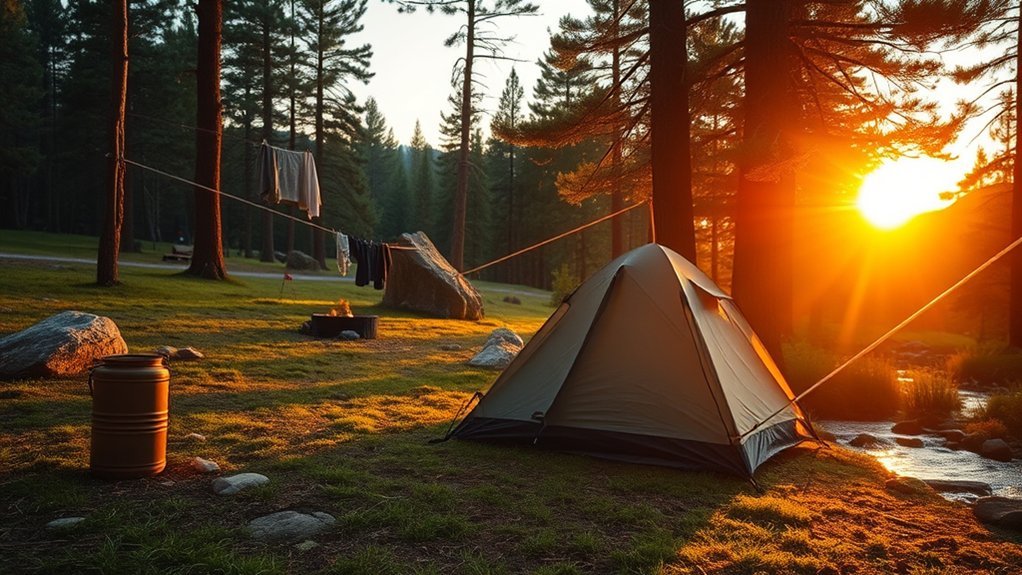
To minimize camp smells near your tent, keep your campsite clean and organized. Store food in bear-proof canisters, ideally 250-350 feet from your sleeping area. Use dedicated cooking clothes and don’t bring them inside the tent. Regularly dispose of trash and use natural odor absorbers like activated charcoal bags or vinegar to trap smells. A well-placed tent for airflow can also help. Stick around to discover more tips for enhancing your camping experience.
Maintaining Cleanliness at Your Campsite
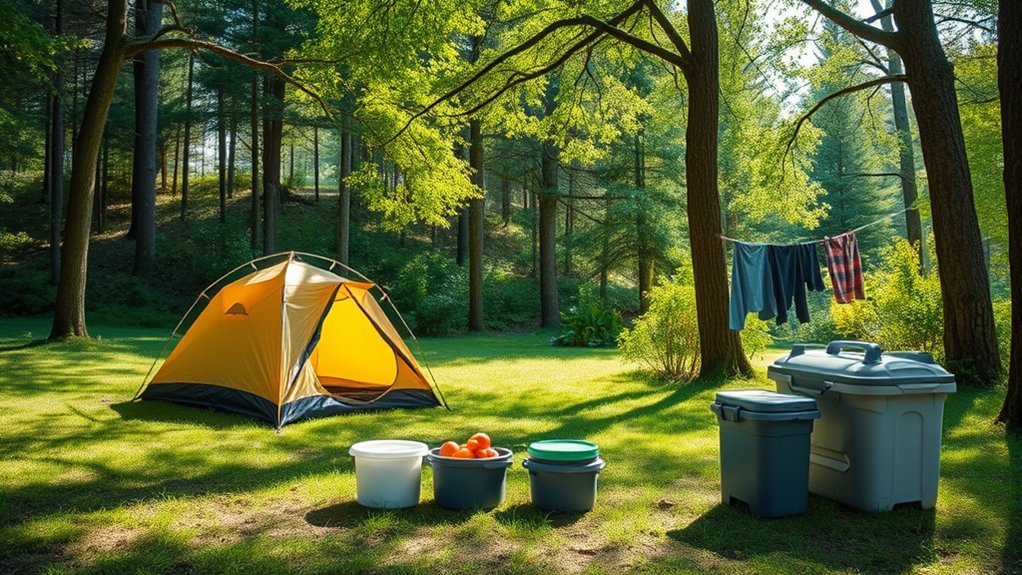
To minimize camp smells and keep wildlife at bay, you need to prioritize cleanliness at your campsite. Start with campsite organization by keeping your cooking area, latrine, and tent spaced apart, ideally 250-350 feet, or 500 feet in bear-prone areas. This layout not only prevents scent transfer but also enhances your peace of mind.
Use bear-proof containers for all food and smelly items, or hang them from trees at least 10 feet off the ground to deter wildlife. Always wear separate cooking clothes and avoid bringing them into your tent, reducing odors in your sleeping space.
Be diligent about cleaning up food scraps and disposing of waste properly; seal it in garbage bags or bury it. Regularly assess and maintain cleanliness in your campsite, as a tidy area greatly aids in scent prevention, keeping your camping experience enjoyable and safe.
Secure Food Storage Techniques
When camping, securing your food is essential for keeping wildlife at bay and ensuring a pleasant experience. Use bear-proof canisters to store all food and smelly items. If you don’t have one, hang your food from trees at least 10 feet off the ground. Maintain a “bear triangle” by keeping your cooking area, tent, and latrine spaced at least 250-350 feet apart. In high bear-risk areas, increase that distance to 500 feet.
To further minimize odors, wear dedicated cooking clothes and avoid bringing them into your tent. Seal leftover food in odor-resistant bags and pack out all garbage to prevent attracting bears and other animals. Finally, position your cooking area downwind from your tent to stop odors from drifting into your sleeping space. By following these secure food storage techniques, you can enjoy a worry-free camping experience.
Natural Odor Absorbers for Tents

Natural odor absorbers can greatly enhance your camping experience by keeping your tent smelling fresh and inviting. One effective option is activated charcoal bags, which trap odor-causing particles, neutralizing unwanted smells. Simply hang or place these bags inside your tent. Baking soda is another versatile choice; sprinkle it on surfaces to absorb moisture and odors, letting it sit for a few hours before vacuuming or shaking it out.
For strong odors, try placing an open container of vinegar in your tent. It’ll absorb and neutralize those scents while leaving a fresh aroma. Coffee grounds can do the trick as well—just set a small bowl inside to mask unpleasant smells. Finally, consider using essential oils like lavender in a diffuser or mixed with water for a pleasant fragrance and natural antibacterial benefits. These simple solutions can keep your camping environment clean and enjoyable.
Managing Waste Properly
Properly managing waste while camping is essential not only for your comfort but also for the environment and wildlife safety. To guarantee effective waste disposal and odor control, follow these simple guidelines:
Proper waste management while camping ensures both your comfort and the safety of the environment and wildlife.
- Always pack out all trash and leftover food in sealable bags to minimize odors.
- Dispose of food scraps in designated bear-proof containers or bury them at least 6-8 inches deep, away from your tent.
- Use a dedicated latrine area for human waste, ideally 200 feet from water sources.
- Keep your cooking area clean by wiping surfaces and using separate utensils to avoid lingering smells.
- Store food and scented items in bear-proof canisters or hang them at least 10 feet off the ground.
Creating a Pleasant Camping Environment

How can you create a pleasant camping environment that keeps both you and wildlife happy? Start by maintaining a clean campsite. Regularly dispose of food scraps and trash to eliminate odors that attract unwanted visitors. Store food in bear-proof containers, ideally 250-350 feet away from your tent. This not only safeguards you but enhances the outdoor ambiance.
Use a dedicated set of cooking clothes, and avoid wearing them inside your tent to prevent lingering cooking smells. Consider scent-masking products like natural essential oils or activated charcoal bags to neutralize any odors around camp.
Choose a tent location that benefits from natural airflow, like near a stream or in a breezy spot, to help disperse campfire scents and other lingering smells. By following these practical steps, you’ll foster a pleasant camping atmosphere that enhances your experience in the great outdoors.
Frequently Asked Questions
How Often Should I Clean My Campsite to Reduce Smells?
You should clean your campsite daily to guarantee effective odor prevention. Regular campsite cleaning, including trash disposal and food storage, keeps unpleasant smells at bay, enhancing your outdoor experience and liberating you from unwanted distractions.
Can I Use Essential Oils to Mask Odors?
Yes, you can use essential oils to mask odors effectively. Their benefits include natural fragrance and potential odor elimination techniques. Just mix a few drops with water in a spray bottle and enjoy a fresher camping experience.
What Types of Food Attract Animals the Most?
Scented snacks like fruits, meats, and baked goods attract animals the most. To avoid unwanted visitors, use airtight food storage and keep these items away from your tent. You’ll enjoy your camping experience more!
How Can I Prevent Mildew Smells in My Tent?
To prevent mildew smells in your tent, practice regular tent maintenance by ensuring proper moisture control. Dry your tent completely before storage, use a footprint for protection, and avoid cooking inside to minimize humidity buildup.
Are There Specific Plants That Help Reduce Odors?
Odor neutralizing plants like lavender and mint act as nature’s fresheners, breathing life into your space. These natural scent repellents not only combat unpleasant smells but also uplift your spirit during your outdoor adventures.
Conclusion
By keeping your campsite clean and managing food and waste effectively, you can enjoy a more pleasant experience under the stars. Think of your tent as a sanctuary, much like Odysseus sought after his long journey. Embrace natural odor absorbers and secure storage techniques to create a space that feels welcoming. Remember, a little effort goes a long way in preserving the beauty of nature and ensuring your camping adventure is memorable for the right reasons.
