

Last Updated on July 30, 2026 by Mason Reed
Whether you need a tent footprint depends less on how often you camp and more on the ground, the durability of your tent floor, and how much extra weight you are willing to carry. A footprint is most useful on rocky, abrasive, muddy, or wet sites and with thin, aging, or expensive tent floors. On smooth, established campsites, careful site selection may be enough.
Quick Answer
A tent footprint is worth using when the ground is rocky, abrasive, muddy, or wet, or when you want to protect a thin or costly tent floor. You can often skip it on clean, soft, established sites. It adds protection and keeps the floor cleaner, but it does not replace proper pitching, waterproof coatings, or an insulated sleeping pad.
Key Takeaways
- A footprint mainly protects a tent floor from abrasion, grit, mud, and some puncture risks.
- The footprint must sit slightly inside the tent-floor perimeter so it cannot collect rainwater.
- It may add a moisture barrier, but it cannot repair a leaking floor or make a poor campsite waterproof.
- A thin footprint provides little useful insulation; cold-weather warmth comes from a properly rated sleeping pad.
- Choose one based on terrain, floor condition, tent value, packed weight, and trip length—not an arbitrary number of camping nights.
Disclosure: As an Amazon Associate I earn from qualifying purchases. Some links on this page are affiliate links, at no extra cost to you.
Understanding Tent Footprints
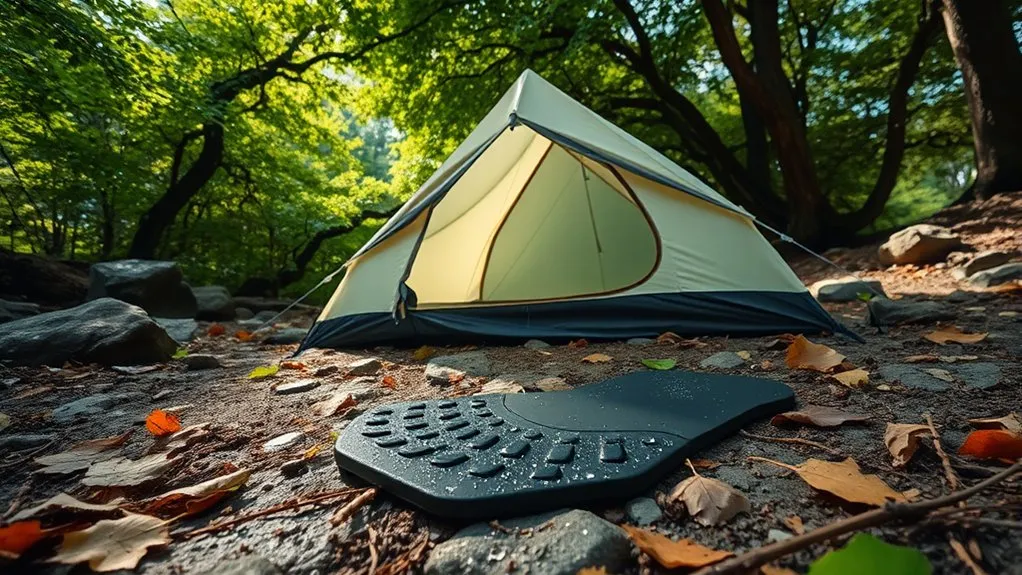
A tent footprint is a groundsheet placed between the tent floor and the ground. A model-specific footprint is shaped to match a particular tent and may include corner loops, buckles, or grommets. A universal groundsheet or DIY version can do the same basic job if it is cut and positioned correctly.
The main benefit is floor protection. Dirt and rough ground rub against the footprint instead of the tent floor, making the tent easier to pack and helping reduce wear. Both REI’s tent-footprint guidance and MSR’s footprint guidance describe abrasion protection, a cleaner floor, and longer tent-floor life as the main reasons to use one.
Note: A footprint is an extra protective layer, not a cure for peeling floor coatings, damaged seams, holes, poor drainage, or an incorrectly installed rainfly.
Do You Need a Tent Footprint?
There is no reliable rule that says occasional campers do not need a footprint or frequent campers always do. A single night on sharp granite can be harder on a tent floor than several nights on clean grass. Use the ground conditions and your equipment to decide.
| Factor | Use a Footprint | You May Skip It |
|---|---|---|
| Ground | Rock, gravel, roots, coarse sand, mud, sap, or rough platforms | Smooth, clean, dry, established tent pads |
| Tent Floor | Thin, aging, patched, or expensive to replace | Robust floor in good condition and used on gentle terrain |
| Trip Style | Long trips, repeated pitching, car camping, or base camping | Short ultralight trips where every ounce matters and sites are predictable |
| Weather and Cleanup | Wet, muddy, snowy, or sandy conditions | Dry weather on a clean surface with easy access to dry the tent |
Use a Footprint When
- You expect sharp rocks, roots, gravel, or abrasive sand.
- Your tent has a lightweight floor that you want to protect from repeated wear.
- The ground is muddy, wet, snowy, or covered with debris that would make packing difficult.
- You are using a compatible fly-and-footprint or “fast-pitch” setup. Check the tent manual because not every model supports this configuration.
- You use the same tent often and want an easier-to-clean sacrificial layer beneath it.
You May Skip a Footprint When
- The site is smooth, clean, dry, and free of sharp debris.
- Your tent floor is durable, undamaged, and the manufacturer does not require a footprint.
- You are carrying an ultralight load and accept the added floor-wear risk.
- Your shelter already includes an integrated groundsheet or another correctly sized protective layer.
Ideal Scenarios for Using a Tent Footprint

A footprint earns its space most clearly when it solves a specific problem:
- Rocky or abrasive campsites: It takes the scraping and grit that would otherwise contact the tent floor.
- Mud, sand, and wet ground: It keeps much of the mess off the tent, making breakdown and cleanup easier.
- Long trips or repeated setup: The protective layer reduces direct wear across many pitches.
- Tarp camping: A correctly sized groundsheet creates a clean sleeping area when the shelter has no sewn-in floor.
- Compatible minimalist pitches: Some tents can use the footprint with the fly, poles, and stakes while leaving the inner tent at home. Follow the manufacturer’s exact instructions.
- Snow camping: A footprint can keep the tent floor cleaner and reduce contact with wet snow, but it should not be counted as meaningful thermal insulation.
For cold ground, use a sleeping pad with an appropriate R-value. REI’s sleeping-pad guide explains that R-value, not a thin groundsheet, is the measure used to compare insulation from the ground.
Note: A footprint may have limited backup uses, but many are too small or lack the attachment points needed for a dependable emergency roof. Carry dedicated emergency shelter when conditions require it.
Pros and Cons of Tent Footprints
A footprint can be useful without being essential. Its value comes from protection and easier cleanup, while its main costs are added weight, bulk, and expense.
| Aspect | With a Footprint | Without a Footprint |
|---|---|---|
| Abrasion and Punctures | Adds a sacrificial layer between the floor and rough ground | Tent floor takes direct contact and wear |
| Cleanliness | Mud, sap, sand, and grit collect on the easier-to-clean footprint | More dirt reaches the tent floor |
| Wet Ground | Adds another water-resistant layer when properly sized | Tent floor coating provides the main barrier |
| Condensation | May reduce direct contact with damp ground, but ventilation and site conditions remain the main controls | Ventilation and site conditions still control most condensation |
| Warmth | Little practical insulation from a thin sheet | Warmth still depends on the sleeping pad and sleep system |
| Weight, Bulk, and Cost | Adds another item to buy, pack, dry, and maintain | Lighter and simpler, but the tent floor receives more wear |
A tent footprint is a protection layer—not a complete waterproofing, insulation, or condensation-control system.
How to Choose and Use a Tent Footprint
Choose a Model-Specific or Universal Footprint
A model-specific footprint offers the easiest fit and may support a fly-only pitch. Confirm the exact tent name, capacity, and model year before buying because similarly named tents can have different floor shapes or attachment points.
A universal or DIY groundsheet costs less and works with more tents, but you must size it correctly. It does not need corner attachments for basic floor protection, although attachment points can make setup easier in wind.
Size It Slightly Smaller Than the Tent Floor
The footprint should remain hidden beneath the pitched tent. REI recommends a slightly smaller footprint so rain cannot collect between the groundsheet and the tent floor. For a DIY footprint, a practical starting point is to trim the material about 1 inch inside each edge, then test the fit with the tent fully pitched.
Warning: Never leave a tarp or footprint extending beyond the tent floor. Rain running off the tent can land on the exposed material and funnel underneath you.
Pitch It Correctly
- Choose a durable site: Use an established campsite or durable ground where permitted. The National Park Service Leave No Trace guidance recommends camping on durable surfaces and avoiding unnecessary site alteration.
- Remove loose hazards: Pick up small sticks, cones, and sharp stones that could damage the footprint or tent. Do not dig drainage trenches or strip vegetation.
- Lay out the footprint: Align its door end, corners, and tapered shape with the tent. Follow labels, color coding, or the tent manual for orientation.
- Pitch the tent over it: Attach footprint loops or grommets only when they are designed for your tent.
- Check the perimeter: Walk around the tent and tuck under any material that remains visible.
Pro Tip: There is no universal rule that the shiny or coated side must face up or down. Follow the product markings or manufacturer instructions, especially when corner hardware has a set orientation.
Cost-Effective Alternatives and DIY Solutions
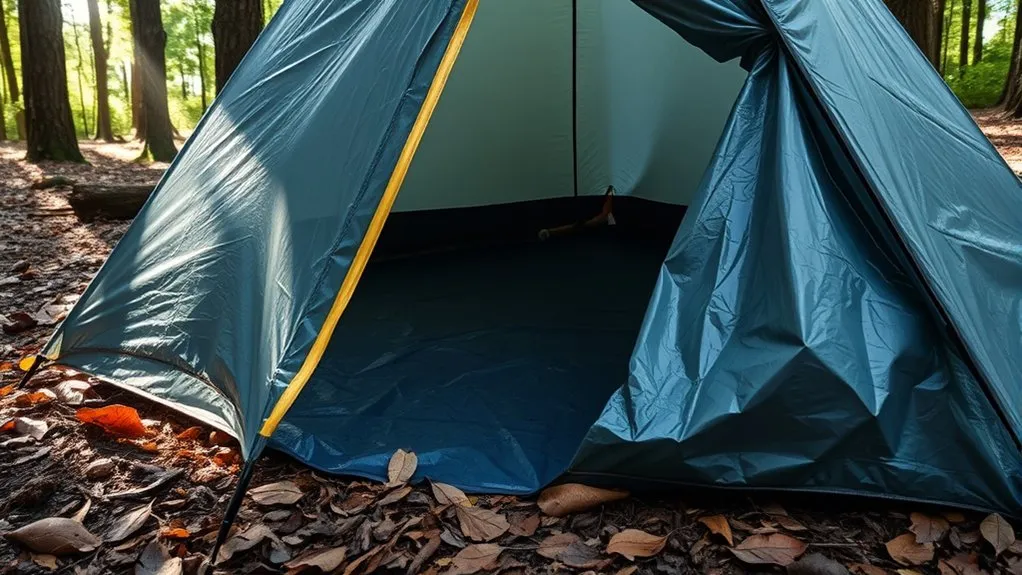
A DIY footprint can provide useful protection without the price or hardware of a model-specific accessory. The best material depends on whether you value low weight, abrasion resistance, compact storage, or easy replacement.
| Material | Best For | Trade-Offs |
|---|---|---|
| Polycryo or Window-Film Plastic | Low weight, small packed size, and easy replacement | Can puncture or tear sooner on rough ground |
| Tyvek HomeWrap | A tougher, reusable DIY sheet | Bulkier and initially noisy; DuPont describes Tyvek as water-resistant rather than permanently impermeable under all pressure and exposure |
| Coated Nylon or Polyester | A durable, packable footprint that can be reused for years | Usually costs more and may require sewing or edge finishing |
| Household Tarp | Car camping, large tents, and inexpensive durability | Heavy and bulky; excess material must be folded completely under the tent |
At a Glance
| Time Required | About 10–20 minutes, plus a test pitch |
| Difficulty | Easy |
| Tools Needed | Footprint material, tape measure, marker, scissors, and the pitched tent |
| Cost | Free when reusing suitable material; otherwise generally less than a model-specific footprint |
How to Make a DIY Tent Footprint
- Pitch the tent: Set it up on a clean, dry surface so the floor reaches its true shape and tension.
- Place the material underneath: Smooth it flat without stretching thin plastic.
- Trace the floor shape: Mark the outline from outside the tent, including tapered ends or unusual corners.
- Mark an inner cutting line: Move the line inward by about 1 inch on every edge so the finished footprint will not protrude.
- Cut and round the corners: Rounded corners are less likely to snag or start a tear than sharp points.
- Test the fit: Reposition the footprint and confirm that no material is visible outside the tent floor.
- Add only suitable attachments: Reinforce durable fabric before adding loops. Do not punch grommets into very thin film because the material can tear around the hole.
Pro Tip: Label the head end and door side with a permanent marker. That small step makes setup faster in wind, rain, or darkness.
How to Clean and Maintain a Tent Footprint
A footprint normally needs less delicate care than a tent body, but the correct method depends on its coating and fabric. NEMO’s tent and footprint care guidance recommends cleaning when needed and line-drying the footprint. When manufacturer instructions differ, follow the instructions for your product.
- Shake or brush off debris: Remove grit before it can abrade the fabric during packing.
- Spot-clean first: Use cool or lukewarm water, a soft sponge, and a small amount of mild, non-detergent soap or a cleaner approved for coated outdoor fabric.
- Rinse thoroughly: Soap residue can attract dirt and may affect some coatings.
- Air-dry completely: Dry both sides before folding or storing to reduce mildew and odor.
- Inspect for damage: Patch small holes with repair tape compatible with the footprint material. Replace the footprint if tears spread or the coating separates badly.
- Store cool and dry: Keep it away from prolonged heat, direct sunlight, and damp storage areas.
Frequently Asked Questions
Can I use any fabric for a DIY tent footprint?
No. Choose a material that is reasonably tear-resistant, water-resistant, and suitable for repeated ground contact. Polycryo is light but less abrasion-resistant, Tyvek is tougher but bulkier, and coated nylon or polyester offers durability at a higher cost. Avoid absorbent fabric such as cotton.
How do I clean and maintain a tent footprint?
Brush off grit, spot-clean with mild non-detergent soap and cool or lukewarm water, rinse well, and air-dry both sides completely. Check the manufacturer’s care instructions before machine washing because coatings, attachment hardware, and materials vary.
Will a footprint affect my tent’s ventilation?
A correctly sized footprint does not block normal tent vents. It may reduce direct contact with damp ground, but airflow, humidity, wet gear, temperature, and campsite choice have a much larger effect on condensation.
Can I use a footprint with a tarp setup?
Yes. Under a floorless tarp shelter, it works as a groundsheet for your sleeping area and gear. Keep it inside the tarp’s drip line. For a tent’s fly-only setup, confirm that the footprint, poles, fly, and attachment points are designed to work together.
What size footprint do I need for my tent?
Use the compatible footprint listed for your exact tent model, or cut a DIY sheet slightly smaller than the pitched floor. No edge should extend beyond the tent because exposed material can catch rain and direct it underneath.
Does a tent footprint make the tent warmer?
Only slightly, if at all. A thin footprint is not rated as meaningful insulation. Use an insulated sleeping pad with an R-value suited to the expected temperature and ground conditions.
Which side of a tent footprint faces up?
Follow the footprint label, corner colors, coating instructions, or tent manual. There is no reliable one-rule-fits-all answer because materials and attachment systems differ among manufacturers.
Can I put a footprint inside the tent?
You can place a clean groundsheet inside as a temporary moisture or floor-protection layer, but it will not protect the outside of the tent floor from rocks and abrasion. A leaking or damaged floor should still be cleaned, patched, or recoated correctly.
Conclusion
A tent footprint is useful when it protects against a real risk: rough ground, mud, repeated pitching, or a thin or costly tent floor. It is less valuable on smooth, dry campsites where careful setup already protects the tent. If you carry one, make sure it is slightly smaller than the floor and do not treat it as a substitute for drainage, waterproof repairs, ventilation, or an insulated sleeping pad. A well-cut DIY groundsheet can deliver the same basic protection with less cost and weight.
Sources
- REI Co-op: What Is a Tent Footprint? — footprint purpose, benefits, and correct sizing.
- MSR: Universal Tent Footprint — abrasion protection, cleaner floors, compatible minimalist pitches, and condensation context.
- National Park Service: Leave No Trace Seven Principles — camping on durable surfaces and responsible campsite use.
- REI Co-op: Sleeping Pad Buying Guide — R-value and ground insulation for cold-weather camping.
- NEMO Equipment: Cleaning, Repairing, and Storing Your Tent — footprint cleaning and drying guidance.
- DuPont: Tyvek FAQs — water resistance and limitations of Tyvek material.

