
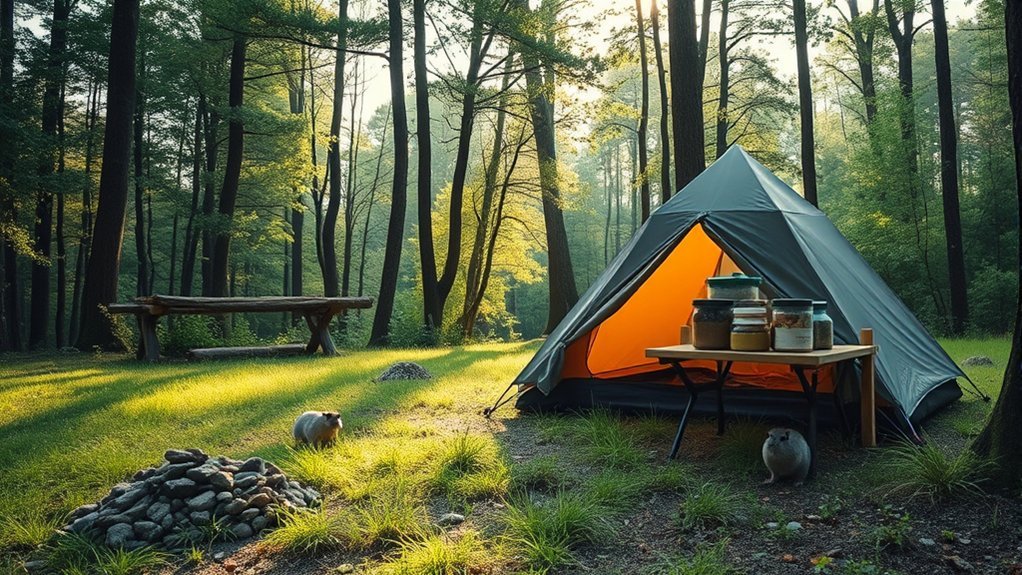
To keep rodents out of your tent and away from your gear, start by eliminating food sources and keeping cooking areas clean. Store food in airtight containers and dispose of trash properly. Set up your campsite away from dense vegetation, and regularly sweep for crumbs. Use natural deterrents like peppermint oil and garlic near the tent. For extra protection, consider traps and appealing baits. There are more effective tips and strategies to guarantee a pest-free camping experience.
Eliminate Food Sources
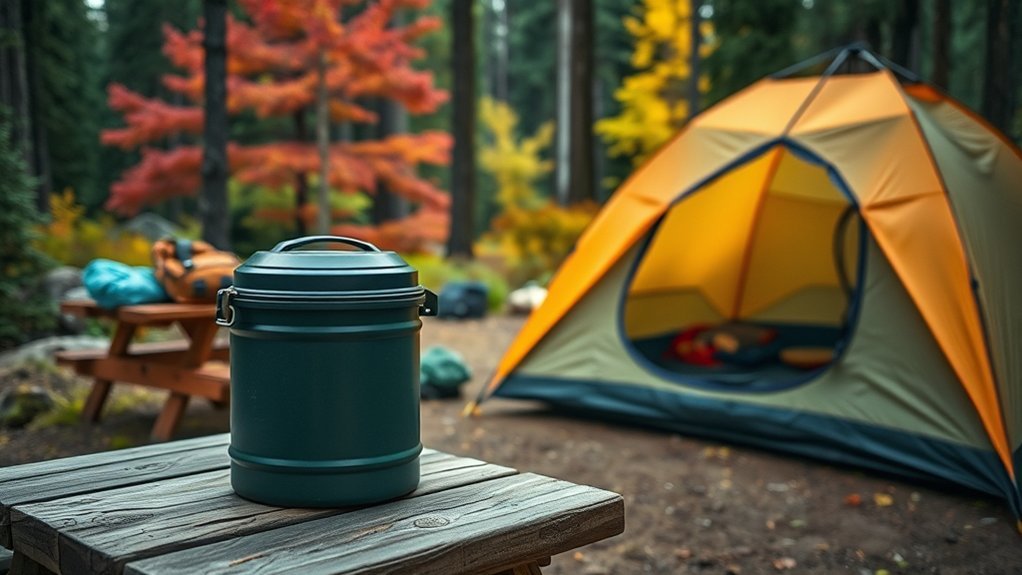
To keep rodents out of your tent, start by eliminating all potential food sources. Proper food storage is essential; store all food items in airtight containers to mask odors that attract rodents. Don’t leave cooking utensils or dirty dishes out, as even small remnants can lure mice and other pests. After meals, clean up thoroughly—make sure no crumbs or spills remain on the ground or picnic table.
Dispose of garbage properly in sealed bags, and use designated trash containers that are rodent-proof. It’s best to keep all food supplies in your vehicle or a designated storage area away from the tent. This minimizes the chances of rodent encounters and helps maintain your camping experience free from unwanted guests. By taking these straightforward steps, you can create a rodent-free environment that allows you to enjoy nature without the worry of pests.
Keep Cooking Areas Clean
Keeping your cooking areas clean is essential for preventing rodents from invading your tent. Always prioritize cooking surface cleanliness by cleaning up immediately after meals. Food particles can attract unwanted guests, so wipe down your cooking surfaces and utensils right away. Store all food items, including snacks and cooking supplies, in airtight containers to block access for mice and other pests.
Be vigilant about spills and crumbs; remove them as soon as they occur to minimize the risk of attracting rodents. Regularly inspect and clean your cooking equipment, like grills and stoves, to verify no hidden remnants linger. It’s also wise to check the surrounding area for potential nesting materials, such as paper or fabric, that might entice rodents to settle nearby. By maintaining high standards of utensil hygiene and keeping your cooking space tidy, you greatly reduce the chance of rodent invasions.
Set Up a Clean Campsite
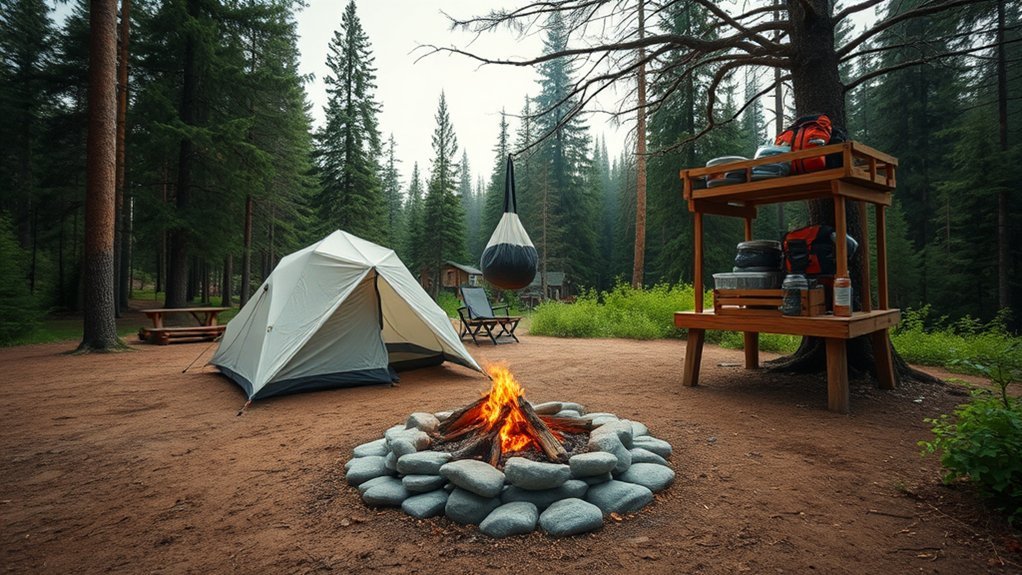
A clean campsite is your first line of defense against rodents. Proper campsite organization and strategic tent placement can greatly reduce the chances of unwelcome visitors. Here are three essential steps to keep your area rodent-free:
- Seal Food: Store all food in airtight containers, away from your tent and gear.
- Clean Regularly: Sweep away crumbs and food remnants, as even the tiniest trace can attract rodents.
- Choose Tent Location Wisely: Set up your tent away from dense vegetation and brush, which can harbor pests.
After cooking, make sure all equipment and utensils are cleaned and stored properly to minimize odors. Dispose of trash in sealed bags and use designated waste bins promptly. By maintaining a clean campsite, you can enjoy the freedom of the outdoors without worrying about pesky rodents invading your space.
Use Airtight Storage Solutions
When you’re out camping, using airtight storage solutions is crucial for keeping rodents at bay. Opt for containers made of durable materials like hard plastic or metal to effectively block odors that attract pests. Make certain all containers have secure, locking lids to create a complete seal, making it tough for mice to access your food and gear.
Consider using vacuum-sealed bags for clothing and soft gear. They save space while eliminating scents that might lure rodents. Always store your airtight containers off the ground and away from your tent or camping area to further minimize the risk of rodent encounters.
Regularly inspect your storage solutions to guarantee they remain intact and effective against any intruders. By investing in quality airtight storage, you can enjoy your outdoor adventure without worrying about unwanted visitors. Stay free and focused on your experience!
Implement Natural Deterrents
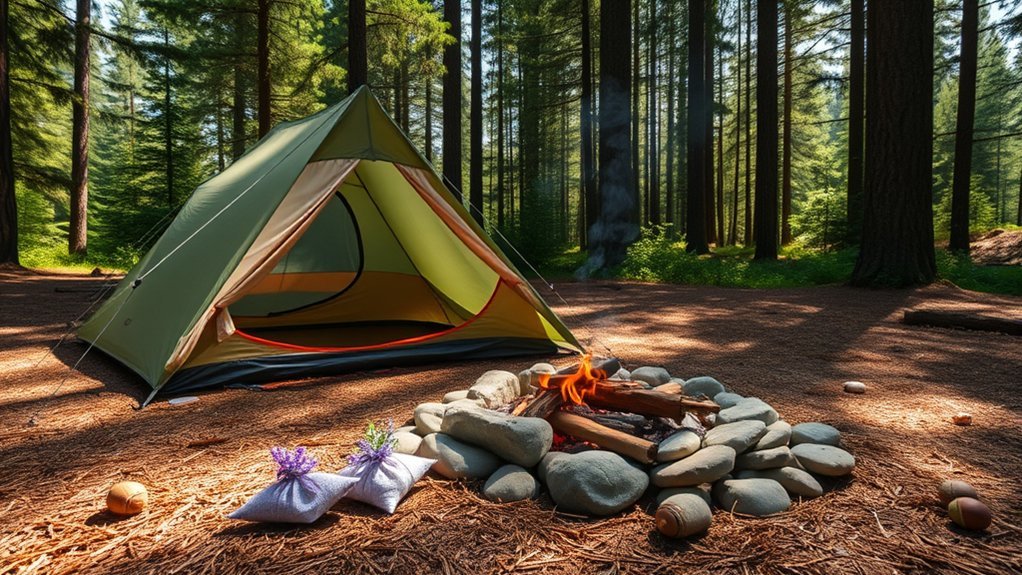
To deter rodents effectively, consider implementing natural repellents around your tent and gear. Using scent strategies can keep those pesky intruders at bay without harsh chemicals. Here are three effective methods:
To keep rodents away naturally, use scent strategies like dryer sheets, peppermint oil, and garlic around your camping gear.
- Dryer Sheets: Scatter dryer sheets around your tent. Their strong scent can deter rodents from entering your space.
- Peppermint Oil: Soak cotton balls in peppermint oil and place them strategically. This natural oil’s aroma is a powerful repellent.
- Garlic: Hang sachets of crushed garlic or place garlic cloves near the tent entrance. Rodents find this odor unappealing, providing an extra layer of protection.
Regularly check and replenish these natural deterrents to maintain their effectiveness. By embracing these simple, eco-friendly solutions, you can enjoy your outdoor adventures without the worry of unwanted guests. Take control and liberate your camping experience from rodents!
Create a Barrier Around the Tent
To keep rodents away, start by clearing the area around your tent of debris, tall grass, and leaves that could serve as hiding spots. Next, lay down a ground tarp or footprint to create a solid barrier that makes burrowing difficult. These steps form a strong defense against unwanted critters.
Clear Surrounding Vegetation
Creating a clear barrier around your tent is essential for keeping rodents at bay, as it minimizes their hiding spots and makes your campsite less inviting. Effective vegetation management is vital in altering rodent behavior, so take these steps:
- Trim back overgrown grass, shrubs, and trees within a 10-foot radius to reduce potential shelter for rodents.
- Remove fallen leaves, branches, and debris that offer nesting materials.
- Maintain a tidy campsite by clearing away food scraps and trash that could attract unwanted visitors.
Use Ground Barrier Materials
Regularly using ground barrier materials around your tent is essential for keeping rodents at bay. Start with ground barrier types like a thick layer of gravel or coarse sand to deter burrowing. For added protection, install hardware cloth or metal mesh, extending at least a foot underground to block tunneling. Keep the area free of debris, such as leaves and branches, as they provide cover for rodents. Consider using a ground tarp or footprint to make the tent’s vicinity less inviting. It’s vital to regularly check and maintain these barriers, ensuring they’re effective and free from erosion or damage. This proactive approach will help you enjoy your outdoor experience without unwanted rodent encounters.
Regularly Inspect and Maintain Gear
To keep rodents at bay, regularly check your gear for any signs of damage or wear. Clean your equipment consistently, removing food scraps and debris that could attract unwanted visitors. By staying proactive, you’ll guarantee your tent remains a safe and comfortable space.
Check for Damage
While enjoying the great outdoors, it’s crucial to keep your tent and gear in top shape to prevent rodent entry. Regular tent inspections and gear maintenance can save you from unwanted pests and guarantee a stress-free adventure. Here are three key areas to check:
- Seams and Zippers: Confirm they’re intact and functioning; even tiny gaps can invite rodents.
- Storage Bags: Examine for cracks or openings that could allow access to your gear.
- Visual Damage: Look for tears or holes that could be entry points.
Perform seasonal maintenance, and log your inspections and repairs to track vulnerabilities. Staying proactive keeps your gear protected and lets you enjoy your wilderness experience without worry.
Clean Regularly
Keeping your gear clean is essential for preventing rodent infestations. Regular tent maintenance starts with inspecting and cleaning your gear often. Remove any food remnants, crumbs, or debris that could attract pests. Store food items in airtight containers and keep them outside your tent. After each use, wipe down surfaces of camping gear, like coolers and cooking equipment, to eliminate odors that might lure rodents in. Maintain a routine of checking for signs of rodent activity, such as droppings or gnaw marks, so you can tackle issues before they escalate. Keep your camping area tidy by regularly disposing of trash and organizing belongings to make it less appealing for rodents. A clean campsite is your first line of defense!
Utilize Traps for Extra Protection
Setting up traps around your tent not only deters rodents but can also effectively catch them before they reach your gear. To enhance your rodent defense, focus on proper trap placement and bait selection. Here are three key steps to follow:
- Choose the Right Trap: Snap traps provide quick kills, while live traps allow for humane capture.
- Select Appealing Bait: Opt for delicious options like peanut butter or sunflower seeds to attract curious rodents.
- Position Strategically: Place traps in areas showing signs of activity, such as droppings or gnaw marks.
Regularly check and maintain your traps to guarantee they’re functional throughout your trip. By utilizing traps effectively, you’ll create an extra layer of protection against unwelcome visitors, allowing you to enjoy your outdoor experience without worries. Embrace the freedom of camping without the fear of rodent encounters!
Frequently Asked Questions
What Types of Food Attract Rodents the Most?
High protein snacks like nuts and jerky, along with sweet treats such as candy or baked goods, attract rodents the most. Keeping these foods sealed and stored properly helps prevent unwanted visitors.
Can I Use Essential Oils Other Than Peppermint?
Yes, you can use essential oils like citrus oils and lavender scent. Both have strong aromas that can deter rodents, making your space less inviting for them. Experiment and find what works best for you.
How Often Should I Inspect My Gear for Rodents?
Inspect your gear as regularly as you’d check a lighthouse’s beacon. Rodent behavior can change quickly, so gear maintenance should happen weekly. Staying vigilant prevents unwanted guests and keeps your adventures worry-free and liberating.
What Is the Best Type of Trap for Tent Use?
For tent use, snap traps are effective for quick results, while humane traps allow you to catch and release rodents safely. Choose based on your preference for efficiency or compassion in handling these little intruders.
Are There Any Rodent-Proof Tents Available on the Market?
Yes, there are rodent-proof tents available. Look for options featuring rodent-resistant materials and effective tent design features like reinforced seams and floor liners, which help keep unwanted critters away while you enjoy the great outdoors.
Conclusion
By taking these steps, you can keep rodents at bay and protect your gear. Remember, “an ounce of prevention is worth a pound of cure.” Stay vigilant about food sources, maintain a clean campsite, and use airtight storage solutions. Implementing natural deterrents and creating barriers around your tent can make a big difference. Regular inspections and traps can provide that extra layer of security. Enjoy your camping experience without the worry of unwanted visitors!
