
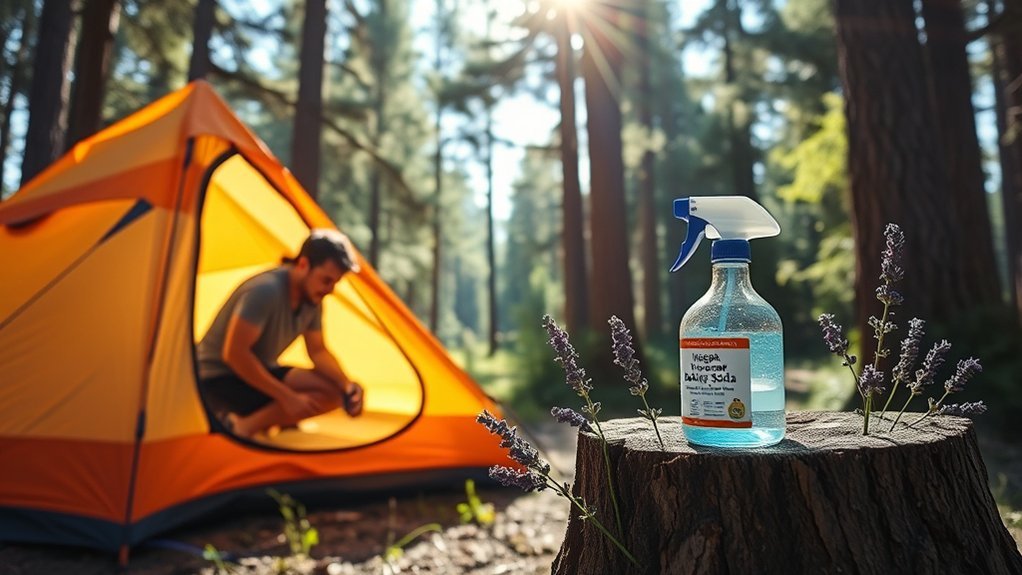
To get mildew smell out of your tent for good, clean it thoroughly with a vinegar solution or specialized cleaner like Revivex Pro Cleaner. Rinse well and air dry it completely in a well-ventilated area, avoiding direct sunlight. Store the tent in a cool, dry place using breathable bags to promote airflow. Regularly inspect it for dampness and use odor absorbers if needed. For more effective strategies on maintaining tent freshness, explore the following guidelines.
Understanding the Causes of Mildew Smell in Tents

When you pack away your tent while it’s still damp, you’re inviting mildew to take hold. Mildew thrives in moisture and enclosed spaces, making your tent a prime target if it isn’t aired out properly. To combat this, implement effective mildew prevention strategies. First, always dry your tent completely before storage, ensuring that airflow circulates throughout. Use moisture management techniques to monitor humidity levels in your storage area; a dry environment is essential. Storing your tent in a cool, dry place can greatly reduce mildew risks. Regular maintenance is key—clean your tent after each use with specialized cleaning products designed to deter mildew growth. Neglecting these steps can lead to unpleasant odors and worsen allergies, making your outdoor experience less enjoyable. By actively managing moisture and ensuring proper ventilation, you can keep your tent fresh and odor-free.
Effective Cleaning Methods for Mold and Mildew
To effectively tackle mold and mildew odors in your tent, start by choosing the right cleaning solution. A natural option is a mixture of one part vinegar to two parts water, which can eliminate odors without damaging the fabric. For more stubborn cases, consider soaking the tent in hot water with a specialized cleaner like Revivex Pro Cleaner. If odors persist, sponging with a Lysol and water solution may help address them while protecting the material.
Enzymatic mold removers specifically designed for tent fabric can also provide targeted cleaning; just follow the product instructions for the best results. Remember, regular maintenance is key—clean and air out your tent after each use. This cleaning frequency is essential for effective mildew prevention, ensuring your tent stays fresh and ready for your next adventure.
Products Worth Considering
Use In Bathroom Tile and Grout, Bathtub, Soap Scum, Showers, Drywall, Wood, Fences, Decks, Vinyl Sidng, Concrete Floors, Kitchen, Brick Walls, and other areas where mold and mildew can grow
Quickly removes mold, mildew, moss and algae stains on contact without heavy scrubbing; EASY TO USE - spray, wait until the stain disappears, then rinse
Clean 20 jackets or 5 sleeping bags with a 10 fl oz of this concentrated, low suds detergent; safe for all technical gear including GORE-TEX jackets
Step-by-Step Guide to Deodorizing Your Tent
To effectively deodorize your tent, start with the right cleaning solutions to eliminate mold and mildew. Next, apply odor neutralizing techniques for lasting freshness, and don’t overlook proper storage practices to prevent future smells. Following these steps will guarantee your tent stays clean and pleasant for your next adventure.
Products Worth Considering
Remove strong and smelly odors from fabric with this effective, all-natural, concentrated formula
Remove strong and smelly odors from fabric with this effective, all-natural, concentrated formula
Powerful Natural Odor Eraser: This Chemical-free formula is a pet poop & pee smell destroyer. Spray it on any outdoor surface, and odors will quickly disappear. The only thing left behind will be a fresh eucalyptus scent.
Effective Cleaning Solutions
Removing mildew smell from your tent requires a systematic approach for effective results. Start by cleaning your tent with hot, soapy water, using an eco-friendly cleaner like Revivex Pro Cleaner to eliminate mold and bacteria. After cleaning, mix 1 fl oz of Revivex Odor Eliminator with each gallon of water and soak the tent for no more than 5 minutes to neutralize stubborn odors without rinsing. If the PU coating is degraded, soak the tent in warm water with mild dish soap for 2-3 hours, then scrub with a mixture of isopropyl alcohol and water. Finally, air dry the tent completely away from direct sunlight or heat. Regular tent maintenance, including airing it out and storing it properly, helps prevent future odors.
Odor Neutralizing Techniques
While tackling the mildew smell in your tent, implementing effective odor neutralizing techniques guarantees a fresh and usable camping shelter. Start by mixing 1 fl oz of Revivex Odor Eliminator with each gallon of water and soak the tent for a maximum of 5 minutes without rinsing. This microbial treatment targets odor absorption effectively. For stubborn odors, use a vinegar solution (1 part vinegar to 2 parts water) to wipe down affected areas, then rinse and dry thoroughly. After cleaning, let your tent air dry completely away from sunlight and heat. Finally, consider placing activated charcoal bags or dryer sheets inside during storage to continuously absorb unwanted odors and keep your tent smelling fresh.
Proper Storage Practices
Properly storing your tent can greatly reduce the risk of mildew and unpleasant odors. After each trip, air out your tent thoroughly and make certain it’s completely dry. For effective tent maintenance, use large mesh or cotton bags for storage, allowing airflow and avoiding damp areas like basements or attics. Don’t compress your tent; keep it loosely packed to promote ventilation and minimize odor buildup. Regularly inspect your stored tent for any signs of moisture or mildew, and act immediately if detected. To further combat odors, consider placing activated charcoal bags inside the storage bag. These storage solutions will help keep your tent fresh, ready for your next adventure.
Removing PU Odors From Tent Fabric
To effectively eliminate PU odors from your tent fabric, you can start by soaking the tent in warm water mixed with a few drops of mild dish soap for 2-3 hours. This process loosens the PU coating, making it easier to remove odors. After soaking, gently scrub the affected areas with a 50/50 mixture of isopropyl alcohol and water to effectively target odors resulting from the breakdown of the polyurethane coating.
Once cleaned, apply a new PU coating using Seam Grip TF to restore waterproofing and enhance odor prevention. Allow the tent to dry for 24 hours before storing. Regularly monitor your tent for signs of PU coating degradation, as neglect can lead to lingering odors. By maintaining a consistent cleaning and re-coating routine, you’ll prolong the lifespan of your tent fabric and keep unwanted odors at bay.
Proper Storage Techniques to Prevent Future Odors
To prevent future odors in your tent, make sure to air it out completely before storage, ensuring it’s fully dry. Store it in a cool, dry place, avoiding humid areas that can foster mildew. Use breathable storage bags and keep the tent loosely packed to promote air circulation and maintain freshness.
Products Worth Considering
LARGE CAPACITY: 46 x 12.5 x 12.5 Inches, with storage capacity of 30Gal, ideal for travel or storing foldable strollers and sports gear.
Dimensions when full: 52" x 12" x 16" (L*W*H) with extra-large capacity, COOLBEBE travel bag with roomy interior for storing items. Ideal for camping, hunting and sport travel and even fits for umbrella style strollers
Pack your tent in our ALPS Mountaineering Tent Bag and you're ready for you next campout
Air Circulation Importance
Air circulation plays an important role in preventing mildew odors in your tent. To maintain ideal tent ventilation, store your tent in a loose, uncompressed state, allowing air to flow freely. This simple technique helps reduce moisture buildup and keeps odors at bay. Choose a cool, dry environment away from direct sunlight, as heat and humidity can accelerate mildew growth. Utilizing large mesh laundry bags or cotton bags for storage further aids air circulation, minimizing the risk of musty smells. Regular inspections of your stored tent for signs of mildew are vital—address any issues immediately. Finally, airing out your tent for several days after trips, particularly in humid conditions, effectively preserves freshness and prevents future odors.
Dry Storage Recommendations
After guaranteeing proper air circulation, how you store your tent is key to preventing future odors. To maintain freshness and avoid mildew, follow these dry storage recommendations:
- Thoroughly Air Out: Always air out your tent for several days after trips, especially in humid conditions, using effective drying techniques.
- Choose the Right Storage: Store your tent in a cool, dry place using large mesh or cotton bags, which allow for air circulation and prevent moisture accumulation.
- Avoid Compression: Keep your tent loosely packed to enhance ventilation. Regularly inspect stored tents for any signs of mildew or odor development and address issues promptly for effective tent maintenance.
Implementing these practices guarantees your tent remains fresh and ready for your next adventure.
Maintaining Tent Freshness Between Uses
Maintaining freshness in your tent between uses is essential to prevent mildew and unpleasant odors. Start by airing out your tent for at least an hour after each camping trip. This simple tent maintenance task helps reduce moisture buildup. Before packing your tent away, make sure it’s completely dry; even small amounts of dampness can lead to mold and mildew development.
Store your tent loosely in a cool, dry place, allowing for air circulation to avoid trapping moisture. Regularly inspect your tent for any signs of mildew or odors, addressing issues immediately with appropriate cleaning methods.
To enhance freshness, consider using products like Revivex Odor Eliminator during storage. These freshness tips will keep your tent in prime condition, ready for your next adventure. By following these practices, you can enjoy a clean, odor-free environment, liberating your camping experience from the burden of musty smells.
Products Worth Considering
Includes one, 17 ounce Amazon Basics Gel Odor Eliminator
Remove strong and smelly odors from fabric with this effective, all-natural, concentrated formula
100% NATURAL BAMBOO CHARCOAL: The bamboo charcoal bags are made of 100% natural bamboo charcoal, without any fragrance and chemicals. They are safe for children and pets. Standard size bamboo charcoal particles have a larger contact area with air, the performance of adsorption is better, effectively remove odors and bring fresh air.
Additional Tips for Long-term Tent Care
To guarantee your tent remains in excellent condition for years to come, regularly performing maintenance tasks is essential. Incorporate these tips into your routine for effective tent fabric care and mildew prevention:
Regular maintenance is key to keeping your tent in top shape for future adventures.
- Air it Out: After each trip, air your tent for several days to prevent mildew buildup and maintain freshness.
- Thorough Cleaning: Use a mild soap solution to clean your tent, rinsing thoroughly to eliminate odors before storage.
- Proper Storage: Store your tent in a cool, dry place with good ventilation—avoid attics or damp basements that can foster moisture-related odors.
Additionally, inspect your tent for mold or mildew periodically, especially after extended storage. Consider applying a UV protectant to enhance your tent’s longevity and resistance to environmental factors. By following these tips, you’ll ascertain your tent stays fresh and ready for your next adventure.
Products Worth Considering
GET RID OF STUBBORN MOLD AND MILDEW STAINS: Our instant spray cleaner removes the stains left behind from black mold and mildew. They tend to leave behind ugly staining that can go deep below the surface
REMOVES STAINS FROM ORGANIC GROWTH ON YOUR OUTDOOR SURFACES: 30 SECONDS Outdoor cleaner rapidly cleans stains from algae, mold, mildew, dirt and grime
TWO FAST-ACTING FORMULAS: The ultimate mold prevention kit, our bundle includes 1 spray bottle of RMR-86 and 1 spray bottle of RMR-141 RTU to kill mold and mildew instantly while lifting difficult stains that are left behind
Frequently Asked Questions
Can I Use Vinegar to Remove Mildew Smell From My Tent?
Yes, vinegar’s effectiveness can help eliminate mildew smells from your tent. Mix it with water for cleaning, and guarantee you dry the tent thoroughly afterward to prevent future mildew growth.
How Often Should I Clean My Tent to Prevent Odors?
Clean your tent every few uses, especially after damp conditions. Regular tent maintenance prevents odors from forming. It’s essential to air it out and store it properly, ensuring you enjoy fresh adventures without worry.
Is It Safe to Wash My Tent in a Washing Machine?
It’s not safe to wash your tent in a washing machine. Instead, use gentle washing techniques and hand wash it with mild soap to maintain its waterproof coating and overall tent care. Avoid agitation and harsh detergents.
What Should I Do if My Tent Has Persistent Odors?
Persistent tent odors affect 60% of campers. To eliminate them, identify odor causes like moisture or mold. Use mildew prevention tips such as proper drying and storage. Regular maintenance keeps your tent fresh and ready.
Can Sunlight Help Eliminate Mildew Smells From My Tent?
Yes, sunlight exposure can help eliminate mildew smells from your tent. Regularly airing it out in direct sunlight promotes mildew prevention, as UV rays kill spores and reduce odors, keeping your gear fresh and ready for adventures.
Conclusion
By following these steps, you can banish mildew smells from your tent for good. Picture yourself unrolling a fresh, clean tent under a starlit sky, free from unwanted odors. With proper cleaning and storage techniques, you’ll not only enjoy a pleasant camping experience but also extend the life of your gear. Remember, a little maintenance goes a long way in preserving your tent’s freshness, ensuring every adventure is as enjoyable as the last.