
Last Updated on July 29, 2026 by Mason Reed
If your tent stakes loosen during the night, you usually do not need to take the whole shelter down and pitch it again. Work one anchor at a time: check the weather, light the area with a headlamp, reset or replace the weak stake, then retension the connected guyline. The safest fix depends on the tent design, soil, wind direction, and stake type.
Quick Answer
To fix loose tent stakes at night without re-pitching, secure one anchor at a time. Reset the stake in firmer ground, match its position to the direction of pull, and retension the guyline. In soft ground, use a longer stake, a stable rock anchor, or a buried deadman instead of simply overtightening the line.
Key Takeaways
- Use a headlamp and repair one anchor at a time so the tent keeps its shape.
- Do not treat 45 degrees as a universal rule; follow your tent manual and align each stake with the load it must resist.
- Retension guylines until the fly is taut, not drum-tight.
- For sand, snow, or very loose soil, switch to a wider stake, rock anchor, or buried deadman.
- Do not damage roots, cut live branches, or remove natural objects from the site.
At a Glance
| Time Required | 5–15 minutes |
| Difficulty | Easy to moderate |
| Tools Needed | Headlamp, gloves, stake mallet or rock, spare stakes, and extra cord |
| Cost | $0 with existing gear; about $10–$30 for spare or specialty stakes |
Disclosure: As an Amazon Associate I earn from qualifying purchases. Some links on this page are affiliate links, at no extra cost to you.
Check Weather and Nighttime Safety First
Before touching the anchors, switch on a headlamp and put on shoes. Scan for guylines, stakes, rocks, roots, and other trip hazards. Keep children and pets inside or away from the work area, and avoid swinging a mallet near the tent fabric.
Warning: Do not stay outside adjusting stakes during lightning, a tornado warning, or destructive winds. The National Weather Service says a tent is not a safe lightning shelter. Move to a substantial building or hard-topped vehicle when one is available.
If the tent is repeatedly collapsing, poles are bending, fabric is tearing, or the ground is washing away, a small anchor repair is no longer enough. Leave the tent and move to safer shelter rather than trying to save the pitch.
Assessing Stake Stability
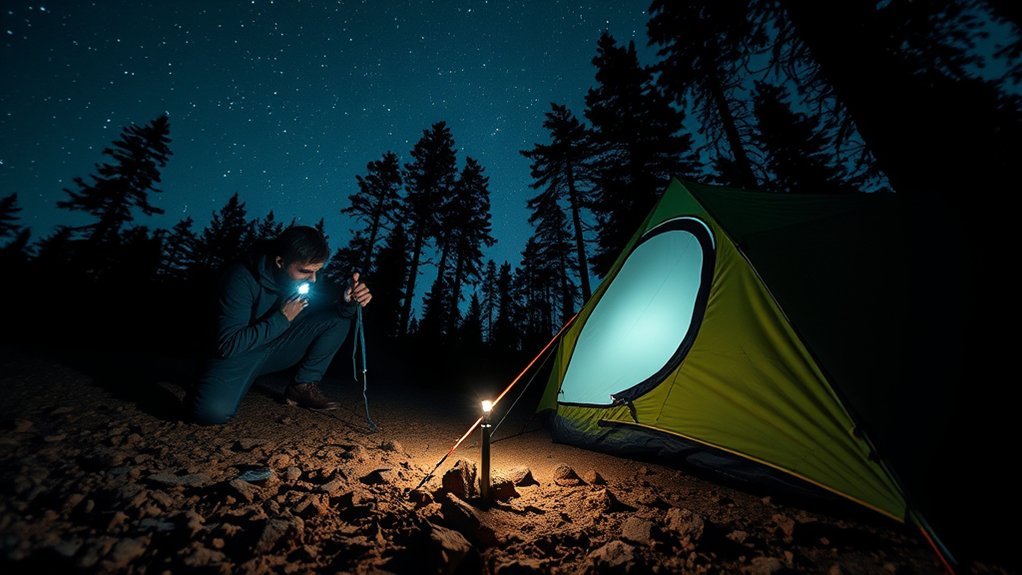
Start with the corner or guyline that is moving the most. Hold the line close to the stake and give it a gentle, controlled pull in the same direction the tent is loading it. A secure stake should not rotate, rise, or cut through the soil. Also check whether the line has slipped through its tensioner or whether wet fabric has stretched.
Look at the whole tent before changing anything. A sagging panel may come from one loose anchor, uneven guyline tension, a shifted rainfly, or a stake that was placed in loose gravel, sand, mud, or disturbed soil. Note the wind direction and identify the windward side first. REI’s tent setup guidance recommends using windward guy-out points at minimum and balancing support around the shelter when greater stability is needed.
Quick Diagnosis by Symptom
| What You See | Likely Fix |
| Stake rises or rotates | Reset it in firmer soil, drive it deeper, or use a longer or wider stake. |
| Guyline is slack but stake is firm | Retension the line and check the tensioner or knot. |
| Stake slices through sand or mud | Use a broad stake, rock anchor, or buried deadman. |
| Fly is distorted or seams are strained | Reduce tension and rebalance nearby guylines. |
Weighing Down Loose Stakes
A rock can help, but simply dropping a heavy stone on a stake is not always the best fix. It may bend a thin stake, pinch the cord, create a trip hazard, or place a sharp edge near the rainfly. Use one of these safer methods:
- Reset and brace: Drive the stake fully into firmer ground, then place a stable rock on the soil behind it, away from the tent fabric.
- Big-rock/little-rock anchor: Wrap the guyline around a smaller rock, place a larger stable rock in front of it, and tension the line so the smaller rock cannot slide out.
- Filled stuff sack: Put smooth rocks, sand, or snow in a durable sack, close it, and attach the guyline to the sack’s secure loop. Do not use a delicate sleeping-bag sack that could tear.
Pro Tip: Keep the anchor low and directly in line with the guyline’s pull. A heavy object placed off to one side can twist the stake instead of supporting it.
You may use a closed backpack as temporary ballast only in calm enough conditions to work safely. Keep electronics, food, and fragile gear protected; attach the line to a strong haul loop rather than laying the pack on a sharp stake. A dedicated rock anchor or suitable replacement stake is usually more reliable.
Tightening Guylines for Support
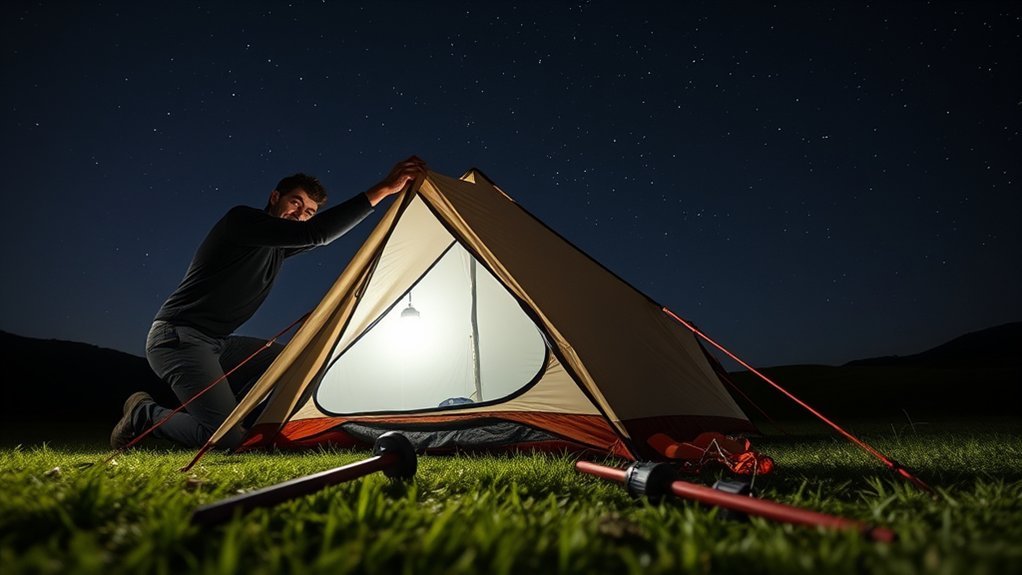
Guylines help the poles and rainfly share wind loads. Big Agnes advises using guylines to support a tent’s structure, especially toward the prevailing wind. Tighten them in small increments rather than pulling one line as hard as possible.
| Action | What to Do |
| Check every line | Look for slack, slipped knots, damaged cord, and jammed tensioners. |
| Start on the windward side | Secure the side facing the wind, then balance tension on the other sides. |
| Use the correct guy-out | Attach cord only to reinforced loops or points identified in the tent manual. |
| Stop at taut | Remove flapping and sag without distorting the frame or overstressing seams. |
The goal is balanced tension, not maximum tension. A taut fly sheds wind and rain better; an overtightened fly can strain seams, clips, poles, and zippers.
Adjusting Stake Angles
There is no single stake angle that is correct for every tent, stake shape, and soil type. Coleman’s general setup guide recommends stakes at about 45 degrees away from the tent, while an REI wind-tunnel article reports that its designers found stakes strongest when driven straight into the ground. Because official guidance differs, use your tent manufacturer’s instructions first and focus on resisting the actual direction of pull.
Coleman’s tent camping guide and REI’s stake-angle testing article illustrate why a universal “always use 45 degrees” rule is too broad.
How to Reset One Stake Without Re-Pitching
- Reduce the load: Loosen the connected guyline slightly while keeping the tent supported by the other anchors.
- Pull the stake straight out: Use its removal loop or a stake puller. Do not wrench it sideways and enlarge the hole.
- Move to undisturbed ground: Shift several inches away from the loose hole, staying in line with the guyline’s pull.
- Choose the correct stake: Use a longer, wider, or terrain-specific stake when the original cannot grip.
- Drive it securely: Follow the tent and stake maker’s angle guidance, leaving only the attachment point exposed.
- Retension gradually: Tighten the line, inspect the tent shape, and make small corrections.
Note: Some semi-freestanding and trekking-pole tents depend on precise stake placement to stand correctly. For those shelters, follow the model-specific pitch diagram rather than general camping advice.
Utilizing Natural Materials Responsibly
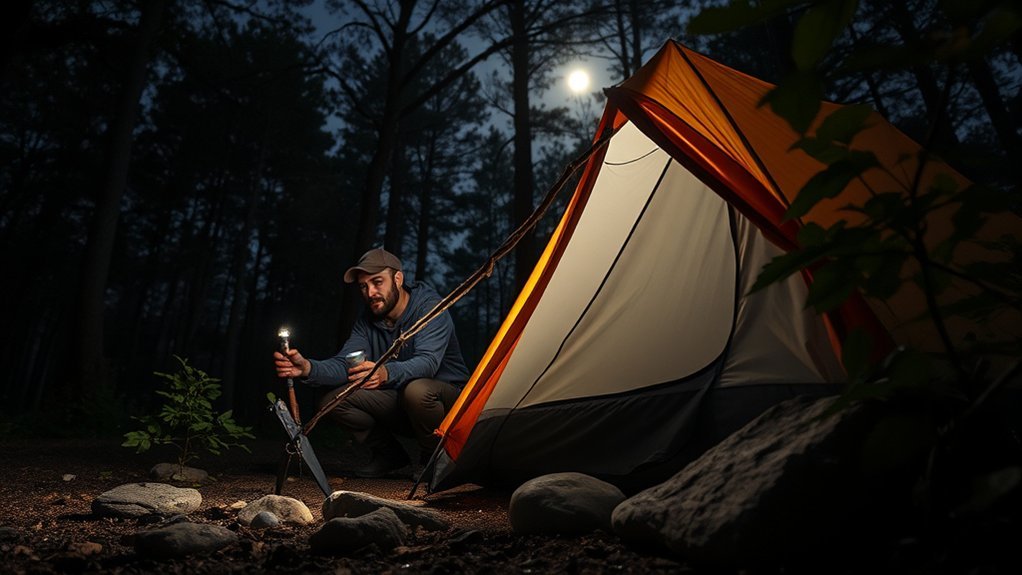
Stable rocks and already-fallen wood can help when stakes will not hold, but use them only where local rules allow and without damaging the campsite. The Leave No Trace Center for Outdoor Ethics advises leaving rocks, plants, and other natural objects as you find them.
Finding Suitable Anchor Objects
- Large, stable rocks: Choose rocks that will not roll, shift, or expose sharp edges to the cord or fly.
- Already-fallen branches: Use only sturdy deadwood lying on the ground, where collection and movement are permitted.
- Your own gear: A durable stuff sack filled with sand, snow, or smooth stones can become a removable anchor.
Do not tie guylines to fragile shrubs, exposed roots, dead standing trees, or branches overhead. Do not cut vegetation, dig into sensitive ground, or use bones and antlers as campsite hardware. Return any moved natural material when you break camp.
Improvised Deadman Technique
A deadman anchor spreads the load across a wider area than a narrow stake. It is useful in loose sand, soft snow, or soil that will not hold a normal peg.
- Attach the guyline to the center of a long stake, sturdy stick, durable stuff sack, or purpose-built snow anchor.
- Dig a trench across the direction of pull, not in line with it.
- Lay the anchor horizontally in the trench and route the guyline through a narrow channel toward the tent.
- Bury the anchor, compact the material firmly, and tension the line gradually.
- Mark the line or anchor so nobody trips over it in the dark.
Depth depends on the material and load. Loose powder, dry sand, and strong wind require more surface area and deeper burial than damp, compact ground. If the anchor keeps moving, use a larger anchor or relocate the guy point rather than repeatedly overtightening it.
Creative Solutions for Nighttime Fixes
When the original stake cannot be reset, match the repair to the surface instead of forcing the same method everywhere.
| Ground | Best Nighttime Fix | Avoid |
| Firm soil | Reset in a fresh hole or use a longer stake. | Reusing an enlarged, loose hole. |
| Loose sand | Sand stake, buried stuff sack, or horizontal deadman. | Short, narrow stakes under high tension. |
| Soft snow | Snow stake or buried deadman; allow packed snow to set before loading. | A warm, loose anchor that can melt or pull through. |
| Rocky ground | Big-rock/little-rock anchor or a stake placed in a soil pocket. | Hammering until an aluminum stake bends. |
| Mud or saturated soil | Move to firmer nearby ground and use a longer stake. | Piling tension onto a hole that is widening. |
Manufacturers commonly supply enough anchors for normal conditions, but unusual soil and weather may require extra or specialized stakes. See Cascade Designs’ guidance on tent stakes and guylines.
Preventing Stakes From Loosening Again
- Practice at home: Learn the tent’s guy-out points, tensioners, and model-specific pitch before a night repair is necessary.
- Carry spares: Pack extra cord, two or more spare stakes, and terrain-specific anchors when camping on sand or snow.
- Use reflective cord: It is easier to find at night and reduces trip risk.
- Inspect after weather changes: Rain can soften soil, wind can work stakes loose, and some fabrics stretch when wet.
- Do not overtighten: Excess tension can distort the frame and pull stakes out faster.
- Choose a better site: Whenever possible, pitch on durable, well-drained ground that is protected from the strongest wind.
Frequently Asked Questions
What tools do I need to fix loose tent stakes at night?
Use a headlamp, shoes, gloves, a stake mallet or smooth rock, spare stakes, and extra guyline. A stake puller and reflective cord also help. Keep the repair kit in an outside pocket so you do not have to unpack the tent in bad weather.
Can I use my backpack to secure a stake?
A closed backpack can provide temporary ballast, but do not place it directly on a sharp stake. Protect fragile gear and food, keep the pack dry, and attach the guyline to a strong haul loop. A proper stake, rock anchor, or filled stuff sack is usually safer and more dependable.
How do I prevent stakes from loosening again?
Choose undisturbed ground, use stakes suited to the surface, drive them fully, and align each anchor with the direction of pull. Balance guyline tension around the tent and recheck it after rain, stronger wind, or fabric stretch.
Is it safe to adjust tent stakes in the dark?
It can be safe in mild conditions when you use a headlamp, wear shoes, and work slowly. It is not safe to remain outside during lightning, tornado conditions, falling branches, or destructive winds. Move to safer shelter when severe weather threatens.
What if I cannot find natural materials nearby?
Use your own equipment: a spare or wider stake, extra cord, a durable stuff sack filled with sand or snow, or a purpose-built snow or sand anchor. Avoid damaging vegetation or dismantling natural features just to secure the tent.
Should every tent stake be driven at 45 degrees?
No. Some manufacturers recommend an angled placement, while other testing favors a more vertical stake. Follow the instructions for your tent and stake, use firm ground, and position the anchor to resist the actual direction of pull.
When should I stop repairing and move the tent?
Move when several anchors keep failing, water is flowing through the site, branches or rocks may fall, or the shelter is deforming beyond normal movement. During severe weather, prioritize a substantial building or hard-topped vehicle over protecting the pitch.
Conclusion
You can usually stabilize loose tent stakes without re-pitching the entire shelter. Light the area, check the weather, and fix one anchor at a time. Reset the stake in fresh ground, retension the guyline, and switch to a wider stake, rock anchor, or buried deadman when the soil is too soft. Balanced tension and terrain-appropriate anchors matter more than any single angle rule.
Sources
- REI Co-op: How to Set Up a Tent — guyline placement, windward support, and tensioning.
- Big Agnes: Tent Tips — structural use of guylines and prevailing-wind setup.
- Coleman: Tent Camping Guide — manufacturer guidance for angled stake placement and guyline use.
- REI Co-op: Camping Setup Tests — alternative stake-angle findings and guyline geometry.
- Leave No Trace: Leave What You Find — responsible use of rocks, plants, and natural objects.
- National Weather Service: Lightning Safety Outdoors — tents are not safe lightning shelters.

