
Last Updated on July 29, 2026 by Mason Reed
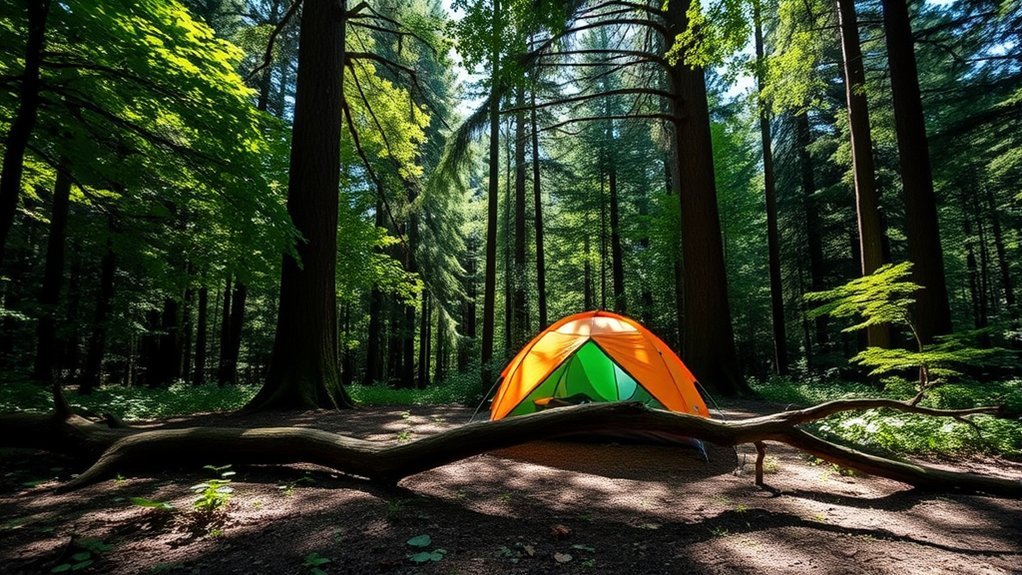
Falling branches and unstable trees can turn an otherwise suitable campsite into a serious hazard. Before pitching your tent, inspect the canopy, trunks, roots, nearby slopes, and weather conditions, then move to another legal site whenever a questionable tree or limb could reach your sleeping area.
Quick Answer
To avoid widowmakers, inspect your campsite in daylight and look above and around the tent area for hanging limbs, broken tops, leaning or dead trees, trunk cracks, root movement, decay, and recent storm or fire damage. Pitch outside the potential fall zone, and relocate if wind, rain, snow, or cracking sounds increase the danger.
Key Takeaways
- Inspect the full area a tree or branch could strike—not only the space directly above your tent.
- Dead limbs, broken tops, lodged branches, cracks, decay, peeling bark, root movement, and an abnormal lean are reasons to choose another site.
- Green leaves do not guarantee safety; live trees and apparently healthy limbs can also fail.
- A rope, tarp, or tent cannot catch or safely deflect a falling limb.
- Recheck the site when wind, rain, snow, or other conditions change.
At a Glance
| Time Required | About 5–10 minutes before setup, plus another check if weather changes |
| Difficulty | Easy visual screening; professional tree-risk assessment requires specialized training |
| Tools Needed | Daylight, weather forecast, and careful observation; binoculars are optional |
| Cost | Usually $0 |
Warning: A tent, tarp, hammock, or rope offers no meaningful protection from a falling tree or heavy branch. Never remain under a known hazard because you believe your equipment will stop or redirect it.
Disclosure: As an Amazon Associate I earn from qualifying purchases. Some links on this page are affiliate links, at no extra cost to you.
Understanding Widowmakers and Their Risks
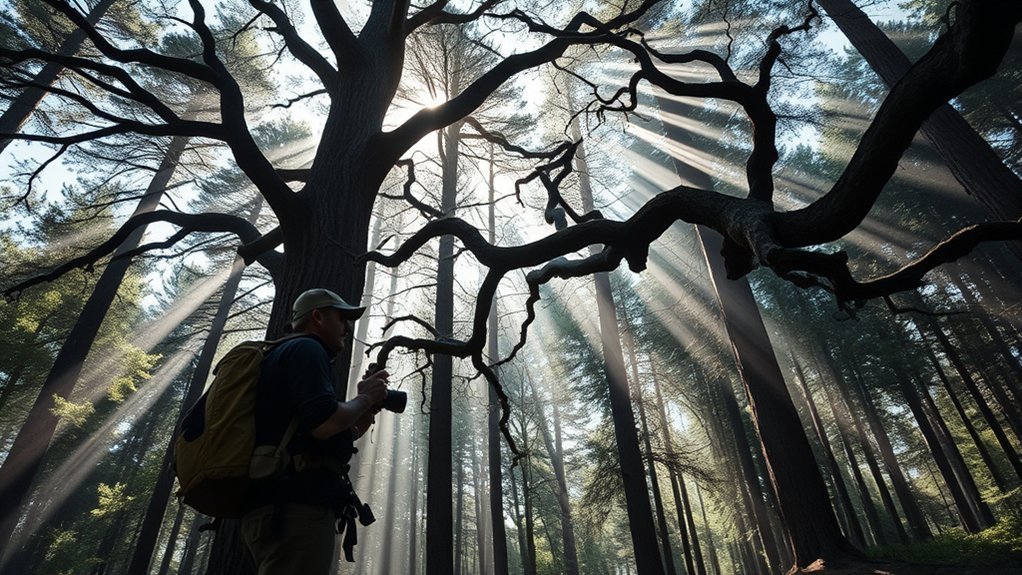
In formal logging guidance, the Occupational Safety and Health Administration describes a widowmaker as a broken limb hanging freely in a tree being felled or in a nearby tree. Campers commonly use the term more broadly for a hanging branch, broken treetop, dead standing tree, or other overhead tree part that could fall into a campsite. You can review the OSHA explanation of widowmakers and snags.
The safest response is avoidance. The National Park Service campsite guidance tells campers to look up and avoid pitching beneath dead branches or near dead trees that could fall.
Do not assume a tree is safe just because it has green leaves. Live trees and branches can contain cracks, weak unions, hidden decay, damaged roots, or storm injuries. The National Park Service warns that trees and branches may fall whether or not they are dead and may fail even when there is no wind.
A visual inspection can reduce your exposure, but it cannot certify a tree as safe. When you are uncertain, move the tent.
Identifying Safer Trees and Hazard-Tree Warning Signs
A camper does not need to diagnose the exact disease or calculate the probability of failure. Your goal is to notice visible warning signs and avoid placing people or equipment within striking distance.
Check the Canopy
- Dead, broken, or hanging limbs: Look for branches without bark or leaves, branches hanging vertically, and limbs caught in neighboring trees.
- Broken tops: A snapped trunk or treetop can leave loose wood overhead.
- Large dead sections: A live tree with a dead crown section can still drop heavy branches.
- Weak branch unions: Closely joined trunks or large limbs with visible cracks may have reduced strength.
- Recent debris: Numerous newly fallen limbs beneath a tree can indicate continuing failure.
Check the Trunk and Base
- Cracks or splits: Pay particular attention to cracks that extend into a major limb union or down the trunk.
- Cavities and decay: Large hollows, soft or crumbling wood, fungal conks, and rotten areas at the base are warning signs.
- Missing or peeling bark: Widespread bark loss may indicate a dead or severely damaged area.
- Fire or lightning damage: Charred trunks, exposed roots, long scars, and burned surroundings require extra caution.
- Abnormal lean: A leaning tree is more concerning when the lean appears recent or the surrounding soil and roots have shifted.
Check the Roots and Ground
- Look for lifted soil, exposed roots, cracks in the ground, or a root plate pulling away from the soil.
- Be cautious around saturated soil, eroded banks, burned root systems, and steep slopes.
- Remember that a tree above your tent on a slope may fall, slide, or roll farther downhill.
Note: The absence of visible warning signs does not prove that a tree is structurally sound. Campers should perform a cautious screening check, not attempt a professional tree-risk assessment.
Seasonal and Weather Considerations for Tree Assessment
Tree hazards change with weather and season. Bare branches may be easier to inspect during part of the year, while snow, ice, wind, saturated soil, and dense foliage can create or conceal other problems.
| Season or Condition | Main Concerns | Campsite Response |
|---|---|---|
| Winter | Snow and ice loading, broken limbs, concealed ground cracks, and frozen branches | Avoid snow- or ice-loaded branches and inspect again after a storm |
| Spring | Saturated soil, flooding, erosion, wind, and delayed storm damage | Check roots, banks, slopes, and the forecast before setup |
| Summer | Dense foliage hiding dead limbs, thunderstorms, drought stress, insects, and fire damage | Inspect from more than one angle and avoid burned or heavily damaged stands |
| Fall | Wind, early snow or ice, loose limbs, and changing foliage | Do not mistake normal leaf drop for proof of tree death; examine the full structure |
| High or Gusty Wind | Falling limbs, uprooted trees, and delayed storm damage | Leave the wooded area or move to a legal clearing beyond the reach of falling trees |
| Burned Areas | Dead standing trees, weakened roots, unstable soil, falling rocks, and hidden stump holes | Obey closures and avoid camping in questionable burned stands, especially during wind or storms |
The USDA Forest Service hazard-tree guidance advises extra caution during wind and after snow or ice storms. Its burned-area safety guidance also recommends avoiding burned areas when high or gusty winds are forecast.
Choosing the Right Campsite Location
Use an established tent pad or designated campsite when one is provided, but still inspect it before unpacking. Campground maintenance reduces risk; it does not make tree failure impossible.
When dispersed camping is legal, favor a durable, level site where no questionable tree, top, or branch could reach the tent. Scan in every direction because a leaning tree or broken top may fall sideways across an apparently open spot.
Use the Potential Fall Zone, Not an Arbitrary Distance
There is no single distance that fits every tree. Tree height, branch length, lean, slope, wind direction, and the location of the defect all affect where debris may land. Keep moving until the suspect tree or limb could not strike your sleeping, cooking, or gathering area.
Note: The commonly cited 200-foot campsite measurement is used in some bear-country guidance to separate food preparation and storage from sleeping areas. It is not a universal hazard-tree distance.
Avoid:
- Dead, leaning, cracked, burned, or partly uprooted trees within striking distance.
- Hanging branches or broken tops over the tent, picnic table, fire ring, vehicle, or access path.
- Dense patches of dead standing trees.
- Steep downhill positions beneath questionable trees.
- Flood-prone ravines, eroding banks, and low areas that may collect water.
- Exposed ridges or peaks when strong wind, lightning, or severe weather is possible.
Pro Tip: Stand where each corner of the tent will be placed and look upward from that exact position. A branch that appears offset from one side of the site may be directly overhead from another corner.
Inspecting Your Surroundings Before Setting Up
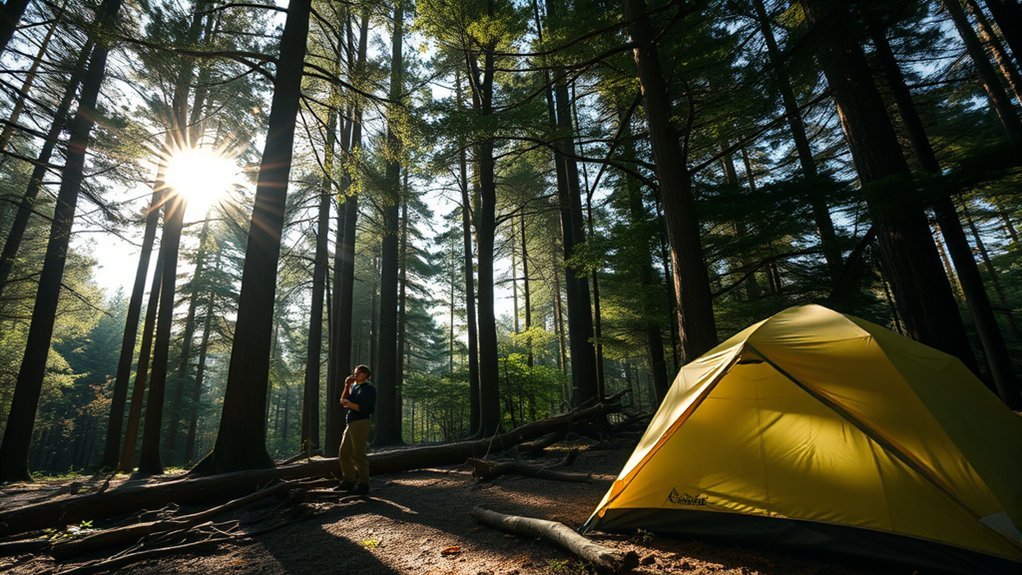
Complete the inspection before unloading your gear. Once the tent is erected, fatigue and the desire to stay put can make it harder to abandon a questionable location.
- Arrive with daylight remaining. A headlamp may reveal an obvious branch, but it cannot provide the broad view needed for a dependable canopy and fall-zone check.
- Walk the site boundary. Identify the tent pad, cooking area, access path, and places where people will sit or stand.
- Look up and outward. Scan the canopy above the site and nearby trees that could fall across it.
- Inspect from several angles. Look for hanging limbs, cracks, broken tops, cavities, decay, bark loss, root movement, fire damage, and a recent lean.
- Check the ground. Look for fresh branches, lifted soil, eroded banks, unstable slopes, stump holes, and signs of recent flooding.
- Check recent and expected weather. Wind, snow, ice, saturated soil, and storms can make an acceptable-looking area more dangerous.
- Choose another site when in doubt. Do not rely on a tent, vehicle, tarp, or improvised barrier for protection.
Recheck the site after a storm, when wind begins to rise, or whenever you hear cracking, popping, snapping, or falling debris. The National Park Service tree-hazard guidance advises people to move away immediately when they hear cracking or snapping from trees, roots, or branches.
Why Rope Is Not a Falling-Limb Safety Barrier
Do not stretch rope above or beside your tent in an attempt to catch, stop, or deflect falling branches. Standard camping cord is not designed to withstand the weight and impact of a tree limb, and a tensioned line may snap, pull equipment loose, or redirect debris.
Never throw a rope over a widowmaker, climb the tree, shake a hanging limb, cut a damaged tree, or attempt to pull it down. Tree removal is hazardous work that may require trained personnel, specialized equipment, and permission from the land manager.
Rope can still serve limited, ordinary campsite purposes when used away from tree hazards:
- Mark the edge of a no-entry area without walking beneath the suspect tree.
- Secure a tarp or bug net to sound supports outside the fall zone.
- Hang lightweight campsite equipment where local rules permit.
- Make guy lines more visible to reduce tripping.
Warning: Do not attach a hammock, tarp, clothesline, food hang, or shelter line to a dead, cracked, burned, leaning, or otherwise questionable tree. Loading or disturbing the tree may increase the hazard.
What to Do if Conditions Change After Setup
A campsite that looked reasonable in calm weather may become unsafe when wind, heavy rain, snow, or ice arrives.
- Move people out of the potential fall area before handling tents or loose gear.
- Go to a legal clearing that is beyond the reach of surrounding trees, or leave the forested area when conditions warrant it.
- Do not delay relocation to save a tent, tarp, vehicle, or other equipment.
- Do not stand beneath trees while watching for movement.
- Notify a campground host, ranger, or land manager about the hazard and identify the site number or exact location.
- Do not return until the conditions and location are reasonably safe.
If you are in a burned area and the wind increases, leave promptly. Burned trees and weakened root systems can fail with little warning, and unstable ground may create additional hazards.
Sharing Knowledge and Building a Safer Camping Community
Teach every person in your group to look up before tents, chairs, hammocks, or cooking areas are positioned. Children and first-time campers may notice a branch without understanding why it matters, so give them a simple rule: point out anything dead, broken, hanging, cracked, or leaning.
Report suspected hazard trees near established campsites, parking areas, roads, and trails. Provide the site number, trail location, nearby landmark, and a clear description. A photograph taken from a safe position may help staff identify the problem, but do not enter the fall zone to obtain it.
Respect closures, barriers, posted warnings, and campground instructions. Do not cut standing trees or alter a developed campsite unless the responsible land manager has specifically authorized the work.
Emergency Response After a Falling Branch or Tree
If a branch or tree strikes a tent or person, first check whether the scene is safe. More branches may fall, and damaged trunks, power lines, unstable soil, fire, or severe weather may create additional danger.
- Check: Assess scene safety, responsiveness, breathing, severe bleeding, and obvious injuries without putting yourself beneath another hazard.
- Call: Call 911 or the local emergency number for an unresponsive person, breathing problem, severe bleeding, suspected head or spinal injury, crush injury, or other serious condition. Follow the dispatcher’s instructions.
- Care: Provide first aid only within your level of training. Control life-threatening bleeding and begin CPR when appropriate and trained to do so.
- Avoid unnecessary movement: Do not move a person with a possible head, neck, or spinal injury unless remaining in place creates an immediate danger, movement is needed for CPR, or severe bleeding cannot otherwise be controlled.
- Guide responders: Send someone to meet emergency personnel when possible and provide the campground name, site number, trail, coordinates, or nearest landmark.
The American Red Cross summarizes emergency action as check, call, and care. Its head, neck, and spinal injury guidance provides additional information about avoiding unnecessary movement.
Frequently Asked Questions
What are the best tools for assessing tree hazards at a campsite?
For an ordinary camper, the most useful tools are daylight, careful observation, a current weather forecast, and a willingness to relocate. Binoculars may help you view the canopy from a safe position. Soil meters and probes do not establish that a tree is safe, and professional tree-risk assessment requires specialized training.
How can I identify widowmakers in the dark?
A headlamp may reveal an obvious hanging branch, but darkness makes it difficult to inspect the full canopy, neighboring trees, roots, and fall zone. Plan to make camp before dark. If you arrive late, select a legal site with maximum open space and no visible overhead hazards, or continue to another safe legal campsite rather than accepting a questionable tree.
Are pine or oak trees more likely to produce widowmakers?
Do not rely on a blanket species rule. Any tree may develop hanging limbs or structural defects. Local species, diseases, insects, drought, fire, ice, wind, age, roots, and individual structure all affect risk. Base your campsite decision on the condition of the actual trees and current site conditions.
What should I do if a widowmaker falls on my tent?
Check for continuing overhead danger before approaching. Call 911 for serious injuries, breathing problems, severe bleeding, entrapment, unresponsiveness, or a suspected head, neck, spinal, or crush injury. Follow dispatcher instructions, provide care within your training, and avoid unnecessarily moving an injured person unless the scene remains dangerous or lifesaving care requires movement.
Does camping near water increase widowmaker risk?
Water proximity alone does not prove that a tree will fail. Inspect the actual trees and pay extra attention to eroded banks, exposed roots, saturated soil, flood zones, leaning trees, and unstable slopes. A riverside site may have both tree-fall and flooding hazards, so evaluate each risk separately.
How far should my tent be from a dead or damaged tree?
There is no universal camper distance that fits every tree. Move outside the entire area the tree, broken top, or branch could strike, allowing for its height, lean, branch length, slope, and the possibility of sliding or rolling debris. When that fall area is uncertain, choose a different site.
Can I remove a small hanging branch myself?
Do not climb, pull, shake, cut, or throw objects or rope at a hanging branch. A lodged limb may move unexpectedly, and cutting standing vegetation may violate local rules. Relocate your campsite and report the hazard to the campground host, ranger, property owner, or land manager.
Conclusion
The most reliable way to avoid widowmakers is to inspect before setup and refuse to sleep within the potential fall area of a questionable tree or branch. Look beyond dead foliage: check the canopy, trunk, roots, surrounding ground, slope, recent damage, and weather. Recheck when conditions change, and relocate rather than relying on rope, tents, tarps, or guesswork.
No visual check can eliminate every possibility of tree failure. It can, however, help you recognize obvious hazards and make a safer campsite decision. When a tree’s condition or reach is uncertain, choose another legal site and report the concern to the responsible land manager.
Sources
- USDA Forest Service — Hazard Trees — warning signs, wind and snow hazards, dead-tree areas, and campsite avoidance.
- National Park Service — Finding and Setting Up a Campsite — campsite selection, daylight setup, overhead branches, and dead-tree avoidance.
- National Park Service — Stay Safe in Burned Areas — falling-tree awareness, cracking sounds, weather risks, and burned-area precautions.
- USDA Forest Service — Safety Tips for Burned Areas — high-wind precautions, unstable terrain, and overhead-hazard awareness.
- Occupational Safety and Health Administration — Tree-Felling Hazards — definitions of widowmakers and snags and the importance of avoiding hanging limbs.
- American Red Cross — Check, Call, Care — emergency action sequence and when to contact emergency services.
