
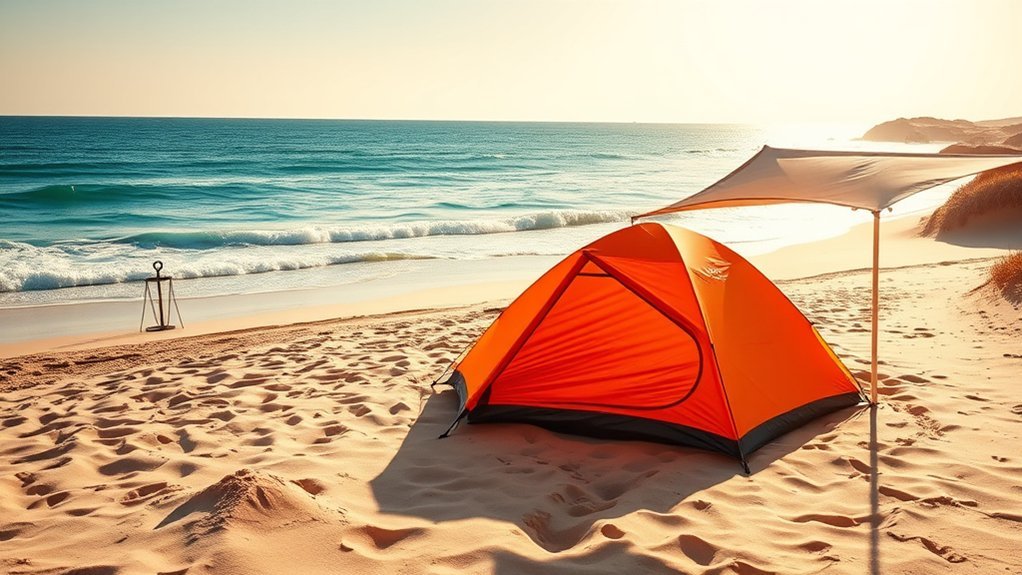
When camping on sand, choose a site at least 100 feet from the water to avoid tides. Use sturdy sand stakes and consider a freestanding tent for easy setup. Pack a durable tarp for extra protection and always secure your tent with guylines and deadman anchors for stability. Don’t forget sun protection like umbrellas, hats, and high-SPF sunscreen. Following these tips will lead to a more enjoyable beach experience, and there’s plenty more to explore for your next adventure!
Choosing the Right Campsite
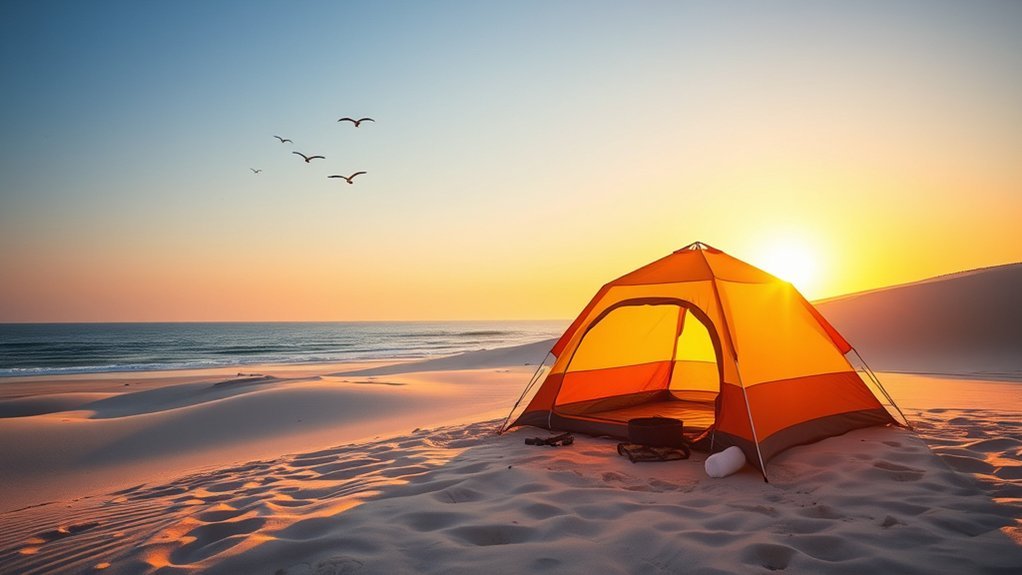
When you’re choosing the right campsite at the beach, it’s vital to prioritize safety and comfort. Start by selecting a spot at least 100 feet from the water’s edge to avoid tidal flooding and guarantee you’re safe during high tide. Research camping locations based on mile markers—mile marker 4 often provides better beach access and safety compared to mile marker 2.
Wildlife awareness is important; avoid setting up near nesting birds or sensitive habitats to minimize disturbance and protect these ecosystems. Also, consider the prevailing wind direction when you set up camp, as this can help reduce sand exposure and potential damage to your shelter. Always check tide schedules and aim to set up during low tide to dodge issues with rising water and strong waves. By making these smart choices, you can enjoy a liberated, worry-free camping experience by the sea.
Essential Beach-Specific Gear
When you’re heading to the beach, having the right gear can make all the difference in your camping experience. You’ll want to pack essentials like sand stakes to keep your tent secure and portable sun shelters for much-needed shade. Don’t forget sun protection items, as staying safe from UV rays is vital while you enjoy the sun and surf.
Must-Have Beach Supplies
To make your beach camping experience enjoyable and hassle-free, you’ll need to pack the right supplies that cater specifically to sandy environments. Here’s a quick guide to must-have beach supplies:
| Item | Purpose |
|---|---|
| Sand stakes | Secure your tent in loose sand |
| Dustpan and brush | For easy sand cleaning of your gear |
| Collapsible sun shelter | Provides shade and is easy to transport |
| Durable tarp | Protects your tent from sand and saltwater |
| Beach cooking tools | Guarantee you can cook without worrying about sand |
Essential Sun Protection Items
Sun protection is essential for anyone spending time at the beach, and having the right gear can make all the difference in your comfort and safety. To enjoy your sun-soaked adventure with peace of mind, don’t forget these must-have items:
- Beach Umbrellas: Perfect for creating shade during peak sunlight hours, preventing heat exhaustion and sunburn.
- High-SPF Sunscreen: Choose a sunscreen with SPF 30 or higher. Apply generously and reapply every two hours for ideal protection against UV rays.
- Collapsible Sun Shelters: These provide a shaded refuge for meals and games, accommodating multiple campers while protecting you from the sun and pesky insects.
With these essentials, you’ll be ready to embrace the beach while staying safe and comfortable!
Tent Setup Techniques for Sand
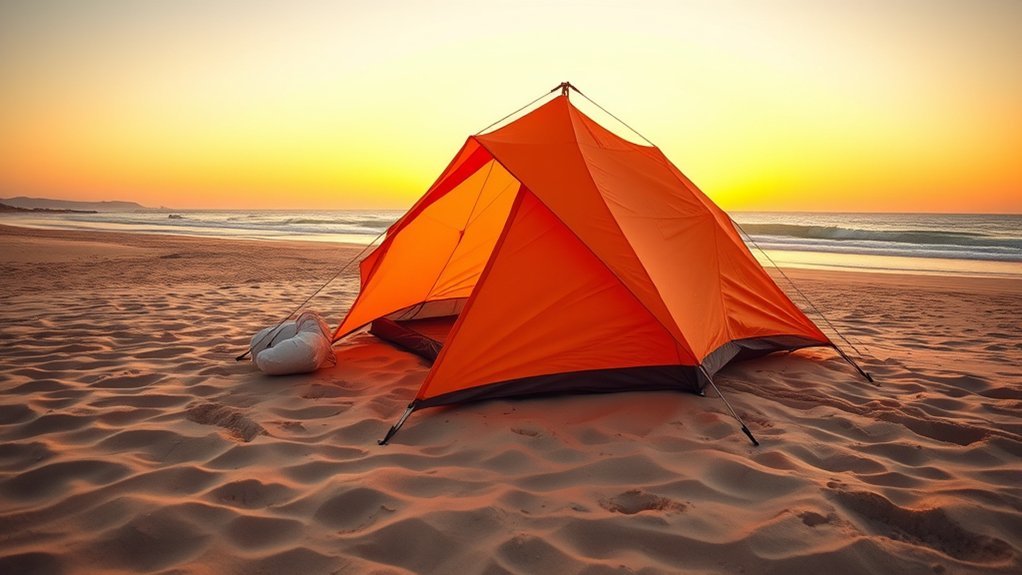
Setting up your tent on sand can be tricky, but with the right anchoring methods, you can guarantee stability against shifting winds. Consider using lightweight MSR Groundhog Stakes or creating deadman anchors with buried sticks for a secure hold. Don’t forget to thread guylines through your tent’s webbing and secure them with rocks to eliminate any slack and keep your shelter steady.
Anchoring Methods for Stability
While camping on the beach can be a relaxing escape, ensuring your tent remains stable in sandy conditions is essential for a comfortable experience. Here are some effective anchoring methods to keep your tent secure:
- Rock stacking: Place large, flat rocks over your tent stakes to increase stability against the wind.
- Dead man anchors: Dig a 12-inch deep hole, wrap guylines around a stick or rock, and bury it for a secure hold in loose sand.
- Driftwood: Wrap guylines around driftwood and bury it deep in the sand for added anchoring power.
Best Tent Stakes
Choosing the right tent stakes can make all the difference when camping on sandy beaches. For sandy conditions, the MSR Groundhog Stakes are a top choice. Their lightweight design and Y shape provide excellent grip and stability, ensuring your tent material remains taut, even in gusty winds. To enhance stability, consider using a rock stacking method—anchor stakes with large, flat rocks and stack more on top. If rocks aren’t available, create deadman anchors by burying a stick or stake wrapped in guylines. Long guylines of at least 36 inches are essential for maintaining tension and weather resistance. Remember, while freestanding dome tents need staking to prevent rolling, non-freestanding shelters like the Mountain Laurel Designs Duomid are easier to set up directly on sand.
Guyline Setup Techniques
When camping on sandy beaches, securing your tent with effective guylines is just as important as choosing the right stakes. To guarantee your tent stays put against shifting sands and winds, consider these techniques for ideal guyline tension:
- 550 cord loops: Create loops by threading one end through the guyline/webbing, securing the other around a flat rock.
- Rock stacking: Place large, flat rocks over tent stakes to enhance stability and prevent them from pulling out.
- Dead man anchors: Dig a 12-inch hole, wrap the guylines around a stick or rock, and bury it for a reliable anchor.
Anchoring Methods for Stability
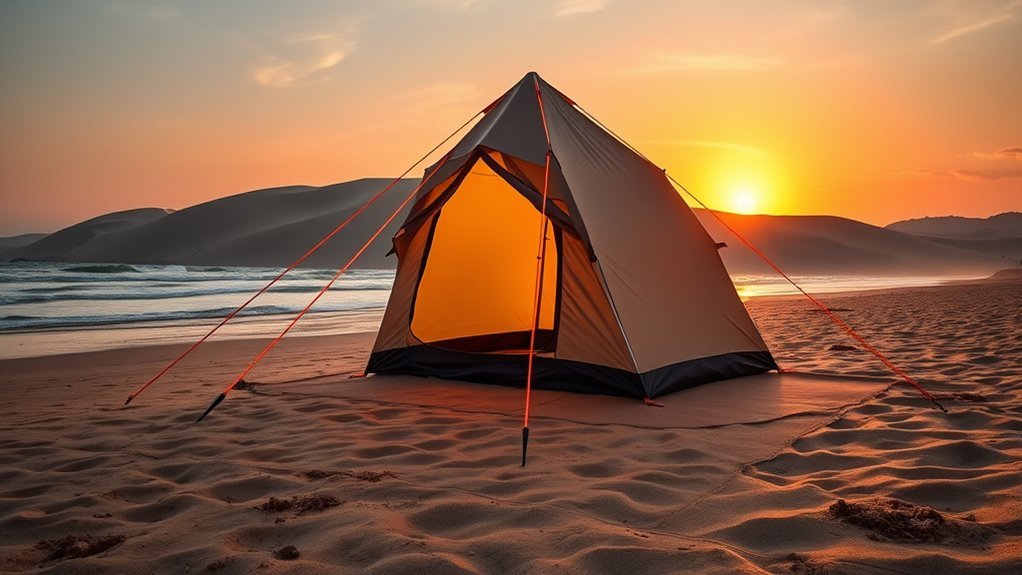
To guarantee your tent remains stable on sandy beach campsites, it’s essential to employ effective anchoring methods. Start with rock stacking, which involves using large, flat rocks to anchor your tent stakes. Place guylines over a foundation rock and secure stakes behind it to enhance wind resistance. For a more robust solution, consider deadman anchors. Dig a hole about 12 inches deep, wrap guylines around a stick or rock, and bury it to increase stability. Adding stacked rocks on top can further bolster your setup. If you’re using a freestanding tent, always stake it down in windy conditions to prevent rolling. Non-freestanding shelters, like the Mountain Laurel Designs Duomid, are easier to set up on sand due to their lighter weight. Finally, opt for sand stakes designed for loose surfaces; they offer better grip than traditional stakes, ensuring your tent stands firm against the elements.
Selecting the Best Tent Stakes
While selecting the best tent stakes for sandy beach camping, it is crucial to take into account both the material and design to guarantee your shelter remains secure. For sandy conditions, you’ll want stakes that grip well and can withstand wind. Consider these options:
Choosing the right tent stakes is essential for ensuring stability and security while camping on sandy beaches.
- MSR Groundhog Stakes: Their lightweight, Y-shaped design offers great hold in loose sand.
- Sand Stakes: These fabric pockets connected to guylines excel at anchoring in sandy environments.
- Longer Guylines: Aim for about 36 inches to enhance tension and stability against wind.
Effective Guyline Usage
Effective usage of guylines is essential for keeping your tent stable and secure on sandy beaches, especially with unpredictable winds. To maximize guyline tension, opt for long guylines, ideally 36 inches, which help maintain stability against gusts. Consider durable materials like the 1.5 mm MLD Pro Guyline that resist abrasion in sandy environments.
Here’s a quick reference for anchoring your guylines effectively:
| Technique | Description | Best Use |
|---|---|---|
| Rock Stacking | Place large, flat rocks on stakes | For added wind resistance |
| Deadman Anchors | Bury a stick or rock wrapped in guylines | When traditional stakes fail |
| Lightweight Stakes | Use sand-specific stakes like MSR Groundhog | Ideal grip in loose sand |
Freestanding Vs Non-Freestanding Tents
When choosing between freestanding and non-freestanding tents for your beach camping adventure, consider the unique advantages each type offers. Each of these tent types has strengths tailored for sandy terrains and weight considerations.
- Freestanding Tents: Easy to set up without stakes, offering more interior space, but can roll in wind if not secured.
- Non-Freestanding Tents: Typically lighter and better suited for uneven beach surfaces, requiring staking for stability. A great example is the Mountain Laurel Designs Duomid for easy setup on sand.
- Minimalist Options: The Zpacks Hexamid Pocket Tarp shines in weight efficiency, perfect for those seeking a simple shelter.
Ultimately, your choice depends on your camping style and the conditions you might face. Whether you prioritize space or weight, understanding these differences will help you enjoy a more liberated experience on the beach.
Managing Tides and Coastal Conditions
Understanding the dynamics of tides and coastal conditions is essential for a safe and enjoyable beach camping experience. Familiarizing yourself with local tide patterns helps you avoid setting up camp too close to the water, as high tides can quickly submerge your campsite. Use tide tracking apps like Tides Near Me to stay updated and plan your activities.
Here’s a quick guide to managing tides and coastal weather:
| Action | Purpose | Tips |
|---|---|---|
| Check tide schedules | Avoid flooding | Research local tide patterns |
| Choose elevated sites | Safety during rising tides | Camp at least 100 feet from the beach |
| Monitor coastal weather | Anticipate wave activity | Be cautious during storms or strong winds |
| Secure belongings | Minimize damage | Store items well above tidal reach |
Sun Protection Strategies
After ensuring your campsite is safe from rising tides, it’s time to focus on sun protection. The sun’s rays can be relentless, so use effective strategies to keep yourself safe and comfortable.
Ensure your campsite is safe from tides before prioritizing sun protection to stay comfortable and healthy.
- Bring a beach umbrella to provide shade during peak hours.
- Apply broad-spectrum sunscreen with at least SPF 30 every two hours, especially after swimming or sweating.
- Wear wide-brimmed hats and UV-protective clothing to shield your skin.
Set up your campsite in areas with natural shade from trees or structures. This minimizes sun exposure throughout the day. Additionally, plan your outdoor activities during cooler parts of the day, like early morning or late afternoon, to avoid that intense midday sun. By implementing these sun protection strategies, you can enjoy your beach camping experience while keeping your skin healthy and protected.
Environmental Considerations for Beach Camping
While enjoying the beauty of a beach campsite, it’s important to be mindful of the environment. Protecting wildlife should be a top priority, so steer clear of sand dunes and their vegetation—these natural barriers are essential for coastal ecosystems. Always pack out all your trash using extra large freezer bags to keep the beach clean for both wildlife and future visitors.
Familiarize yourself with local regulations regarding campfires; many areas prohibit them to safeguard sensitive habitats and prevent wildfires. Be vigilant around nesting birds and avoid their habitats to guarantee their reproductive success.
Embrace sustainable practices by using reusable containers and minimizing single-use plastics. This way, you contribute to preserving these beautiful coastal ecosystems for generations to come. By being considerate and responsible, you can truly enjoy your beach camping experience while protecting the environment.
Frequently Asked Questions
How Do I Keep Sand Out of My Sleeping Bag?
To keep sand out of your sleeping bag, lay a ground tarp underneath, shake off your gear before entering, and use a sand-free area for sleeping. These simple sand prevention tips will enhance your comfort.
What Food Should I Bring for Beach Camping?
For beach camping, pack light, portable meals like wraps and salads, plus tasty camping snacks like trail mix and granola bars. They keep you energized while you enjoy the sun and surf without extra hassle.
Can I Use a Campfire on the Beach?
You can use a campfire on the beach, but check local campfire regulations first. Always prioritize beach safety—keep fires small, monitor them closely, and fully extinguish before leaving to protect the environment and others.
What Are the Best Activities for Beach Camping?
For beach camping, immerse yourself in beach games like frisbee and beach volleyball, or try exciting water sports such as kayaking and paddleboarding. These activities keep you active and create unforgettable memories under the sun!
How Do I Clean up After Camping on Sand?
After camping, you’ll feel like a sand monster! Use sand removal techniques like brushing off gear, shaking out blankets, and vacuuming. Embrace eco-friendly practices by packing out waste and leaving no trace behind.
Conclusion
In the end, camping on sand can be a breeze if you’re well-prepared. Like a ship anchored in calm waters, your tent will stay secure and your experience enjoyable when you follow these tips. By choosing the right gear, mastering setup techniques, and respecting the environment, you’ll create lasting memories along the shore. So grab your gear, embrace the sun and surf, and let the beach be your next great adventure!
