
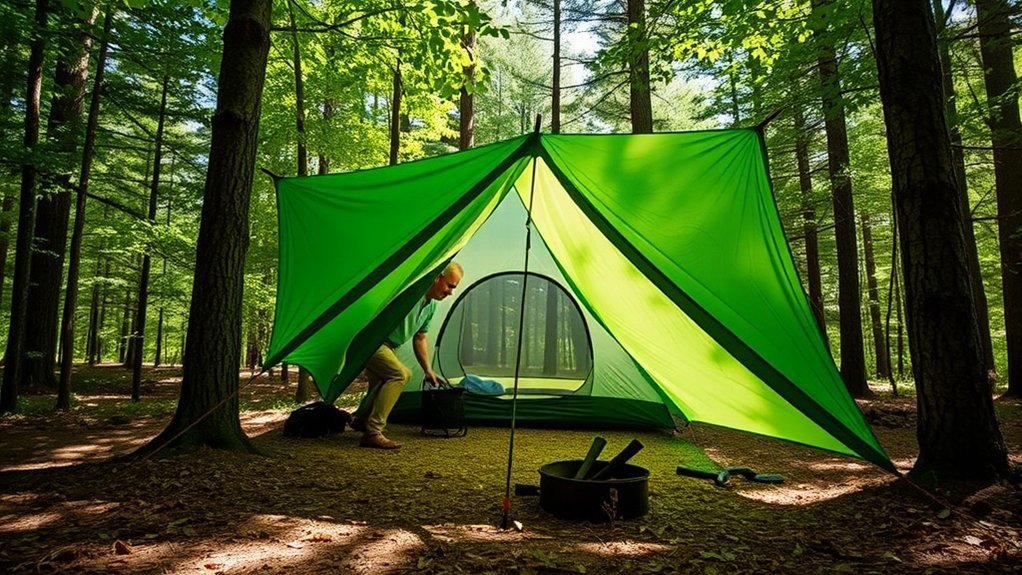
To build a tarp porch for your tent entrance, start by selecting a durable, waterproof, and UV-resistant tarp. Set up sturdy support poles at angles; the back pole should be 5 feet, middle at 6.5 feet, and front at 6 feet. Secure the tarp using grommets and bungee cords to prevent wind lift, and stake it down at wider angles. Regularly check and adjust tension for stability. Want to enhance your setup further? There’s plenty more to reflect upon.
Selecting the Right Tarp Material
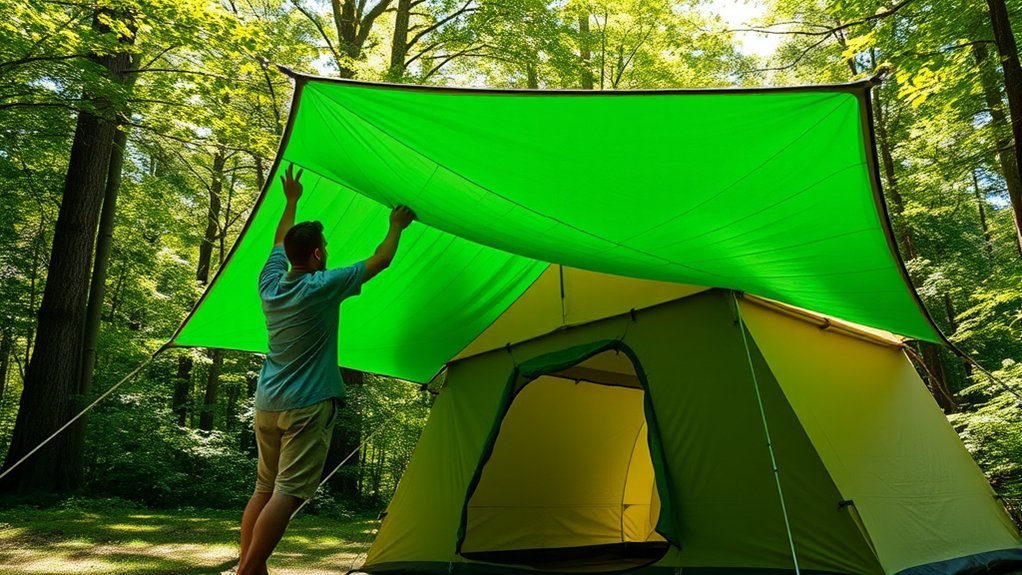
When you’re selecting the right tarp material for your porch, it’s essential to prioritize durability and functionality. A silver tarp from Harbor Freight stands out due to its robust construction and plastic grommets, enhancing resistance to the elements. Focus on tarp types that are waterproof and UV-resistant to effectively shield your space from rain and sun exposure during your adventures.
When deciding on tarp sizes, choose one that provides ample coverage over your tent entrance, extending beyond the sides for ideal protection. Reinforced edges and grommets are vital for secure tie-down points, ensuring stability against wind pressure. Additionally, consider the weight of the tarp; lighter materials are easier to transport and set up, making them perfect for backpacking or solo trips. By addressing these factors, you empower yourself to create a functional and durable tarp porch that enhances your outdoor experience.
Setting Up the Support Poles
To create a stable tarp porch, start by using sturdy inch and a quarter pipes with caps on the bottom as support poles. These pole materials are designed to withstand harsh weather, guaranteeing durability. Set the back pole at 5 feet, the middle pole at 6.5 feet, and the front pole at 6 feet. This arrangement creates an effective pitch, preventing the tarp from acting like a sail in the wind.
When positioning the poles, stake them at wider angles to enhance stability and protect against wind pressure. Angle the poles slightly to relieve tension on the guidelines, allowing for easy adjustments during initial setup. Regularly check the tension on the guidelines, especially during windy conditions, to maintain the integrity of your tarp porch. By following these steps, you’ll secure a reliable shelter that enhances your outdoor experience.
Securing the Tarp Effectively
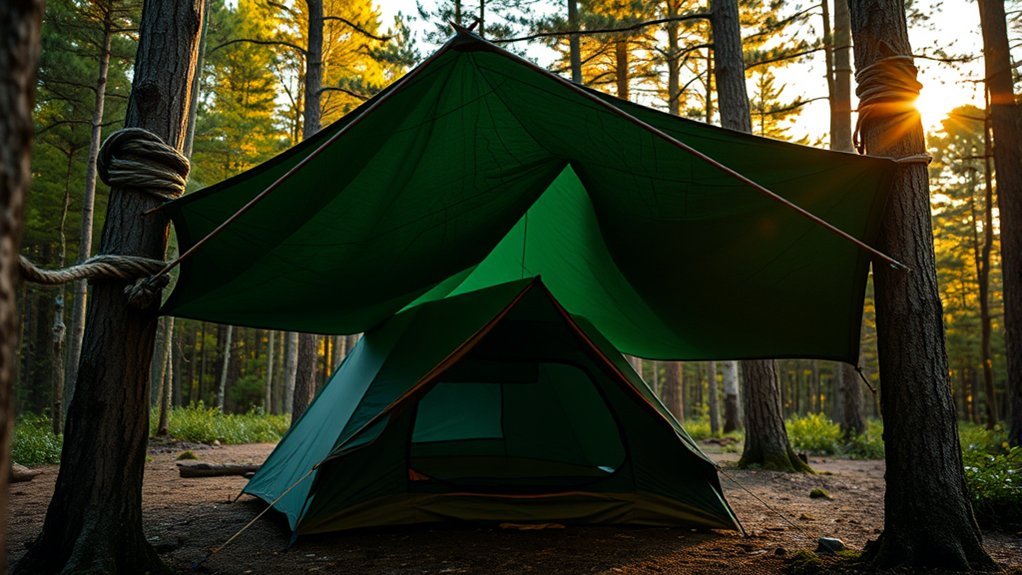
Securing the tarp effectively is essential for maintaining stability and functionality in varying weather conditions. Start by incorporating grommets into the tarp for enhanced durability, facilitating secure tarp attachment to stakes and guidelines. Use bungee cord usage to provide additional stability during storms, allowing the tarp to flex without tearing. Stake the tarp down at wider angles to prevent wind lift, making sure it stays grounded even in harsh weather. To manage tension effectively, utilize a prussic knot on your guidelines; this enables easy adjustments to maintain ideal tarp tension. Regularly check and tighten these guidelines during windy conditions to make sure the tarp remains firmly in place. With these strategies, you can confidently create a reliable tarp porch that enhances your outdoor experience, no matter the weather.
Adjusting Tension for Stability
Adjusting the tension of your tarp is essential for maintaining stability and preventing damage. Using a prussic knot on the guidelines allows you to easily fine-tune the tautness as conditions change. Make it a habit to regularly check and adjust the tension, especially during windy weather, to guarantee your tarp remains secure.
Importance of Tensioning
While setting up your tarp porch, understanding the importance of tensioning is essential for maintaining stability. Proper tension dynamics guarantee your tarp withstands various conditions without becoming a hazard. Here are key stability factors to take into account:
- Start with loose guidelines for easy adjustments later.
- Use a prussic knot on the guidelines for quick modifications as conditions change.
- Angle the poles during setup to relieve tension and maintain stability.
- Regularly check tension, especially in windy weather, to keep the tarp secure.
Prussic Knot Technique
The prussic knot is an essential tool for maintaining the right tension in your tarp porch setup. Its adjustable nature allows for effortless repositioning of guidelines, making it ideal for securing your tarp. When you tie the prussic knot, loop a piece of cord around the main line and weave it back through itself three to five times for maximum grip. This knot slides easily when not under load but grips tightly when tension is applied, ensuring stability in windy conditions. Prussic knot benefits include enhanced adaptability and strong support, while its applications range from securing tarps to climbing. Start with loose guidelines and adjust using the prussic knots to achieve the perfect tautness for your tarp porch.
Regular Tension Checks
To maintain stability and prevent your tarp from flapping or lifting, regularly checking the tension on the guidelines is crucial, especially in windy conditions. Effective tension monitoring guarantees your shelter remains secure and functional. Here are four key steps for guideline adjustments:
- Check regularly: Inspect the tension after heavy rain or wind to prevent sagging.
- Use a prussic knot: This allows for quick tension adjustments without redoing your entire setup.
- Angle the poles: This relieves pressure on the guidelines and enhances stability.
- Set wider angles: During setup, wider angles provide better coverage and maintain proper tension.
Maintenance and Storage Tips
To keep your tarp porch in top condition, always dry the tarp completely before rolling it up to prevent mildew. When removing stakes, use a claw hammer to avoid bending them, ensuring they’re ready for future use. By following these steps, you’ll maintain the integrity and functionality of your tarp setup.
Dry Before Storage
Making certain your tarp is completely dry before rolling it up for storage is essential for preventing mildew growth and extending its lifespan. Follow these steps for effective tarp drying:
- Air Dry: Lay your tarp flat in a sunny location to help it dry thoroughly.
- Inspect for Damage: Regularly check for wear and tear to maintain durability; address any issues immediately.
- Avoid Contamination: Make sure the tarp is free from dirt or debris before storage.
- Store Properly: Once dry, roll or fold the tarp neatly to prevent creasing or damage.
Proper Stake Removal
Removing tent stakes properly is essential for maintaining your tarp setup and maximizing the lifespan of your equipment. Use a claw hammer for efficient removal, as it minimizes the risk of damaging both the stakes and the surrounding ground. When employing removal techniques, make certain to pull stakes straight out to prevent bending, guaranteeing they remain reusable for future setups. Avoid cheap stakes; they can bend or break under wind pressure, complicating removal and jeopardizing your tarp. After removal, store stakes in a designated pouch or container to keep them organized and prevent loss. Regularly check your stakes for wear or damage to guarantee reliability, especially before your next trip, reinforcing effective stake placement and overall setup integrity.
Preventing Mildew Growth
Since mildew thrives in damp conditions, maintaining your tarp’s cleanliness and dryness is vital for preventing its growth. Follow these storage tips for effective mildew prevention:
- Always verify the tarp is completely dry before rolling it up for storage.
- If the tarp gets wet, store it flat in sunlight to kill mildew spores.
- Use a claw hammer to remove stakes without damaging the tarp, preventing moisture retention points.
- Avoid storing your tarp in damp or enclosed spaces, as they create ideal environments for mildew.
Regularly check your tarp for any signs of mildew or dampness during use and storage. By following these guidelines, you can enjoy a mildew-free camping experience and maintain your tarp’s longevity.
Overcoming Weather Challenges
When building a tarp porch, it is crucial to take into account weather challenges that can affect its stability and functionality. To enhance tarp durability, employ robust weatherproofing techniques. Secure the tarp with grommets and bungee cords for added stability against storms. Position the back pole at 5 ft and the front at 6 ft to minimize wind resistance. Use 1.25-inch pipes with caps for support, reinforced with a steel bolt to withstand harsh conditions.
Here’s a quick reference for setup adjustments:
| Weather Conditions | Recommended Action |
|---|---|
| Heavy Rain | Stake at wider angles |
| Strong Winds | Lower tarp height |
| General Instability | Regularly check tension |
Enhancing Your Outdoor Experience
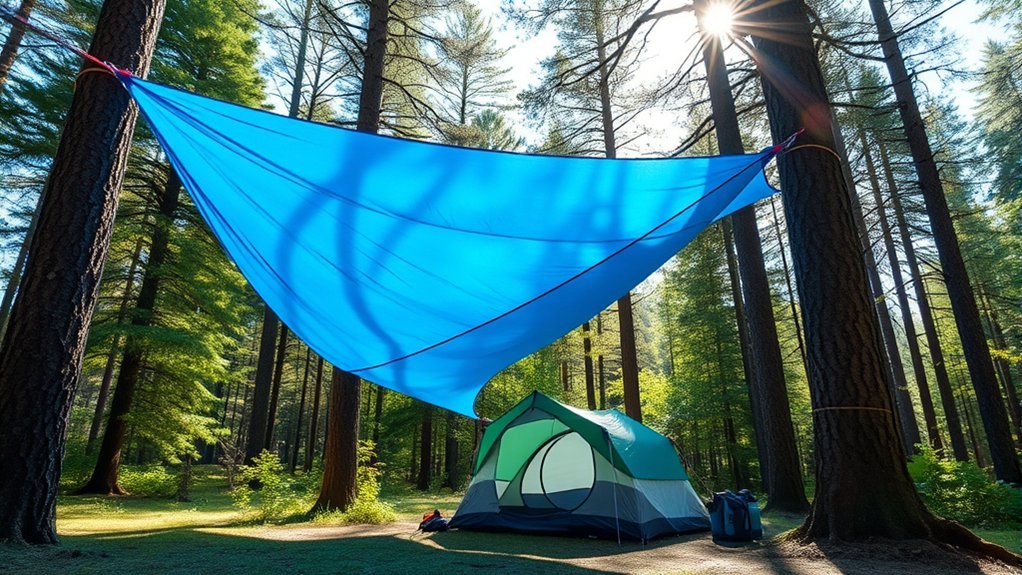
Creating a tarp porch not only extends your living space but also elevates your outdoor experience by providing a versatile area for cooking, relaxing, and enjoying nature. By enhancing outdoor comfort, you can greatly boost your camping enjoyment. Here’s how:
Enhance your camping experience by creating a tarp porch for cooking, relaxing, and enjoying the outdoors.
- Shaded Cooking: Set up your cooking station beneath the tarp to shield yourself from the sun and rain.
- Relaxation Zone: Create a cozy nook with camp chairs and cushions, perfect for unwinding after a day of adventure.
- Gathering Space: Invite fellow campers to share stories and laughter under the protective cover, fostering camaraderie.
- Weather Resilience: Use durable materials and secure your tarp with bungee cords and prussic knots to guarantee stability, enhancing your outdoor experience even in inclement weather.
With a well-built tarp porch, you’re not just camping; you’re embracing freedom in the great outdoors.
Frequently Asked Questions
Can I Use a Regular Tarp Instead of a Silver One?
Yes, you can use a regular tarp instead of a silver one. However, consider tarp material choices; silver tarps reflect sunlight, keeping your area cooler, while regular tarps absorb heat. Choose wisely for ideal comfort.
What Tools Do I Need for Building a Tarp Porch?
You’ll need a sturdy tarp, paracord, stakes, and a mallet. Setup tips include selecting durable tarp materials and ensuring secure anchoring. With these tools, you’ll create a fantastic outdoor extension for your tent!
How Much Weight Can the Tarp Support?
A tarp’s weight capacity depends on its materials and weight distribution. Generally, heavy-duty tarps can support significant loads, but make certain you evenly distribute weight to prevent tearing or failure during use. Always check manufacturer specifications.
Can I Build a Tarp Porch Alone?
Yes, you can build a tarp porch solo while camping. With proper planning and the right materials, you’ll create a functional space that enhances your outdoor experience without needing assistance from others. Enjoy your freedom!
Is It Possible to Add Lighting to the Tarp Porch?
Yes, you can add lighting to your tarp porch. Consider tarp lighting options like solar lights, which are energy-efficient and easy to install, ensuring your space is well-lit without compromising your outdoor experience.
Conclusion
By following these steps, you can create a sturdy tarp porch that transforms your tent entrance into an outdoor oasis. With the right materials and techniques, you’ll be prepared to face any weather challenge, making your camping experience feel like you’re living in a five-star resort. Remember to maintain your setup and store it properly for future adventures. Now, go out there and enjoy the great outdoors with your newly built tarp porch!
