
Last Updated on July 25, 2026 by Mason Reed
Choosing a climbing route is not only about finding a grade you can climb. You also need to check the route style, protection, length, anchors, approach, descent, weather, access rules, and the experience of everyone in your group. A careful route choice gives you more time to enjoy the climbing and fewer surprises at the crag.
Quick Answer
Choose a climbing route that is below your limit, matches your preferred style, uses protection and anchors you know how to manage, and fits your rope, gear, partner, weather, and daylight. Confirm access and closures, study the approach and descent, and keep an easier backup route ready.
Key Takeaways
- Treat the grade as a starting point, not a guarantee. Grades vary by area, rock type, route style, and personal strengths.
- Check route length, rope length, protection, anchor type, descent, and bail options before leaving the ground.
- Use current land-manager notices and local climbing organizations to confirm permits, closures, parking, and access.
- Complete a partner check before every climb and follow the exact instructions for your rope, harness, and belay device.
- Choose a simpler route when the weather, rock, daylight, group experience, or approach is uncertain.
At a Glance
| Time Required | About 15 to 45 minutes for a familiar single-pitch area; longer for remote, traditional, or multi-pitch routes |
| Difficulty | Easy planning task, but the required climbing, anchor, belay, and rescue skills vary by route |
| Tools Needed | Current guidebook or topo, official access and weather information, route-specific gear list, map, and trip plan |
| Cost | Route research may be free; guidebooks, apps, permits, transport, camping, or professional instruction can add cost |
Warning: Rock climbing can cause severe injury or death. This guide helps you compare routes, but it does not teach belaying, anchor construction, lowering, rappelling, rescue, or lead climbing. Learn those skills from a qualified instructor and practice them in a controlled setting before climbing independently.
Disclosure: As an Amazon Associate I earn from qualifying purchases. Some links on this page are affiliate links, at no extra cost to you.
Choose the Best Climbing Routes
Choosing the best climbing routes starts with matching the route to your ability, preferred style, equipment, and the conditions on the day. Do not choose from the grade alone. Read the full route description and look for the route length, number of pitches, protection type, bolt spacing, anchor description, approach, descent, sun exposure, rock type, and known hazards.
Use a current guidebook or topo, then confirm important details with the land manager, local climbing organization, or experienced climbers who know the area. User-generated apps and forums can help with recent comments, but they can contain errors or stale information. Treat them as supporting information rather than your only safety source.
Use a Route Selection Checklist
Before you commit to a route, answer these questions:
- Difficulty: Is the grade comfortably within the ability of every climber who must lead or follow it?
- Style: Does the route involve slabs, cracks, overhangs, chimneys, delicate footwork, powerful moves, or exposure that suits your experience?
- Protection: Is it top rope, sport, traditional, mixed, bouldering, or multi-pitch, and does your group have the required training?
- Length: Is your rope long enough for the route and planned descent?
- Anchors and descent: Do you understand how you will finish, lower, walk off, or rappel?
- Conditions: Is the rock dry, the weather stable, and the temperature suitable for the wall’s aspect?
- Access: Is the route open, and are parking, permits, seasonal closures, or private-property rules involved?
- Consequences: Are there ledges, loose rock, difficult falls, water hazards, avalanche terrain, or a remote rescue?
Pro Tip: Pick a primary route and an easier backup route in the same area. A backup gives you a safe option when the first route is crowded, wet, closed, harder than expected, or too slow for the remaining daylight.
Match Route Grades to Your Skill
You should know your current grade, but you should also know what that grade means in the local system. Roped climbs may use the Yosemite Decimal System, French sport grades, British traditional grades, or another regional scale. Bouldering often uses V grades or Fontainebleau grades. These systems are not exact conversions, and every grade includes some judgment.
Know Your Current Grade
Start with an honest skill assessment. Review what you can climb with control across different wall angles, hold types, and movement styles. A route that matches your usual grade may still feel much harder when it is steep, polished, runout, sustained, exposed, or unfamiliar.
The British Mountaineering Council’s grade overview explains that grades vary between walls and remain subjective. That is why your recent performance on similar terrain is more useful than your single highest send.
Start One Grade Easier
At a new crag, begin below your normal maximum. One grade easier is a useful starting point, but a larger step down may be sensible when you are moving from indoor to outdoor climbing, changing rock types, leading for the first time, or visiting an area known for stiff grades. The BMC also advises climbers to reduce their grade on their first outdoor sport climbs while they adjust to natural rock.
An easier first route gives you time to learn the local holds, friction, bolt spacing, route-finding style, and descent. It also lets you check whether the guidebook grade feels accurate for you that day.
Progress With Small Steps
Move up only after you can complete your current routes with steady movement and safe decisions. Track the route style as well as the grade. For example, being comfortable on a vertical face does not automatically prepare you for a crack, roof, slab, or long endurance route at the same grade.
Ask an instructor or trusted partner for feedback before increasing the technical or commitment level. Progress can mean climbing a slightly harder grade, but it can also mean managing a longer route, reading holds better, improving footwork, or staying calm on unfamiliar terrain.
Pick Top Rope or Lead Routes
When you choose between top rope and lead routes, consider both the climbing difficulty and the system-management skills. Top roping generally limits fall distance because the rope runs to an anchor above the climber. However, setting or reaching the top-rope anchor may create serious hazards of its own. Lead climbing adds rope handling, clipping, longer falls, ground-fall risk near the start, and more demanding belay decisions.
Route Safety Basics
Choose top rope when a safe, permitted, and properly built system is already available or can be set by a trained person. Do not walk near an exposed cliff edge or build an outdoor anchor without the required skills. For lead climbing, both climber and belayer need specific training in clipping, fall management, rope handling, communication, and lowering.
Before every climb, complete a mutual partner check. Petzl’s partner-check guidance covers the belay system, harness fit, tie-in knot, carabiner lock, and a knot at the free end of the rope. Always follow the instructions for your exact equipment.
Skill Level Match
If you are new, use a climbing wall, qualified guide, or instructor-led outdoor session to build skills. A route can be easy to climb but difficult to manage safely because of its anchor, descent, length, exposure, loose rock, or remote location.
Lead routes suit climbers and belayers who have already demonstrated safe technique in a controlled setting. Do not use a quiet crag or an easy grade as a substitute for training. The National Park Service climbing-safety guidance recommends staying within your ability and getting professional training when you are unsure whether your group has the required skills.
Travel-Friendly Route Choices
For a first day at a destination, favor established routes with a clear approach, simple descent, reliable information, and an easy retreat. A single-pitch area close to the road may be easier to manage than a remote wall, but you still need to check local hazards and anchor conditions.
Do not assume a bolted route is automatically safe or that it needs less planning. Bolt quality, spacing, corrosion, missing hardware, and lower-off design can vary. Choose a route only when your equipment, rope, and skills match the entire system from the ground to the descent.
Check Route Type, Protection, and Descent
The same grade can describe very different levels of commitment. Compare the route type before you compare the number:
- Top rope: Check how the anchor is reached, whether top access is permitted, and whether the system can be managed without cliff-edge exposure.
- Sport: Check route length, bolt count, bolt spacing, fixed-anchor condition, stick-clip customs, and the lower-off method.
- Traditional: Check crack sizes, protection quality, runouts, anchor options, and whether the leader can place and assess protection at that grade.
- Bouldering: Check landing quality, pad coverage, spotter needs, downclimb options, highball exposure, and local restrictions.
- Multi-pitch: Check pitch lengths, anchor types, route-finding, rope system, descent, communication, retreat points, and emergency self-rescue skills.
Study the descent before starting. A walk-off can be longer or harder than the climb, and a rappel may require route-specific skills, rope lengths, and equipment. If the descent description is unclear, choose another route or go with a qualified guide.
Check Rope Length, Route Length, and Lowering
Rope-length mistakes can cause fatal lowering accidents. Confirm the route length and the full lowering or rappel distance in a current topo. Do not assume the rope length listed for a nearby route applies to yours. Rope markings can fade, ropes can shrink with use, and published lengths can be approximate.
Tie a stopper knot in the free end when lowering or top roping, unless a specific supervised system requires something different. Petzl identifies a rope that is too short as a primary hazard and recommends checking the route length and tying a knot at the rope end. Make sure the knot cannot pass through your rope bag or other setup.
Warning: Cleaning a sport anchor, lowering from fixed hardware, and rappelling are safety-critical skills. Anchor designs vary, and a small mistake can be fatal. Learn and practice the exact method with a qualified instructor before doing it outdoors.
Review Weather, Rock, and Objective Hazards
Check more than the chance of rain. Look at temperature, wind, lightning, recent rainfall, snow, tides, river levels, daylight, and the direction the wall faces. A south-facing wall may become dangerously hot, while a shaded wall can stay wet or icy.
Some rock types weaken when wet. For example, Zion National Park warns climbers to avoid damp rock and allow drying time after rain. Local guidance may require waiting one or more days after rain. Never climb wet rock when the land manager or local climbing organization advises against it. Also look for loose blocks, rockfall from parties above, unstable snow, wildlife, poison plants, and crowded belay areas.
The NPS recommends considering altitude, aspect, rock type, season, route duration, approach, descent, regulations, and a backup plan when selecting a climb. Check the official forecast and land-manager alerts again on the morning of the trip.
Find Routes in Guides and Forums

Start with a current climbing guidebook or official topo. It should help you identify the wall, route line, grade, protection, length, approach, and descent. Check the edition date because routes, access, fixed hardware, and parking can change.
Then compare the guidebook with recent reports from a local climbing organization, land manager, climbing gym, or established route database. Forums and social groups can reveal wet routes, damaged anchors, road closures, or crowding, but user reports are not guaranteed to be accurate. Confirm safety-critical details through an official or local source whenever possible.
Apps such as Stōkt and Retro Flash are mainly designed for spray walls and indoor or home-wall problem setting, so they are not suitable as primary outdoor route guides. Use an outdoor route database or local guidebook for destination planning, and download the information you need before entering an area with weak service.
Check Local Rules and Access
Before you commit to a route, verify the current climbing regulations and access restrictions. Seasonal wildlife closures, fire restrictions, private-land agreements, parking rules, permits, bolting policies, and camping rules can change. Check the land manager’s website on the day of your trip, not only when you first plan it.
| Source | What to Check | Why It Matters |
|---|---|---|
| Land manager | Closures, permits, fire rules, parking, camping | Official and current requirements |
| Local climbing organization | Access agreements, trail changes, local ethics | Protects long-term access |
| Current guidebook or topo | Approach, route line, length, descent | Reduces route-finding errors |
| Recent local reports | Wet rock, damaged hardware, road conditions | Adds timely context |
The Access Fund’s responsible-climbing guidance asks climbers to respect closures, stay on established trails, minimize noise and group size, protect wildlife and cultural resources, and learn local ethics. These actions help keep climbing areas open.
Pack the Right Climbing Gear
Pack for the route, not for a generic climbing day. Your list may include a helmet, harness, suitable dynamic rope, belay device, locking carabiner, quickdraws, traditional protection, anchor materials, rope tarp, approach shoes, weather layers, water, food, headlamp, navigation tools, and first-aid supplies. The exact list depends on the discipline and route.
Check that every item is compatible. Rope diameter must fall within the approved range for the belay device, carabiners must fit their connection points, and the rope must be long enough for the route and descent. The UIAA’s 2026 equipment guidance stresses choosing gear for the activity and checking compatibility with equipment you already own.
Inspect equipment before the trip and again before use. Follow the manufacturer’s retirement, cleaning, storage, and inspection instructions. Do not use gear with unknown history, chemical contamination, serious wear, cracks, deformation, damaged stitching, or other signs that require retirement.
Know Anchor and Belay Basics
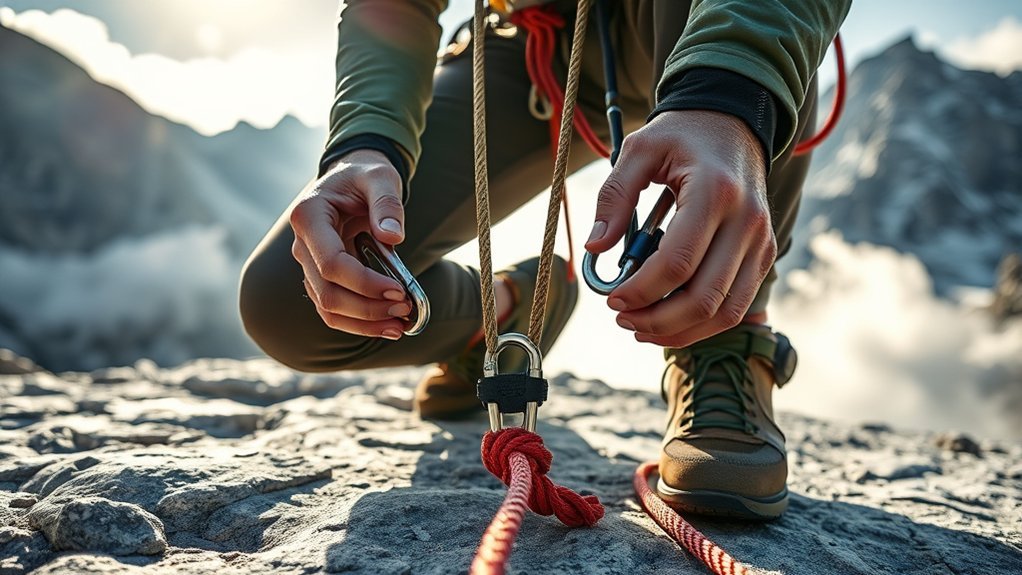
Anchors and belay systems are safety-critical. Do not rely on a short article to learn how to build an anchor, clean a sport route, rappel, or belay. These skills require hands-on instruction, supervised practice, and route-specific judgment.
Fixed anchors can be affected by poor installation, wear, corrosion, rock quality, and environmental conditions. The UIAA’s rock-anchor resources explain that corrosion and stress-corrosion cracking have caused real anchor failures. A bolt that looks normal is not automatically reliable. Learn local anchor concerns, inspect what you can, and retreat when you cannot confirm a safe system.
For belaying, use the exact technique in the device manufacturer’s instructions and keep control of the brake strand. Assisted-braking devices, including the Petzl GRIGRI, are not hands-free devices. The climber and belayer should agree on commands, check each other’s setup, and perform a function check before the climber leaves the ground.
Note: A familiar indoor system may work differently outdoors. Fixed anchors, uneven ground, rope drag, ledges, wind, long lowering distances, and poor communication can change the consequences of a mistake.
Plan Travel and Approach Logistics
Build your trip around the route’s real time demands. Include driving, parking, the approach, gearing up, waiting for other parties, climbing, descent, and the walk back. Start early enough to finish before weather or darkness becomes a problem.
Check whether you need a high-clearance vehicle, shuttle, reservation, permit, cash fee, or offline map. Confirm lodging or camping rules and do not assume overnight parking is allowed. Carry enough water and food for delays, and bring a headlamp even for a planned day trip.
Review the approach and descent separately. Save key junctions, wall photos, and emergency contacts offline. Give yourself extra time to locate the route base because many outdoor routes are difficult to identify from a written description alone.
Build a Backup and Emergency Plan
Leave a trip plan with a trusted person who is not joining the climb. Include the climbing area, planned route, vehicle details, group names, expected return time, backup plan, and who to contact if you are overdue. The NPS trip-plan guidance explains that this information can help search and rescue teams locate an overdue group.
Know the emergency number for the area and whether mobile service is available. In remote locations, consider a suitable satellite communication device and learn how to use it before the trip. Carry first-aid supplies that match the group and location, but remember that a kit does not replace training.
Set turnaround rules before you start. Turn back when the route takes too long, weather worsens, the rock is unsafe, the hardware is questionable, a partner is not comfortable, or the descent cannot be completed in daylight. The goal is to return safely, not to force the original plan.
Connect With Local Climbers
Tapping into the local climbing scene can improve your route choices and help you understand conditions that a guidebook cannot show. Local climbers may know which walls dry first, which approaches are confusing, where parking causes conflict, and which routes have damaged hardware.
- Join a local climbing organization or attend an access event.
- Ask gym staff or qualified guides about suitable routes for your ability.
- Read current local reports, then confirm official rules with the land manager.
- Volunteer for trail or stewardship work to learn local ethics and protect access.
Ask clear questions about route length, protection, descent, anchor condition, recent weather, and closures. Avoid asking only, “What is the best route?” The best choice depends on your group, equipment, experience, and the conditions that day.
Sources
- U.S. National Park Service: Staying Safe While Climbing — ability, training, conditions, closures, and trip planning
- U.S. National Park Service: Things to Consider — route style, aspect, approach, descent, regulations, and backup plans
- Petzl: Partner Check — pre-climb checks for the belay system, harness, knot, and rope end
- UIAA: Climbing Equipment Advice — equipment selection, compatibility, standards, inspection, and instructions
- UIAA: Rock Anchors — anchor standards, corrosion, and fixed-hardware concerns
- Access Fund: Climb Responsibly — closures, local ethics, trails, wildlife, waste, and access protection
Frequently Asked Questions
How do you get better at route finding?
Practice two separate skills: finding the correct route on the cliff and reading the movement once you are on it. Compare the topo with large landmarks, count obvious features, confirm the start and neighboring routes, and stop when the terrain no longer matches the description. For movement, preview holds, rests, clipping positions, and crux sections from the ground.
How are bouldering routes set?
Indoor route setters choose holds, wall angles, start and finish positions, movement sequences, and intended difficulty. They test the problem, adjust holds, check fall zones, and ask other setters to review it. Outdoor boulder problems are not “set” in the same way. Climbers follow natural features and local rules without moving or damaging the rock.
How do you anchor a sport climb?
Use only an established fixed anchor that you have been trained to assess and manage. The method for clipping, cleaning, lowering, or top roping depends on the hardware and local practice. Do not install bolts or improvise an anchor from written instructions. Learn the route-specific procedure from a qualified instructor, and retreat if the anchor is damaged, corroded, loose, incomplete, or unfamiliar.
How do you thread a belay device?
Load the rope exactly as shown in the instructions and diagrams for your specific device. Connect it to the correct harness point with the approved locking carabiner, lock it, keep control of the brake strand, and perform a partner and function check. Get hands-on instruction before belaying independently because devices differ and incorrect loading can prevent them from working.
How do you know whether a rope is long enough?
Check the route and descent length in a current topo, confirm your rope’s actual length, and allow for possible shrinkage and measurement error. For lowering, the rope normally needs to cover twice the vertical lowering distance. Tie a stopper knot in the free end and never rely only on a middle mark.
Should beginners choose top rope or lead climbing?
Most beginners first learn movement and belaying on a supervised top-rope system. Lead climbing adds clipping, longer falls, more rope handling, and greater demands on the belayer. Move to lead climbing only after qualified instruction and controlled practice. Outdoor top-rope anchors also require training and safe access.
What should you do if a route is wet or harder than expected?
Do not force the attempt. Wet rock can be slippery, and some rock types can weaken after rain. Follow local drying guidance. If the route is too hard, use a safe retreat method that your group already knows, ask for qualified help when available, or choose your easier backup route.
Conclusion
You climb smarter when you choose routes that fit your real skill, not only your best grade. Check the style, protection, rope length, anchors, descent, weather, access, equipment, and group experience before you start. A conservative first route, clear partner check, current local information, and an easier backup plan can reduce avoidable risk and make the day more enjoyable.
