
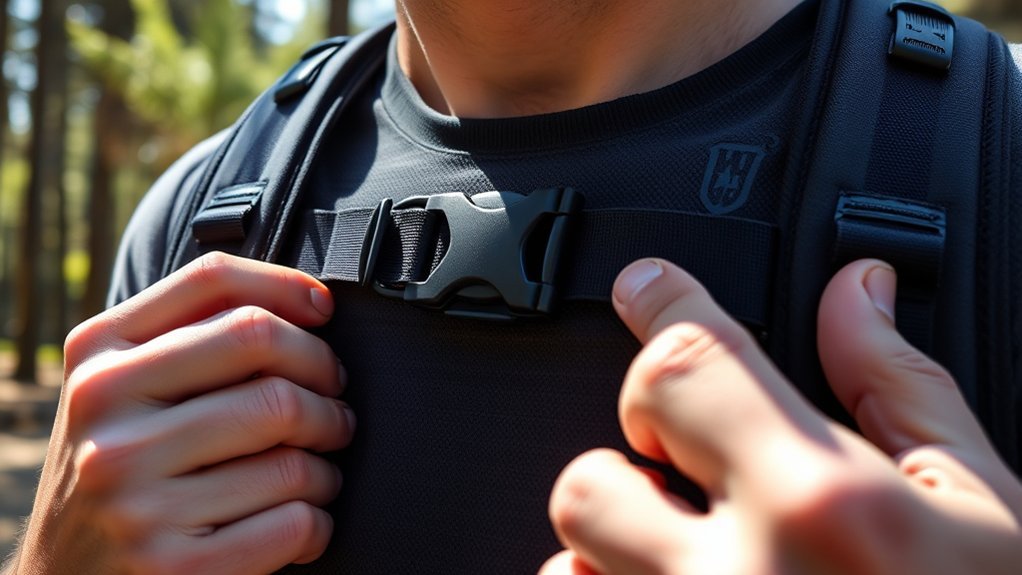
To adjust the sternum strap on your backpack, start by locating the notches for easy removal. Gently press and pull to detach it, then reattach by aligning the pieces with designated slots, ensuring ridges are underneath for security. Position the strap based on your preference for a snug fit that distributes weight evenly. Remember to check for wear and make adjustments during hikes for best comfort and stability. Stick around to discover more tips for your backpacking experience.
Understanding the Purpose of the Sternum Strap

When you’re out on a hike or carrying your backpack for an extended period, the sternum strap plays an essential role in maintaining comfort and stability. This strap helps stabilize the shoulder straps, preventing them from sliding off your shoulders as you move. By distributing weight more evenly across your chest, it reduces strain on your back and shoulders, making your journey more enjoyable.
Proper use of the sternum strap can enhance your overall comfort and improve your posture, especially on longer treks. You can easily adjust the strap to accommodate your body type and personal preferences, ensuring a customized fit. When fitted correctly, it keeps your backpack securely in place, allowing you to focus on your adventure rather than adjusting your gear. Understanding the purpose of the sternum strap empowers you to hike confidently and liberates you from discomfort.
How to Remove the Sternum Strap
Adjusting your sternum strap can enhance your comfort, but there may be times when you need to remove it entirely. To do this, start by locating the notches on the strap where you can comfortably insert your thumb for easy disconnection. Press and pull gently at one side to slide it out of its place. Be certain to repeat this process on the opposite side to fully detach the sternum strap from the backpack.
Once you’ve removed both pieces, verify they’re completely detached before attempting any reattachment or adjustments. Familiarizing yourself with this removal procedure will enhance your efficiency for future adjustments. Being able to liberate your backpack from the sternum strap can help you adapt your gear to your needs, whether you’re switching to a different setup or simply enjoying a lighter load.
Products Worth Considering
Keeps shoulder straps of your backpack securely in place, and gives your hands free. Made of 3/4" wide Nylon Webbing, durable to use. Quick Release Buckle, easy to buckle and...
Steps to Reattach the Sternum Strap
To reattach your sternum strap, start by aligning the strap pieces with their designated slots on your backpack. Insert one end into the slot and push it through until it’s fully seated. Finally, check that both sides are secure to guarantee stability and comfort during use.
Products Worth Considering
High Elasticity Backpack Chest Strap: The Vigorport sternum strap is made of premium high stretch elastic band. It allows you to adjust the elasticity and length of the chest strap as required, won't slide around, stay securely in place, and frees your hands from a heavy backpack
Add a chest strap to your backpack for extra stability more convenient practical
Tailored Fit for 20MM Webbing: These backpack chest straps are specifically designed to fit backpack webbing up to 20MM. Both the strap and buckle are precisely sized for compatibility, ensuring a secure and stable attachment to your gear without any slipping or misalignment
Correct Piece Alignment
Reattaching the sternum strap requires careful alignment of its components to ascertain a secure fit. Start by positioning both pieces correctly, making certain they fit into their designated slots. Insert one end of the strap into its slot, pushing it all the way across the opening. Once inserted, push the strap through until you hear a click, confirming it’s secure. Make sure the ridges on the strap face underneath, which helps prevent detachment during use. After reattachment, gently tug on the strap to confirm it’s fastened properly.
| Step | Action |
|---|---|
| Align both pieces | Make certain they fit in designated slots |
| Insert strap | Push through the opening until it clicks |
| Verify fit | Tug gently to check for security |
Secure Through Designated Openings
Once you’ve guaranteed the correct alignment of the sternum strap, it’s time to secure it through the designated openings on your backpack. Start by carefully inserting one end of the strap into the designated slot, pushing it all the way across until it’s fully seated. Next, pop the strap through the designated opening to lock it in place, ensuring it fits snugly. Make sure the ridges on the strap sit underneath, providing a secure fit and preventing slippage. After reattachment, always check for a firm connection to avoid any accidental detachment during use. This step is essential for comfort and stability, allowing you to move freely and confidently on your adventures.
Confirm Fit and Stability
When you’re ready to confirm the fit and stability of your sternum strap, start by aligning the strap pieces with their designated slots for a proper connection. Insert one end of the strap into its slot and push it fully across until it pops through the designated opening. Verify the ridges on the strap are positioned underneath to secure it firmly in place during use. After reattachment, gently pull on the strap to confirm it’s securely attached and won’t detach during movement. Regularly monitor the strap’s position and adjust as needed for comfort and stability, especially during different activities or loads. This verifies your backpack’s fit remains ideal, allowing you the freedom to explore without distraction.
Finding the Right Strap Position
Finding the right position for your sternum strap is all about personal preference and the activities you plan to do. You might want to adjust it higher or lower depending on your body type and comfort level. Experimenting with different placements can help you achieve the best fit for stability and support while you’re on the move.
Products Worth Considering
Adjustable Backpack Chest Strap: 1 PCS of Backpack Chest Strap Replacement,Webbing Dia. 1", Adjustable Length From 20 to 55 cm, Compatible With Most sizes, secure fit on any backpack
2 PCS Universal Backpack Chest Straps: Fix the backpack straps securely on your shoulders to free up both hands. Perfect for children's school bags, as well as for hiking, traveling, jogging, camping, mountaineering bags and other activities with a heavy-loaded backpack.
Easily attaches to the Herschel Little America, Herschel Little America Mid, Herschel Retreat and Seymour Backpacks released in June 2023 and onwards
Personal Preference Considerations
Adjusting the sternum strap to your liking can make a significant difference in your comfort during outdoor activities. The ideal placement varies for everyone, so try positioning it across your chest or slightly higher or lower to find what feels best. Experimenting with different locations helps you discover the perfect balance and stability for your body type and pack load. If your backpack has two straps, consider placing one higher and another lower on your chest for better weight distribution. Don’t forget to regularly check and adjust the strap during your trek, especially when your load shifts. A well-fitted strap enhances your overall experience and posture, allowing you to freely enjoy your adventures.
Activity-Based Adjustments
To guarantee maximum comfort during various activities, it’s essential to position your sternum strap based on the specific demands of your adventure. The ideal strap placement varies by individual, so adjust it according to your body shape and backpack weight. For added stability, consider using two straps—one higher and one lower—especially during dynamic activities.
| Activity Type | Recommended Strap Position |
|---|---|
| Hiking | Across the chest |
| Climbing | Higher for better stability |
| Running or Biking | Lower for freedom of movement |
Regularly adjust your strap as you engage in different activities to maintain comfort and avoid strain. A well-aligned sternum strap enhances your backpack’s functionality, letting you enjoy your journey to the fullest.
Ensuring Proper Attachment for Safety
While you’re getting ready for your next adventure, ensuring the proper attachment of the sternum strap on your backpack is essential for safety. A securely attached sternum strap prevents accidental detachment during movement, which could lead to loss or damage. Make sure the ridges of the strap are positioned underneath for a stable fit while carrying your load.
Always double-check that both sides of the strap are fully engaged in their designated slots. This avoids any slack that could lead to strap failure. Regularly inspect the strap for signs of wear or looseness, adjusting as necessary to keep it functioning effectively.
Familiarize yourself with the removal and reattachment process. This way, you can quickly address any issues that arise, ensuring your strap remains secure. Prioritizing these steps will help you stay safe and focused on your journey, allowing for a liberating experience in the great outdoors.
Products Worth Considering
Keeps shoulder straps of your backpack securely in place, and gives your hands free.
2 adjustable points by the sides of the detachable buckle, allow you to adjust it to a comfortable length while in use
【Free and solid】The Backpack sternum strap with adjustable non-slip clips to prevent slippage when applied to different backpack straps;
Tips for Maintaining Your Sternum Strap
Proper maintenance of your sternum strap is key to guaranteeing its longevity and functionality. Start by regularly inspecting it for any signs of wear and tear; this helps keep it secure during your adventures. Clean the strap and buckles with mild soap and water to prevent dirt buildup that can impact performance.
When you’re not using your backpack, store it in a cool, dry place to avoid degradation from moisture or extreme temperatures. It’s also vital to avoid overloading your backpack, as excessive weight can strain the sternum strap, causing premature failure.
To keep yourself familiar with your gear, periodically practice removing and reattaching the strap. This simple routine guarantees it remains in good working condition and ready for your next journey. By prioritizing these maintenance tips, you can enjoy a more liberated experience on the trail, free from equipment worries.
Products Worth Considering
Keeps shoulder straps of your backpack securely in place, and gives your hands free.
Quantity : 1 piece for one backpack . Color : black. NO BACKPACK. Backpack is just for display.
This is a new strap that is more convenient and practical than the old one.
Frequently Asked Questions
Can I Adjust the Sternum Strap Without Taking off My Backpack?
Yes, you can adjust the sternum strap without taking off your backpack. Just reach in, loosen or tighten the strap, and find your desired fit. This allows for quick adjustments while you’re on the go.
What if My Sternum Strap Feels Too Tight or Too Loose?
If your sternum strap feels too tight or loose, you can easily adjust it. Loosen or tighten the straps until it fits comfortably across your chest, allowing you to move freely and enjoy your adventure.
Are Sternum Straps Universal for All Backpack Types?
No, sternum straps aren’t universal for all backpack types. They vary in design and adjustability. Always check your specific backpack’s compatibility before making adjustments to guarantee comfort and support during your adventures.
How Often Should I Check the Fit of My Sternum Strap?
You should check your sternum strap fit every few hours during hikes. Studies show that proper adjustments can reduce fatigue by up to 30%, enhancing your comfort and freedom to explore without unnecessary strain on your shoulders.
Can I Replace a Damaged Sternum Strap Easily?
Yes, you can replace a damaged sternum strap easily. Most backpacks allow for simple detachment and reattachment. Just ascertain you get a compatible replacement, follow instructions, and you’ll have it fixed in no time.
Conclusion
Adjusting your sternum strap isn’t just a small detail; it’s like fine-tuning a musical instrument. Just as a slight adjustment can create harmony in sound, the right strap position guarantees comfort and stability during your adventures. Remember, a well-fitted strap helps distribute weight evenly, preventing fatigue on long hikes. So, take a moment to tweak it before you hit the trail—you’ll be glad you did when you’re breezing through those miles with ease!