
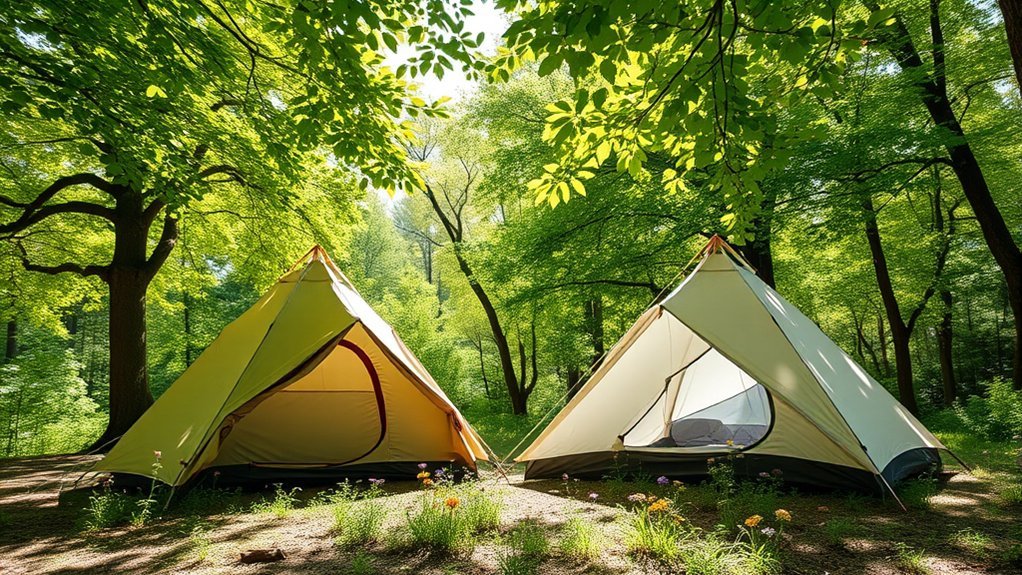
When deciding between freestanding and non-freestanding tents, consider your specific needs. Freestanding tents offer better weather protection, more interior space, and convenience in diverse terrain setups, making them ideal for comfort-focused trips. In contrast, non-freestanding tents are lighter, more compact, and affordable, perfect for minimalist hikers. Each type has its strengths regarding weight, packability, and durability. Understanding these factors helps you choose the right tent for your adventures, and there’s more to explore on their features.
Overview of Tent Types

When choosing a tent for your outdoor adventures, understanding the different types can make a significant difference in your experience. Freestanding tents offer notable benefits, as they can stand independently without stakes. This versatility allows you to set up camp on various terrains and easily adjust your tent’s position before staking it down. On the other hand, non-freestanding tents have their own advantages, often being lighter and more compact, perfect for backpackers seeking to minimize weight. These tents rely on stakes for stability, resulting in a more streamlined design but with less interior space and headroom. Semi-freestanding tents blend features of both types, providing some flexibility while still requiring stakes for peak performance. Ultimately, the choice between freestanding and non-freestanding tents hinges on your preferences, trip duration, and the specific conditions you expect to encounter during your journey.
Products Worth Considering
Easy Set Up - Y frame tent with simple structure. One person first using this tent is able to set up the tent quickly. The installation instructions sewn inside of the stuff...
Performance Considerations
Choosing the right tent type greatly impacts your outdoor experience, especially when considering performance. Here’s what you should keep in mind:
- Weather Protection: Freestanding tents provide superior resilience in harsh conditions due to their pole structure and double-wall designs.
- Ventilation Efficiency: Freestanding tents generally offer better airflow, reducing condensation and enhancing comfort inside.
- Interior Space: Freestanding tents typically have more generous headroom and livable space, allowing for easier movement.
- Durability: While ultralight non-freestanding tents can compromise robustness for weight, freestanding options often use more rugged materials.
Understanding these performance considerations will help you choose a tent that meets your needs, ensuring you stay dry and comfortable on your adventures. Aim for a balance between weight and stability, depending on your specific outdoor goals.
Products Worth Considering
Fully featured and refreshed for 2020, the reliable backpacking companion Grand Mesa tent is now even grander. Easy, affordable, and awesome… like your favorite freeze-dried meal. Without the heart burn.
【EASY SETUP FREE STANDING TENT】:With one set of aluminum alloy tent poles, the tent is super easy to assemble, it takes less than two minutes for anyone with no experience.The 2 Y-shape can make it self standing without peg nails. It is the easiest tent you have ever put up. Perfect 2 person tent for Backpacking, cycling, Hiking, Bikepacking, Mountaineering, Fishing or Car Camping. And The Tent comes with a instruction manual.
Lightweight & Compact: Weighing just 4 lbs. 1 oz., this tent is perfect for solo backpackers seeking a lightweight shelter without compromising on durability.
Weight and Packability
Weight plays an essential role in selecting the right tent for your adventures, especially for backpackers who prioritize packability. Freestanding tents often weigh around a pound more than non-freestanding options due to additional poles. For long-distance hikes, even half a pound can make a significant difference. Non-freestanding tents, with their compact designs, allow for easier packing, fitting snugly into your backpack. Trekking pole tents utilize your existing poles, enhancing packability without extra weight.
| Tent Type | Average Weight | Packing Techniques |
|---|---|---|
| Freestanding Tents | Heavier | Bulkier, needs more space |
| Non-Freestanding Tents | Lighter | Compact, easy to pack |
| Trekking Pole Tents | Lightest | Utilizes existing poles |
Selecting the right tent involves considering weight distribution and packing techniques, ensuring you can travel light and efficiently.
Products Worth Considering
【Protect Your Hands】 Night Cat backpacking tent (ZP-10) uses the upgraded fiberglass pole that is fully covered with PROTECTION CASE. Comparing the traditional fiberglass pole under single layer only, the double layer design can protect your hands when assembling to avoid the tiny scrap inserting your hands
【Durable and High-Quality Material】: BISINNA Camping tent are made with high quality Material. The INNER TENT made with 190T Polyester Taffeta+B3 No-see-um Mesh; RAINFLY made by 190T Polyester Taffeta and guarantees PU2000mm water-resistant; TENT POLES made with lightweight and durable 7001 space aluminum, can supports most heavily wind rain.
【Quick & Easy Setup】Designed for effortless solo setup, this 2 person backpacking tent features easy set up structure and two lightweight aluminum poles. It can be pitched in just 3 minutes—perfect for hikers or campers who want a hassle-free experience.
Interior Space and Comfort
Interior space and comfort are essential factors to evaluate when selecting a tent for your outdoor adventures. The choice between freestanding and non-freestanding tents greatly affects your experience regarding interior layout and usable height. Here’s what you can expect:
When choosing a tent, prioritize interior space and comfort for a better outdoor experience.
- Freestanding tents: Enjoy greater interior volume, allowing you to sit upright comfortably.
- A-frame design: Non-freestanding tents often have limited headroom, making them feel cramped.
- Vestibule space: Freestanding options typically include larger vestibules for gear storage, keeping the interior clutter-free.
- Pitching flexibility: Freestanding tents can be set up on various terrains without stakes, offering more choice for comfortable locations.
Ultimately, if you prioritize space and comfort, a freestanding tent will likely be your best bet. It allows you to relax, move freely, and fully enjoy your outdoor escapades without feeling confined.
Products Worth Considering
Key Features: Waterproof and durable material - Lightweight but sturdy frame pole for sleeping overnight, even on a windy or drizzle day. - Perfect for the outdoor enthusiast that enjoys camping, backpacking, hiking ,etc.
1 PERSON TENT: If trekking or backpacking personal in the backcountry, you will need a quality one person tent to keep you protected from the elements. Polyester rain fly&bathtub with PU 5000 coating is better in waterproof and firmer than you expected. Weatherproof material with factory-sealed seams keeps you dry and comfortable in all season&all weather conditions! You need an appropriate lightweight solo tent for backpacking!
2024 NEW CLOUD UP BASE: The Cloud up Base is the upgraded version of Cloud up 2 Person Tent; 1. A ventilation window is added above the front door, to provide more air flow in the tent, avoid water condensation; 2. The door is upgraded to be a larger and higher front door, with more space to put your camping gears and easy access to the tent.
Cost and Durability
When considering budget and longevity, you’ll find that non-freestanding tents generally offer a more affordable option for backpackers. These budget options can start around $30, while high-end models for both types can exceed $500. Non-freestanding tents often use lighter materials to save weight, which may compromise durability compared to their freestanding counterparts. Freestanding tents, with their robust pole structures, typically perform better in harsh weather conditions, providing an edge in durability.
However, non-freestanding tents shine in repairability; you can fix them with basic materials in the field, while freestanding tents may require specific replacement parts for pole damage. Ultimately, if you prioritize budget and flexibility in repairs, a non-freestanding tent is a solid choice. But if you seek enhanced durability and can accommodate a higher price, a freestanding tent might serve you better in the long haul.
Products Worth Considering
Lightweight & Compact: Weighing just 4 lbs. 1 oz., this tent is perfect for solo backpackers seeking a lightweight shelter without compromising on durability.
EASY SETUP FREE STANDING TENT: With one set of aluminum alloy tent poles, the tent is super easy to assemble, it takes less than two minutes for anyone with no experience.The double-Y structure can make it self standing without peg nails. It is the easiest tent you have ever put up. Perfect 3 person tent for Backpacking, cycling, Hiking, Bikepacking, Mountaineering, Fishing or Car Camping. And The Tent comes with a instruction manual.
WATERPROOF & LONG-LASTING: Polyester rain fly & groundsheet & bathtub with PU 5000 coating is firmer than you expected. Weatherproof material with factory-sealed seams keeps you dry and comfortable in all season&all weather condition! Better material but more affordable! You really need an appropriate lightweight 2 person tent for backpacking!
Frequently Asked Questions
Can Freestanding Tents Be Used Without Stakes?
Yes, you can use freestanding tents without stakes, but you’ll sacrifice some tent stability, especially on uneven camping terrain. For best performance, securing your tent enhances its structure and weather resistance, ensuring a better camping experience.
How Do Weather Conditions Affect Tent Performance?
Weather conditions greatly impact tent performance; strong winds can test its durability, while heavy rain exposes weaknesses in weather resistance. Choosing a tent designed for specific conditions guarantees you stay protected and comfortable during your adventures.
Are There Hybrid Tent Options Available?
Yes, hybrid tents exist, blending freestanding and non-freestanding features. They offer benefits like stability and versatility, allowing you to pitch them in varying conditions, freeing you to explore diverse environments without compromise.
What Accessories Are Recommended for Each Tent Type?
For each tent type, consider essential tent accessories like footprint groundsheets for protection, guylines for stability, and repair kits for emergencies. These camping essentials enhance durability, comfort, and overall experience, ensuring you’re always prepared.
How Do I Maintain and Care for My Tent?
To keep your tent in top shape, regularly clean it with mild soap and water. Master repair techniques for small tears and guarantee it’s dry before storage to prevent mold and extend its life.
Conclusion
In choosing between freestanding and non-freestanding tents, you weigh flexibility against stability. Freestanding tents offer easy setup and mobility, perfect for varied terrains, while non-freestanding options excel in weight-saving and compactness for minimalist adventures. Your decision boils down to your priorities: if you’re after convenience in diverse conditions, a freestanding tent’s your best bet. However, if ultralight backpacking is your goal, a non-freestanding option can deliver unmatched efficiency. Each has its place in your camping arsenal.