
Last Updated on July 27, 2026 by Daniel Globe
A hiking boot should feel secure around your heel and midfoot without squeezing your foot, while leaving enough room for your toes to move freely. The goal is not a boot that feels tight. It is a boot that holds your foot in place without rubbing, pinching, or letting your toes hit the front on downhill sections.
Quick Answer
Hiking boots should feel snug at the heel and midfoot but never painfully tight. Your heel should stay secure, your toes should be able to wiggle, and there should generally be about a thumb’s width between your longest toe and the front of the boot. Test the fit while wearing your normal hiking socks and insoles.
Key Takeaways
- A hiking boot should hold your heel and midfoot securely without pinching or creating pressure points.
- Leave enough room for your toes to move and avoid hitting the front of the boot during descents.
- Measure both feet while standing and use the larger foot as your starting point for sizing.
- Wear the same socks, insoles, or orthotics you plan to use on the trail when testing boots.
- Terrain and pack weight can change the type of footwear you need, but they are not reasons to automatically buy a longer size.
- Never rely on break-in to correct painful pressure, severe heel slip, or a boot shape that does not match your foot.
At a Glance
| Time Required | About 20–30 minutes to measure your feet and properly test several pairs |
| Difficulty | Easy |
| Tools Needed | Foot-measuring device or paper and ruler, hiking socks, and your usual insoles or orthotics |
| Cost | No extra cost to measure and test fit; boot prices vary |
How Hiking Boots Should Fit
Good hiking-boot fit is a balance between security and space. Your foot should not slide around inside the boot, but the boot should not squeeze your toes, forefoot, instep, or heel.
Think about the fit in five zones:
- Heel: Your heel should stay controlled when you walk. A small amount of natural movement may occur, but repeated lifting or rubbing is a warning sign.
- Midfoot: The boot should wrap securely around your foot without crushing it.
- Instep: Laces should hold your foot without creating painful pressure across the top.
- Forefoot: The widest part of your foot should not be squeezed by the sides of the boot.
- Toe box: Your toes should be able to wiggle and spread naturally without touching the front during normal walking or descents.
A good hiking boot feels secure, not restrictive: controlled at the heel and midfoot, comfortable across the forefoot, and roomy enough for your toes.
This general approach matches current fitting advice from Salomon and KEEN, both of which emphasize secure heel hold, adequate toe space, hiking socks, and the absence of pressure points.
Measuring Your Feet for the Perfect Fit
Start with measurements rather than assuming that the size printed on your everyday shoes will transfer directly to hiking boots.
For the most complete measurement, a footwear store can use a Brannock-type device to check heel-to-toe length, heel-to-ball or arch length, and width. The Brannock Device Company’s official instructions recommend measuring while standing with weight on the feet, measuring both feet, and fitting the larger foot.
How to Measure Foot Length at Home
- Put on the hiking socks you expect to wear.
- Stand on a piece of paper with your heel against a straight wall.
- Keep your weight distributed naturally over the foot.
- Mark the end of your longest toe.
- Measure from the wall to that mark.
- Repeat the process for the other foot.
- Use the larger measurement when consulting the boot manufacturer’s size chart.
Measuring later in the day can also be useful because feet commonly expand after hours of standing and walking. Salomon and KEEN both recommend trying hiking footwear later in the day for this reason.
Note: A foot-length measurement is a starting point, not a guarantee of fit. Two boots labeled with the same size can feel very different because their internal shape, width, instep height, toe-box shape, and overall volume differ.
Do Not Ignore Heel-to-Ball Length
A shoe should flex near the same place your foot flexes at the ball of the foot. This is one reason professional shoe-fitting measurements include heel-to-ball or arch length in addition to simple heel-to-toe length.
If the widest part of your foot sits well behind or ahead of the boot’s natural flex point, changing to another size or another model may produce a better match.
Trying on Hiking Boots: What to Look For
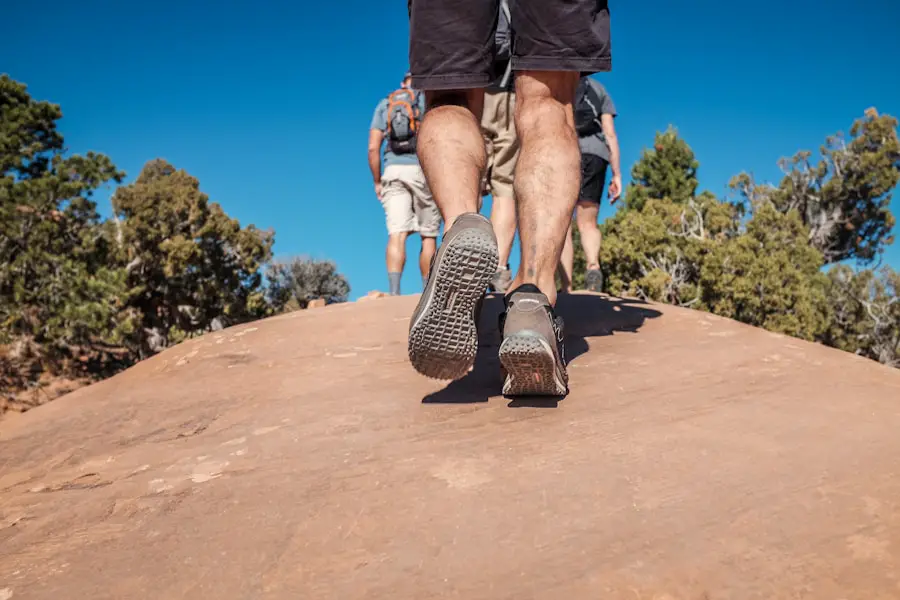
Try hiking boots with the socks you actually intend to wear. If you normally use an orthotic or aftermarket insole, install it before judging the fit because it can change the amount of usable space inside the boot.
Lace the boot fully and walk around for several minutes. Pay attention to the heel, sides of the foot, instep, flex point, and toes. There should be no sharp pressure, burning sensation, pinching, or obvious rubbing.
Check the Heel
Your heel should feel secure rather than loose. Repeated up-and-down rubbing can create hot spots and blisters. Before rejecting an otherwise good boot, make sure it is laced correctly, but do not use extremely tight laces to force an oversized boot to stay on your foot.
Check the Toe Box
Your toes need room to wiggle. As a general guideline, current Salomon hiking-footwear guidance recommends roughly a thumb’s width between your longest toe and the end of the footwear.
That space is especially important when walking downhill, when your foot can move forward inside the boot.
Perform a Downhill Test
Use a fitting ramp, stairs, or another safe incline if available. Walk downhill with the boots properly laced. Your toes should not repeatedly strike the front of the boot.
KEEN also recommends testing boots on an incline or decline because a pair that feels comfortable on level flooring may reveal toe or heel problems once the foot shifts under load.
Warning: Do not assume painful pressure, numb toes, severe heel rubbing, or toe impact will disappear after break-in. Those symptoms often indicate the wrong size, width, volume, or boot shape.
Should Hiking Boots Be a Size Bigger?
Not automatically. There is no universal rule that every hiker should buy hiking boots a half-size or full size larger than street shoes.
Your final size needs to leave enough functional room for your hiking socks, normal foot expansion, and downhill movement while still keeping the heel and midfoot secure. Depending on the manufacturer, model, and the way your everyday shoes fit, that could be your usual labeled size or a different one.
Salomon advises choosing the larger option when you fall between two of its sizes, but that manufacturer-specific guidance should not be converted into a rule that applies to every brand.
Pro Tip: Ignore the number on the box until the fit test is finished. Heel hold, toe clearance, width, flex-point alignment, and the downhill test tell you more than comparing the label with your casual-shoe size.
Width, Foot Volume, and Boot Shape Matter Too
Length is only one part of hiking boot sizing. A boot can be long enough and still feel wrong because it is too narrow, too wide, too shallow over the toes, or too tight over the instep.
Manufacturers build footwear around different lasts, which are the forms that determine the internal shape of the shoe. Even models from the same brand can fit differently.
Do not assume that terms such as “wide” or “regular” are perfectly standardized across manufacturers. The Brannock Device Company specifically notes that width terminology can vary between footwear makers.
Signs the Boot Is Too Narrow or Low-Volume
- Your toes or forefoot feel squeezed from the sides.
- You feel strong pressure across the top of the foot even with reasonable lacing.
- Your toes cannot spread naturally.
- You develop a concentrated pressure point instead of even contact.
Signs the Boot Is Too Wide or High-Volume
- Your heel lifts excessively even when the boot is properly laced.
- Your foot slides from side to side.
- Your foot moves forward noticeably during descents.
- You need to overtighten the laces just to hold your foot in place.
In many cases, changing to a model built on a different last works better than repeatedly sizing up or down in a shape that does not match your foot.
Considerations for Different Types of Hiking
| Hiking Type | Footwear Considerations |
| Day Hiking | Light hiking shoes, trail shoes, or boots can work depending on terrain, weather, and personal preference. Fit should still be secure with adequate toe room. |
| Backpacking | Rough terrain and heavier loads may favor footwear with a more stable platform and stiffer construction. Do not automatically size up; fit the boot with your actual socks and insoles. |
| Winter Hiking | Account for the socks you will actually wear and any insulation or traction-system requirements. Avoid a fit so tight that your toes are compressed. |
| Mountain Hiking | Technical terrain may call for a more protective, stable, and stiffer boot. Mountaineering objectives may require specialized footwear and compatible traction equipment. |
The important distinction is that the demands of the hike help determine the type of footwear you need. They do not replace normal sizing and fitting rules.
Current Salomon guidance recommends considering terrain, duration, pack load, protection, and footwear height when choosing between lighter hiking shoes and more supportive boots.
Sizing Tips for Different Brands and Styles
Shoe-size labels are not perfectly consistent across manufacturers or even across every model from the same manufacturer. For that reason, your normal size should be treated as a starting point.
Use the manufacturer’s current size chart, but still try the footwear whenever possible. Check the actual last shape, available widths, heel pocket, toe-box shape, and instep volume rather than assuming an entire brand fits narrow or wide.
A low-cut hiking shoe can also feel very different from a mid- or high-cut boot bearing the same labeled size because the upper, lacing, volume, stiffness, and heel construction may differ.
If you are buying online, test the boots indoors while they are still returnable. Wear your hiking socks and normal insoles, lace both boots fully, walk around, and use stairs if it is safe to do so. Check the seller’s return policy before wearing them outdoors.
Common Mistakes to Avoid When Sizing Hiking Boots
Assuming the Size Label Guarantees the Fit
Two boots carrying the same printed size can fit differently. Always judge the actual boot on your foot rather than buying from the number alone.
Automatically Sizing Up for Backpacking
A backpacking boot may be stiffer or more supportive than a light hiking shoe, but that does not mean it should automatically be longer. Select the correct footwear type first, then size it using your feet, socks, insoles, and fit tests.
Ignoring Sock Thickness
Try boots with the socks you will actually use. A different sock thickness changes the space available inside the boot and can change how securely the heel and midfoot are held.
Forgetting Insoles or Orthotics
An aftermarket insole or prescribed orthotic occupies space. Bring it during fitting rather than adding it after buying a boot that only fits with the factory insole.
Expecting Break-In to Fix Pain
Some materials soften and adapt with use, particularly traditional leather. That does not mean a painful boot will become the correct shape. Salomon advises starting new footwear with shorter walks but also notes that a boot that does not match your foot is unlikely to become correct simply through break-in.
Testing Only on Flat Flooring
Walk on a fitting ramp or safe stairs when possible. A downhill test can expose toe impact or forward sliding that is easy to miss on a flat store floor.
Troubleshooting Common Hiking Boot Fit Problems
Your Heel Slips
First check your lacing. A heel-lock or surgeon’s-knot-style lacing technique can improve heel hold in a boot that otherwise fits well. However, persistent large heel movement may mean the heel pocket or overall boot volume is wrong for your foot.
Your Toes Hit the Front Downhill
Make sure your heel is seated and the boot is correctly laced. If your toes still strike the front on descents, you may need more usable length, a different toe-box shape, or better heel hold.
The Boot Pinches the Sides of Your Foot
Try the appropriate wide version if the model offers one. If increasing width makes the heel sloppy or the boot still pinches, a different last may suit your foot better than simply buying a longer size.
The Top of Your Foot Hurts
Pressure over the instep can sometimes be reduced with a different lacing pattern. If the boot remains uncomfortable with normal lacing, the model may not provide enough volume for your foot.
One Foot Is Larger Than the Other
Measure both feet and fit the larger one. Brannock’s official instructions note that different-sized feet are common. The smaller foot can sometimes be secured through careful lacing or an appropriate fitting adjustment without squeezing the larger foot into a boot that is too small.
Tips for Ensuring Comfort and Support
Stock insoles work well for some hikers and not for others. An aftermarket insole can alter cushioning, support, heel position, and internal volume, so it should be evaluated as part of the complete boot fit rather than treated as an automatic upgrade.
If you already use an orthotic recommended for you, bring it to the fitting. Do not select the boot first and assume the orthotic will fit later.
Lacing can also fine-tune a correctly sized boot. Different techniques can improve heel hold or relieve localized pressure. The American Hiking Society recommends walking around in prospective boots and testing them on an incline when available rather than judging them while standing still.
Pro Tip: Before a major trip, wear new boots indoors and on several shorter walks or hikes. This lets you identify rubbing, lacing problems, or fit issues before you are miles from the trailhead.
Breaking In New Hiking Boots
Modern hiking footwear should not require you to endure pain before it becomes wearable. Synthetic footwear may need little traditional break-in, while heavier leather footwear can soften and conform somewhat with use.
Start with short walks and gradually increase your distance. Break-in is useful for confirming comfort and allowing materials to move with your foot, but it cannot correct a boot that is fundamentally too short, too narrow, too high-volume, or built on the wrong last.
Knowing When It’s Time to Replace Your Hiking Boots
There is no universal mileage at which every hiking boot must be replaced. Inspect the condition and performance instead.
Look closely at the outsole, midsole, upper, stitching, heel lining, and bond between the sole and upper. Severely worn tread can reduce useful grip, while cracking, separation, damaged uppers, or major changes in cushioning can signal that repair or replacement is needed.
Do not assume every worn boot must be thrown away. Some traditionally constructed trekking and mountaineering boots can be resoled or repaired. For example, LOWA’s current care guidance explains that some of its cemented trekking and mountaineering footwear can receive replacement outsoles and cushioning components, while some injected lightweight models cannot be fully resoled.
If a previously comfortable boot begins causing persistent rubbing or your foot moves differently because the structure has broken down, inspect the footwear before the next long trip.
When considering how a hiking boot should fit, it is also useful to think about the other gear you will carry on your outdoor adventures. If your hiking trip includes fishing, a compact setup can reduce the amount of bulky equipment you need to carry. This guide to the best travel fishing rod highlights portable options designed for travel and outdoor trips. Pairing properly fitted hiking footwear with practical gear can make the outing more comfortable and enjoyable.
Love travel? Join Our Facebook Community For More Tips.
Frequently Asked Questions
Why is proper hiking boot fit important?
A properly fitting hiking boot keeps your foot controlled without excessive rubbing or pressure. A poor fit can contribute to blisters, hot spots, sore toes, pressure points, and discomfort that becomes worse over a long hike.
How should a hiking boot fit?
It should feel secure around the heel and midfoot without squeezing. Your forefoot should not be pinched, your toes should be able to move, and your toes should not hit the front when you walk downhill.
What are signs that hiking boots do not fit?
Common signs include repeated heel rubbing, excessive heel lift, toes hitting the front, side-to-side sliding, pinching, concentrated pressure points, numbness, or needing to overtighten the laces to keep the foot secure.
Should I try on hiking boots in the afternoon?
Trying boots later in the day is useful because your feet may be larger after you have spent hours standing and walking. Wear your normal hiking socks during the fitting.
How much toe room should hiking boots have?
A common guideline is roughly a thumb’s width between your longest toe and the front of the boot. More important than the exact number is whether your toes can move freely and stay clear of the front during a downhill test.
Should hiking boots be a half-size bigger?
Not automatically. Hiking boots need enough room for your hiking socks, normal foot expansion, and downhill movement, but size labels vary. Measure your feet and judge the actual fit rather than automatically adding a half size.
Can breaking in hiking boots fix a bad fit?
No. Break-in can soften some materials and make an already suitable boot feel more natural, but it cannot reliably fix a boot that is too short, painfully narrow, excessively loose, or the wrong shape for your foot.
What should I do if one foot is bigger?
Measure both feet and use the larger foot as the main sizing reference. Then use appropriate lacing or fitting adjustments to secure the smaller foot rather than squeezing the larger foot into a boot that is too small.
Sources
- The Brannock Device Company — Instructions & Fitting Tips — foot length, arch length, width, standing measurement, and fitting the larger foot.
- Salomon — How to Choose Your Hiking Shoes — hiking socks, end-of-day fitting, terrain, pack load, and pressure-point guidance.
- Salomon — High, Mid, or Low-Cut Hiking Shoes — updated 2026 guidance on toe room, secure fit, footwear height, and intended use.
- KEEN — How to Find a Perfect-Fitting Pair of Hiking Boots — heel hold, toe space, downhill testing, socks, and model-to-model sizing differences.
- American Hiking Society — Hiking Boots — practical try-on, heel control, toe room, walking tests, and break-in advice.
- LOWA — Care Tips — footwear construction differences, sizing variation, material aging, repairs, and resoling.
