

Last Updated on September 10, 2026 by Daniel Globe
Hiking can be much more than a relaxing walk in nature. Depending on your pace, elevation gain, terrain, and pack weight, it can challenge your heart, legs, core, balance, and endurance at the same time. It is also easy to scale: a beginner can start on a short, gentle trail, while an experienced hiker can turn steep terrain into a demanding aerobic workout.
Unlike a treadmill or exercise machine, a trail constantly changes under your feet. Hills increase effort, uneven ground requires balance, and descents demand controlled braking from your leg muscles. That combination makes hiking a useful form of functional exercise while still giving you the enjoyment of being outdoors.
Quick Answer
Yes, hiking is a good workout. It can provide moderate-to-vigorous aerobic exercise while strengthening the legs and challenging the core and stabilizing muscles. Steeper trails, a brisker pace, and longer distances increase the training effect. For balanced fitness, combine hiking with regular strength training and recovery.
Key Takeaways
- Hiking can count as aerobic exercise when it raises your heart rate and breathing into a moderate or vigorous range.
- Uphill hiking strongly challenges the glutes, quadriceps, calves, and cardiovascular system, while downhill travel requires controlled eccentric work from the legs.
- Calorie burn varies widely with body weight, pace, grade, terrain, duration, and pack load, so one universal calories-per-hour figure is misleading.
- Regular physical activity supports cardiovascular health, weight management, mood, sleep, balance, and long-term health.
- A safe workout starts with the right trail, appropriate footwear, adequate water and food, a weather check, and the National Park Service’s Ten Essentials.
Disclosure: As an Amazon Associate I earn from qualifying purchases. Some links on this page are affiliate links, at no extra cost to you.
How Hiking Compares to Other Forms of Exercise
Hiking offers a combination of aerobic exercise, muscular endurance, balance, and outdoor movement that is hard to duplicate with one gym machine. How demanding it is, however, depends on the trail and the hiker.
Functional Fitness Through Natural Movements
Traditional strength workouts are useful because they let you progressively train specific muscles. Hiking provides a different challenge. Every step may require you to climb, descend, stabilize your ankle, step over an obstacle, or adjust your balance.
Research on uneven-terrain walking has found greater lower-limb muscle activity and higher energy demands than walking on smooth ground. That helps explain why a rocky or rolling trail may feel substantially harder than covering the same distance on a sidewalk.
A More Enjoyable Form of Exercise
Enjoyment matters because an exercise plan only works when you can stick with it. For people who dislike stationary cardio, changing scenery and having a destination can make a long hike feel more rewarding than an equivalent amount of time indoors.
Hiking can also be social. Walking with friends, family, or a hiking group can add motivation and accountability without making the outing feel like a formal workout.
A Compelling Alternative to Traditional Exercise Routines
Hiking does not have to compete with running, cycling, swimming, or gym training. Each has advantages. Running can deliver high aerobic intensity in less time, cycling allows long endurance sessions with relatively little impact, and resistance training provides more precise progressive overload for strength.
Hiking’s advantage is its combination of sustained movement, climbing, balance, changing terrain, and outdoor exposure. A well-rounded program can use hiking for aerobic endurance while keeping dedicated strength and mobility sessions elsewhere in the week.
Does Hiking Count as Cardio?
Yes. Hiking counts as cardiovascular exercise when it makes your heart beat faster and increases your breathing for a sustained period. A flat, leisurely walk may be light exercise, while a brisk climb can move into moderate or vigorous intensity.
The U.S. Physical Activity Guidelines recommend that adults work toward 150 to 300 minutes of moderate-intensity aerobic activity each week, or 75 to 150 minutes of vigorous activity, plus muscle-strengthening exercise on at least two days per week.
Note: A simple talk test can help gauge effort. During moderate exercise, you should usually be able to talk but not sing comfortably. During vigorous effort, speaking more than a few words at a time becomes difficult.
Which Muscles Does Hiking Work?
Hiking primarily trains the lower body, but changing terrain also requires the trunk and smaller stabilizing muscles to work continuously.
- Glutes: Help extend the hips and drive you uphill.
- Quadriceps: Help straighten the knee during climbing and perform substantial controlled, eccentric work on descents.
- Hamstrings: Assist hip extension and help control the leg throughout the stride.
- Calves: Help push the body forward and upward and stabilize the ankle.
- Core and hip stabilizers: Help maintain posture and balance on irregular ground.
- Feet and ankles: Make constant small adjustments to changes in footing.
- Upper body: Trekking poles can involve the arms, shoulders, and upper back while also providing extra points of contact with the ground.
Downhill hiking deserves special attention. Research on simulated descents shows that prolonged eccentric leg work can affect dynamic foot-ground control even before obvious strength loss occurs. That is one reason tired hikers should slow down and stay especially focused during the descent.
The Physical and Mental Health Benefits of Hiking
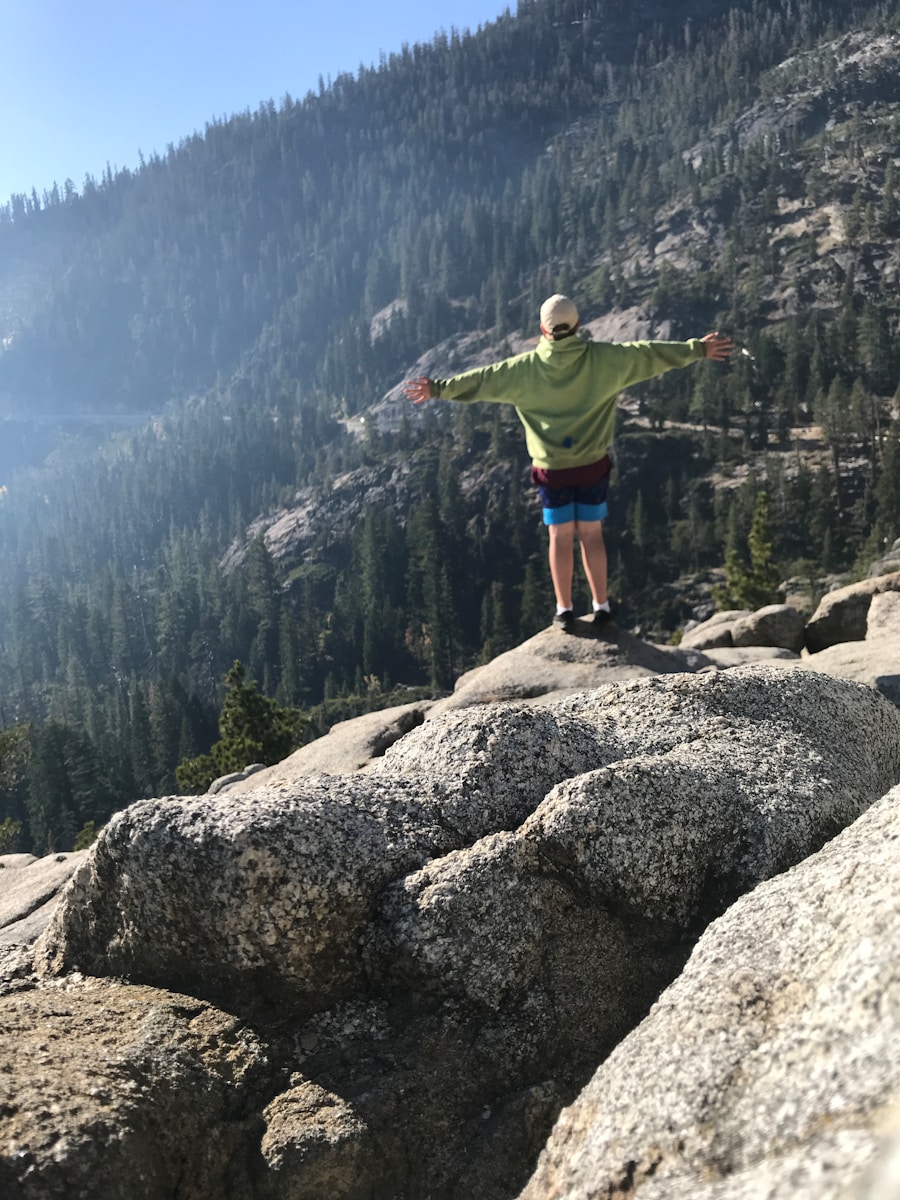
Regular hiking can contribute to many of the same health benefits associated with other forms of physical activity. The Centers for Disease Control and Prevention reports that physical activity can improve sleep, reduce short-term feelings of anxiety, support blood-pressure control, improve bone health, and lower the long-term risk of conditions including heart disease and stroke.
Trails can also challenge balance and coordination. Uneven surfaces require repeated adjustments in step length, foot placement, joint position, and muscle activation. Those demands are different from walking on a perfectly flat surface.
The outdoor setting may add another benefit. A large 2026 review of nature-based interventions found overall improvements in several mental-health outcomes, including anxiety and depressive symptoms, although the researchers also noted important differences in study quality and intervention design. Hiking should therefore be viewed as a useful way to combine exercise with nature exposure rather than as a treatment for a mental-health condition.
The health benefit comes from more than simply reaching a summit: consistent movement, appropriate intensity, and making physical activity a regular habit matter most.
Tips for Making the Most of Hiking as a Workout
Hiking Workout at a Glance
| Calories Burned | Varies greatly. The Adult Compendium rates slow hill walking at about 3.8 METs, normal hill hiking at about 5.3 METs, cross-country hiking at 6.0 METs, and hiking/backpacking with a daypack at about 7.8 METs. |
| Heart Health | Regular moderate-to-vigorous physical activity helps lower cardiovascular risk and can improve blood pressure and cholesterol. |
| Muscle Work | Primarily legs and glutes, with continuous work from the core, hips, feet, and ankle stabilizers. Poles can add upper-body involvement. |
| Mental Health | Physical activity can reduce short-term anxiety, and research also supports potential mental-health benefits from nature exposure. |
| Weight Management | Hiking increases energy expenditure and can support weight management when combined with an eating pattern and overall activity level that fit your goals. |
Start by giving each hike a purpose. You might aim to increase your total time, cover more elevation, maintain a brisk steady pace, or simply complete the same trail with less fatigue than before. Specific goals make progress easier to measure.
Varying your trails can also keep the workout challenging. A short route with a steep climb stresses the body differently from a long, rolling route. You do not need an extreme mountain to progress; adding distance, elevation, or pace gradually is enough.
Try Hiking Intervals
Intervals are an easy way to increase intensity without running. After warming up, alternate several minutes of brisk uphill hiking with easier walking. Let your breathing settle during the easier sections, then repeat.
A simple session might look like this:
- 10 minutes of easy walking to warm up
- 3 to 5 minutes of brisk climbing
- 2 to 3 minutes at an easier pace
- Repeat the harder/easier cycle 4 to 6 times
- Finish with 5 to 10 minutes of easy walking
Pro Tip: Change one training variable at a time. Add distance, elevation, speed, or pack weight rather than increasing everything on the same hike. This makes progress easier to control and gives your body time to adapt.
How Often Should You Hike for Fitness?
There is no single hiking schedule that works for everyone. Frequency depends on trail difficulty, fitness level, other workouts, and how well you recover.
Beginners can start with one or two manageable hikes per week and add ordinary walking or other aerobic activity on additional days. When those hikes no longer leave you excessively sore or fatigued, gradually increase duration or elevation.
More experienced hikers can use easier hikes as aerobic base training and harder, hillier outings as demanding workout days. Avoid treating every hike as a maximum-effort event. Recovery is part of training too.
If hiking is your main aerobic activity, use your weekly total to work toward the federal physical-activity target of at least 150 minutes of moderate exercise or 75 minutes of vigorous exercise. You can mix moderate and vigorous activity rather than doing only one intensity.
The Importance of Proper Gear and Preparation for Hiking
Proper preparation protects both the quality of your workout and your safety. Choose footwear that fits well, provides suitable traction for the terrain, and is comfortable over the distance you plan to cover. A high-cut hiking boot is not automatically better for every trail; the right choice depends on terrain, weather, load, fit, and personal preference.
Moisture-managing socks and clothing can improve comfort, while extra layers help you adapt to changing weather. Before leaving, check the trail length, elevation profile, current conditions, weather forecast, closures, and expected daylight.
The National Park Service Ten Essentials include systems for:
- Navigation
- Sun protection
- Insulation
- Illumination
- First aid
- Fire
- Repair tools
- Nutrition
- Hydration and water treatment
- Emergency shelter
The NPS also recommends choosing a trail that matches your abilities, checking park alerts and weather, leaving a trip plan with someone, and being prepared to change plans when conditions are unsafe.
Warning: Stop exercising and seek appropriate medical help for severe chest pain, fainting, severe difficulty breathing, confusion, or other alarming symptoms. People with cardiovascular disease, significant medical conditions, or major activity limitations should ask a health professional what level of exercise is appropriate before beginning strenuous hiking.
Heat, Hydration, and Altitude
Hot weather, direct sun, humidity, and high elevation can make an otherwise familiar trail much harder. Carry enough water for the route, drink regularly, bring extra supplies when reliable water is unavailable, and do not assume untreated streams are safe to drink.
At higher elevations, reduce your pace and allow time to acclimate. The National Park Service advises hikers who are going substantially higher than they are accustomed to avoid overexerting themselves while they adjust.
How Hiking Can Help with Weight Loss and Muscle Toning

Calorie-Burning Potential
Hiking increases energy expenditure, but there is no single accurate “calories burned per hour” figure for every person. The Adult Compendium of Physical Activities assigns different MET values to different forms of hiking and hill walking.
For example, its listed activities include approximately 3.8 METs for slow walking through fields and hillsides, 5.3 METs for normal-paced hill walking, 6.0 METs for cross-country hiking, and 7.8 METs for hiking or backpacking with a daypack.
Using the standard MET energy-expenditure equation, a person weighing about 155 pounds (70 kg) would theoretically expend roughly 280 calories per hour at 3.8 METs, about 390 calories at 5.3 METs, and roughly 575 calories at 7.8 METs. These are estimates rather than measurements of an individual hiker’s metabolism.
Body mass, fitness, temperature, trail surface, elevation gain, speed, pack weight, and rest stops can all move the real number higher or lower.
Muscle-Toning Benefits
Hiking provides repeated resistance against gravity. Climbs emphasize the glutes and legs, while descents require the muscles to control your body as gravity pulls you downhill. Uneven surfaces add balance and stabilization work.
That repeated muscular effort can improve endurance and conditioning, especially in people who are new to hiking. However, hiking alone does not provide the same precise progressive overload available from exercises such as squats, deadlifts, step-ups, lunges, calf raises, rows, and presses.
Using a Backpack to Increase the Challenge
Carrying a backpack increases external load and can raise the physical demand of a hike. It is also useful practice when you genuinely need to carry gear on longer trips.
Do not add a heavy pack simply to chase a higher calorie number. Become comfortable with the distance and terrain first, then increase load gradually. Reduce the weight if it changes your gait, causes persistent back or joint pain, or makes it difficult to maintain safe footing.
Hiking and Weight Loss
Hiking can support weight loss because it adds physical activity and energy expenditure to your week. It does not guarantee weight loss by itself. Long-term changes in body weight depend on overall energy intake, energy expenditure, consistency, sleep, medications, health conditions, and other individual factors.
The CDC notes that physical activity is important for healthy weight management, but the amount each person needs varies.
The Impact of Hiking on Cardiovascular Health
When hiking raises your breathing and heart rate, it functions as aerobic exercise. Regular aerobic activity trains the heart, lungs, blood vessels, and working muscles to handle sustained effort more efficiently.
The CDC reports that regular physical activity can lower the risk of heart disease and stroke and can help improve blood pressure and cholesterol. The benefit depends on making physical activity a regular habit rather than relying on an occasional hike.
Trail difficulty provides a natural way to change cardiovascular intensity. A gentle path can serve as an easier endurance or recovery session, while a long climb can provide a much harder aerobic challenge.
That flexibility makes hiking useful across a wide range of fitness levels. Beginners can slow down or choose flatter trails, while conditioned hikers can increase elevation, distance, or pace.
Incorporating Hiking into a Well-Rounded Fitness Routine
Hiking works best as part of a balanced routine rather than as the only kind of exercise you ever do. Federal recommendations call for both aerobic activity and dedicated muscle-strengthening exercise.
Strength sessions can focus on movements that carry over well to the trail, including squats, lunges, step-ups, calf raises, hip hinges, rows, presses, and loaded carries. Stronger legs and hips can make climbing easier, while upper-body and trunk training prepares you to manage a pack and maintain good posture.
Mobility work can also help you move comfortably through a useful range of motion. Gentle stretching or yoga may fit well after easier sessions, although flexibility work should complement rather than replace strength and aerobic training.
Cross-training with cycling or swimming can add cardiovascular volume while giving your feet and legs a break from repeated trail impact. Ordinary walking is another simple way to build the base endurance needed for longer hikes.
A practical week might include one longer hike, one shorter or hillier hike, two strength sessions, and easier walking or another aerobic activity between them. The exact mix should reflect your goals, schedule, current fitness, and recovery.
Hiking with friends or a local group can make that routine easier to maintain. The social element creates accountability while still allowing the workout to feel like recreation rather than another chore.
Choosing Gear for a Better Hiking Experience
Comfortable gear cannot replace fitness or good judgment, but it can make long days on the trail easier. For footwear ideas, this waterproof sneaker roundup covers several options for wet conditions.
A practical pack also matters when you need to carry water, food, layers, navigation tools, and emergency supplies. This minimalist travel backpack guide provides additional ideas, while the ultralight tent guide is useful for hikers planning overnight backpacking trips.
Love travel? Join Our Facebook Community
Frequently Asked Questions
What are the benefits of hiking as a workout?
Hiking can provide aerobic exercise while challenging the legs, glutes, core, balance, and muscular endurance. Regular physical activity also supports cardiovascular health, sleep, weight management, and mental well-being.
Does hiking count as cardio?
Yes. Hiking counts as cardiovascular exercise when it raises your heart rate and breathing for a sustained period. A leisurely flat hike may be light exercise, while brisk or steep hiking can reach moderate or vigorous intensity.
How does hiking compare with running or cycling?
All three can improve aerobic fitness, but the training effect depends on intensity and duration. Running often reaches high intensity more quickly, cycling is useful for long lower-impact endurance sessions, and hiking combines aerobic work with climbing, balance, uneven terrain, and outdoor movement.
How can I turn hiking into a harder workout?
Increase one variable gradually, such as distance, elevation gain, pace, or the amount of time spent climbing. You can also alternate brisk uphill intervals with easier walking. Add pack weight only after you can comfortably manage the terrain and distance without it.
How often should I hike for fitness?
Beginners can start with one or two manageable hikes per week and gradually increase duration or difficulty. Count moderate and vigorous hiking toward your overall weekly aerobic-activity target, while leaving enough recovery time after difficult outings.
Are there risks or precautions to consider when hiking for exercise?
Yes. Choose trails that match your abilities, check weather and trail conditions, carry the Ten Essentials, use suitable footwear, bring enough food and water, and increase difficulty gradually. Heat, altitude, slippery terrain, storms, fatigue, and poor navigation can turn a normal workout into a safety problem.
Can hiking help mental health as well as physical health?
It may. Physical activity can reduce short-term feelings of anxiety, and research on nature-based activities also suggests benefits for mood, stress, and some mental-health outcomes. Hiking can support well-being, but it should not be treated as a replacement for professional mental-health care when that care is needed.
Sources
- Centers for Disease Control and Prevention — Health Benefits of Physical Activity for Adults — supports cardiovascular, anxiety, blood-pressure, bone, sleep, and long-term health claims.
- U.S. Office of Disease Prevention and Health Promotion — Physical Activity Guidelines — supports current weekly aerobic and muscle-strengthening recommendations.
- Adult Compendium of Physical Activities — Walking and Hiking MET Values — supports hiking-intensity and energy-expenditure estimates.
- National Park Service — Hike Smart — supports trail selection, weather checks, trip planning, footwear, food, hydration, and hiking-safety guidance.
- National Park Service — Ten Essentials — supports the recommended emergency and preparedness equipment.
- Nature Human Behaviour — 2026 systematic overview and second-order meta-analysis of nature-based interventions — supports the qualified discussion of mental-health benefits from nature exposure.

