
Last Updated on September 27, 2026 by Mason Reed
The best climbing chalk helps keep your hands dry so you can focus on your next move. Loose chalk, liquid formulas, blocks, and refillable chalk socks all manage moisture differently. The right choice depends on your skin, climbing style, and gym rules.
Our best overall pick is Friction Labs Unicorn Dust, thanks to its fine texture and versatile loose-chalk format. For an affordable refillable option, consider the Metolius Super Chalk Sock.
We compared product formats, manufacturer specifications, application methods, packaging, and the linked listings to help you choose.
Best Climbing Chalk Compared
| Product | Best for | Format | Amount | Score |
|---|---|---|---|---|
|
Budget
|
Refillable, controlled application | Fabric chalk sock | Prefilled; refillable | 78/100 |
|
Premium
|
Low-dust liquid application | Alcohol-based liquid | 75 mL | 88/100 |
|
Linked listing unavailable
|
Bulk block chalk for gym use | Solid blocks | 8 × 2 oz | 92/100 |
|
Mid-range
|
Versatile loose chalk | Fine powder and chunks | 2.5 oz | 96/100 |
|
Mid-range
|
Controlled application and chalk-ball refills | Solid circular discs | 5 × 0.85 oz | 84/100 |
Best Climbing Chalk: Our Top Picks
1. Metolius Super Chalk Sock

Bottom line: The Metolius Super Chalk Sock suits climbers who want controlled chalk application without handling loose powder every time.
- Format: Refillable fabric sock, limiting direct contact with loose chalk.
- Amount: Prefilled chalk sock, ready for initial use.
- Composition: Magnesium carbonate, the standard climbing-chalk material.
The fabric lets chalk transfer to your hands when you squeeze or rub the sock. Keep it inside your chalk bag or bucket for convenient application between climbs.
Metolius offers refillable and non-refillable versions, so check the selected variation before buying. The refillable version lets you add chalk rather than replacing the entire sock.
Pros and Cons
- Refillable design reduces the need for replacement socks.
- Fabric helps control the amount of chalk applied.
- Compact enough for standard chalk bags.
- Less direct handling of loose powder.
- Less direct chalk access than an open bag of powder.
- Fabric can wear with repeated handling.
- Refilling takes more care than pouring chalk into a bucket.

2. Friction Labs Secret Stuff Hygienic

Bottom line: Friction Labs Secret Stuff Hygienic provides a liquid-chalk application with less loose dust than traditional powder.
- Format: Liquid chalk, applied directly to your hands.
- Amount: 75 mL, in a portable tube.
- Composition: Magnesium carbonate with an 80% ethyl alcohol base.
This linked product is the Hygienic formula, not the Original or Alcohol-Free version. Friction Labs recommends applying a small amount and allowing approximately 20 seconds for it to dry.
The liquid spreads before drying into a chalk layer. It works as a base layer before climbing or lifting and helps limit loose powder during application.
The alcohol-based formula may not suit everyone with dry, cracked, or sensitive skin. Check the ingredients before use, and allow it to dry fully before gripping holds or equipment.
Pros and Cons
- Lower-dust application than loose powder.
- Portable tube allows controlled dispensing.
- Can be used as a base layer before loose chalk.
- Manufacturer-developed Hygienic formula.
- Requires drying time before use.
- Alcohol may irritate compromised skin.
- Tube needs to remain closed between applications.

3. Frank Endo Block

Bottom line: Frank Endo Block is a traditional magnesium carbonate chalk supplied in bulk blocks. The linked Amazon listing showed the item as unavailable during the latest check.
- Format: Solid blocks, used whole or broken into powder.
- Amount: Eight 2 oz blocks, totaling 16 oz.
- Composition: Magnesium carbonate without added drying agents.
Block chalk lets you rub the solid surface on your hands or break off pieces for a chalk bucket. The bulk format suits repeated use in gyms, coaching programs, and group training.
Unlike a chalk sock or liquid formula, broken blocks produce loose powder. Store unused blocks securely to reduce crumbling and spills.
Pros and Cons
- Traditional magnesium carbonate formulation.
- Bulk pack provides multiple blocks.
- Can be applied as solid chalk or broken into powder.
- Linked Amazon listing is unavailable.
- Blocks can crumble during handling and transport.
- Loose powder creates dust and requires cleanup.

Check the Frank Endo Block listing on Amazon.
4. Friction Labs Unicorn Dust

Bottom line: Friction Labs Unicorn Dust is a versatile loose chalk with a fine powder-and-chunk texture for climbers who prefer direct application.
- Format: Fine loose chalk with small chunks.
- Amount: 2.5 oz, suitable for filling a chalk bag.
- Composition: High-purity magnesium carbonate.
The linked variation is Unicorn Dust, not the chunkier Gorilla Grip or Bam Bam blends. Its texture makes it easy to rub chalk across your palms and fingertips before climbing.
You can pour it into a chalk bag for routes or a bucket for bouldering. Loose chalk gives you direct control over application, although it can spill and create more airborne powder than contained formats.
Pros and Cons
- Fine texture allows direct, even application.
- Useful for bouldering and roped climbing.
- Can refill chalk bags and buckets.
- Multiple package sizes are available in the product range.
- Loose powder can spill inside a bag.
- Creates more airborne dust than liquid chalk or a sock.
- Fine texture may not suit climbers who prefer large chunks.

5. Friction Labs Chalk Discs

Bottom line: Friction Labs Chalk Discs provide controlled application and a convenient way to refill compatible chalk balls.
- Format: Solid circular chalk discs.
- Amount: Five 0.85 oz discs, totaling 4.25 oz.
- Composition: High-purity magnesium carbonate.
Each disc can be rubbed against your hands or broken into smaller pieces. The solid shape helps reduce loose powder during handling.
Friction Labs also designed these discs for refilling its Magic and Magic Pro chalk spheres. Place a disc inside the refillable pouch and break it down within the fabric.
The resealable tube makes storage easier, but the discs are still chalk blocks. They can break apart during transport and are not completely dust-free.
Pros and Cons
- Solid shape allows targeted application.
- Useful for refilling compatible chalk spheres.
- Five individual discs allow portioned use.
- Resealable, recyclable tube packaging.
- Discs can crumble when handled roughly.
- Less convenient for direct application during a route.
- Chalk sphere is purchased separately.

Friction Labs Unicorn Dust vs Metolius Super Chalk Sock: Is the Upgrade Worth It?
The main difference is how you apply chalk. Unicorn Dust gives you direct access to loose powder, while the Metolius sock controls how much chalk passes through its fabric.
- Application: Unicorn Dust allows direct coating of your palms and fingertips; Metolius requires squeezing or rubbing the sock.
- Dust: The sock helps contain powder, while loose chalk needs more careful handling.
- Refilling: Unicorn Dust can fill a chalk bag or bucket, and the Metolius sock can be topped up when empty.
Which Climbing Chalk Should You Buy?
- Everyday loose chalk: Get the Friction Labs Unicorn Dust.
- Controlled application: Get the Metolius Super Chalk Sock.
- Low-dust liquid: Get the Friction Labs Secret Stuff Hygienic.
- Chalk-ball refills: Get the Friction Labs Chalk Discs.
How We Chose
- Grip format: We compared loose powder, liquid chalk, solid blocks, and refillable socks.
- Application: We considered ease of use, dust control, and reapplication during training.
- Product specifications: Manufacturer information and linked listings informed composition, size, and variant details.
- Practicality: We considered packaging, refilling, transport, and gym compatibility.
- Safety and availability: We checked available product and recall information and identified listing issues.
The scores carried over from the original comparison. They are editorial scores, not independent laboratory measurements.
How to Choose the Best Climbing Chalk
Loose Chalk vs Liquid Chalk
Loose chalk gives you direct access to powder and makes it easy to coat your fingertips. It is useful for bouldering, sport climbing, and gym training, but it requires a bag or bucket to contain spills.
Liquid chalk spreads across your hands before drying. It can reduce loose powder during application, making it useful where gym rules limit dust.
For a traditional loose format, consider Friction Labs Unicorn Dust. For liquid application, consider Friction Labs Secret Stuff Hygienic.
Block Chalk and Chalk Discs
Solid chalk can be rubbed directly onto your hands or broken into powder. The main advantages are portion control and convenient storage.
Chalk discs provide a more compact version of the same idea. Friction Labs Chalk Discs also work with the manufacturer’s refillable Magic chalk spheres.
Dust Control and Gym Rules
Some climbing gyms restrict loose chalk or ask climbers to use chalk balls. Check the facility’s policy before buying a large container of powder.
A refillable sock such as the Metolius Super Chalk Sock helps contain chalk during handling. Liquid formulas offer another way to limit airborne powder.
Skin Sensitivity
Chalk absorbs moisture, but repeated application and handwashing can leave your skin dry. If you develop irritation, reduce unnecessary applications and care for your skin between sessions.
Check liquid-chalk ingredients carefully. The linked Secret Stuff Hygienic formula contains ethyl alcohol, so it may not suit everyone with irritated or cracked hands.
Packaging and Refilling
Think about how you carry chalk. Loose powder needs a secure container, while liquid chalk requires a tightly closed tube.
Refillable socks can reduce replacement waste. Solid discs also make it easier to refill compatible chalk balls without pouring loose powder directly into the fabric.
Mistakes to Avoid When Buying Climbing Chalk
- Ignoring gym rules: Check whether loose, liquid, or sock-based chalk is permitted.
- Buying the wrong formula: Confirm the selected liquid-chalk variation and ingredients.
- Confusing refills with complete products: Chalk discs do not include a separate chalk sphere.
- Overapplying chalk: Start with a small amount and add more only when needed.
- Ignoring package size: Compare the amount supplied rather than judging value from the container alone.
FAQs
Which Chalk Type Is Best for Me?
The right chalk depends on how you climb and where you train. Loose chalk gives direct coverage, while a refillable sock helps control powder. Liquid chalk reduces dust during application, and solid discs work well for targeted use or compatible chalk-ball refills. Check your gym’s rules before choosing.
How Should I Apply and Store Chalk?
Apply a small amount to your palms and fingertips, then rub it across the areas that need coverage. Allow liquid chalk to dry completely before climbing. Keep containers closed and store chalk in a dry place. Avoid leaving open powder where it can spill onto clothing or equipment.
Will Chalk Harm My Skin or the Environment?
Climbing chalk is generally made from magnesium carbonate, but repeated use can dry your hands. Moisturize between sessions and care for cracked skin. Avoid creating unnecessary chalk clouds indoors, and follow local outdoor climbing guidelines. Refillable products and controlled application can also reduce waste and cleanup.
Is Liquid Chalk Better Than Loose Chalk?
Neither format is better for everyone. Liquid chalk offers a controlled, lower-dust application and can work as a base layer. Loose chalk gives you direct access to powder for quick reapplication. Your preferred feel, skin sensitivity, and gym restrictions should guide the decision.
Can I Use Climbing Chalk for Weightlifting?
Yes. Magnesium carbonate chalk is used in both climbing and weightlifting to manage hand moisture. Loose chalk works well in a training bucket, while liquid chalk can help reduce powder around shared equipment. Follow your gym’s policy and use only enough chalk to coat your hands.
Are Chalk Balls Refillable?
Some chalk balls are refillable, while others are designed for single use. Check the product description before purchasing. Refillable designs let you add loose chalk or compatible solid refills. The Metolius Super Chalk Sock has a refillable option, and Friction Labs Chalk Discs can refill compatible Magic chalk spheres.
Customer Preferences
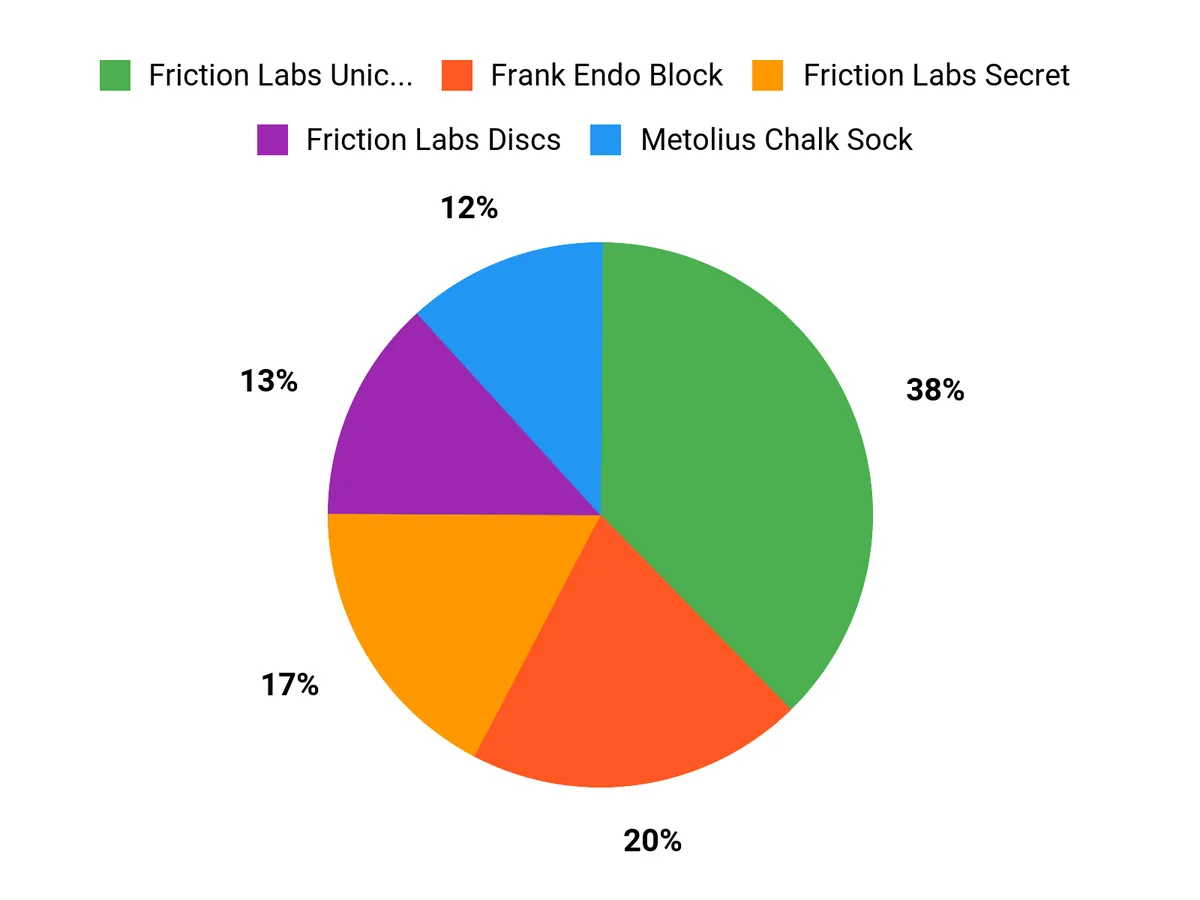
Your preferred chalk format usually comes down to application, dust control, and convenience. Loose chalk offers direct coverage, liquid chalk limits loose powder, and refillable socks help contain chalk between uses.
If you travel or share training space, packaging and gym rules may matter as much as texture. For regular climbing, choose a format that you can apply consistently without unnecessary mess.
Final Verdict: Best Climbing Chalk
Friction Labs Unicorn Dust is our overall choice for climbers who prefer a versatile loose-chalk format. Its fine powder-and-chunk texture works for direct application in chalk bags and buckets.
If dust control or refilling matters more, a contained or liquid format may better suit your routine.
For an affordable refillable option, see the Metolius Super Chalk Sock. For a premium liquid alternative, see Friction Labs Secret Stuff Hygienic.
Product Image Gallery
| Product | Image |
|---|---|
| Metolius Super Chalk Sock |
|
| Friction Labs Secret Stuff Hygienic |
|
| Frank Endo Block |
|
| Friction Labs Unicorn Dust |
|
| Friction Labs Chalk Discs |
|

