

Last Updated on November 4, 2026 by Mason Reed
Choosing the best backpacking tent means balancing weight, weather protection, packed size, and sleeping comfort. The Naturehike Cloud-Up 2 is a strong option for lightweight three-season hiking, while the OneTigris Stella offers a more enclosed design for changing conditions. In this guide, you’ll compare three relevant tent listings, understand their differences, and learn what to check before buying.
Disclosure: As an Amazon Associate I earn from qualifying purchases. Some links on this page are affiliate links, at no extra cost to you.
Quick Answer: Which Backpacking Tent Should You Choose?
Best Overall: The Naturehike Cloud-Up 2 with 20D nylon construction is our leading recommendation for backpackers who want a compact double-wall tent with lightweight materials and a vestibule for gear.
Best Alternative Configuration: The Naturehike Cloud-Up 2 with 210T polyester construction is worth comparing if you prefer this fabric configuration and want a practical three-season hiking shelter.
Best for Seasonal Versatility: The OneTigris Stella 4 Season Tent is suited to backpackers who prefer a more enclosed shelter and are comfortable carrying additional weight.
Important: These are use-case recommendations based on published product information, not claims of personal hands-on testing. Confirm the exact fabric, packed weight, dimensions, and included accessories for your selected Amazon configuration.
Key Takeaways
- Weight matters: Compare packaged weight and minimum trail weight separately. They do not include the same components.
- Two-person tents can feel narrow: Check the floor width against your sleeping pads before buying.
- Three-season designs: Naturehike’s Cloud-Up models are generally intended for spring, summer, and autumn backpacking.
- Four-season labels have limits: The OneTigris Stella is marketed for four-season use, but that does not guarantee safety in severe alpine storms or heavy snow.
- Waterproof ratings are only part of the picture: Rainfly coverage, seams, ventilation, site selection, and correct pitching also affect weather protection.
Our Top Backpacking Tent Picks
Compare these three backpacking tent listings by their intended use, construction, and practical tradeoffs. Specifications can vary by color, fabric version, and seller configuration.
| Backpacking Tent | Product Image | Best For | Capacity | Weight | Weather Protection | Amazon | Review |
|---|---|---|---|---|---|---|---|
| Naturehike Cloud-Up 2 Person Ultralight Backpacking Tent |

|
Best Overall Lightweight backpacking |
2 Persons | Approximately 3.5–4.0 lb depending on configuration and weight definition | Coated rainfly; verify selected variant’s waterproof specification | Check Price on Amazon | Read Our Analysis |
| Naturehike Cloud-Up 2 Person Ultralight Backpacking Tent – 210T Polyester Listing |
|
Best Polyester Configuration Three-season camping and hiking |
2 Persons | Approximately 4.3 lb in a matching marketplace listing; verify package | Listed PU3000mm+ fabric coating; verify exact configuration | Check Price on Amazon | Read Our Analysis |
| OneTigris Stella 4 Season 2 Person Camping Tent |

|
Best for Seasonal Versatility More enclosed shelter design |
2 Persons | Approximately 4.4–4.8 lb; published figures differ | Manufacturer-listed 3000mm waterproof rating | Check Price on Amazon | Read Our Analysis |
Comparison note: Manufacturer and marketplace specifications can describe different tent versions or weight measurements. These numbers are approximate buying references, not independently measured results. Check the exact Amazon listing before purchasing.
More Details on Our Top Picks
-
Naturehike Cloud-Up 2 Person Ultralight Backpacking Tent – Best Overall
The Naturehike Cloud-Up 2 Person Backpacking Tent is a practical choice if you want to reduce pack bulk without giving up a separate rainfly and inner sleeping compartment. The Cloud-Up’s streamlined shape and compact pole system make it particularly relevant for hiking, trekking, and shorter backpacking trips.
The 20D nylon configuration uses lightweight coated fabric and aluminum alloy poles. Its double-wall construction separates the sleeping area from the rainfly, helping manage airflow and condensation when pitched correctly.
Naturehike lists a packed size of approximately 17.7 x 4.7 inches for a Cloud-Up 2 configuration. Published packaged weights vary by version, with the manufacturer listing approximately 3.97 lb for one configuration. Confirm the selected listing’s total packaged weight rather than relying only on a minimum trail-weight figure.
A front vestibule provides a useful place for shoes and some equipment outside the sleeping area. However, you should not assume it will hold two large backpacks comfortably. Measure your sleeping pads and consider how much equipment you typically carry.
- Capacity: 2 Persons
- Weight: Approximately 3.5–4.0 lb depending on configuration and weight definition
- Waterproof Rating: Varies by material configuration; confirm the rainfly and floor specifications
- Setup Ease: Compact freestanding-style pole structure; stake and guy out for weather stability
- Material: 20D Nylon with coated rainfly construction in the selected version
- Carry Bag: Included in typical configurations
- Additional Feature: Front vestibule for gear
- Additional Feature: Double-wall construction
- Additional Feature: Mesh inner tent for airflow
Why You’ll Like It
The biggest advantage is its combination of portability and basic backpacking functionality. You get a compact shelter with separate weather protection and a dedicated sleeping compartment.
The vestibule also helps you keep wet shoes away from your sleeping bag. For a solo backpacker, the two-person layout can provide more usable space without requiring a large car-camping tent.
Who Should Buy This Tent?
Consider this Naturehike model if you regularly hike to campsites, want a compact two-person shelter, and prioritize carrying weight over standing room. It is particularly appealing for solo backpackers who want extra interior space and pairs who use narrower sleeping pads.
Who Should Avoid It?
It may not be the best choice if you need extensive interior storage, two wide sleeping pads, standing height, or specialized snow and alpine-storm protection. Its three-season design should not be treated as a mountaineering shelter.
Pro Tip: Check whether the listed weight includes the footprint, stakes, storage bags, and guy lines. A tent’s minimum weight can be noticeably lower than the total weight you carry. -
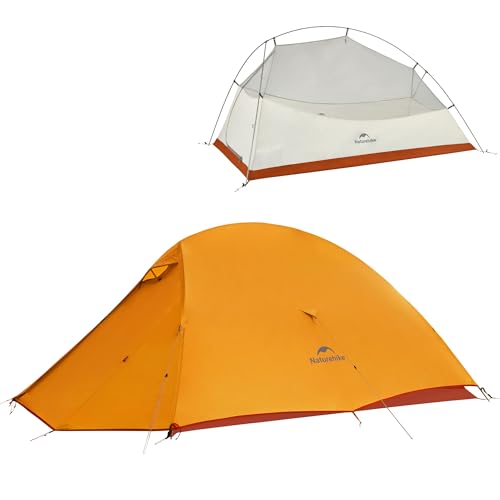
Naturehike Cloud-Up 2 Person Backpacking Tent – 210T Polyester Configuration
The Naturehike Cloud-Up 2 Person Backpacking Tent in the 210T polyester listing is another relevant option for hikers who want a double-wall, packable two-person shelter. It follows the same general Cloud-Up concept while offering a different advertised fabric configuration.
The matching marketplace listing describes a 210T polyester fabric with a waterproof coating, aluminum poles, and a front vestibule. Its advertised floor dimensions are approximately 82.7 inches long by 51.2 inches wide, although the exact interior dimensions should be confirmed for your selected version.
Some listings show a weight around 4.3 lb. Because Cloud-Up products are sold in multiple fabric versions and generations, these figures should not be assumed to apply to every Cloud-Up model. The material and weight specifications should be checked directly on the purchase page.
The separate inner tent and rainfly can help manage ventilation. The vestibule is useful for storing shoes and small equipment outside the sleeping compartment.
- Capacity: 2 Persons
- Weight: Approximately 4.3 lb in a matching marketplace listing; confirm the selected package
- Waterproof Rating: Advertised PU3000mm+ for the polyester configuration; verify exact material specification
- Setup Ease: Freestanding-style pole configuration with additional staking recommended
- Material: 210T polyester with waterproof coating in the matching listing
- Carry Bag: Included in the matching listing
- Additional Feature: Front entry and vestibule
- Additional Feature: Mesh inner compartment
- Additional Feature: Footprint included in the matching listing; confirm current package contents
Why You’ll Like It
This version is worth considering if you like the Cloud-Up layout but prefer a polyester fabric configuration. Polyester generally absorbs less moisture and stretches less when wet than standard nylon, although actual performance also depends on coatings, fabric construction, and seam treatment.
The practical benefit is a compact tent for ordinary backpacking, bikepacking, and campsite trips where you want a balance between weather protection and carrying convenience.
Who Should Buy This Tent?
Choose this configuration if you want a three-season double-wall tent and the seller confirms that the polyester fabric, weight, dimensions, and included accessories match your needs.
Who Should Avoid It?
Consider another configuration if minimizing total pack weight is your top priority or if you need a shelter for severe snow conditions. It is also not an ideal choice if you require unusually wide sleeping space for two adults.
Before You Buy: Naturehike sells multiple Cloud-Up and Cloud-Up Pro configurations. Some manufacturer descriptions use different materials from marketplace listings. Confirm that the chosen Amazon variant is actually the polyester version you want, rather than assuming all similarly named models have identical specifications. -
OneTigris Stella 4 Season 2 Person Camping Tent – Best for Seasonal Versatility
The OneTigris Stella 4 Season Camping Tent is worth considering if you prefer a more enclosed shelter than a typical mesh-focused summer backpacking tent. OneTigris markets the Stella as a four-season model with a coated nylon exterior and a removable outer layer.
The tent uses 20D nylon outer fabric, an aluminum alloy pole system, and a manufacturer-listed 3000mm waterproof rating. A ventilated inner compartment helps maintain airflow, while the outer shelter provides additional separation from wind and precipitation.
The Stella is designed for two people, with published dimensions around 6.9 feet in length, 4.1 to 4.3 feet in width, and approximately 3.8 feet in peak height. The manufacturer publishes both 4.4 lb and 4.8 lb figures in its product information, so confirm the actual packaged weight for the selected configuration.
Its setup kit is listed with tent poles, 10 stakes, four guy lines, and a carrying bag. Correct staking and tensioning remain important even though the design uses a freestanding-style structure.
- Capacity: 2 Persons
- Weight: Approximately 4.4–4.8 lb; published specifications differ
- Waterproof Rating: Manufacturer-listed 3000mm
- Setup Ease: Crossing aluminum pole structure with stakes and guy lines
- Material: Coated 20D nylon outer fabric with a separate inner tent
- Carry Bag: Included
- Additional Feature: Removable outer shelter
- Additional Feature: Mesh ventilation
- Additional Feature: Setup kit listed with 10 stakes and four guy lines
Why You’ll Like It
The Stella offers a different balance of features from the Naturehike Cloud-Up models. Its more enclosed construction can appeal to backpackers who want a shelter designed for changing seasonal conditions.
The removable outer structure provides pitching flexibility in suitable weather, while the included guy lines help you secure the tent properly at camp.
Who Should Buy This Tent?
Consider the OneTigris Stella if you prioritize a more enclosed two-person shelter, camp in varied seasons, and do not mind carrying a tent that may weigh more than some lightweight three-season alternatives.
Who Should Avoid It?
It is less attractive if your primary goal is the lowest possible pack weight. The manufacturer’s four-season designation should also not be interpreted as proof that the tent is appropriate for expedition mountaineering, extreme alpine winds, or significant snow accumulation.
Safety Note: A four-season label does not guarantee snow-load capacity, extreme-wind resistance, or warmth. Check the manufacturer’s specific limitations and expected weather conditions before relying on any tent in winter backcountry terrain.
Factors to Consider When Choosing Backpacking Tents
The best backpacking tent for you depends on more than its advertised capacity or waterproof rating. Your hiking distance, expected weather, sleeping pads, and packing preferences all influence which shelter makes sense.
Weight and Portability
Weight and portability are among the most important factors when choosing a backpacking tent. However, manufacturers and retailers may publish several different weight figures.
- Minimum trail weight: Usually includes the tent body, rainfly, and poles, but not every accessory.
- Packaged weight: Generally includes the complete supplied tent package, including stakes and storage bags.
- Actual carried weight: Depends on the components you take, including any optional footprint or repair equipment.
Always compare the same weight definition across tents. A model advertised at a low minimum weight may be noticeably heavier when fully packed.
Packed dimensions also matter. A compact tent may fit inside your backpack more easily, while longer pole segments may require a specific packing arrangement.
If two people share one tent, you can sometimes divide the poles, fly, and body between backpacks to distribute the load.
For additional guidance, see REI’s backpacking tent buying guide.
Weather Resistance Ratings
Backpacking tent waterproof ratings commonly use millimeters of hydrostatic head. This indicates the water pressure a fabric coating can resist under a specified testing method.
A higher number can indicate greater water-pressure resistance, but it does not automatically make one complete tent better in every storm.
Several additional features affect real-world protection:
- Rainfly coverage: A well-designed fly helps protect exposed tent panels and openings.
- Seam treatment: Properly sealed seams reduce water entry at stitched areas.
- Floor construction: Waterproof coatings and ground protection help limit moisture entering from below.
- Guy lines and stakes: Secure anchoring improves pitch stability.
- Ventilation: Air circulation helps reduce condensation inside the shelter.
Remember that a fabric rated at 3000mm or 4000mm is not automatically suitable for severe wind, hail, heavy snow, or prolonged exposure without proper setup.
Setup and Assembly Ease
A backpacking tent should be practical to pitch when you’re tired or dealing with changing weather.
Freestanding-style designs can make initial assembly easier because their pole structures support the tent body before complete anchoring. However, you still need appropriate stakes and guy lines for dependable field use.
Look for these useful setup features:
- Clearly connected or easy-to-identify pole sections.
- Simple clips or pole attachment points.
- Accessible stake loops and guy-out points.
- A rainfly that is easy to position correctly.
- Instructions suited to the specific model and configuration.
A manufacturer’s advertised setup time is not a guarantee. Terrain, wind, experience, and the number of people pitching the tent can all affect assembly time.
Pro Tip: Practice pitching your new tent at home before your first overnight backpacking trip. Check all poles, stakes, lines, and zippers while replacements or adjustments are still easy.
Interior Space and Comfort
A two-person backpacking tent can technically accommodate two campers while still feeling narrow once sleeping pads and equipment are inside.
Before choosing a tent, compare the usable sleeping floor dimensions with your actual sleeping pads.
For example, two 25-inch-wide pads require at least 50 inches of usable width if positioned side by side. Tapered floors, inward-sloping walls, and pad shape can further reduce practical space.
Also consider these comfort factors:
- Floor length: Leave enough room for your sleeping system without pushing it into tent walls.
- Peak height: Check whether you can comfortably sit upright.
- Door position: A front-entry tent can be less convenient for two people than one with separate side doors.
- Vestibule size: Consider where shoes and backpacks will go.
- Interior storage: Pockets can keep headlamps and small items accessible.
If you often camp with a partner, a tent’s practical floor shape and door access may be just as important as its total weight.
Material Durability and Quality
Backpacking tents frequently use nylon or polyester fabrics with waterproof coatings.
Nylon can offer a useful strength-to-weight balance, making it common in lightweight shelters. Polyester generally stretches less when damp and can offer good dimensional stability.
Neither material is automatically superior in every application. The fabric’s denier, weave, coating, stitching, and overall construction all matter.
Common features worth examining include:
- Ripstop construction: Designed to help limit tear propagation.
- Aluminum poles: Often used in backpacking tents because they offer a practical balance of weight and strength.
- Reinforced attachment points: Helpful where poles, stakes, and guy lines create tension.
- Durable floor materials: Particularly important on rocky or abrasive campsites.
- Repair compatibility: Check that patches and sealants are appropriate for the tent’s fabric coating.
Ultralight materials require sensible care. Avoid dragging the tent over sharp surfaces, and inspect it after trips involving rough terrain.
Ventilation and Airflow Features
Effective ventilation helps control condensation and improves sleeping comfort.
Moisture can accumulate inside a tent from breathing, damp clothing, humid air, and temperature differences between the inside and outside.
Double-wall tents help by separating the inner sleeping compartment from the exterior rainfly. Mesh panels and vents can improve airflow when weather conditions allow them to remain open.
For better ventilation:
- Keep vents open when practical.
- Maintain the intended space between the rainfly and inner tent.
- Avoid storing wet clothing against the tent walls.
- Choose a campsite with reasonable airflow.
- Pitch the fly tightly enough to maintain its designed shape.
Even a well-ventilated waterproof tent can develop condensation. Interior moisture does not always mean that rain is leaking through the fabric.
Before You Buy: Backpacking Tent Checklist
Use this checklist to avoid common mistakes when comparing two-person backpacking tents.
- Confirm the exact model: Similar names may cover different generations, fabrics, and accessory packages.
- Check the packaged weight: Do not compare minimum weight with packaged weight.
- Measure your sleeping pads: Ensure the tent has adequate usable width and length.
- Review the rainfly design: Check coverage, ventilation, and weather limitations.
- Inspect the pole system: Make sure the setup is manageable for your experience level.
- Check the contents: Confirm whether stakes, guy lines, carry bags, and a footprint are included.
- Match the tent to the season: Do not assume every waterproof tent is appropriate for winter conditions.
- Review current seller terms: Check the manufacturer’s warranty, return policy, exact configuration, and Amazon availability before checkout.
Backpacking Tent Safety and Care Tips
Your shelter’s reliability depends partly on how you use and maintain it.
After each trip, remove loose dirt, inspect the floor and seams, and dry the tent completely before long-term storage.
Use cleaning and repair products compatible with the fabric coating. Silicone-treated and polyurethane-coated materials may require different seam sealers or adhesives.
For detailed maintenance guidance, read REI’s guide to tent cleaning, waterproofing, and care.
Frequently Asked Questions
What Is the Best Tent for Winter Backpacking?
The best tent for winter backpacking depends on expected wind, snow, elevation, and exposure. Look for a shelter specifically designed and documented for those conditions, with appropriate poles, anchors, ventilation, and snow-shedding performance.
The OneTigris Stella is marketed as a four-season tent, but that label alone does not confirm its suitability for severe alpine weather or heavy snow loading. Always match the shelter’s documented capabilities to the conditions you expect.
How Do I Properly Pack My Backpacking Tent?
Shake off loose dirt and debris. If the tent is dry, fold or loosely stuff the fabric according to the manufacturer’s guidance and store the poles and stakes so they cannot puncture it.
If you must pack a wet tent during a hike, keep it separated from dry equipment where practical and dry it thoroughly as soon as possible. Avoid storing a damp tent for extended periods.
Can I Use a Backpacking Tent for Car Camping?
Yes. A backpacking tent works for car camping, especially when you want a compact shelter that is easy to transport.
However, backpacking tents often have less headroom, storage space, and interior comfort than larger car-camping models. If carrying weight is not important, you may prefer a roomier shelter.
What Accessories Enhance My Backpacking Tent Experience?
Useful accessories include a compatible tent footprint, suitable stakes, extra guy lines, a headlamp, a sleeping pad, and a small repair kit.
A footprint can help protect the floor from abrasion, but it should fit properly and should not extend beyond the tent floor where it could collect rainwater.
Check the tent’s included accessories before buying extras to avoid carrying unnecessary weight.
How Do I Repair a Damaged Tent While Camping?
For a small tear, clean and dry the damaged area when possible, then apply a repair patch or tape specifically compatible with the tent fabric.
If a seam leaks, use an appropriate seam sealer according to the product instructions. Temporary emergency tape may help in some situations, but it is not necessarily a permanent repair.
For a broken pole, use a suitable pole repair sleeve or splint if available. If a structural failure compromises the shelter, seek safer protection rather than relying on an unstable tent in hazardous weather.
Are Two-Person Backpacking Tents Comfortable for Two Adults?
They can be, but comfort depends on sleeping-pad width, floor shape, interior height, and available storage.
Some two-person tents fit two standard pads with little extra room. If you use wide pads or want to store large backpacks inside, compare the usable floor measurements carefully before buying.
What Is the Difference Between Three-Season and Four-Season Tents?
Three-season tents are generally designed for typical spring, summer, and autumn conditions. They often emphasize ventilation and lower weight.
Four-season tents generally emphasize greater enclosure and weather resistance, but their actual capabilities vary widely. A four-season label is not a substitute for verifying snow-load, wind, ventilation, and structural limitations.
Conclusion
The best backpacking tent is the one that matches your hiking conditions, carrying preferences, and sleeping-space needs.
For typical three-season backpacking, the Naturehike Cloud-Up 2 with 20D nylon construction is our leading option thanks to its lightweight materials, compact design, and useful vestibule. The polyester Cloud-Up listing provides an alternative configuration worth comparing when the exact material and package contents suit your needs.
If you want a more enclosed tent for varied seasonal use and can accept additional weight, the OneTigris Stella is another relevant choice. Be sure to understand its weather limitations before using it in demanding winter environments.
Before purchasing, compare the exact packed weight, floor dimensions, fabric specifications, included accessories, and manufacturer guidance. Choosing with these details in mind will help you find a backpacking shelter that fits your next adventure.
