
Last Updated on September 10, 2026 by Daniel Globe
Hydration is one of the most important parts of a safe, enjoyable hike, especially in hot and dry environments. Your body loses fluid through sweat and breathing during exertion, but there is no single drinking amount that fits every hiker. The best plan accounts for the weather, route, pace, available water, and your own sweat rate while avoiding both dehydration and excessive fluid intake.
Quick Answer
There is no universal amount of water every hiker should drink. In Grand Canyon heat, the National Park Service recommends roughly 0.5 to 1 quart (about 0.5 to 1 liter) per hour. Elsewhere, adjust for heat, exertion and your sweat rate, drink according to your needs, and never force fluids beyond what your body is losing.
Losing too much body water affects more than thirst. Research summarized in the National Athletic Trainers’ Association fluid-replacement position statement found that prolonged aerobic performance is consistently reduced when hypohydration reaches about 2% or more of body mass. Hydration also supports temperature regulation, circulation and recovery as your workload rises on the trail.
Key Takeaways
- There is no one-size-fits-all drinking rate; heat, pace, body size, acclimatization and individual sweat losses all matter.
- For hiking in Grand Canyon heat, use roughly 0.5 to 1 quart of water or sports drink per hour as a planning range, not a mandatory quota.
- Carry enough water for the route plus a safety margin, but do not force yourself to drink simply because you carried it.
- On long, hot or high-sweat hikes, replace sodium and other electrolytes through appropriate drinks and food.
- Too much fluid can be dangerous. Avoid overdrinking and exercise-associated hyponatremia.
- Grand Canyon water availability can change suddenly, so check current National Park Service updates and carry a treatment method when appropriate.
- For Phoenix-area desert trails, hike during cooler periods and obey any Extreme Heat Warning trail restrictions.
- Confusion, altered mental status, seizures or loss of consciousness in the heat are emergency signs that require immediate medical help and rapid cooling.
Disclosure: As an Amazon Associate I earn from qualifying purchases. Some links on this page are affiliate links, at no extra cost to you.
Preparing for Hydration on the Trail
Before you start, assess the route length, elevation change, difficulty, forecast, shade and reliable water sources. A cool two-hour woodland walk may require far less fluid than the same amount of time climbing steep desert terrain.
Begin the hike normally hydrated rather than trying to “water load” just before leaving. Drink normally during the hours before your hike, eat regular meals and bring more water than you expect to need when reliable refills are uncertain.
Note: The amount you carry is not a drinking quota. Extra water is a safety reserve. Forcing fluid beyond your losses can dilute blood sodium and cause potentially life-threatening exercise-associated hyponatremia.
Estimate Your Personal Sweat Rate
If you hike regularly, estimating your sweat rate can give you a better starting point than a generic liters-per-hour rule. On a representative hike, weigh yourself immediately before and after exercise with similar clothing, record how much you drank and account for any urine produced.
Sweat rate ≈ (body-mass loss in kilograms + liters consumed − liters of urine) ÷ hours of exercise. Because 1 kilogram of body-mass change is roughly equivalent to 1 liter of water, this gives an approximate hourly fluid loss. Repeat the test in different temperatures because your sweat rate can change considerably with weather and effort.
The goal is not to replace every drop at all costs. The NATA recommends hydration practices that limit excessive dehydration while also preventing fluid gain from overdrinking.
At a Glance: Hiking Hydration
| Grand Canyon heat guidance | About 0.5 to 1 quart (roughly 0.5 to 1 liter) of water or sports drink per hour while hiking in the heat; adjust to your actual needs. |
| Best personal guide | Weather, effort, thirst, measured sweat rate and changes in body mass. |
| Electrolytes | Useful during long, hot or high-sweat hikes; salty foods can also help replace sodium lost in sweat. |
| Water sources | Never assume a seasonal trail source is working. Check current conditions and carry treatment where natural water may be required. |
| Overhydration warning | Do not force fluids or deliberately gain body weight during exercise. |
| Emergency signs | Confusion, altered mental status, seizures or loss of consciousness in the heat require emergency help and rapid cooling. |
Choosing the Right Hydration Gear
Hydration packs are convenient because a built-in reservoir and drinking tube let you take small drinks without repeatedly stopping. Many packs also provide room for food, sun protection, navigation tools and a first-aid kit.
Traditional water bottles remain reliable and make it easy to see exactly how much water you have left. Stainless steel, food-grade reusable plastic and collapsible bottles can all work well. On remote routes, carrying water in more than one container gives you some redundancy if a bottle leaks or a reservoir fails.
Choose the lightest system that comfortably carries the amount your route requires. Extra weight adds fatigue over long distances, but underestimating your water needs in desert conditions can be much more serious.
Hydration Tips for Hiking in the Grand Canyon
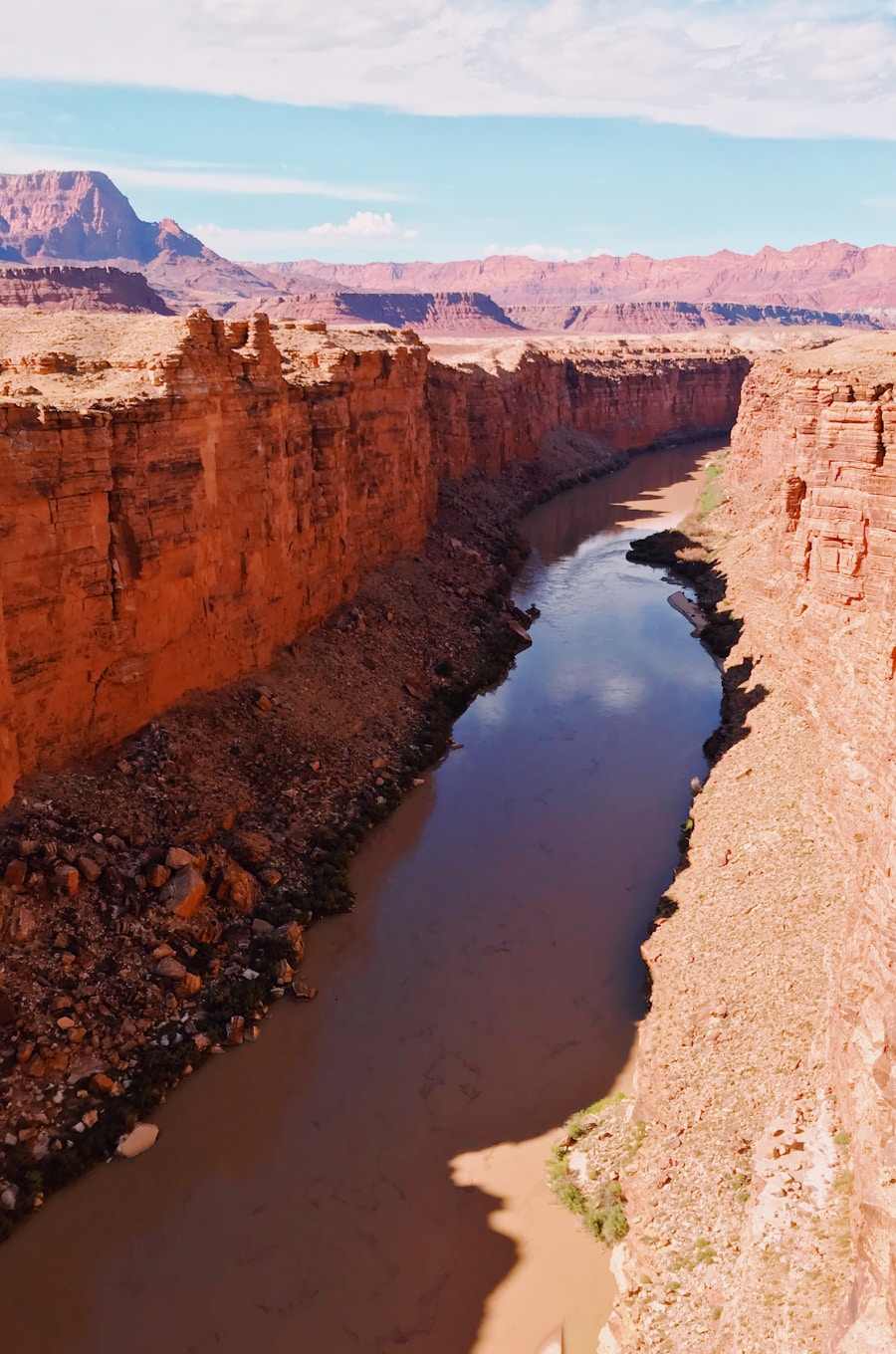
The Grand Canyon combines steep terrain, low humidity and potentially extreme heat. The National Park Service hiking FAQ advises hikers in hot conditions to drink about one-half to one full quart of water or sports drink during each hour of hiking.
Treat that range as a planning guide rather than a command to force down a fixed volume. Current Grand Canyon hiking safety guidance also warns hikers not to force fluids and notes that overhydration can cause hyponatremia. Take regular opportunities to drink, respond to thirst and conditions, and avoid gaining body weight from excessive fluid intake.
In Grand Canyon heat, hydration is only part of the safety plan: hikers also need food, shade, conservative pacing and a realistic turnaround plan.
Water availability inside the canyon can change suddenly because of seasonal shutoffs and pipeline failures. Check the park’s current water-status page before starting, and never make a route dependent on a spigot without confirming that it is operating.
If you may need natural water, follow the park’s current safe drinking water instructions. At Grand Canyon, filtration alone may not be sufficient. NPS guidance calls for appropriate filtration followed by disinfection, or proper boiling, depending on the situation.
Warning: Do not collect water directly from or next to visible cyanobacterial mats. Standard backpacking filters, boiling and common chemical disinfectants do not remove dissolved cyanotoxins once they are present in the water. Follow posted Grand Canyon advisories.
Pro Tip: Pair fluids with regular food on long, hot hikes. Sodium-containing snacks or an appropriately formulated electrolyte drink can help replace salt lost through heavy sweating while also providing needed calories.
Hydration Tips for Hiking in Phoenix or on Ranch Trails
Phoenix-area desert hiking demands the same conservative approach. High temperatures, direct sun and dry air can increase heat strain quickly, even for fit hikers. Start hydrated, choose a route that matches your fitness, carry more water than you expect to use and turn around before your supply becomes critically low.
The City of Phoenix recommends hiking when temperatures are cooler, wearing appropriate clothing and sun protection, carrying a phone, hiking with others when possible and bringing plenty of water.
Phoenix also operates a Trail Heat Safety Program. On National Weather Service Extreme Heat Warning days, specified trails at Camelback Mountain, Piestewa Peak and South Mountain are restricted from 8 a.m. to 5 p.m. Check current restrictions before leaving and never enter a closed trail.
For private ranch trails, follow any property-specific rules about trail access and water availability rather than assuming a public Phoenix trail policy applies. When temperatures are extreme, postponing the hike is safer than trying to compensate simply by carrying more water.
Recognizing Dehydration and Heat Illness
Recognizing Dehydration Symptoms
Possible dehydration signs include thirst, dry mouth, fatigue, dizziness, reduced urine output and darker-than-usual urine. No single sign is perfect, so pay attention to the pattern, your environment and how you feel.
If you become dizzy, nauseated, unusually exhausted or unable to maintain your normal pace in the heat, stop exerting yourself, move to a cooler or shaded location and reassess before continuing.
Heat Exhaustion: A Serious Condition
According to the CDC/NIOSH heat-illness guidance, heat exhaustion can include headache, nausea, dizziness, weakness, thirst, heavy sweating, elevated body temperature and decreased urine output. Move the affected person out of the heat, cool them and provide frequent sips of cool fluid if they are alert and able to drink safely.
Warning: Confusion, altered mental status, slurred speech, seizures or loss of consciousness in a person exposed to heat can indicate heat stroke, a medical emergency. Call 911 immediately, move the person to a cooler area and begin rapid cooling while help is coming. Do not rely on a specific thermometer reading before acting, and do not give oral fluids to someone who cannot drink safely. This article provides general safety information and is not a substitute for medical care.
Prevention and Education
Take breaks before you are exhausted, use shade whenever possible, reduce your pace as temperatures rise and pay attention to hiking partners as well as yourself. Heat illness can impair judgment, making a buddy more likely to notice concerning changes.
People who have clinician-directed fluid or sodium restrictions, medical conditions affected by heat, or medications that change heat tolerance or fluid balance should follow individualized medical advice rather than generic hydration targets.
Avoid Overhydration and Hyponatremia
Dehydration is not the only hydration hazard. Drinking fluid faster than your body is losing it can dilute sodium in the blood, producing exercise-associated hyponatremia. Both plain water and sports drinks can contribute if consumed excessively.
The NATA recommends avoiding body-mass gain during exercise and matching fluid replacement as closely as practical to individual sweat losses. Grand Canyon NPS guidance likewise tells hikers not to force fluids.
Note: Carrying four liters for safety does not mean you must drink four liters. Your reserve protects you from delays, hotter-than-expected conditions and failed water sources; your actual intake should still reflect your body’s needs.
Hydration-Friendly Foods for Hiking
Foods with high water content can contribute to your total fluid intake. Watermelon, cucumbers, oranges and strawberries provide water along with carbohydrates, vitamins and minerals, although they should supplement rather than replace your main drinking-water supply.
On longer or hotter hikes, food is also useful for replacing sodium and energy. Salty crackers, pretzels, trail mix, sandwiches and other portable carbohydrate-rich foods can complement your fluids.
Sports drinks and electrolyte products can be useful when sweat losses are high. Coconut water also contributes fluid and potassium, but its sodium content varies and may be lower than products designed specifically for heavy sweating, so check the nutrition label rather than assuming all electrolyte beverages are equivalent.
Post-Hike Hydration and Recovery
After the hike, continue drinking according to thirst and replace the fluid and food you lost during the day. A normal meal containing carbohydrates, protein and some sodium often supports both hydration and recovery.
If you need rapid recovery for another strenuous session and can measure your body-mass loss, the NATA notes that replacing roughly 100% to 150% of the calculated fluid deficit over the recovery period may be appropriate. For example, a 1-kilogram loss corresponds to roughly 1 liter of fluid deficit, so about 1 to 1.5 liters spread through the recovery period may be needed when rapid replacement is important.
A balanced post-hike meal can pair protein such as lean meat, eggs, dairy, beans or other plant-based alternatives with carbohydrates from whole grains, fruit or starchy vegetables. Continue eating and drinking gradually rather than trying to replace everything in one large bolus.
By planning for your route, using your own sweat and thirst cues, checking current water conditions and knowing both dehydration and overhydration risks, you can make hiking in the Grand Canyon, Phoenix-area desert and other demanding environments much safer.
When hiking in the Grand Canyon, Phoenix area or on ranch trails, a reliable portable water container is essential. Check out our related guide on portable water bottles for outdoor adventures to compare options for carrying water on the trail.
Love travel? Join Our Facebook Community
Frequently Asked Questions
How much water should I drink while hiking in the Grand Canyon, Phoenix, or on ranch trails?
There is no universal amount. In Grand Canyon heat, NPS recommends roughly 0.5 to 1 quart of water or sports drink per hour. Elsewhere, adjust for weather, exertion, thirst and your personal sweat rate without forcing excessive fluid.
What factors affect how much water I need while hiking?
Temperature, sun exposure, humidity, altitude, pace, hike duration, body size, acclimatization and your individual sweat rate can all change your fluid needs.
Should I drink before I feel thirsty?
Give yourself frequent opportunities to drink, especially in heat, but do not force fluid simply to hit an hourly target. Thirst, measured sweat loss and conditions should guide your plan, and you should avoid gaining body weight from overdrinking during exercise.
When do hikers need electrolytes?
Electrolytes are most useful when a hike is long, hot or produces heavy sweating. Sodium-containing food or an appropriately formulated electrolyte drink can help replace salt lost in sweat; there is no single time cutoff that applies to everyone.
Can I rely on Grand Canyon trail water sources?
No. Water availability can change suddenly because of seasonal shutoffs or pipeline problems. Check the National Park Service’s current water-status page before hiking and carry an appropriate backup treatment method when your route requires it.
What are signs of dehydration and heat illness?
Thirst, dry mouth, fatigue, dizziness and reduced or dark urine can occur with dehydration. Heat exhaustion may also cause headache, nausea, weakness and heavy sweating. Confusion, seizures or loss of consciousness in the heat require emergency medical help.
Can drinking too much water while hiking be dangerous?
Yes. Excessive fluid intake can dilute blood sodium and cause exercise-associated hyponatremia. Do not force fluids or deliberately drink enough to gain body weight during exercise.
Are Phoenix trails ever closed because of extreme heat?
Yes. During National Weather Service Extreme Heat Warnings, the City of Phoenix restricts specified trails at Camelback Mountain, Piestewa Peak and South Mountain from 8 a.m. to 5 p.m. Check current city trail information before leaving.
Sources
- National Athletic Trainers’ Association Position Statement: Fluid Replacement for the Physically Active — supports individualized fluid replacement, the effects of hypohydration, sweat-rate planning, overhydration risk and post-exercise rehydration.
- National Park Service — Grand Canyon Hiking Frequently Asked Questions — supports Grand Canyon hot-weather fluid guidance and trail-water planning.
- National Park Service — Grand Canyon Key Hiking Messages and Critical Updates — supports current water-status checks, balanced food/fluid intake and the warning against forced overhydration.
- National Park Service — Safe Drinking Water — supports backcountry water-treatment procedures and cyanobacteria precautions.
- City of Phoenix — Trail Heat Safety Program — supports Phoenix extreme-heat trail restrictions and desert hiking safety.
- CDC/NIOSH — Heat-Related Illnesses — supports current heat exhaustion and heat stroke signs and first-aid guidance.
