
Last Updated on September 11, 2026 by Daniel Globe
You can usually bring hiking poles on a plane, but whether they can go in your carry-on depends on the pole tips, airport-security rules, airline policy, and countries on your itinerary. In the United States, TSA currently permits blunt-tipped poles in carry-on bags, while sharp-tipped poles must be checked. Other authorities and airlines may apply stricter rules.
Quick Answer
Under current TSA guidance, blunt-tipped hiking poles may go in carry-on or checked bags, but sharp-tipped poles must be checked. Your airline or another country may apply stricter rules. The safest option is to collapse the poles, cover the tips, pack them securely in checked baggage, and verify every airport on your itinerary.
Key Takeaways
- TSA allows blunt-tipped hiking poles in carry-on bags, subject to screening and the officer’s final decision.
- Sharp-tipped poles belong in checked baggage and should be securely covered or wrapped.
- Airlines can be stricter than airport security. Iberia and Ryanair do not permit hiking or trekking poles in the cabin.
- Recreational trekking poles and medically necessary walking aids may be treated differently.
- Check the rules for your departure, connection, destination, and return airports before packing.
At a Glance
| Time Required | About 10–20 minutes to check rules and pack the poles |
| Difficulty | Easy |
| Tools Needed | Tip protectors, tape or straps, padding, and a sturdy checked bag or pole case |
| Cost | Usually no extra cost if the bag is included in your fare; checked-bag or special-baggage fees may apply |
Disclosure: As an Amazon Associate I earn from qualifying purchases. Some links on this page are affiliate links, at no extra cost to you.
Can You Bring Hiking Poles on a Plane?
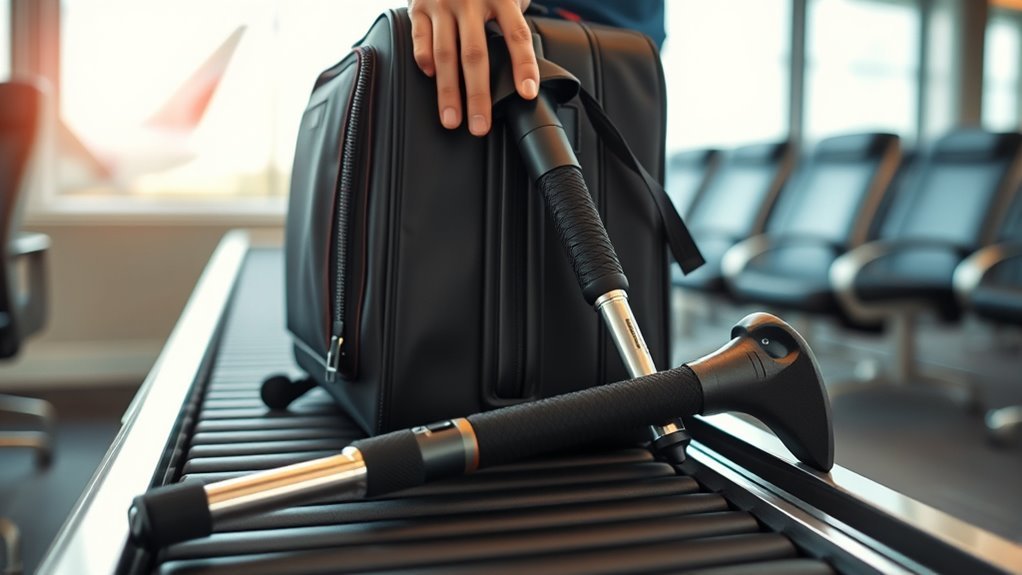
Yes, you can normally transport hiking poles by air. The important question is whether they can stay in your cabin bag or must go in checked baggage.
Four factors determine the answer:
- Tip design: Sharp metal tips face stricter restrictions than genuinely blunt ends.
- Airport-security rules: The rules at your departure and transit airports apply when you pass through security.
- Airline policy: An airline can prohibit an item even when airport security would otherwise permit it.
- Bag dimensions: A permitted pole must still fit within the airline’s cabin-bag size limits.
Collapsible and folding poles are easier to pack, but compact size does not automatically make them acceptable in the cabin. You must satisfy both the security authority and the airline.
Warning: Do not rely on being able to gate-check a pole that security rejects. A checkpoint officer may require you to return to the airline counter, place the pole in checked baggage, give it to someone outside security, ship it, or abandon it.
TSA Rules for Hiking Poles
The Transportation Security Administration’s current guidance separates hiking poles by tip design:
- Blunt-tipped hiking poles: Permitted in carry-on and checked bags, subject to screening.
- Sharp-tipped hiking poles: Not permitted in carry-on bags but generally permitted in checked baggage.
A TSA officer makes the final checkpoint decision. The airline must also accept the pole as cabin baggage, and it must fit within the carrier’s size limits.
Carry-On Allowances
You may be able to carry a blunt-tipped hiking pole through a U.S. checkpoint. Before doing so, confirm all of the following:
- The end is genuinely blunt and does not expose a sharp metal point.
- The collapsed pole fits completely inside your approved cabin bag.
- Your airline permits hiking poles in the cabin.
- Your connecting and return airports apply compatible rules.
Rubber tip protectors are useful for packing, but you should not assume that placing a removable cap over a sharp metal tip will make the pole acceptable. Ask TSA or the airline before travel when the underlying pole has a pointed end.
You may save or print the relevant guidance, but a printed page does not override an officer’s security decision.
Checked Bag Rules
Checked baggage is usually the most dependable option for hiking poles. Both blunt- and sharp-tipped poles can generally be transported in a checked bag when they are packed safely and accepted by the airline.
Checked bags still undergo security screening. Cover sharp ends so they cannot puncture the bag or injure baggage handlers and inspectors. Place the poles near the center of the bag and surround them with clothing or other padding.
Check the carrier’s current baggage allowance before booking. Fees vary by airline, route, fare type, loyalty status, and the time at which you purchase the bag.
When Hiking Poles Must Be Checked
You should place hiking poles in checked baggage when they have sharp tips, when the airline prohibits them in the cabin, when the departure country does not allow recreational poles through security, or when the collapsed poles exceed cabin-bag dimensions.
Checking the poles is also the safer choice when your itinerary crosses several countries with different security rules.
Sharp Tips Require Checking
Sharp-tipped hiking poles should not be placed in a U.S. carry-on bag. Cover the tips with fitted protectors, foam, thick cardboard, or another durable material before placing the poles in checked baggage.
Secure the covers with tape or straps so they cannot slide off during handling. Do not leave exposed points that could pierce the suitcase or damage nearby items.
Removing a detachable tip can help when the manufacturer designed the pole for disassembly. Store the removed parts in a sealed pouch so they do not become lost inside the bag.
Airline Rules May Differ
Airport-security approval does not force an airline to accept hiking poles as cabin baggage. Carriers can set stricter rules based on storage, safety, and baggage policies.
| Airline or itinerary | Cabin policy | What to do |
|---|---|---|
| Iberia | Trekking poles and similar mountaineering accessories must be checked. | Pack them securely in checked baggage. |
| Ryanair | Ski poles and walking or hiking poles are listed among items prohibited on board. | Use checked baggage and securely wrap pointed ends. |
| Other airlines | Policies vary by carrier, route, aircraft, and fare. | Check the airline’s restricted-items and baggage pages. |
| International connections | A new security checkpoint may apply a different national rule. | Follow the most restrictive rule on the full itinerary. |
Pack Poles In Checked Bags
Use a sturdy suitcase, padded pole bag, or hard-sided case when checking hiking poles. A thin outer pocket may not protect carbon-fiber or aluminum shafts from impact.
- Clean off dirt, mud, and moisture.
- Collapse or disassemble the poles as far as the manufacturer permits.
- Tighten the adjustment locks so sections do not slide during handling.
- Cover sharp tips and secure the covers.
- Bundle the poles together with straps or reusable ties.
- Wrap them in clothing, foam, or bubble wrap.
- Place them lengthwise near the center of the bag.
- Label the bag with your contact information.
Pro Tip: Photograph the packed poles and your closed suitcase before check-in. The photos can help you document their condition if the bag is delayed or damaged.
Airline Rules for Hiking Poles
Airline rules cover more than security permission. A carrier may also apply cabin-size limits, checked-bag weight limits, special-equipment procedures, or oversize charges.
Before travelling, check the airline’s website for:
- Restricted or prohibited cabin items
- Standard checked-bag dimensions and weight
- Sports-equipment or special-baggage rules
- Fees for adding a checked bag
- Liability limits for fragile equipment
When the online policy does not mention trekking poles, contact the airline and describe the poles accurately. Include their collapsed length, tip type, and whether they will be inside a bag.
Keep a record of the response when possible. However, airport-security officers and airline staff still make operational decisions on the day of travel.
Country Rules for Trekking Poles
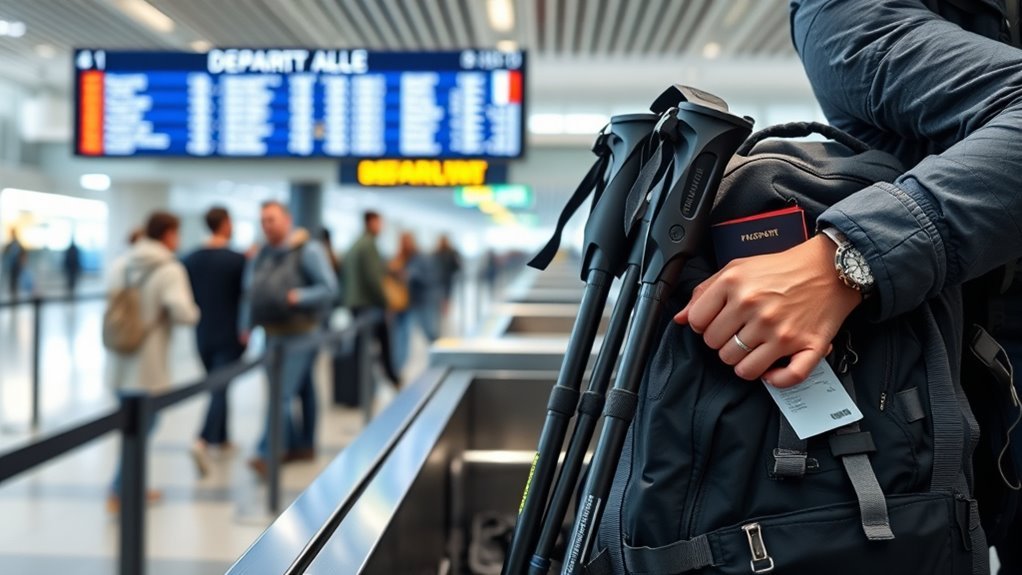
Security rules differ by country, and the rule at a connecting airport may matter even when your first airport allows the poles.
| Location | General guidance | Important limitation |
|---|---|---|
| United States | TSA permits blunt-tipped hiking poles in carry-on and checked bags. Sharp-tipped poles must be checked. | The officer and airline retain final control. |
| United Kingdom | GOV.UK lists recreational walking and hiking poles as prohibited in hand luggage and allowed in hold luggage. | A medically needed cane or walking aid is treated differently. |
| Spain | Aena says foldable trekking poles may be kept inside a suitcase for X-ray inspection. | The airline may be stricter. Iberia requires trekking poles to be checked. |
| Australia | Use the current CASA Pack Right guidance and check with the airline. | Sharp, pointed, or weapon-like sporting items may face carry-on restrictions. |
Review the rules for every flight segment, including the return journey. A pole accepted at one airport may be refused when you pass through security in another country.
Note: The most restrictive applicable rule usually determines how you should pack. When the airport permits a pole but the airline prohibits it in the cabin, follow the airline’s checked-baggage requirement.
How to Pack Hiking Poles Safely
Start by cleaning and drying the poles. Dirt and moisture can transfer to your clothing, affect locking mechanisms, or lead to corrosion during a long trip.
Collapse telescoping poles or fold Z-style poles according to the manufacturer’s instructions. Do not force sections beyond their intended range, because that can damage locks, cables, or carbon-fiber shafts.
Use fitted rubber protectors on the tips, then add a second protective layer when the poles have metal points. Foam, corrugated cardboard, or a small rigid tube can prevent the ends from puncturing your bag.
Bundle the poles so they cannot move independently. Wrap them with clothing or padding and place them away from the suitcase walls. Keep removable baskets, tip parts, and adjustment tools in a closed pouch.
If you are attempting to carry blunt poles in the cabin where permitted, place them fully inside the bag. An exposed pole attached to the outside of a backpack may fail the airline’s size rules or attract additional screening.
Alternatives to Flying With Hiking Poles
If checking poles is inconvenient or expensive, consider obtaining them after arrival.
- Rent from an outfitter: A good option for guided walks, short treks, or one-way routes.
- Buy inexpensive poles locally: Useful when the cost is lower than adding checked baggage.
- Ship your poles ahead: Send them to a hotel, luggage-storage service, or outfitter that has agreed to receive the package.
- Ask a tour operator: Some guided trips include loaner poles or offer rentals.
- Use public transport after arrival: Trains and buses may have fewer equipment restrictions, although their baggage rules still apply.
Confirm opening hours, stock, rental deposits, and return arrangements before depending on a shop at your destination. International shipping may also involve customs processing and delivery delays.
Camino Packing Tips for Poles and Gear
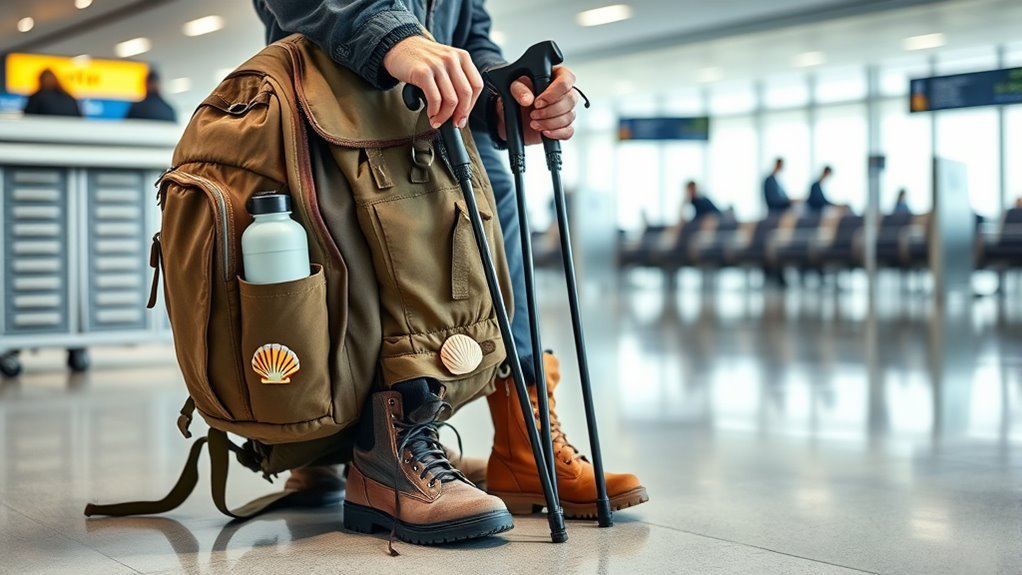
For a Camino de Santiago trip, check the rules for the country from which you depart as well as the airline flying you to Spain.
Aena may permit foldable trekking poles inside cabin baggage for inspection, but that does not guarantee acceptance by your carrier. Iberia requires trekking poles to be checked, and Ryanair lists walking and hiking poles among items prohibited on board. Flights departing from a UK airport also treat recreational hiking poles as hold-baggage items.
Practical Camino options include:
- Pack your poles securely in a checked backpack or suitcase.
- Place the backpack inside a protective travel cover or duffel bag.
- Rent or buy poles after arriving in Spain.
- Ship your poles to your first confirmed accommodation with permission from the property.
- Choose folding poles to reduce checked-bag space, while remembering that compact size does not override cabin restrictions.
Also check your return flight. A pole purchased in Spain may need to go in checked baggage when you fly home, even if it was permitted on an earlier part of the trip.
Frequently Asked Questions
Does TSA allow hiking sticks in carry-on bags?
TSA currently allows blunt-tipped hiking poles and walking sticks in carry-on bags, subject to screening and the officer’s final decision. Sharp-tipped poles and sticks must go in checked baggage. Your airline can still apply a stricter cabin rule.
Are you allowed to take hiking sticks on a plane?
Yes. Hiking sticks can generally travel in checked baggage when packed safely. Carry-on acceptance depends on the tip, security authority, airline, dimensions, and countries on your itinerary.
Can I bring a walking stick into an airplane cabin?
A walking stick needed as a mobility aid is often permitted in the cabin after security screening. Recreational hiking sticks may be treated as sports equipment and face stricter rules. Contact the airline’s accessibility or special-assistance team before travel when you rely on the stick for mobility.
Does a walking stick count as hand luggage?
It depends on the airline and why you use it. A recreational stick may need to fit inside your cabin allowance or be checked. A medically necessary mobility aid may be carried under separate accessibility rules and may not count as a standard cabin bag.
Do rubber tip covers make sharp hiking poles carry-on safe?
Do not assume that a removable rubber cap changes how security classifies a sharp-tipped pole. Ask the security authority and airline before travel. When the underlying tip is pointed, checked baggage is the safer option.
What happens on a connecting international flight?
You may have to pass through security again during a connection. The rules at that airport then apply, even if your poles passed the first checkpoint. Check every transit country and follow the most restrictive policy on your itinerary.
Conclusion
You can bring hiking poles on a plane, but you cannot rely on one worldwide carry-on rule. TSA permits blunt-tipped poles in cabin bags, while sharp-tipped poles must be checked. The UK, individual airlines, and other authorities may be stricter. Check every flight segment, protect the tips, and use checked baggage whenever the rules are unclear.
Sources
- Transportation Security Administration: What Can I Bring? — U.S. carry-on and checked-bag rules for hiking poles and walking sticks.
- Iberia Hand Luggage Rules — Iberia’s requirement to check trekking poles and similar mountaineering accessories.
- Ryanair Prohibited-Items Guidance — Ryanair’s cabin restrictions for walking and hiking poles.
- GOV.UK Sports Equipment Restrictions — UK hand- and hold-luggage rules for recreational walking and hiking poles.
- GOV.UK Personal Items and Mobility Aids — UK guidance for canes, walking aids, and other mobility equipment.
- Aena Hand-Luggage Guidance — Spanish airport guidance for foldable trekking poles and security inspection.
