
Last Updated on July 27, 2026 by Daniel Globe
Hiking can support weight loss because it increases physical activity and calorie use while giving you a workout that can be adjusted to your fitness level. The number of calories you burn depends on your body weight, pace, trail grade, terrain, trip length, and any load you carry. Hiking works best for weight management when it is paired with a sustainable eating pattern, enough recovery, and consistent activity.
Quick Answer
Yes. Hiking can help you lose weight by increasing the calories you use and making it easier to accumulate moderate-to-vigorous physical activity. A 155-pound person may burn roughly 280 to 520 calories per hour across slow hiking through harder uphill efforts, but actual calorie burn varies widely. Diet, consistency, sleep, and recovery still matter.
Key Takeaways
- Hiking can contribute to the calorie deficit needed for weight loss, but exercise alone does not guarantee weight loss.
- Pace, body weight, elevation gain, trail surface, duration, and pack weight all affect energy use.
- Steeper terrain usually raises exercise intensity, but there is no universal rule that every steep hike burns a fixed percentage more calories.
- Intervals can improve fitness and make a hike more time-efficient, but research does not show that interval training consistently causes more weight or fat loss than continuous aerobic exercise.
- Build volume and difficulty gradually, use appropriate footwear and hydration, and combine hiking with strength training and a sustainable eating pattern.
At a Glance
| Time Required | Start with 30–60 minutes; longer hikes can be added as fitness improves |
| Difficulty | Beginner to advanced; choose trail grade and distance for your current ability |
| Tools Needed | Supportive footwear, water, weather-appropriate clothing, navigation, and basic safety essentials |
| Cost | Often $0 on free local trails if you already have suitable footwear and basic gear; park fees and equipment vary |
How Hiking Burns Calories
The calories burned during a hike vary by body weight, intensity, terrain, duration, and load. The 2024 Adult Compendium of Physical Activities assigns different metabolic equivalent, or MET, values to different forms of hiking and hill walking. For example, slow hiking or ambling through fields and hillsides is listed at 3.8 METs, normal hiking through fields and hillsides at 5.3 METs, cross-country hiking at 6.0 METs, and moderate-to-brisk hill climbing on a 6% to 10% grade at 7.0 METs.
For a person who weighs about 155 pounds, those activity levels translate to roughly 280, 390, 440, and 520 calories per hour, respectively. These are estimates, not guarantees. Fitness level, temperature, altitude, stops, trail conditions, and individual metabolism can change actual energy use.
| Hiking intensity | MET | 120 lb | 155 lb | 200 lb |
|---|---|---|---|---|
| Slow hiking/ambling, no load | 3.8 | ~220 cal/hr | ~280 cal/hr | ~360 cal/hr |
| Normal hiking through fields/hillsides | 5.3 | ~300 cal/hr | ~390 cal/hr | ~500 cal/hr |
| Cross-country hiking | 6.0 | ~340 cal/hr | ~440 cal/hr | ~570 cal/hr |
| Hill climbing, 6%–10% grade, moderate-to-brisk | 7.0 | ~400 cal/hr | ~520 cal/hr | ~670 cal/hr |
Note: Watches, apps, and calorie calculators are useful for comparing your own workouts, but their calorie numbers are estimates. Avoid treating the displayed number as an exact amount of food you need to “eat back.”
The Impact of Terrain on Hiking and Weight Loss

Terrain changes how hard your body has to work. A flat, well-maintained trail may feel similar to brisk walking, while steep grades, loose surfaces, rocks, sand, and repeated climbs can increase effort and recruit more stabilizing muscles. The Compendium data show why a single “calories burned hiking” number is misleading: intensity rises as pace, grade, and load increase.
There is no reliable universal rule that steep terrain burns exactly 50% more calories than flat terrain. The difference depends on the grade, pace, surface, and hiker. A better approach is to compare the difficulty of your own routes and progress gradually rather than chasing a fixed percentage.
Varying trails can also make training more engaging. Rocky paths, rolling hills, forest trails, and sandy sections challenge balance and muscular endurance in different ways. As fitness improves, you can increase distance or elevation gain without needing every hike to be maximal.
Does Carrying a Backpack Increase Calorie Burn?
Carrying a pack increases the work required to move, but the size of the increase depends on load, grade, and speed. The 2024 Compendium lists backpacking at 7.0 METs and hiking or organized walking with a daypack at 7.8 METs, while normal hiking through fields and hillsides without a load is listed at 5.3 METs. Those entries are different activities, so they should not be interpreted as proof that adding a pack always raises calorie burn by a specific percentage.
Do not add unnecessary weight just to burn more calories. A heavier pack can increase fatigue and may raise the risk of foot, knee, hip, or back discomfort, especially if you increase load too quickly. Carry the water, food, layers, navigation, and safety items your hike requires. For longer trips, a properly fitted pack matters; this guide to the best hiking backpacks for multi-day treks can help with trip-specific gear planning.
Pro Tip: To make a hike harder, first add time, pace, or modest elevation gain before deliberately adding pack weight. Those variables are easier to control and do not require carrying unnecessary load.
Incorporating Interval Training into Hiking for Weight Loss
| Interval Training Benefit | What It Means on the Trail |
|---|---|
| Higher workout intensity | Short brisk or uphill efforts can raise heart rate more than an easy steady pace. |
| Improved cardiovascular fitness | Alternating harder and easier efforts can improve aerobic capacity and make hills feel more manageable over time. |
| Time-efficient training | Intervals can create a challenging workout without making every hike long. |
| Weight-management support | Intervals increase exercise intensity, but they are not proven to produce more weight or fat loss than continuous aerobic training when programs are compared overall. |
Interval training can make hiking more challenging and improve cardiovascular fitness. Instead of sprinting on uneven trail, use controlled power-hiking intervals. After a 5- to 10-minute easy warm-up, hike briskly uphill or at a fast sustainable pace for 1 to 2 minutes, then recover at an easy pace for 2 to 3 minutes. Repeat four to six times, then cool down.
A 2023 systematic review and meta-analysis found that high-intensity interval training and moderate-intensity continuous training did not differ significantly for weight, BMI, waist circumference, or fat mass in adults with overweight or obesity, although interval training may improve some fitness and metabolic measures. In other words, intervals are a useful option, not a weight-loss shortcut. See the published review in PubMed.
How Hiking Builds Muscle and Supports Metabolism
Hiking is primarily aerobic exercise, but it also challenges the quadriceps, hamstrings, calves, glutes, and core. Uneven terrain adds balance and stabilization demands, while trekking poles can involve the upper body. Regular hiking can improve lower-body muscular endurance and may improve strength in people who are starting from a low activity level.
It is more accurate to say that hiking supports muscle function than to promise a large “metabolism boost.” More lean tissue is associated with higher resting energy needs, but hiking is not a replacement for progressive resistance training when the goal is to build substantial muscle. Current U.S. physical activity guidance recommends that adults also perform muscle-strengthening activity on at least two days each week.
For overall health, adults should aim for at least 150 minutes of moderate-intensity aerobic activity each week, plus muscle-strengthening activity on at least two days.
A Beginner Hiking Plan for Weight Loss
You do not need a punishing schedule. The goal is to build enough weekly activity to support health and weight management without increasing distance, elevation, and intensity all at once. The following example can be adjusted around your current fitness, local terrain, and recovery.
| Week | Hiking Goal | Optional Progression |
|---|---|---|
| 1 | 2 easy hikes of 30–40 minutes | Use mostly gentle terrain and finish feeling you could do a little more. |
| 2 | 2–3 hikes totaling 90–120 minutes | Add a few short hills or 4 controlled brisk intervals. |
| 3 | 3 hikes totaling about 120–150 minutes | Make one hike slightly longer while keeping the others comfortable. |
| 4 | Aim for at least 150 minutes of moderate activity across hiking and other exercise | Add elevation, pace, or time gradually; continue strength training twice weekly. |
The CDC recommends at least 150 minutes of moderate-intensity aerobic activity or 75 minutes of vigorous activity each week, or an equivalent combination, plus two days of muscle-strengthening activity. More activity may be needed for some people to reach or maintain a particular body weight.
Tips for Maximizing Weight Loss While Hiking
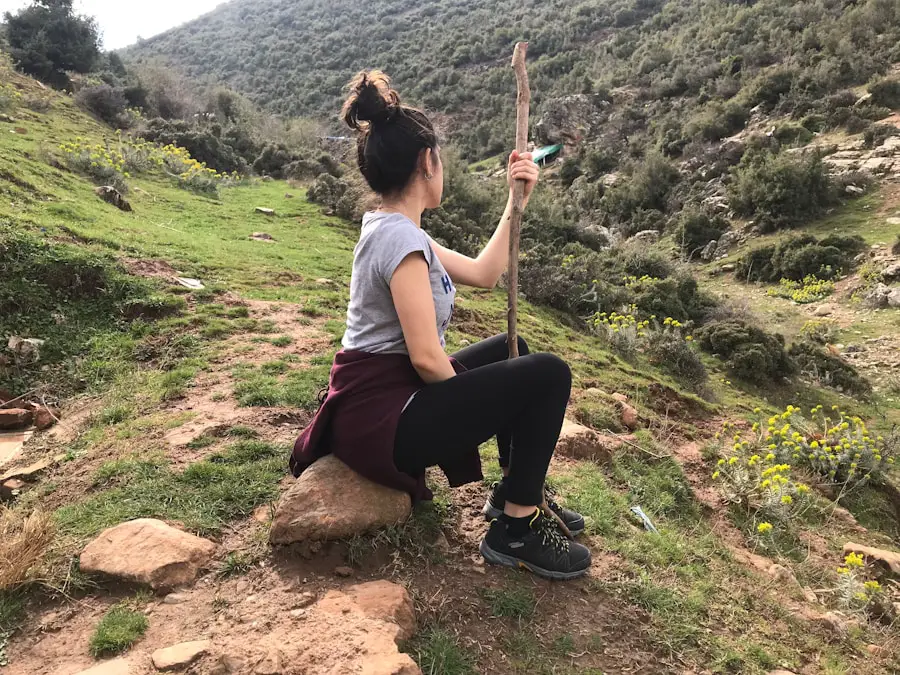
Specific goals can make a hiking routine easier to follow. Instead of focusing only on the scale, track behaviors you control: weekly hiking minutes, distance, elevation gain, perceived effort, and how consistently you complete your planned outings.
- Choose a repeatable pace. On moderate days, you should usually be able to speak in short sentences. Save harder efforts for planned intervals or steeper sections.
- Increase one variable at a time. Add a little distance, elevation, pace, or frequency rather than increasing everything in the same week.
- Use hills strategically. Power hiking uphill raises intensity without requiring you to run on uneven ground.
- Consider trekking poles. Poles can improve stability and involve the upper body, especially on climbs and descents.
- Stay hydrated. Bring enough water for the route and conditions, and drink regularly in hot weather or at altitude.
- Track trends, not exact calorie numbers. Apps and journals are useful for monitoring progress, but calorie-burn estimates can be imprecise.
- Recover. Sleep and easier days help you maintain consistency and reduce the chance that fatigue derails your routine.
The Psychological Benefits of Hiking for Weight Loss
Hiking can also support the behavioral side of weight management. Exercise is associated with better mood, sleep, and mental well-being, and outdoor “green exercise” may offer additional psychological benefits for some people. A 2026 systematic review and meta-analysis of 51 studies found improvements in well-being and affect with green exercise, although results varied across studies. You can review the study through PubMed.
Enjoyment matters because the best exercise plan is one you can repeat. Hiking with friends or family can add social support and accountability, while solo hiking can provide quiet time away from daily stress. Neither approach is automatically better; choose the format that makes you more likely to stay active safely.
Combining Hiking with a Healthy Diet for Effective Weight Loss
Hiking helps you use more energy, but weight loss still depends on overall energy balance. The CDC notes that physical activity combined with reducing calorie intake can create the calorie deficit that leads to weight loss. It also notes that most weight loss comes from reducing calorie intake, while regular physical activity is especially important for health and long-term weight maintenance.
For everyday meals, focus on a pattern you can maintain. The current Dietary Guidelines for Americans, 2025–2030 emphasizes whole, nutrient-dense foods and limiting highly processed foods, added sugars, and refined carbohydrates. Fruits, vegetables, whole grains, and varied protein foods can all fit into a hiking-friendly eating pattern.
Before a hike, choose food that sits well and provides enough energy for the planned duration. On longer outings, pack practical snacks such as fruit, nuts, sandwiches, or other foods you tolerate well. After a demanding hike, a normal meal that includes both protein and carbohydrate can support recovery. Avoid turning every hike into a reason for unrestricted eating, because a large post-hike calorie surplus can offset the energy used on the trail.
Note: Healthy weight loss is individual. Medications, medical conditions, sleep, stress, age, and other factors can affect body weight. The CDC recommends gradual, steady weight loss and a sustainable lifestyle rather than rapid-loss approaches.
Hiking Safety When Your Goal Is Weight Loss
Do not let calorie goals override trail safety. The National Park Service recommends choosing a trail that matches your abilities, checking weather and park alerts, leaving a trip plan, carrying appropriate essentials, and bringing enough water and food. Start with shorter, easier hikes and increase challenge as your fitness and trail skills improve.
Warning: Stop and seek appropriate help for chest pain, fainting, severe shortness of breath, confusion, signs of heat illness, or a serious injury. If you are recovering from an injury or have a chronic medical condition or disability, ask a qualified health professional what types and amounts of activity are appropriate for you before increasing hiking intensity.
Hiking is often lower impact than running, but that does not make every trail “easy on the joints.” Long descents, steep climbs, uneven surfaces, and heavy packs can stress the knees, ankles, hips, and back. People with joint problems may do well with gentle trails, shorter distances, trekking poles, or another form of exercise, but the right choice depends on the individual.
Frequently Asked Questions
What is hiking?
Hiking is outdoor walking on trails or routes through natural environments such as parks, forests, hills, and mountains. Difficulty can range from a short, nearly level path to a long route with steep climbs and rugged footing.
How does hiking help with weight loss?
Hiking increases physical activity and calorie use. When that activity is paired with a sustainable eating pattern that produces an overall calorie deficit, it can contribute to weight loss. Hiking can also improve fitness, which may make it easier to stay active consistently.
How many calories can you burn while hiking?
There is no single number. A 155-pound person may burn roughly 280 calories per hour during slow hiking, about 390–440 calories during normal to cross-country hiking, and around 520 calories during moderate-to-brisk climbing on a 6% to 10% grade. Body weight, pace, terrain, elevation, stops, weather, and pack weight all change the estimate.
What are the other benefits of hiking?
Regular hiking can improve cardiorespiratory fitness, lower-body endurance, balance, and overall physical activity. Exercise also supports sleep and mental health, and outdoor exercise may improve well-being and mood for some people.
How often should you hike to see weight loss results?
There is no guaranteed hiking frequency for weight loss. For general health, adults should work toward at least 150 minutes of moderate-intensity aerobic activity each week, or 75 minutes of vigorous activity, plus strength work on at least two days. Some people need more total activity for weight management.
Are there any precautions to take while hiking for weight loss?
Yes. Match the trail to your ability, check weather and trail conditions, wear appropriate footwear and clothing, carry water and essential safety gear, tell someone your route, and increase distance and elevation gradually. Do not continue just to hit a calorie or distance goal if conditions become unsafe.
Is hiking better than walking for weight loss?
Hiking often uses more energy per minute than level walking because trails may include hills and uneven surfaces. However, a longer brisk walk can burn more total calories than a short easy hike. The better choice is the activity you can do safely and consistently.
Should I carry a heavier backpack to lose weight faster?
Usually not. A heavier load increases workload, but it also increases fatigue and may increase discomfort or injury risk. Carry what the hike requires and progress with time, pace, distance, or elevation before adding unnecessary weight.
Sources
- 2024 Adult Compendium of Physical Activities — Walking — MET values for hiking, hill climbing, backpacking, and loaded walking.
- CDC — Physical Activity and Your Weight and Health — calorie deficit, physical activity, and weight-management guidance.
- CDC — Adult Activity: An Overview — weekly aerobic and muscle-strengthening recommendations.
- National Park Service — Hike Smart — trail planning, hydration, equipment, and hiking safety.
- PubMed — HIIT vs. Moderate-Intensity Continuous Training Meta-analysis — comparison of interval and continuous training for body composition and weight outcomes.
- PubMed — Green Exercise and Mental Health Meta-analysis — 2026 evidence on outdoor exercise and mental health outcomes.
