
Last Updated on July 27, 2026 by Daniel Globe
Hiking can burn a meaningful number of calories while building endurance and getting you outdoors, but there is no single “calories per hour” number that applies to every hike. Your body weight, pace, trail grade, terrain, pack weight, and total effort all affect how much energy you use.
Quick Answer
For a 155-pound adult, hiking may burn about 270 calories per hour at a slow pace, about 370 on rolling terrain, around 420 cross-country, and roughly 490–620 on sustained hills depending on grade. Loaded backpacking can be higher. These are estimates; actual calorie burn varies from person to person.
Key Takeaways
- Body weight, trail grade, pace, terrain, and pack weight all change how many calories hiking burns.
- Current MET data place hiking activities across a wide intensity range rather than at one fixed calorie rate.
- A 155-pound person may burn roughly 270 calories per hour on an easy hike and 600 or more on sustained steep terrain.
- Fitness watches can help track trends, but their calorie estimates should not be treated as exact measurements.
- Hiking can support weight management, but increasing trail difficulty or pack weight should never come at the expense of safety.
The CDC estimates that a 154-pound person uses about 370 calories per hour during moderate hiking.
The reason hiking calorie burn varies so much is simple: your muscles need energy every time they move your body uphill, stabilize you on uneven ground, or carry extra weight. A gentle trail can feel similar to brisk walking, while a sustained climb with a backpack can become vigorous exercise.
Disclosure: As an Amazon Associate I earn from qualifying purchases. Some links on this page are affiliate links, at no extra cost to you.
Calories Burned Hiking by Weight and Intensity
The 2024 Adult Compendium of Physical Activities assigns MET values to different hiking and hill-climbing activities. A MET represents energy expenditure relative to resting metabolism. Higher MET values mean greater energy demand.
The table below uses the common approximation of MET × body weight in kilograms × hours. Numbers are rounded and should be treated as estimates rather than exact calorie measurements.
| Body Weight | Slow Hiking 3.8 MET |
Normal Hills 5.3 MET |
Cross-Country 6.0 MET |
6–10% Hills 7.0 MET |
11–20% Hills 8.8 MET |
|---|---|---|---|---|---|
| 125 lb | 215 | 300 | 340 | 400 | 500 |
| 155 lb | 270 | 370 | 420 | 490 | 620 |
| 185 lb | 320 | 445 | 505 | 590 | 740 |
| 200 lb | 345 | 480 | 545 | 635 | 800 |
Important: These figures estimate total energy expenditure during the activity. Real-world results can differ because MET values represent typical energy costs across groups rather than a personalized laboratory measurement.
Factors Affecting Calorie Burn While Hiking
Body weight has a major effect on calorie expenditure. Moving a heavier body generally requires more energy, so two people hiking the same trail at the same pace will not necessarily burn the same number of calories.
Trail grade can make an even bigger difference. According to the 2024 Adult Compendium, climbing hills without a load at a moderate-to-brisk pace is listed at 5.3 MET for a 1–5% grade and 7.0 MET for a 6–10% grade. An 11–20% grade at a slow-to-moderate pace is listed at 8.8 MET.
Pace also matters. Moving faster generally raises oxygen demand and energy expenditure, although steep terrain can produce high effort even when your actual walking speed is slow.
Terrain affects effort because rocks, roots, mud, sand, and uneven surfaces can require more careful foot placement and stabilization than smooth pavement.
Pack weight increases the mass you have to move. The Compendium lists backpacking at 7.0 MET and hiking with a daypack at 7.8 MET, although your actual effort depends on the pack, grade, pace, and trail.
Weather and altitude can make a hike feel harder, but they should not be used as calorie-burning tools. Hot conditions increase heat stress and dehydration risk. The National Park Service recommends planning around conditions, knowing your limits, carrying adequate water and food, and adjusting your hike when needed.
Warning: Do not choose extreme heat, excessive pack weight, or terrain beyond your ability simply to burn more calories. Extra effort is useful only when you can maintain safe footing, hydration, temperature control, and good judgment.
The Hourly Breakdown of Calories Burned at Different Intensities
A slow hike through fields or gentle hills is listed at about 3.8 MET in the 2024 Compendium. For a 155-pound adult, that works out to roughly 270 calories per hour using the standard MET approximation.
A normal-paced hike through fields and hillsides is about 5.3 MET, or roughly 370 calories per hour at 155 pounds. Cross-country hiking is listed at 6.0 MET, which works out to about 420 calories per hour for the same person.
Once sustained climbing enters the picture, calorie expenditure can rise quickly. A moderate-to-brisk climb on a 6–10% grade is listed at 7.0 MET, or roughly 490 calories per hour for a 155-pound hiker. An 11–20% grade at a slow-to-moderate pace is 8.8 MET, which is roughly 620 calories per hour at the same body weight.
Very steep or very fast uphill walking can have still higher MET values. That does not mean every mountain hike burns 700 or 800 calories per hour, however. Steep trails often reduce walking speed, include rest breaks, and vary continuously in grade.
Note: “Calories per hour” should normally be based on moving time. A three-hour outing that includes long lunch, photo, or summit breaks will usually have a lower average hourly burn across the entire trip.
Tips for Maximizing Calorie Burn While Hiking
| Tip | How It Affects Effort |
|---|---|
| Choose challenging terrain | Uphill grades can raise hiking from roughly 5.3 MET on mild hills to 7.0–8.8 MET on steeper grades. |
| Carry a backpack | A necessary hiking pack increases the mass you move and can raise energy demand, especially uphill. |
| Use trekking poles | Poles engage the arms and can improve stability, but there is no dependable fixed calorie increase that applies to every hiker. |
| Increase pace when conditions allow | A faster sustainable pace generally raises exercise intensity and calorie expenditure. |
| Include uphill sections | Elevation gain is one of the most reliable ways to increase hiking intensity without needing to run. |
Interval-style hiking can also increase intensity. For example, you might hike a climb at a brisk but controlled pace and then recover at an easier pace on flatter terrain. Higher-intensity exercise can produce a temporary increase in post-exercise oxygen consumption, sometimes called the “afterburn effect,” but the extra calorie expenditure after the workout is usually modest compared with the energy used during the hike itself.
You do not need to add a weighted vest simply to increase calorie burn. If you already carry water, food, clothing, first-aid supplies, and other normal hiking equipment, that load is enough to affect effort. Adding unnecessary weight can increase fatigue and make footing more difficult.
Pro Tip: Elevation gain is usually a better way to make a hike harder than deliberately overloading your pack. Choose a hillier route that still matches your fitness and experience.
How to Calculate Calories Burned While Hiking
A practical way to estimate hiking calorie burn is to use a MET value. A MET expresses how much energy an activity uses relative to rest. One MET is approximately equal to one calorie per kilogram of body weight per hour.
A simple formula is:
Calories burned ≈ MET × body weight in kilograms × duration in hours
For example, suppose a 154-pound hiker weighs about 70 kilograms and hikes cross-country at approximately 6 MET for two hours:
6 × 70 × 2 = about 840 calories
A commonly used oxygen-consumption equation is slightly more detailed:
Calories per minute ≈ MET × 3.5 × body weight in kilograms ÷ 200
Both approaches are estimates. Individual metabolism, fitness, efficiency, trail conditions, and measurement methods can produce different results.
Active Calories vs. Total Calories
Fitness apps may display either active calories or total calories. Active calories attempt to show the energy used above resting metabolism. Total calories may include both exercise energy and the calories your body would have used while resting during the same period. This is one reason two apps can show different numbers for the same hike.
How Accurate Are Fitness Trackers?
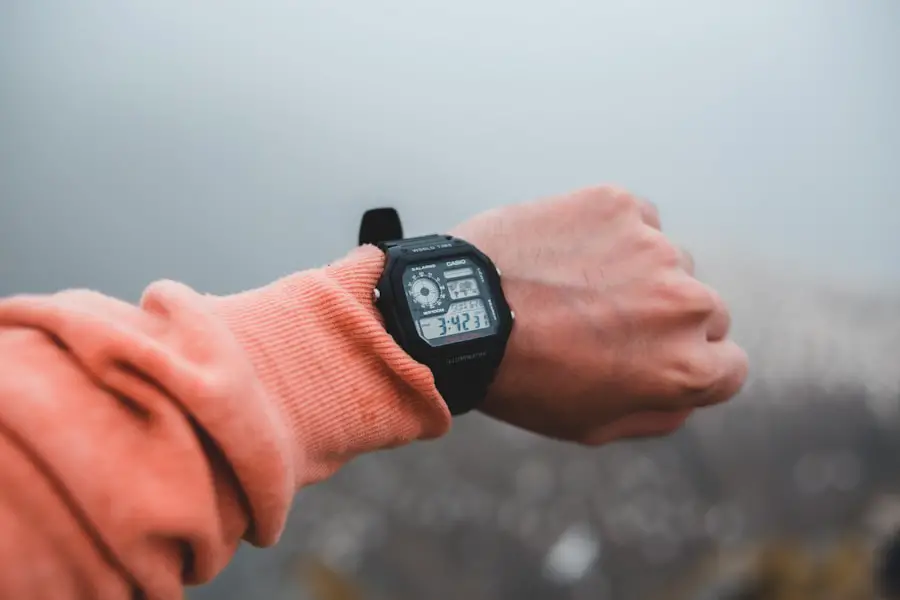
GPS watches and fitness trackers are useful for recording distance, elevation, pace, and workout trends, but their calorie estimates are much less dependable. A systematic review of wrist-worn activity trackers found poor energy-expenditure accuracy across the devices studied, with mean absolute percentage error above 30% for all brands assessed.
Use your watch to compare similar hikes over time rather than treating a reading such as “687 calories” as a laboratory-quality measurement.
The Benefits of Hiking for Weight Management
Hiking can support weight management because physical activity increases the amount of energy your body uses. The CDC explains that physical activity combined with reduced calorie intake can create the calorie deficit needed for weight loss.
Exercise alone does not guarantee weight loss. Food intake, sleep, age, medications, genetics, and other factors can influence body weight. The CDC notes that reducing calorie intake accounts for much of weight loss, while regular physical activity is especially important for health and maintaining weight loss.
Hiking also improves aerobic fitness and challenges the legs, hips, and core. Steeper trails increase demand on the glutes, quadriceps, calves, and other muscles involved in climbing and controlling descents. Trekking poles and backpacks can add upper-body involvement, although hiking remains primarily a lower-body aerobic activity.
There may also be benefits beyond exercise itself. Research on nature exposure has found associations with improvements in stress, mood, and other mental-health outcomes. A 2024 meta-analysis of nature exposure reported beneficial mental-health effects, although results vary according to the population and type of exposure.
Comparing Hiking to Other Forms of Exercise for Calorie Burn
Hiking generally burns more calories than easy level walking because trails often include hills and uneven terrain. Running can burn more calories per minute, but hiking may be easier for some people to sustain for several hours.
For a consistent comparison, Harvard Health lists the following approximate 30-minute calorie values for a 155-pound person:
| Activity | 30 Minutes | Approx. Per Hour |
|---|---|---|
| Walking at 3.5 mph | 133 calories | 266 calories |
| Cross-country hiking | 216 calories | 432 calories |
| Running at 5 mph | 288 calories | 576 calories |
These Harvard Health figures are useful for comparison, but they still represent estimates. A steep mountain hike can exceed the energy cost of the listed cross-country hike, while an easy nature walk may burn much less.
Choosing between hiking, running, cycling, or gym exercise does not have to come down to which activity produces the largest calorie number. An activity you enjoy and can perform consistently is often more useful than a higher-intensity workout you rarely do.
Making the Most of Your Hiking Workouts
Start by deciding what you want from the hike. If your goal is general fitness, a comfortable trail that keeps you moving steadily can provide an effective aerobic workout. If you want a harder session, gradually increase distance, elevation gain, or pace rather than changing everything at once.
Track distance, moving time, elevation gain, and how hard the hike felt. Those measures often provide more useful long-term information than obsessing over the exact calorie number shown on a watch.
For weight management, combine regular physical activity with eating habits that support your energy needs and goals. For fitness improvement, consistency and gradual progression matter more than maximizing calories on every outing.
Hiking can also fit naturally into travel. Travelers who rely on medical equipment should plan those needs separately from their hiking workout; for example, this guide to travel CPAP machines covers portable continuous positive airway pressure considerations while away from home.
Note: Calorie estimates are best used for comparison and planning, not as permission to ignore hunger, hydration, fatigue, or other signals from your body during a long hike.
Frequently Asked Questions
What is hiking?
Hiking is an outdoor physical activity that involves walking on trails, paths, hills, or natural terrain. It can range from easy walks on maintained trails to strenuous mountain climbs and multi-day backpacking trips.
How many calories does hiking burn per hour?
There is no single number. A 155-pound person may burn roughly 270 calories per hour during slow hiking, around 370 on normal rolling terrain, about 420 cross-country, and roughly 490–620 on sustained hills depending on grade. Body weight, speed, pack weight, and trail conditions can move the estimate higher or lower.
Why does body weight affect hiking calories?
Moving a larger mass generally requires more energy. That means a heavier person will usually burn more calories than a lighter person completing the same hike at the same intensity.
Does hiking uphill burn more calories?
Yes. Uphill hiking generally requires substantially more energy than level walking. The 2024 Adult Compendium assigns progressively higher MET values as hill grade and effort increase.
Does carrying a backpack burn more calories?
Usually. A backpack adds weight that your body must move, which can increase energy expenditure. The effect depends on the pack weight, trail grade, pace, and your body size. Do not carry unnecessary weight solely to increase calorie burn.
Are fitness-watch calorie estimates accurate?
They are useful estimates but should not be treated as exact. Research on consumer wearables shows that energy-expenditure calculations can have substantial error. Watches are more useful for comparing your own workouts and tracking trends over time.
Is hiking a good way to burn calories and lose weight?
Hiking can contribute to the calorie deficit needed for weight loss and provides cardiovascular and muscular benefits. Weight loss still depends on overall energy balance, so food intake and other lifestyle factors matter as well.
Are there health benefits to hiking besides burning calories?
Yes. Regular physical activity supports cardiovascular health, muscle and bone health, sleep, balance, and mental well-being. Hiking also provides exposure to outdoor and natural environments, which research has associated with benefits for mood and stress.
Sources
- 2024 Adult Compendium of Physical Activities — Walking — MET values for hiking, backpacking, hill climbing, and load carrying.
- CDC — Physical Activity and Your Weight and Health — hiking calorie estimate, physical-activity recommendations, and weight-management guidance.
- Harvard Health — Calories Burned in 30 Minutes — comparison of hiking, walking, running, and other activities by body weight.
- U.S. National Park Service — Hike Smart — trail planning, pack load, hydration, and hiking-safety guidance.
- Systematic Review of Wrist-Wearable Activity Trackers — evidence on the accuracy of wearable calorie and energy-expenditure estimates.
- Bettmann et al. — Nature Exposure and Mental Health Meta-Analysis — evidence related to mental-health outcomes associated with nature exposure.

