

Last Updated on July 27, 2026 by Daniel Globe
Hiking can burn a substantial number of calories while improving cardiovascular fitness, leg strength, balance, and endurance. Unlike walking on a flat sidewalk, hiking often includes hills, uneven ground, elevation changes, and sometimes a backpack, all of which can increase the physical demand. The exact number of calories you burn, however, depends on much more than the trail name or distance.
Quick Answer
Hiking often burns roughly 300–600+ calories per hour, but there is no single number that fits everyone. Body weight, pace, grade, terrain, pack load, and rest stops all matter. The 2024 Adult Compendium lists normal field-and-hillside hiking at 5.3 METs, cross-country hiking at 6.0 METs, and hiking with a daypack at 7.8 METs.
Key Takeaways
- A normal hike can burn several hundred calories per hour, but body weight and hiking intensity make a large difference.
- Steeper grades and faster paces generally raise energy expenditure more reliably than simply choosing a trail labeled “rocky” or “mountainous.”
- A backpack can increase the workload, but adding unnecessary weight just to burn calories can increase fatigue and stress on your feet, knees, hips, and back.
- Intervals can make a hike more demanding, but they do not guarantee greater fat loss than steady hiking.
- Fitness watches and apps are useful for comparing your own hikes, but their calorie numbers should be treated as estimates rather than exact measurements.
Disclosure: As an Amazon Associate I earn from qualifying purchases. Some links on this page are affiliate links, at no extra cost to you.
How Many Calories Does Hiking Burn?
One useful way to estimate hiking calories is with METs, or metabolic equivalents. A MET describes the energy cost of an activity compared with resting. The 2024 Adult Compendium of Physical Activities assigns different MET values to hiking based on pace, grade, and load.
A simple estimate is:
Calories burned ≈ MET value × body weight in kilograms × hours of activity.
For example, 155 pounds is about 70.3 kilograms. At 5.3 METs, one hour of normal hiking through fields and hillsides works out to roughly 372 calories. At 6.0 METs for cross-country hiking, the estimate is about 422 calories. Hiking with a daypack at 7.8 METs would be roughly 548 calories per hour.
Note: MET calculations are population-level estimates. Your actual energy expenditure can be higher or lower because of fitness, age, movement efficiency, trail conditions, altitude, rest periods, and other individual differences.
Estimated Hiking Calories by Body Weight
| Body Weight | Normal Hiking 5.3 METs |
Cross-Country Hiking 6.0 METs |
Hiking With Daypack 7.8 METs |
| 130 lb | ≈313 calories/hour | ≈354 calories/hour | ≈460 calories/hour |
| 155 lb | ≈372 calories/hour | ≈422 calories/hour | ≈548 calories/hour |
| 200 lb | ≈481 calories/hour | ≈544 calories/hour | ≈707 calories/hour |
The best calorie estimate is a range, not a single number. A change in grade, pace, load, or stopping time can shift the energy cost of the same hike considerably.
Hiking also provides benefits that go beyond calorie expenditure. Regular physical activity can support cardiovascular health, improve sleep, reduce short-term feelings of anxiety, and help lower the long-term risk of several chronic diseases. The Centers for Disease Control and Prevention notes that even a single session of moderate-to-vigorous physical activity can provide immediate health benefits.
Factors That Affect Calorie Burn While Hiking
No calorie chart can account for every hiker and every trail. These factors have the biggest influence on how hard your body must work.
Body Weight
Moving a larger body generally requires more energy. That is why two hikers walking the same route at the same pace can have different calorie expenditures. At 5.3 METs, for example, a 130-pound person has an estimated expenditure of about 313 calories per hour, while a 200-pound person is closer to 481 calories per hour.
Pace
Increasing your pace usually increases oxygen demand and energy expenditure. A brisk hike that keeps you breathing noticeably harder will generally burn more calories per minute than an easy stroll with frequent stops.
Grade and Elevation Gain
Going uphill is one of the most reliable ways to increase hiking intensity. The Adult Compendium lists hill climbing without a load at 5.3 METs for a moderate-to-brisk pace on a 1–5% grade, 7.0 METs on a 6–10% grade, and 8.8 METs on an 11–20% grade at a slower-to-moderate pace.
Elevation gain therefore matters more than simply calling a trail “mountainous.” A smooth but steep climb can require far more energy than a rocky trail with little elevation change.
Terrain
Roots, rocks, mud, sand, loose gravel, and uneven surfaces can slow your pace while increasing the need for balance and stabilization. The calorie effect varies because some difficult surfaces increase muscular effort while also forcing you to move more slowly.
Pack Load
Carrying a backpack adds external load, so your body must move more total mass. The effect depends on how much you carry, your pace, the grade, and how efficiently the pack transfers weight to your hips and torso.
Duration and Stops
A three-hour outing does not necessarily equal three hours of active hiking. Long lunch breaks, photography stops, trail congestion, and navigation pauses all reduce your average hourly energy expenditure for the total trip.
Weather and Altitude
Heat, cold, wind, humidity, and altitude can make a hike feel harder, but they should not be used as calorie-burning tools. Hot conditions in particular raise the risk of dehydration and heat-related illness. The CDC advises people exercising in heat to slow their pace, drink more water than usual, and avoid the hottest part of the day when possible.
Warning: Do not choose extreme heat, dangerous terrain, excessive pack weight, or an unsafe pace just to increase a calorie number. Trail safety is more important than maximizing energy expenditure.
Tips for Maximizing Calorie Burn During Hiking
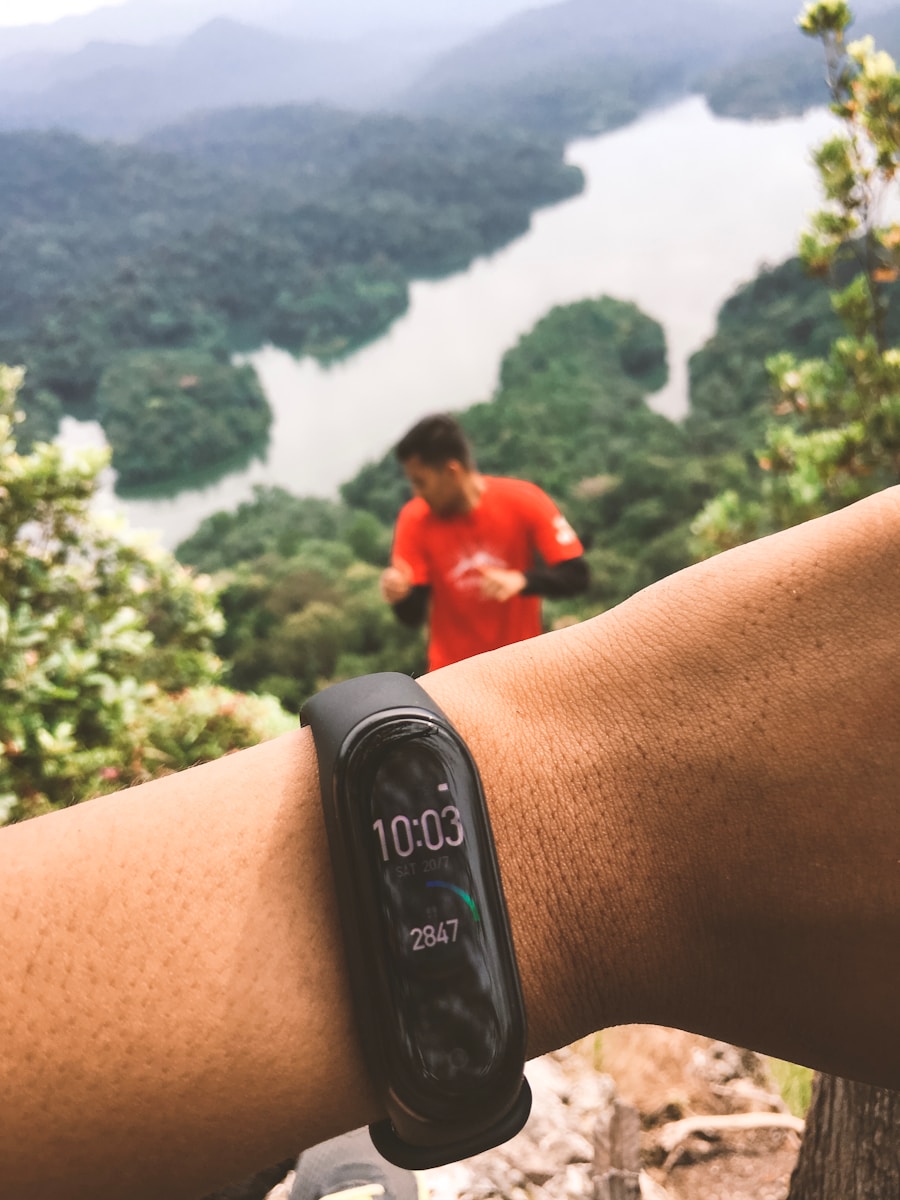
The safest way to increase calorie expenditure is to make the hike moderately harder while staying in control. You do not need to turn every outing into an all-out workout.
- Increase your pace gradually. Walk briskly on clear, stable sections instead of sprinting on uneven ground.
- Add manageable climbing. Choose routes with more elevation gain as your fitness improves.
- Reduce unnecessary standing time. A steady pace raises total active time without requiring extreme intensity.
- Use longer routes when appropriate. Duration can increase total calorie expenditure even when pace stays moderate.
- Train consistently. Regular hiking is more valuable for fitness than occasionally forcing an exhausting effort.
Trekking poles can also be useful on steep or unstable trails. They may improve balance, give your arms a role in movement, and make loaded hiking feel more manageable. However, research does not show that poles reliably produce a large increase in calorie expenditure, so use them for comfort and stability rather than as a calorie-burning trick.
Pro Tip: To compare your own hikes, use the same route and track moving time, pace, elevation gain, heart rate, and perceived effort. Those trends are often more useful than chasing an exact calorie number.
Choosing the Right Terrain for Calorie-Burning Hikes
| Activity | MET Value | Approx. Calories/Hour for 160 lb |
| Slow hiking through fields and hillsides, no load | 3.8 | ≈276 |
| Normal hiking through fields and hillsides, no load | 5.3 | ≈385 |
| Cross-country hiking | 6.0 | ≈435 |
| Hill climbing, 6–10% grade, moderate-to-brisk pace | 7.0 | ≈508 |
| Hiking or backpacking with a daypack | 7.8 | ≈566 |
| Hill climbing, 11–20% grade, slow-to-moderate pace | 8.8 | ≈639 |
These figures come from the 2024 Adult Compendium and are estimates, not guarantees. They demonstrate why grade, speed, and load are better predictors of hiking intensity than broad labels such as “rocky” or “mountainous.”
Uneven terrain still has training value. Rocks, roots, and loose surfaces require more careful foot placement and balance, while climbing places greater demand on the quadriceps, calves, hamstrings, glutes, and cardiovascular system. Descents also require controlled braking from the legs and can produce substantial muscular fatigue even when your heart rate is lower than it was on the climb.
Choose terrain that matches your experience. A steeper or more technical trail is only useful as exercise if you can move through it safely.
Incorporating Interval Training Into Your Hiking Routine
Intervals can raise the intensity of a hike without requiring you to maintain a hard pace for the entire outing. The safest version for most hikers is power-hiking rather than sprinting.
A Simple Hiking Interval Session
- Warm up with 10–15 minutes of comfortable hiking.
- On a stable uphill section, hike hard for 1–3 minutes while staying in control.
- Return to an easy pace for 2–4 minutes.
- Repeat the hard/easy cycle 4–6 times.
- Finish with at least 10 minutes at an easy pace.
Use the talk test to judge effort. During an easier section, you should normally be able to speak in sentences. During a harder interval, speaking more than a few words at a time should feel difficult.
Intervals can improve cardiovascular fitness and provide a time-efficient way to accumulate vigorous activity. However, research comparing high-intensity intervals with moderate continuous exercise does not support the idea that intervals always produce greater weight or body-fat loss. Both approaches can be effective, and consistency matters more than choosing one as a universal winner.
Warning: Avoid hard intervals on exposed ridgelines, wet rock, loose scree, crowded trails, technical descents, or any section where speed reduces your ability to place your feet safely.
The Role of Weighted Packs in Increasing Calorie Burn

A backpack increases the amount of mass you must move, so carrying a load can increase the physical demand of hiking. The exact calorie increase is not a fixed percentage. It changes with pack weight, body weight, slope, walking speed, terrain, and the hiker’s efficiency.
The Adult Compendium reflects this difference. Normal hiking through fields and hillsides without a load is listed at 5.3 METs, while hiking or backpacking with a daypack is listed at 7.8 METs. Those categories are not identical experiments, so they should not be interpreted as proof that adding a specific amount of weight will increase calorie burn by a specific percentage.
For most recreational hikers, there is little reason to add dead weight solely to burn more calories. Carry the water, food, clothing, emergency equipment, and other supplies the hike actually requires.
If you are training for backpacking, increase load gradually and use a pack that fits correctly. The National Park Service’s Isle Royale packing guidance advises keeping backpack weight manageable and notes that pack tolerance varies by fitness and individual circumstances.
Note: More pack weight is not automatically better training. Increasing load also increases forces on the feet and changes walking mechanics, so progression should be gradual.
How to Monitor and Track Calorie Burn During Hiking
Fitness watches, smartphone apps, chest straps, GPS devices, and heart-rate monitors can all help you track a hike. Useful measurements include:
- Moving time
- Total duration
- Distance
- Elevation gain
- Average pace
- Average and peak heart rate
- Perceived exertion
- Estimated calories
Calorie estimates deserve the most caution. A systematic review of consumer wrist-worn trackers found that energy-expenditure accuracy was considerably poorer than step-count or heart-rate accuracy, with errors exceeding 30% for energy expenditure across the brands evaluated.
That does not make your watch useless. It means the number is best used as a trend. If the same device reports 350 calories on one familiar hike and 500 on another with substantially more climbing and a higher heart rate, the relative difference may still be useful even though neither number should be treated as laboratory-grade measurement.
Pro Tip: Record elevation gain and moving time along with calories. Those two numbers often explain why two hikes of the same distance feel completely different.
Hiking for Weight Loss
Burning calories and losing body weight are related, but they are not the same thing. Physical activity increases energy expenditure, which can contribute to a calorie deficit. According to the CDC, physical activity can support weight loss and is especially important for maintaining lost weight, while most initial weight loss generally comes from reducing calorie intake.
That means a hike should not be viewed as permission to eat a particular number of extra calories based on a smartwatch estimate. Wearable calorie estimates are too imprecise for that approach.
A more practical strategy is to use hiking as part of a consistent activity routine while keeping nutrition appropriate for your goals. Hiking also provides fitness, mood, and outdoor benefits even when the scale does not change quickly.
Incorporating Strength Training Exercises Into Your Hiking Routine
Strength training can make hiking easier by improving the muscles that support climbing, descending, pack carrying, and balance. It does not need to be performed in the middle of a difficult hike.
A better approach is to train major movement patterns away from technical terrain. Useful exercises include:
- Squats and split squats for the quadriceps and glutes
- Step-ups for climbing strength
- Calf raises for lower-leg endurance
- Hip hinges or deadlift variations for the posterior chain
- Rows for the upper back
- Loaded carries for trunk and grip strength
- Planks and side planks for trunk stability
Hiking can contribute substantially to the aerobic portion. Separate strength sessions help cover the muscle-strengthening side without forcing you to do push-ups or other exercises at exposed viewpoints or while already fatigued.
How to Increase Hiking Intensity Safely
Higher calorie expenditure is useful only when the hike remains within your abilities. Build one variable at a time: distance, pace, elevation gain, or pack weight.
- Check the weather and trail conditions before leaving.
- Tell someone where you are going and when you expect to return.
- Carry enough water, food, weather protection, navigation equipment, and emergency supplies for the route.
- Wear footwear appropriate for the terrain.
- Slow down when footing becomes unstable.
- Turn around if weather, fatigue, pain, altitude symptoms, or trail conditions make continuing unsafe.
The National Park Service’s Hike Smart guidance recommends checking weather and park alerts, carrying essential equipment, planning for changing conditions, and allowing time to acclimate before strenuous high-altitude hiking.
If you have a chronic health condition, have been inactive for a long period, or plan to begin vigorous exercise, discuss an appropriate activity level with a qualified health professional.
For cold-weather outings, staying comfortable matters more than trying to use cold exposure to increase calorie expenditure. Our guide to rechargeable hand warmers for travel covers one option for keeping your hands warm during outdoor trips.
Love travel? Join Our Facebook Community For More Tips.
Frequently Asked Questions
What is hiking?
Hiking is walking for recreation or exercise on outdoor routes such as trails, hillsides, forests, mountains, desert paths, and park systems. It often differs from ordinary walking because the route may include elevation changes, uneven surfaces, obstacles, and a backpack.
How many calories are burned while hiking?
Many hikers will fall somewhere around 300–600 or more calories per hour, depending on body weight and intensity. Using Compendium MET values, a 155-pound person is estimated to burn about 372 calories per hour during normal field-and-hillside hiking, about 422 during cross-country hiking, and about 548 during hiking with a daypack.
What factors affect the number of calories burned while hiking?
The main factors are body weight, pace, gradient, elevation gain, terrain, pack load, moving time, rest stops, fitness, and individual movement efficiency. Steeper grades and faster sustained paces generally increase energy expenditure.
How can I calculate calories burned while hiking?
A simple estimate is MET value × body weight in kilograms × hours of activity. For example, a 70-kilogram person hiking at 6 METs for one hour would have an estimated energy expenditure of about 420 calories. Treat the result as an estimate rather than an exact measurement.
Does hiking uphill burn more calories?
Usually, yes. Climbing requires more work against gravity, and Compendium MET values rise as hiking grade and pace increase. The exact difference depends on the slope, your speed, whether you carry a load, and how much time you spend climbing.
Does carrying a backpack increase calorie burn?
Carrying additional mass generally increases the physical demand of walking and hiking. However, there is no universal rule that a given percentage of body weight produces a matching percentage increase in calories. Carry only a manageable load and increase backpack weight gradually when training for loaded hiking.
Are smartwatch hiking-calorie estimates accurate?
They are useful estimates but should not be treated as exact. Research on consumer wrist-worn devices shows that energy-expenditure calculations are generally less accurate than measurements such as heart rate or steps. Use the same device consistently to compare trends between hikes.
Is hiking good for weight loss?
Hiking can support weight loss because it increases energy expenditure, but weight change depends on overall energy balance. The CDC notes that most weight loss generally comes from reducing calorie intake, while regular physical activity is especially important for health and long-term weight maintenance.
What are the health benefits of hiking?
Hiking can contribute to aerobic fitness, muscular endurance, balance, and healthy weight management. Physical activity also supports cardiovascular and brain health, can improve sleep, and can reduce short-term feelings of anxiety.
Sources
- 2024 Adult Compendium of Physical Activities — Walking and Hiking MET Values — supports hiking, hill-climbing, backpacking, and load-carrying intensity estimates.
- Centers for Disease Control and Prevention — Adult Physical Activity Guidelines — supports weekly aerobic and muscle-strengthening recommendations.
- Centers for Disease Control and Prevention — Physical Activity, Weight, and Health — supports the relationship between physical activity, calorie expenditure, and weight management.
- National Park Service — Hike Smart — supports weather, planning, altitude, equipment, and hiking-safety guidance.
- Germini et al. — Accuracy and Acceptability of Wrist-Wearable Activity-Tracking Devices — supports caution around consumer-device energy-expenditure estimates.
- Sanca-Valeriano et al. — HIIT vs. Moderate Continuous Training Systematic Review — supports balanced wording on interval training, body weight, and body-fat outcomes.

