
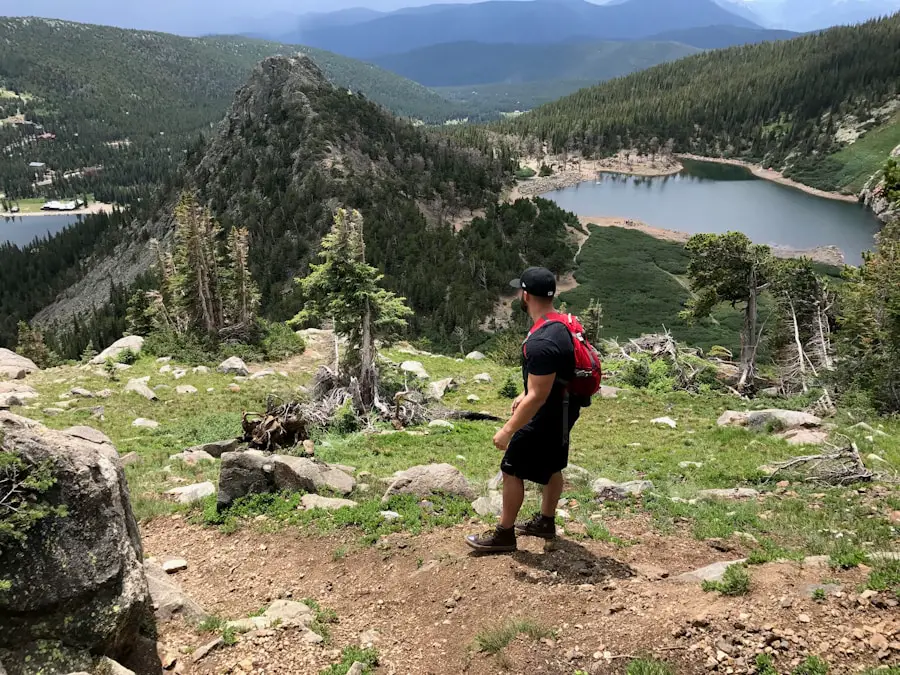
Last Updated on September 10, 2026 by Daniel Globe
Hiking can work your glutes hard, especially when the trail climbs. The important distinction is that using your glutes is not the same as maximizing muscle growth. Uphill hiking can improve glute strength and muscular endurance and may produce some growth in beginners, but people who want noticeably larger or stronger glutes will usually get better results by combining hiking with progressive resistance training.
Quick Answer
Yes. Hiking can strengthen and condition your glutes, especially on uphill routes where the gluteus maximus helps extend the hip. It may produce some muscle growth in beginners, but hiking alone is usually less reliable for maximizing glute size than progressive resistance training such as squats, step-ups, hip thrusts, and deadlift variations.
Key Takeaways
- Uphill hiking works the glutes more than level walking because the hips must produce more force to lift the body.
- The gluteus maximus provides much of the hip-extension power, while the gluteus medius and minimus help stabilize the pelvis.
- Hiking is excellent for muscular endurance and can improve strength, but it is not the most reliable standalone method for maximizing glute hypertrophy.
- For more muscle growth, combine hiking with progressive resistance exercises at least twice per week.
- Use natural steps, safe inclines, sensible progression, adequate food, and recovery rather than ankle weights or risky sprints on technical trails.
At a Glance
| Sample Session | About 45–60 minutes, adjusted to your fitness and trail conditions |
| Difficulty | Beginner to intermediate; increase elevation and duration gradually |
| Tools Needed | Supportive hiking footwear, water, navigation, weather-appropriate clothing, and normal hiking safety gear |
| Cost | Often free once you have suitable gear; some parks or trailheads charge access or parking fees |
Disclosure: As an Amazon Associate I earn from qualifying purchases. Some links on this page are affiliate links, at no extra cost to you.
How the Glutes Work During Hiking
The glutes consist mainly of the gluteus maximus, gluteus medius, and gluteus minimus. According to the NCBI anatomy reference for the gluteus maximus, the gluteus maximus is the largest of these three muscles and is a powerful hip extensor. It becomes especially important during movements that demand force, including climbing stairs or hills and running.
The gluteus medius and minimus have a different but equally useful job. They help abduct the hip and stabilize the pelvis when your weight is supported by one leg. That stabilization matters on uneven trails, during step-ups, and whenever one foot is moving while the other supports the body.
Muscle growth, or hypertrophy, occurs when training provides enough repeated stimulus for the muscle to adapt over time. It is more accurate to think in terms of mechanical tension, training volume, progression, adequate nutrition, and recovery than to say muscles simply grow because exercise creates microscopic tears.
Hiking can be valuable glute training, but for reliable hypertrophy, treat it as a complement to progressive resistance training rather than a complete replacement.
The Physical Benefits of Hiking for Glute Development
Hiking is a practical way to challenge the entire lower body while spending time outdoors. The amount of glute work depends heavily on the trail. A flat, easy path places less demand on the hip extensors than a route with repeated climbs, large steps, or sustained elevation gain.
When you hike uphill, the gluteus maximus helps extend the hip and propel your body upward. Your quadriceps, hamstrings, calves, and core also contribute. On uneven surfaces, the gluteus medius and minimus help keep the pelvis controlled as your weight shifts from one leg to the other.
Downhill hiking is different. Your glutes still contribute to control and stability, but the quadriceps often perform substantial eccentric work as they help slow your body on each descent. That is one reason a long downhill section can leave the fronts of the thighs particularly sore.
Hiking also contributes to overall physical activity. The CDC recommends at least 150 minutes of moderate-intensity aerobic activity per week for adults, along with muscle-strengthening activity on at least two days. A sufficiently brisk hike can contribute to the aerobic part of that target while also challenging lower-body muscles.
As a weight-bearing activity, hiking can be part of a lifestyle that supports musculoskeletal health, balance, coordination, and cardiovascular fitness. However, it is better to describe these as potential benefits of regular physical activity rather than promise that hiking alone will increase bone density or flexibility in every person.
How Hiking Can Improve Muscle Activation in the Glutes
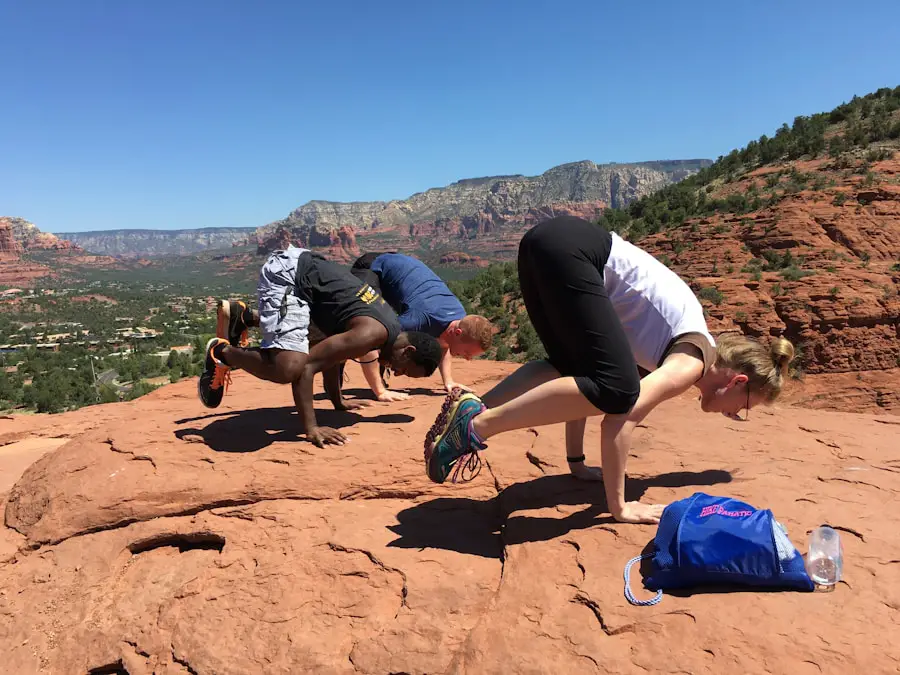
Incline is one of the clearest ways to increase glute demand while walking. A biomechanical study of level and slope walking found that lower-limb muscle activity changes considerably as the grade changes, including activity in the gluteus maximus. You can review the study through PubMed.
The reason is straightforward: climbing requires more hip extension than easy level walking. As the grade rises, your hips must help lift your body upward against gravity. Larger natural step-ups, such as climbing a stable rock or trail step, can increase that demand further.
Uneven terrain also requires constant balance adjustments. The gluteus medius and minimus help stabilize the pelvis while you stand on one leg and move the other forward. This means hiking provides both propulsion work and stabilization work rather than repeatedly training only one movement pattern.
That does not mean you need to consciously clench your glutes during every step. A stable posture, natural stride, controlled pace, and appropriate incline are more useful than trying to force an exaggerated contraction throughout an entire hike.
Note: Feeling a strong “burn” is not required for an exercise to be effective. Muscle activation, fatigue, soreness, strength gains, and hypertrophy are related concepts, but they are not interchangeable measures of progress.
Tips for Maximizing Your Glute Gains on the Trail
| Tip | Description |
|---|---|
| Use Incline | Choose routes with manageable climbs. Uphill walking increases hip-extensor demand more than easy level walking. |
| Resistance Bands | Use lateral band walks, abductions, or glute bridges during dedicated strength sessions or on a safe flat surface before or after the hike rather than while navigating rough terrain. |
| Single-Leg Exercises | Split squats, lunges, and step-ups complement hiking by training each side against progressively increasing resistance. |
| Uphill Intervals | On a stable, unobstructed grade, alternate harder uphill walking with easier recovery periods instead of sprinting over technical terrain. |
| Proper Nutrition | Eat enough total calories and protein to support your activity, training goals, and recovery. |
For better glute engagement, let the hill create the challenge. Keep your steps controlled and natural instead of intentionally overstriding. On steeper climbs, a slightly shorter step may actually make it easier to maintain rhythm, traction, and balance.
You can also increase the challenge by choosing a somewhat steeper route, increasing total elevation gradually, hiking slightly faster on safe sections, or adding more climbing over time. Progress one variable at a time so your joints and connective tissues have time to adapt.
A backpack also increases the work required to move uphill, but more weight is not automatically better. Carry only a load you can manage comfortably with good balance and hiking technique. The National Park Service recommends knowing your limits, planning the route, checking conditions, and considering how much food, water, and equipment you can comfortably carry.
Ankle weights are a poor substitute for proper progression on a trail. They add weight far from the body’s center of mass and change the demands of swinging the leg. For glute growth, dedicated resistance exercises are a more controllable option.
Pro Tip: Instead of hunting for the steepest possible mountain, look for a safe route with several repeatable climbs. Consistent elevation that you can complete with good form is usually more useful than one extremely steep section that forces you to scramble or compromises balance.
Incorporating Hiking into Your Glute-Building Workout Routine
If visible glute growth is your main goal, combine hiking with resistance training. The American College of Sports Medicine’s 2026 resistance-training guidance emphasizes training major muscle groups at least twice per week. For hypertrophy, higher weekly training volume—around 10 working sets per muscle group—is a useful general target, although the best amount depends on experience and recovery.
You do not need complicated methods or constant training to failure. Squats, split squats, step-ups, hip thrusts, Romanian deadlifts, glute bridges, and hip-abduction exercises can all complement what hiking already provides.
Example Hiking and Glute-Strength Week
- Day 1 — Glute strength: Hip thrusts for 3 working sets and split squats for 2 working sets.
- Day 2 — Recovery or easy activity: Comfortable walking or normal daily movement.
- Day 3 — Incline hike: About 45–60 minutes with manageable climbs and optional brisk uphill intervals.
- Day 4 — Recovery: Rest or light activity depending on soreness and fatigue.
- Day 5 — Glute strength: Romanian deadlifts for 3 working sets and step-ups for 2 working sets.
- Weekend — Optional hiking: An easier scenic hike or longer low-intensity walk if you feel recovered.
This example gives the glutes direct resistance training while keeping hiking in the program for endurance, coordination, outdoor activity, and additional lower-body work. Beginners can start with less and gradually increase the workload.
Set hiking goals that are measurable without turning every outing into a maximum-effort workout. Distance, total elevation gain, hiking time, and how comfortably you handle a familiar climb are useful ways to track progress.
The Mental and Emotional Benefits of Hiking for Glute Development

The benefits of hiking are not limited to muscle training. Regular physical activity supports both physical and mental health, and many people find outdoor exercise more enjoyable than repeating the same indoor workout.
Time on a trail can also create a break from screens, work, traffic, and other daily stressors. Research into nature-based activity is generally promising for mood, anxiety, and stress, although results vary between studies and outdoor activity should not be presented as a replacement for mental-health treatment.
Enjoyment matters because a training plan only works when you can repeat it. Someone who dislikes traditional cardio but looks forward to a weekend hike may find it easier to stay consistently active. Hiking can therefore support a glute-building program indirectly by making regular movement and lower-body conditioning more sustainable.
Choosing the Best Hiking Trails for Glute Building
For glute-focused hiking, elevation matters more than simply choosing the longest route. A shorter trail with repeated climbs may challenge the hip extensors more than a much longer, flat path.
Look for trails with features such as:
- Sustained moderate climbs: These keep the gluteus maximus working without requiring unsafe scrambling.
- Repeated rolling hills: Multiple climbs create repeated bouts of hip-extension work.
- Stable step-ups: Natural or constructed trail steps can resemble repeated bodyweight step-ups.
- Varied but manageable terrain: Uneven ground increases balance and pelvic-stability demands.
- Safe footing: Traction and control are more important than choosing the steepest possible slope.
Flat hiking still has value for cardiovascular fitness, walking endurance, and general physical activity. It simply provides less glute-loading stimulus than climbing.
Do not choose a technically difficult trail only because it has more elevation. Check the distance, elevation profile, surface conditions, weather, daylight, closures, water availability, and your own experience before setting out.
Preparing for and Recovering from Hiking for Optimal Glute Development
Start each hike prepared rather than treating it like a gym session with trees around it. Wear footwear suited to the terrain, check the weather and trail conditions, tell someone your plan when appropriate, and carry the supplies required for the route. The National Park Service’s hiking guidance recommends carrying the Ten Essentials and choosing a trail that matches your abilities.
For the first 5–10 minutes, walk at an easier pace and allow your legs and breathing to warm up before tackling harder climbs. If you are new to hills, gradually increase elevation rather than immediately attempting a long, steep route.
Warning: Do not add ankle weights, heavy pack loads, or all-out intervals to an unfamiliar technical trail. Stop if you develop sharp or worsening joint pain, chest pain, severe dizziness, unusual shortness of breath, or loss of balance. People with significant joint, heart, balance, or injury concerns should get individualized medical or rehabilitation guidance before sharply increasing hiking intensity.
Hydration and Food
Bring enough water and food for the length, temperature, altitude, and difficulty of the hike. Longer or harder outings require more planning than a short neighborhood trail. In hot conditions, dehydration and heat illness become more important concerns than maximizing your glute workout.
Protein and Muscle Recovery
Protein supports muscle repair and adaptation, but you do not need to race through a 30-minute post-hike window. The International Society of Sports Nutrition position stand on protein and exercise emphasizes adequate total daily protein and protein distribution across the day. A normal protein-containing meal or snack within the next few hours is reasonable for most recreational hikers.
For healthy people who train regularly, the ISSN describes approximately 1.4–2.0 grams of protein per kilogram of body weight per day as sufficient for most exercising individuals. Individual needs can differ with body size, energy intake, age, health, and training goals.
Stretching and Soreness
Gentle stretching after a hike is fine if it feels good or helps you maintain comfortable mobility, but it should not be presented as a proven way to prevent delayed-onset muscle soreness. Rest, food, sleep, gradual training progression, and sufficient recovery between hard sessions matter more.
Foam rolling is also optional. Research suggests it can modestly reduce perceived soreness for some people, but it is not required for muscle growth or recovery.
If a hike repeatedly produces pain rather than normal muscular fatigue, reduce the difficulty and address the cause instead of trying to push through it.
Note: Hiking can help build a stronger posterior, but progress will eventually depend on whether the challenge continues to increase. When a familiar hill becomes easy, adding progressive resistance training is usually safer and more precise than making your hiking load increasingly extreme.
For hiking trips that also involve flights or overnight travel, the site’s existing travel resources cover travel CPAP machines and hardside carry-on luggage with spinner wheels. These are travel-planning resources rather than glute-training guidance.
Frequently Asked Questions
What muscles are used during hiking?
Hiking uses the glutes, quadriceps, hamstrings, calves, hip stabilizers, and core. Uphill sections increase the demand on the hip extensors, including the gluteus maximus, while uneven terrain also challenges the gluteus medius and minimus as they help stabilize the pelvis.
Does hiking help build glutes?
Yes. Hiking can strengthen and condition the glutes, particularly when the route includes hills and step-ups. Beginners may also gain some muscle. However, progressive resistance training is more reliable than hiking alone for maximizing glute size.
Does hiking make your glutes bigger?
It can, especially if you are new to training and hike challenging inclines regularly. The effect usually becomes smaller as your body adapts. For substantial long-term hypertrophy, exercises that allow progressive resistance—such as hip thrusts, split squats, step-ups, squats, and Romanian deadlifts—are more dependable.
How does hiking contribute to glute development?
Climbing requires repeated hip extension, while single-leg support and uneven ground require pelvic stability. Together, these demands train the glutes for endurance, coordination, and strength. The exact training effect depends on elevation, pace, duration, terrain, load, and your existing fitness.
Are there specific hiking techniques to target the glutes?
Choose safe inclines, maintain a controlled natural stride, and use stable step-ups and uphill intervals. Avoid deliberately overstriding or clenching your glutes during every step. You can also supplement hiking with lunges, step-ups, split squats, hip thrusts, bridges, and hip-abduction exercises.
Is uphill hiking better for the glutes than flat hiking?
Generally, yes. Uphill walking increases the demand on the hip extensors because your body must be lifted against gravity. Flat hiking is still useful for endurance and general fitness, but it typically creates less glute-loading demand.
Can hiking alone be enough to build strong glutes?
Hiking alone can improve glute strength and endurance, particularly in beginners. If your goal is maximizing strength or muscle size, combine hiking with progressive resistance training at least twice per week so the glutes continue receiving a measurable, increasing training stimulus.
Sources
- NCBI Bookshelf — Gluteus Maximus Muscle Anatomy — glute anatomy, hip extension, and functional role during climbing.
- PubMed — The Effects of Sloped Surfaces on Locomotion — lower-limb muscle activation during level, uphill, and downhill walking.
- American College of Sports Medicine — 2026 Resistance Training Guidelines — current resistance-training and hypertrophy recommendations.
- CDC — Physical Activity Guidelines for Adults — weekly aerobic and muscle-strengthening recommendations.
- PubMed — ISSN Position Stand: Protein and Exercise — protein intake and recovery guidance for exercising adults.
- U.S. National Park Service — Hike Smart — trail planning, ability, weather, equipment, and hiking-safety guidance.

