
Last Updated on July 26, 2026 by Daniel Globe
Walking sticks, also called trekking poles or hiking poles, can make many hikes feel steadier and more controlled. They provide extra contact points on loose, rocky, muddy, or steep ground and allow the arms to share some of the work normally handled by the legs.
The benefits are not identical for every hiker or every trail. Pole length, technique, terrain, pack weight, fitness, and joint health all affect the result. Used correctly, walking sticks can support balance and comfort. Used poorly, they may waste energy, catch between rocks, or create extra strain in the hands and shoulders.
Quick Answer
Walking sticks can improve stability, support balance, and shift part of the workload from your legs to your arms. They are especially useful on steep descents, loose ground, stream crossings, and long hikes with a pack. Their value depends on correct length, sound technique, terrain, and the hiker’s health.
Key Takeaways
- A pair of trekking poles creates two extra contact points that may improve stability on uneven terrain.
- A small controlled study found 12%–25% reductions in several knee forces and moments during steep downhill walking with poles.
- Poles may reduce leg fatigue or perceived effort, but they do not always reduce total energy use.
- Correct pole length and relaxed technique are essential. Poles that are too long or too short can encourage poor posture.
- Trekking poles are not wildlife-defense tools and do not replace proper footwear, route planning, or medical mobility aids.
Disclosure: As an Amazon Associate I earn from qualifying purchases. Some links on this page are affiliate links, at no extra cost to you.
Stability and Support Provided by Walking Sticks
The clearest benefit of walking sticks is the extra support they provide. A hiker using two poles can place four points of contact on the ground instead of relying only on two feet. This can be useful around loose stones, wet roots, shallow stream crossings, mud, snow, and uneven trail edges.
Poles also let you test the surface before committing your full body weight. You can probe the depth of mud, check whether a rock is stable, or test the bottom of a shallow stream. They should not be trusted blindly, however. A pole tip can slide, sink, or become trapped between rocks.
A small laboratory study involving 15 young adults found that hiking sticks improved static balance. Two sticks were more effective than one while participants carried a load. The study supports a balance benefit, but it does not prove that poles prevent every fall on real trails. You still need careful foot placement, suitable footwear, and a pace that matches the conditions.
Reduction of Strain on Joints
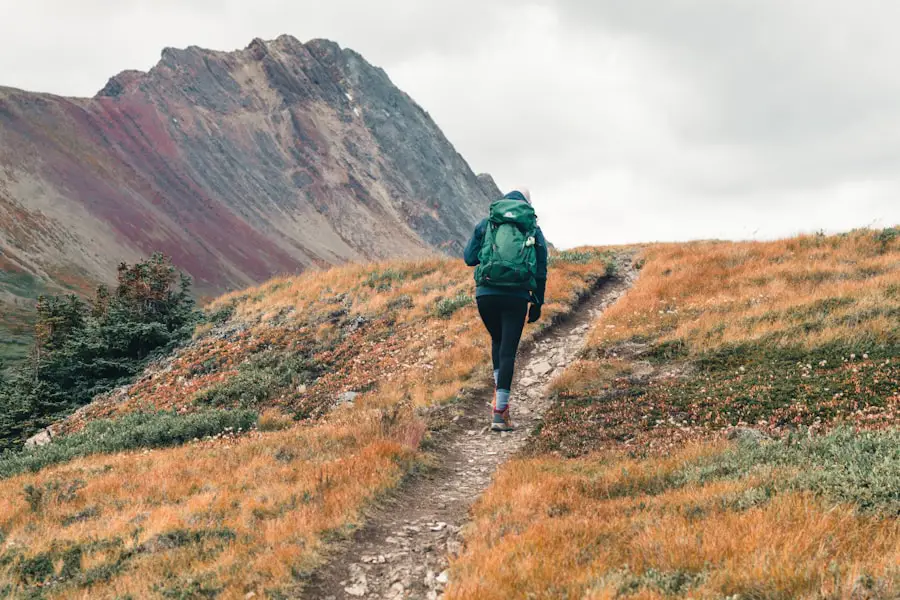
Downhill hiking often places high braking demands on the knees and surrounding muscles. Trekking poles allow the arms to accept part of the load and can reduce some lower-extremity forces when they are planted firmly and at the correct distance.
In a controlled study of eight men walking down a 25-degree ramp, researchers found significant reductions of approximately 12%–25% in several ground-reaction forces, knee moments, and calculated knee-joint forces when hiking poles were used. The study is available through PubMed.
The often-repeated “up to 25%” figure comes from a small laboratory test on a steep downhill ramp. It should not be interpreted as 25% less pain or 25% less knee stress for every hiker.
Other research has also found reduced lower-extremity loading during downhill walking with a backpack. The size of the benefit depends on pole placement, terrain, speed, body position, and how much force the hiker applies through the poles.
Note: Trekking poles are not a treatment for arthritis, persistent knee pain, dizziness, or a balance disorder. Anyone recovering from surgery or injury should ask a qualified healthcare professional whether poles are suitable and how they should be fitted.
Improved Balance on Uneven Terrain
| Terrain | How Poles May Help | Best Practice |
|---|---|---|
| Loose rocks and roots | Provide extra contact points before each step. | Plant the tip on solid ground and avoid cracks that can trap it. |
| Shallow streams | Help test depth, current, and the stability of submerged rocks. | Keep two secure contact points before moving the next foot or pole. |
| Mud or soft snow | Allow cautious probing and may reduce sudden loss of balance. | Use suitable baskets and do not assume the surface will support your weight. |
| Side slopes and traverses | Provide support on both the uphill and downhill sides. | Shorten the uphill pole or grip lower on its shaft when necessary. |
The mental benefit can also matter. Hikers who feel steadier may move more smoothly instead of taking stiff, hesitant steps. However, confidence should not become overconfidence. A pole can fail to grip wet rock, and an adjustable section can collapse if its lock is loose.
Check each locking mechanism before the hike and again after major adjustments. Replace worn rubber tips, damaged baskets, cracked shafts, or locks that slip under pressure.
Increased Endurance and Stamina
Walking sticks engage the arms, shoulders, chest, and upper back. This spreads the work across more muscle groups and may reduce how tired the legs feel, especially during long climbs or when carrying a backpack.
In a field study of 37 hikers who climbed and descended Mount Snowdon, the group using trekking poles reported less muscle soreness and showed lower markers of exercise-related muscle damage after the hike. The results suggest that poles may help preserve leg-muscle function during demanding mountain walking. The study can be reviewed on PubMed.
That does not mean poles always save energy. In another field study, recreational hikers using poles at a matched speed had higher oxygen use and heart rates but did not report greater perceived effort. In other words, poles may make the effort feel better distributed even while the whole body is working as hard or harder.
For endurance, the practical benefit is often improved comfort, rhythm, or leg-fatigue management rather than a guaranteed reduction in calories burned.
Assistance with Uphill and Downhill Hiking
Using Walking Sticks Uphill
On an ascent, plant the poles slightly ahead of or beside your feet and press backward as you step. The goal is to use the arms to assist forward movement without pulling the shoulders upward or leaning heavily on the grips.
On sustained steep climbs, slightly shorter poles may feel more natural. Some hikers also grip below the main handle instead of stopping to change the pole length for every short rise.
A study of trained mountain athletes found only small energy savings on some very steep inclines, but perceived effort was lower across several slopes. This suggests that uphill benefits are real for some hikers but depend on grade and technique.
Using Walking Sticks Downhill
During descents, place the poles a short distance ahead and to the sides before stepping down. This creates a wider support base and allows the arms to accept part of the braking load.
Do not reach so far forward that your shoulders collapse or your body falls behind your feet. On long descents, slightly longer poles may help you maintain a comfortable position, but the correct setting varies with arm length, slope, and technique.
Using Walking Sticks on Flat Ground
On level terrain, use a relaxed opposite-arm rhythm. The left pole generally moves with the right foot, and the right pole moves with the left foot. Let the tips land near the feet rather than stretching far ahead.
You do not need to push hard with every step. A light, natural plant often provides enough rhythm and stability while avoiding unnecessary arm fatigue.
Protection from Trail Hazards and the Limited Wildlife Role
Walking sticks are useful for detecting some trail hazards. They can probe mud, check the depth of shallow water, move aside a loose branch without using a bare hand, and test whether a rock or log is stable.
They should not be described as reliable protection from bears, snakes, or other wildlife. A pole may create distance in an unexpected minor encounter, but attempting to strike, prod, chase, or corner an animal can make the situation more dangerous.
Warning: Do not rely on a trekking pole as wildlife defense. Learn the correct procedure for the species and location, keep a safe distance, store food properly, and follow park guidance. In bear country, consult the National Park Service bear-safety guidance before your trip.
Multi-Functional Use of Walking Sticks
Modern trekking poles can serve several purposes beyond ordinary trail walking. Depending on the model and trip, they may be used to:
- Support compatible trekking-pole tents or tarp shelters.
- Test mud, snow, shallow water, and uncertain footing.
- Support a camera adapter designed for the pole.
- Create a temporary handhold while resting on a slope.
- Hold small snow baskets or larger powder baskets for seasonal conditions.
- Use removable rubber tips on pavement or sensitive hard surfaces.
These functions depend on the pole’s design. A standard pole should not be treated as certified rescue equipment, a medical splint, or a substitute for proper shelter and first-aid supplies.
Enhanced Posture and Alignment
Correctly sized poles can encourage a relaxed, upright walking position. On level ground, many hikers start with the elbow bent near a right angle when the pole tip is beside the foot. This is a starting point rather than a strict rule.
Poles that are too long may raise the shoulders and shorten the arm swing. Poles that are too short may cause excessive bending at the waist. The manufacturer LEKI notes that an unsuitable pole length can contribute to poor posture, unnecessary joint strain, and inefficient technique. Its pole-length guide provides a height-based starting recommendation.
Keep your shoulders down, elbows relaxed, wrists neutral, and grip light. The straps and grips should support the movement without forcing you to squeeze the handles throughout the hike.
Potential for Speed and Efficiency
Experienced hikers and trail athletes sometimes use poles to maintain momentum on steep climbs or move smoothly across rolling terrain. A coordinated pole plant can support a consistent rhythm and reduce hesitation around obstacles.
The effect on speed and efficiency is not universal. Research on very steep uphill walking found small energy savings on some slopes, while research on varied outdoor terrain found higher oxygen use and heart rate when hikers used poles at the same speed.
Poles are therefore best viewed as a tool for stability, load sharing, rhythm, and perceived comfort. They may improve speed for a skilled user on suitable terrain, but they can also slow a beginner who plants them awkwardly or constantly adjusts them.
How to Use Walking Sticks Correctly
Set the Starting Length
Stand on level ground in your hiking footwear. Place the pole tip beside your foot and adjust the length until your elbow is comfortably bent near 90 degrees. Test the setting while walking and make small changes if your shoulders rise or your body bends forward.
Fit the Straps Properly
Follow the instructions supplied with your pole because strap systems differ. The strap should support the hand without cutting into the wrist. Avoid gripping so tightly that your hands, forearms, or shoulders become tense.
Use a Natural Rhythm
On ordinary ground, move each pole with the opposite foot. Plant the tip close to your body and press lightly backward. Avoid stabbing the poles far ahead unless you are testing a specific obstacle or preparing for a controlled step down.
Adjust for the Terrain
- Uphill: Shorten the poles slightly or grip lower on the shaft.
- Downhill: Lengthen them slightly if needed and place them ahead before stepping down.
- Traverse: Shorten the uphill pole or hold its lower grip extension.
- Mud or snow: Use appropriate baskets and test the surface before loading the pole.
- Rocky gaps: Watch for cracks that can trap or bend the tip.
Stow Them When Your Hands Are Needed
Collapse and secure the poles when a trail requires hand-over-hand scrambling, ladder use, fixed cables, or close contact with rock. Dangling poles can catch on vegetation or interfere with balance.
Pro Tip: Practice on an easy trail before relying on poles during a steep descent or stream crossing. A smooth, light pole plant is usually more useful than pushing hard with every step.
How to Choose the Right Walking Sticks
| Feature | What to Consider |
|---|---|
| One pole or two | Two poles provide symmetrical support and are usually better for backpacking and long descents. One staff leaves a hand free and may be enough for light support. |
| Aluminum shafts | Usually durable and more likely to bend than snap after a severe impact, although weight varies by model. |
| Carbon-fiber shafts | Often light and stiff, but they may crack after sharp impacts or deep scratches. |
| Locking system | External lever locks are easy to inspect and adjust. Twist locks can be slim but must be tightened correctly. |
| Grip material | Cork can feel comfortable and manage moisture. Foam is soft and light. Rubber may suit cold conditions but can feel warm during summer use. |
| Packed length | Folding poles pack smaller, while telescoping poles often offer a wider adjustment range. |
| Tips and baskets | Carbide tips grip many natural surfaces. Rubber covers reduce noise and protect hard surfaces. Baskets help limit sinking in mud or snow. |
| Shock absorption | Spring-loaded models may feel softer to some hikers but add weight, movement, and mechanical complexity. |
Comfort and dependable locks usually matter more than choosing the lightest possible model. Test the grip with the gloves you expect to wear and confirm that the adjustment range fits both your normal length and your preferred uphill or downhill settings.
Possible Disadvantages of Trekking Poles
Walking sticks are useful tools, but they are not necessary for every trail or every hiker. Possible drawbacks include:
- Higher oxygen use or heart rate at a matched walking speed.
- Fatigue in the hands, arms, shoulders, or upper back.
- Pole tips becoming trapped between rocks or roots.
- Extra noise on rock and pavement.
- Damage to fragile surfaces when tips are dragged or planted carelessly.
- Less freedom to use a phone, map, camera, handrail, or scrambling hold.
- Extra gear to maintain, collapse, carry, and pack.
You may prefer to stow the poles on smooth, flat paths or whenever they interfere with safe hand use. A short training period can also help determine whether the benefits outweigh the inconvenience for your hiking style.
Lightning Warning: Do not remain on an exposed summit, ridge, or viewpoint during a thunderstorm. National Park Service guidance advises seeking proper shelter and removing metal objects, including trekking poles, from your body when lightning threatens. Review the NPS hiking and lightning precautions before entering exposed mountain terrain.
Traveling with Walking Sticks
Collapse adjustable poles before travel, clean dirt from the tips and baskets, cover sharp ends, and secure each section so it cannot open inside your luggage. Airline and security rules vary by country, airport, and type of pole, so check the applicable requirements before leaving home.
For general packing ideas, this guide to hardside carry-on luggage with spinner wheels may help when comparing luggage designs. Confirm that the packed pole length fits the bag you intend to use.
Conclusion: Are Walking Sticks Worth Using for Hiking?
Walking sticks can be valuable for hikers who want more stability, better control on descents, support while carrying a pack, or a way to spread work between the upper and lower body. Their strongest benefits appear on steep, loose, muddy, snowy, or uneven terrain.
They are not automatic energy savers, fall-prevention devices, medical treatments, or wildlife-defense tools. Choose poles that fit your body, learn a relaxed technique, inspect the locks and tips, and stow them whenever your hands are more useful elsewhere. With those limits understood, trekking poles can make many hikes steadier and more comfortable.
Frequently Asked Questions
What are the benefits of using walking sticks for hiking?
Walking sticks provide extra contact points, support balance, help test uncertain ground, and allow the arms to share some of the work performed by the legs. They are particularly useful on steep descents, loose trails, mud, snow, stream crossings, and long hikes with a backpack.
How do walking sticks help with uphill and downhill hiking?
Uphill, poles let the arms assist forward movement and may reduce perceived effort. Downhill, planting the poles before stepping can widen the support base and transfer some braking load to the arms. The poles must be correctly sized and placed on stable ground.
Are there different types of walking sticks for hiking?
Yes. Options include a single hiking staff, adjustable telescoping poles, compact folding poles, aluminum poles, carbon-fiber poles, and models with or without shock absorption. Grip shape, locking design, adjustment range, packed length, tips, and baskets also vary.
How do I choose the right walking sticks for hiking?
Choose poles with a comfortable grip, dependable locks, a suitable adjustment range, and a packed length that fits your luggage or backpack. Consider aluminum for impact tolerance, carbon fiber for low weight, and interchangeable baskets or tips for the surfaces you expect.
Can walking sticks be used for more than hiking?
They can also be useful for trekking, backpacking, snowshoeing, trail running, and walking on uneven ground. Some shelters are designed to use trekking poles as supports, and some poles accept camera adapters or different seasonal baskets.
Do trekking poles reduce knee strain?
They can reduce some forces and moments during downhill walking. One small controlled study reported reductions of approximately 12%–25% on a steep ramp. The effect varies and should not be interpreted as a guaranteed reduction in knee pain or injury.
Is it better to use one walking stick or two trekking poles?
Two poles generally provide more balanced and symmetrical support, especially with a backpack or on long descents. One staff may be enough for occasional stability and keeps the other hand free. The best choice depends on terrain, comfort, and personal needs.
How high should hiking poles be?
A common starting point is an elbow bend near 90 degrees when standing on level ground with the tip beside the foot. Slightly shorter poles may suit sustained climbs, while slightly longer poles may feel better on descents. Comfort and posture should guide the final setting.
Sources
- Are Trekking Poles Helping or Hindering Your Hiking Experience? A Review — overview of biomechanical and physiological trekking-pole research.
- Knee Joint Forces During Downhill Walking With Hiking Poles — supports the qualified 12%–25% downhill-loading finding.
- Comparison of Hiking Stick Use on Lateral Stability — supports the discussion of laboratory balance and one-versus-two-pole use.
- Trekking Poles Reduce Exercise-Induced Muscle Injury During Mountain Walking — supports the muscle-soreness and recovery discussion.
- National Park Service: Hiking in Bear Country — supports the wildlife-safety cautions.
- LEKI Pole Length Guide — supports the pole-fit and posture guidance.

