
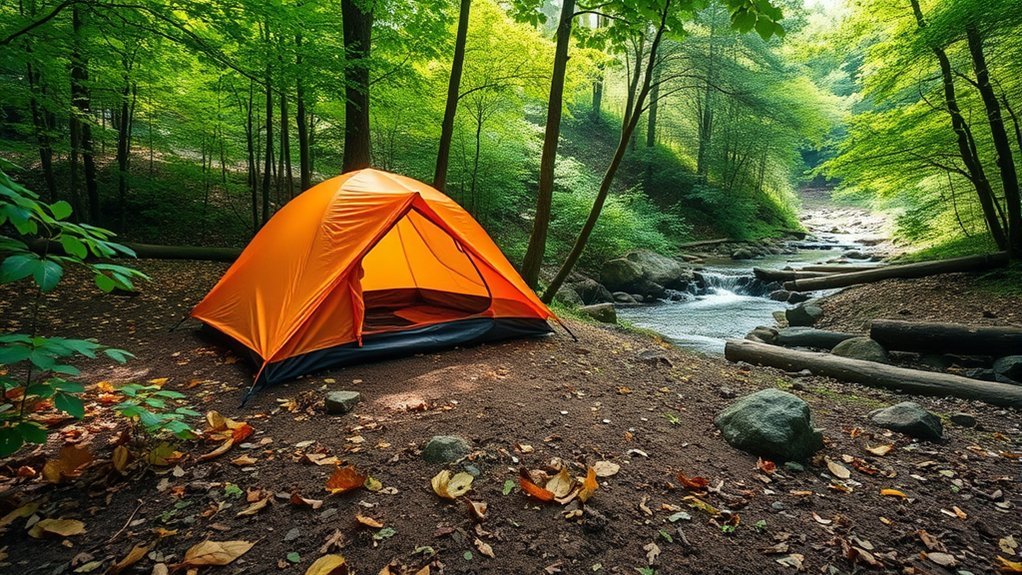
When selecting a campsite during rain, focus on higher ground to reduce flooding risk. Avoid low-lying areas and look for natural slopes that direct water away. You want well-drained soil, so check for dense grass or moss—these indicate better drainage. Orient your tent entrance downhill and use tarps to create dry areas. Keep essential gear in waterproof bags for extra protection. You’ll find even more tips ahead for a successful, dry camping experience.
Importance of Drainage in Campsite Selection

When you’re choosing a campsite, understanding the importance of drainage can make all the difference in your comfort and safety. Proper drainage systems help prevent water pooling, which can lead to flooding and discomfort during rainy weather. By selecting high ground, you greatly reduce the risk of water intrusion, keeping your tent dry even during heavy downpours.
In your campsite assessment, steer clear of low-lying spots and areas that have flooded before; these choices guarantee better drainage and protect your gear from water damage. Additionally, positioning your campsite at least 200 feet away from water sources minimizes risks related to rising water levels. This thoughtful approach not only keeps you dry but also contributes to sustainable camping by reducing soil erosion and environmental harm. Prioritizing drainage in your campsite selection empowers you to enjoy the great outdoors without the worry of unexpected rain.
Choosing the Right Location
When choosing a campsite, consider elevation and slope to keep your tent safe from pooling water. Look for natural drainage patterns and well-drained soil to guarantee a dry and comfortable experience. Don’t forget to seek out natural shelter, as it can provide extra protection against rain and wind.
Products Worth Considering
Ultralight and Compact: Size 104'' x 80'', weighing a mere 0.9 lbs, Made of high-density material, keeping your gear as light as possible.
Ultralight and Compact: Size 80'' x 80'', weighing a mere 0.7 lbs, Made of high-density material, keeping your gear as light as possible.
【MULTIFUNCTIONAL TARP】-The footprint can be used as a tent tarp to prevent the wear and tear of your tent against the ground; allows you to camp on desert sand or on a sandy beach; also perfect for picnic, or to be used as a sun canopy and more; a must-have for outdoor activities.
Elevation and Slope Considerations
Choosing the right location for your campsite is essential, especially during rainy conditions, as it can greatly impact your comfort and safety. Elevation benefits you by reducing water pooling under your tent, and understanding slope types can help you avoid trouble. Here are some tips to take into account:
- Select higher elevations to minimize flooding risk.
- Look for natural slopes or hillsides that direct water away from your site.
- Avoid low-lying areas like valleys or depressions where water collects.
- Research local topography to find spots with steep slopes that divert rainwater efficiently.
Drainage Patterns and Soil
To guarantee your campsite remains dry and comfortable during rainy conditions, it is crucial to take into account drainage patterns and soil types in your selection process. Focus on well-drained soil compositions like sandy or gravelly types, which allow water to flow freely. Avoid low-lying areas and check for signs of past flooding. Here’s a quick reference table to help you assess soil types and drainage techniques:
| Soil Type | Drainage Characteristics |
|---|---|
| Sandy | Excellent drainage, quick drying |
| Gravelly | Good drainage, minimal pooling |
| Clay | Poor drainage, retains moisture |
| Compacted | Limited drainage, prone to flooding |
| Loamy | Moderate drainage, balanced moisture |
Natural Shelter Availability
Finding a campsite that offers natural shelter can make all the difference in staying dry and comfortable during rain. When scouting for a location, consider these essential elements:
- Natural Barriers: Look for trees or rock formations that shield you from wind and rain.
- Avoid Hazards: Steer clear of dead trees, as they can drop branches unexpectedly.
- Elevation: Choose a site on a slope to guarantee water drains away from your tent, avoiding low-lying areas.
- Dense Vegetation: Opt for locations surrounded by thick plants, which can absorb rain and reduce soil erosion.
Recognizing Signs of Good Drainage
Good drainage is essential for a comfortable camping experience, especially during rainy weather. When choosing your campsite, look for drainage indicators that suggest water will flow away from your tent. Elevated terrain is your best friend; it greatly reduces the risk of water pooling around you. Identify well-drained soils, such as sandy or gravelly areas, which absorb water efficiently.
Pay attention to vegetation patterns, too. Dense grass or moss often signals better drainage capabilities, while muddy or bare patches can spell trouble. Steer clear of low-lying spots, dry stream beds, and areas with high-water marks, as these are prime for flooding during heavy rains. Finally, check for natural drainage features like slopes or ditches that can direct water away from your campsite, ensuring a drier and more enjoyable experience. Embrace the freedom of camping with confidence in your site selection!
Avoiding Problematic Areas
When choosing a campsite, avoiding problematic areas is essential for staying dry and comfortable during rainy conditions. Selecting the right spot can make all the difference in your experience. Here are some key tips to take into account:
Choosing the right campsite is crucial for staying dry and comfortable in rainy weather.
- Stay Elevated: Look for elevated, well-drained sites to minimize water pooling beneath your tent.
- Avoid Low-Lying Areas: Skip valleys and depressions where water tends to accumulate, increasing flood risks.
- Follow Natural Slopes: Choose locations with natural slopes that direct water away from your campsite, steering clear of high-water lines.
- Distance from Water Sources: Maintain at least 200 feet from lakes and rivers to reduce the chance of flooding during heavy rain.
Products Worth Considering
A MUST FOR TENT: An extra tent tarp doesn't just give you extra waterproofing, it is used as ground cloths under tents to prevent wear and tear. There's no question that an insulated tent footprint is a great idea to help protect your investment, definitely the choice to extend your tent’s life
A MUST FOR TENT: An extra tent tarp doesn't just give you extra waterproofing, it is used as ground cloths under tents to prevent wear and tear. Ther's no question that an insulated tent footprint is a great idea to help protect your investment, definitely the choice to extend your tent’s life
Double Waterproof Protection: Tent footprint is made from waterproof 210T polyester fabric with silver waterproof coating, which can provide double waterproof protection, ensuring your gear and belongings stay dry in wet conditions
Setting Up for Success
Once you’ve selected a suitable campsite that minimizes flood risks, it’s time to focus on setting up for success in rainy conditions. Start by orienting your tent with the entrance facing downhill. This simple adjustment helps keep rainwater from flowing inside. Use extra stakes to secure your tent, ensuring it withstands gusty winds.
Don’t forget about gear organization. Place a tarp or groundsheet beneath your tent to add a moisture barrier and create a dry area for your equipment. This not only protects your gear but also keeps your living space tidier.
To combat condensation that can lead to leaks, slightly open your tent vents for better ventilation. This small step can make a big difference in maintaining a comfortable interior. By paying attention to tent orientation and gear organization, you’ll set yourself up for a drier, more enjoyable camping experience, even when the rain comes down.
Products Worth Considering
<b>Waterproof and Durable</b> - High-quality waterproof ripstop oxford.
✅ WATERPROOF - Our camping tarp is made with ripstop 190T Polyester Taffeta, taped seams, and an impenetrable water barrier for cover against all conditions
[HEAVY-DUTY WATERPROOF PROTECTION] Made with durable rip-stop fabric featuring polyethylene lamination on both sides for maximum water resistance. Keeps your gear, tent, firewood, and equipment completely dry in rain, snow, or harsh outdoor conditions
Additional Tips for Staying Dry
To keep yourself dry while camping, choosing elevated campsites is essential. Utilizing tarps effectively can create an extra layer of protection against the elements, and don’t forget to pack waterproof gear to stay comfortable. With these strategies, you’ll enhance your experience even when the skies open up.
Products Worth Considering
A MUST FOR TENT: An extra tent tarp doesn't just give you extra waterproofing, it is used as ground cloths under tents to prevent wear and tear. There’s no question that an insulated tent footprint is a great idea to help protect your investment, definitely, the choice to extend your tent's life
FINISHED SIZE - The marked size is the exact finished size. When you choose your size, you will get the exact size tarps.
[HEAVY-DUTY WATERPROOF PROTECTION] Made with durable rip-stop fabric featuring polyethylene lamination on both sides for maximum water resistance. Keeps your gear, tent, firewood, and equipment completely dry in rain, snow, or harsh outdoor conditions
Choose Elevated Campsites
Choosing elevated campsites is essential for staying dry during rainy outings, as it greatly reduces the risk of water pooling beneath your tent. Here’s how to enhance your site assessment for ideal tent placement:
- Seek Natural Slopes: Look for ridges or gentle slopes where water can easily flow away.
- Avoid Low-Lying Areas: Steer clear of valleys where rainwater collects, creating hazardous conditions.
- Stay 200 Feet from Water: Maintain this distance from lakes or rivers to minimize flooding risks.
- Check Ground Conditions: Opt for firm, well-drained surfaces like gravel or dry grass, avoiding muddy or saturated soil.
Utilize Tarps Effectively
An effective tarp setup can greatly enhance your protection against rain while camping. Start by ensuring your tarps are securely anchored and pitched at an angle to allow rainwater runoff, preventing pools from forming. Set up a larger tarp above your tent and cooking area to create a dry zone, extending it beyond the tent’s edges and sloping away from the entrance. Smaller tarps can serve as ground covers under your tent, adding another layer against moisture. For versatility, bring multiple tarps of varying sizes to adapt to changing weather conditions. Finally, don’t forget tarp maintenance—inspect them for wear and damage before use, as even small holes can compromise your campsite’s dryness. Stay dry and enjoy your adventure!
Pack Waterproof Gear
Packing waterproof gear is vital for staying dry during your camping trip, especially when rain unexpectedly rolls in. To guarantee you’re well-prepared, consider these key items for effective rain protection:
- Waterproof Backpack: Choose one or use a rain cover to guard your gear against moisture.
- Lightweight Dry Bags: Pack these to organize and protect important items like clothing and electronics.
- Waterproof Headlamp: Make sure it’s rated IPX4 or higher to keep the light functioning in wet conditions.
- Waterproof Footwear: Select boots with sealed seams to keep your feet dry and comfortable in muddy areas.
Frequently Asked Questions
What Gear Is Essential for Camping in Rainy Conditions?
You’ll need reliable rain gear, including a waterproof jacket and pants, plus water-resistant footwear to keep your feet dry. Don’t forget a durable tarp for extra protection and a waterproof bag for your gear.
How Can I Waterproof My Tent Effectively?
To waterproof your tent effectively, apply tent sealants to seams and zippers, ensuring a tight barrier. Regularly check and maintain your rainfly for any wear and tear to maximize protection against rain. Stay dry and enjoy!
What Are Some Good Food Storage Tips in Wet Weather?
To preserve food in wet weather, use airtight containers to maintain moisture control. Elevate your storage off the ground, and keep it in a shaded area. This’ll help prevent spoilage and keep your meals fresh.
How Do I Keep My Clothes Dry While Camping?
To keep your clothes dry while camping, choose moisture-wicking clothing materials, and use drying techniques like hanging them in a sheltered area. Avoid cotton; it retains moisture and takes longer to dry. Stay comfortable and free!
What Should I Do if My Campsite Floods Unexpectedly?
When the waters rise like an unexpected tide, prioritize flood prevention by moving to higher ground. Grab your essential gear and initiate emergency evacuation; your safety’s the lighthouse guiding you through this storm.
Conclusion
By prioritizing drainage in your campsite selection, you’re not just avoiding a soggy misadventure; you’re ensuring your experience is more like a scene from a cozy camping movie than a drenched disaster. Keep an eye out for the signs of good drainage and steer clear of low-lying areas. With these tips in mind, you’ll be ready to embrace the great outdoors, rain or shine, and create memories that’ll last long after the clouds have cleared.