
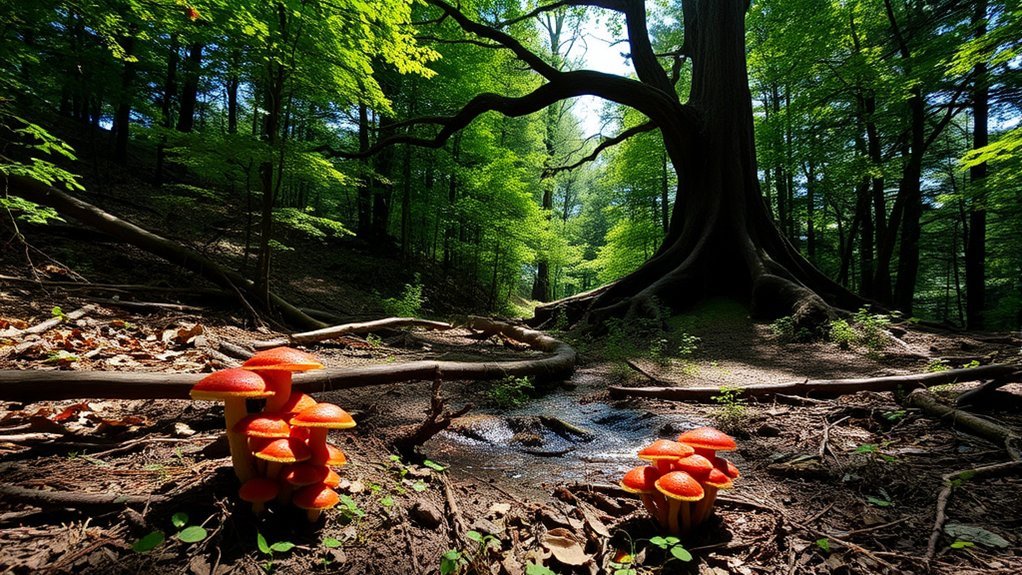
Before setting up your tent, look for natural hazards like flood zones, unstable ground, and windy hilltops. Avoid camping near wildlife trails, water sources, or areas with signs of animal activity. Check for any local regulations on prohibited sites and waste disposal to prevent legal issues. Stay clear of unsanitary locations, such as trash sites or polluted waters. By being cautious about these factors, you can enhance your camping experience and guarantee your safety, and there’s more to discover about selecting the ideal campsite.
Natural Hazard Zones
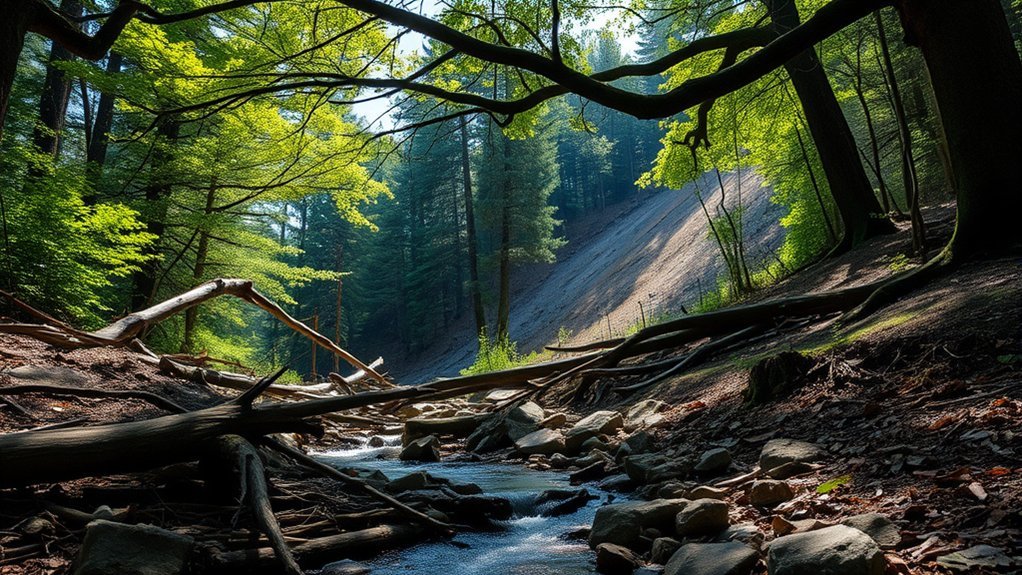
When choosing a campsite, it’s crucial to recognize natural hazard zones that could threaten your safety. Avoid flood zones by identifying dry streambeds and checking for signs of past floods on nearby trees; sudden downpours can lead to rapid water accumulation. Be wary of selecting sites on windy hilltops, as strong gusts can damage tents and expose you to harsh conditions. Instead, look for natural windbreaks like bushes or trees to shield your campsite.
Before setting up camp, verify the ground is stable and firm, steering clear of loose soil or areas near cliffs that could lead to landslides. Always check the weather forecast prior to your trip, as unexpected changes can greatly impact your safety and comfort. By staying vigilant for signs of unstable ground, such as erosion or loose soil, you can minimize risks and enhance your camping experience while enjoying the freedom of the great outdoors.
Environmental Concerns
Choosing the right campsite goes beyond just avoiding natural hazards; it also means being mindful of environmental concerns. When you set up your tent, opt for established campsites that minimize ecological impact and follow local regulations. Avoid fragile ecosystems with sparse vegetation or delicate habitats to help in biodiversity preservation. Familiarize yourself with Leave No Trace principles—pack out all trash, avoid disturbing plants or animals, and protect water sources from contamination. It’s essential to camp at least 200 feet away from water to maintain ecological balance and reduce pollution risks. Additionally, steer clear of areas with signs of animal activity, as this can disrupt wildlife habitats and increase encounter risks. By carefully choosing your campsite, you can enjoy nature while being a responsible steward of the environment. Your choices matter, and they play an important role in preserving the beauty and integrity of our natural landscapes.
Wildlife Habitats
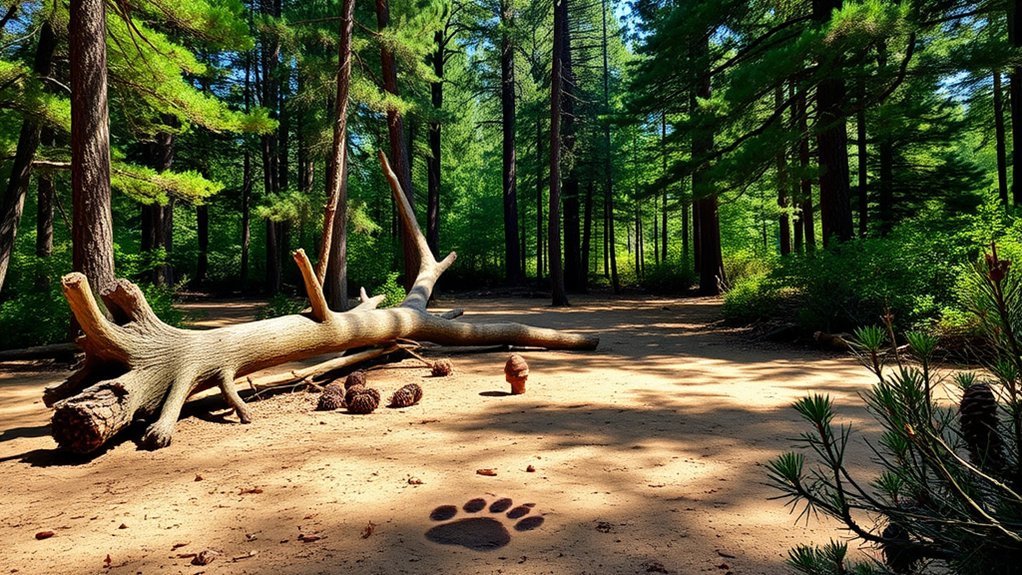
While camping offers a chance to connect with nature, being aware of wildlife habitats is crucial for your safety and the well-being of the animals. Look for signs of animal activity—such as tracks and droppings—that indicate nearby wildlife habitats. Choose a campsite at least 200 feet away from animal trails or food sources to minimize encounters.
| Wildlife Signs | Potential Risks | Safety Tips |
|---|---|---|
| Animal tracks | Close encounters | Make noise while hiking |
| Droppings | Attraction to your site | Camp away from standing water |
| Disturbed vegetation | Predators nearby | Monitor local wildlife activity |
Be cautious of large predators, like bears and mountain lions, which often roam areas where their presence is documented. Stay alert and respect these habitats to guarantee a safe and enjoyable camping experience.
Prohibited or Restricted Sites
Before you set up camp, check local regulations to ascertain you’re not infringing on prohibited or restricted sites. Many areas, especially environmental protection zones and restricted access regions, have specific rules in place to safeguard natural resources and wildlife. Ignoring these regulations can lead to fines or damage to delicate ecosystems.
Local Regulations Overview
Understanding local regulations is essential for a safe and enjoyable camping experience, especially when it comes to prohibited or restricted sites. Always verify whether the land is public or private; camping on private property without permission can lead to legal consequences. Research specific camping restrictions in protected areas, like national parks, where designated zones or campsite permits may apply. Familiarize yourself with local regulations regarding campfires, as some areas impose bans to prevent wildfires. Check for seasonal restrictions, particularly during sensitive wildlife breeding periods or high fire risk times. Additionally, be mindful of waste disposal and sanitation regulations to guarantee compliance and minimize your environmental impact while enjoying the freedom of the outdoors.
Environmental Protection Areas
When planning your camping trip, it’s crucial to recognize that many environmental protection areas have specific prohibitions or restrictions in place. Always verify if the land is public or private to avoid legal issues. Research any camping restrictions in protected areas, like national parks or wildlife refuges, to steer clear of fines. Look for signs indicating prohibited sites, often closed for ecological preservation or safety reasons. Consult local regulations to guarantee you comply with ecological guidelines and support conservation efforts. If your intended campsite falls within a restricted area, be ready to adjust your plans. These regulations exist to protect fragile ecosystems and wildlife habitats, so respecting them is important for both your experience and environmental integrity.
Restricted Access Zones
Since camping in restricted access zones can lead to serious legal issues and environmental damage, it’s essential to identify these areas before you set up your campsite. Always verify if the land is public or private; trespassing can have significant consequences. Research restrictions in national parks or wildlife reserves to avoid prohibited zones. Look for signage indicating restricted access to comply with local regulations.
| Restricted Areas | Consequences |
|---|---|
| Wildlife Reserves | Legal penalties and fines |
| Conservation Areas | Environmental harm |
| Private Property | Potential arrest |
Familiarize yourself with access permissions to guarantee a safe, liberating experience. Adjust your plans if necessary; your adventure depends on it.
Unsanitary or Uncomfortable Locations
Choosing a campsite carefully is crucial for a safe and enjoyable outdoor experience, as unsanitary or uncomfortable locations can quickly turn your trip into a nightmare. Avoid camping near waste disposal areas or trash sites; these spots not only attract pests but also present health risks due to contamination. Polluted water sources, especially near industrial zones, can endanger your health, so steer clear of them to guarantee safe drinking water.
Look for campsites free from garbage and debris to improve comfort and cleanliness. Additionally, staying away from high-traffic areas will minimize noise and disturbances, allowing for a peaceful atmosphere. Finally, assess the terrain for potential hazards. Uneven ground or sharp objects can lead to discomfort and safety issues during your stay. Prioritizing cleanliness and a smooth, stable surface will greatly enhance your camping experience.
Smart Campsite Selection Techniques
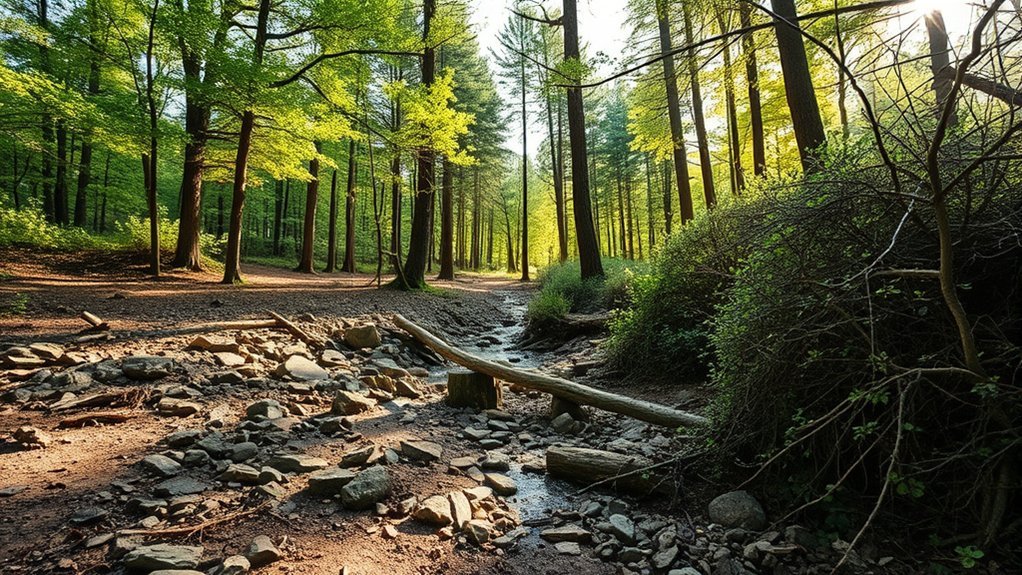
How can you guarantee a safe and enjoyable camping experience? Start by choosing the right spot for your tent setup. Look for level ground free of sharp rocks and debris to guarantee a comfortable sleeping surface. Check the campsite orientation by evaluating overhead trees for dead branches, or “widowmakers,” that could fall during storms.
Stay at least 200 feet away from water sources to prevent contamination and reduce wildlife encounters, aligning with Leave No Trace principles. Evaluate drainage patterns to avoid low-lying areas prone to flooding; higher ground is your best bet for safety.
Lastly, steer clear of animal trails to minimize nocturnal visits and guarantee proper food storage to deter wildlife. By following these smart campsite selection techniques, you’ll create a safer and more enjoyable outdoor experience, allowing you to embrace the freedom of nature without unnecessary risks.
Frequently Asked Questions
What Should I Do if I Encounter a Bear Near My Campsite?
If you encounter a bear near your campsite, stay calm and back away slowly. Follow safety protocols like making noise to deter it, and never approach. Understand bear behavior; give it space to leave peacefully.
How Can I Identify Poison Ivy or Poison Oak in the Area?
To identify poison ivy or poison oak, observe their leaf structure: three leaflets for poison ivy, lobed edges for poison oak. If you touch them, you might experience painful skin reactions—so be cautious and avoid contact.
What Are the Signs of Unstable Ground When Selecting a Campsite?
Check the ground softness by pressing down with your foot; if it sinks easily, it’s unstable. Observe the slope stability—avoid steep areas where soil erosion is evident, as they can lead to dangerous shifts.
How Do I Recognize Signs of Recent Flooding in the Area?
You’ll spot signs of recent flooding by looking for flood debris, like branches or mud, and water stains on nearby trees and rocks. Avoid areas with these indicators to guarantee a safer camping experience.
What Should I Bring to Ensure My Campsite Is Safe From Pests?
To guarantee your campsite’s safe from pests, bring effective pest repellents and insect nets. These tools will help you enjoy nature without unwanted interruptions, allowing you to relax and truly embrace your outdoor experience.
Conclusion
As you prepare to set up your tent, think of your campsite as a canvas waiting for a masterpiece. By avoiding natural hazards, respecting wildlife, and steering clear of unsanitary spots, you guarantee your outdoor experience remains a vibrant work of art. Choosing a safe, serene location not only protects you but enhances your adventure. Remember, a well-considered campsite is the foundation of lasting memories, so take the time to paint your perfect outdoor escape with care.
