
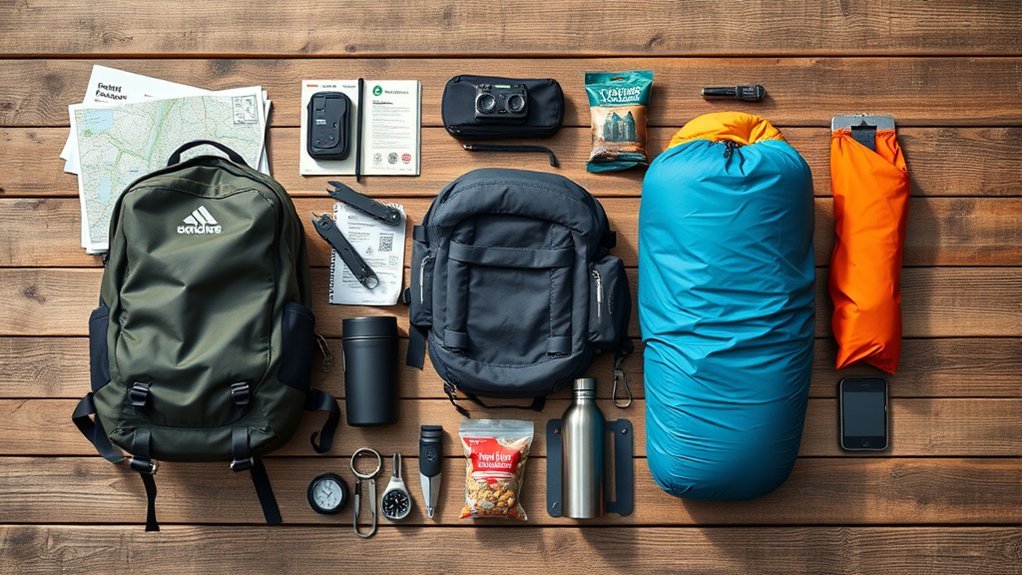
Packing for your next backpacking adventure starts with a solid checklist. You’ll need a reliable backpack (50-60 liters), a lightweight sleeping system, and a dependable water filtration setup. Don’t forget your cooking gear, safety items like a first aid kit, and personal hygiene products. Layering your clothing is key, plus consider comfort items like a portable chair. Follow these tips, and you’ll be set for a successful trip while enjoying the great outdoors. And there’s plenty more to explore!
Essential Backpacking Gear

When you set out on a backpacking adventure, the right gear can make all the difference between a memorable experience and a challenging ordeal. Start with a backpack between 50-60 liters, like the Deuter Aircontact. It offers great support and organization for your essentials. Next, prioritize sleep by packing a lightweight sleeping bag or quilt, such as the Enlightened Equipment Revelation Quilt, which keeps you cozy without weighing you down.
Don’t forget a reliable water filtration system; the HydroBlu Versa Flow is both lightweight and effective, ensuring you have safe drinking water on the trail. Safety gear is non-negotiable—bring a first aid kit and an emergency communication device like the Garmin inReach Mini 2. This way, you’ll be prepared for any situation. With the right gear, you’re not just carrying supplies; you’re embracing freedom and adventure on the open trail.
Products Worth Considering
Ideal for outdoor recreation, hiking, camping, scouting, domestic or international travel, and emergency preparedness
Removes Bacteria & Parasites: The Microfiltration Membrane Removes 99.999999% of Waterborne Bacteria (Including E. Coli and Salmonella), and 99.999% of Waterborne Parasites (Including Giardia and Cryptosporidium) - Essential for Your Survival Kit
High-capacity, gravity-fed, hollow-fiber water filter system ideal for group and family camping, outdoor adventures, and emergency preparedness
Cooking and Food Gear
When you hit the trail, having the right cooking and food gear can make all the difference. A reliable cooking system, smart food storage tips, and strategic meal planning will not only keep you energized but also lighten your load. Let’s explore the essentials that guarantee you enjoy delicious meals even in the wilderness.
Products Worth Considering
Ultralight & Portable: Weighing only 85 grams (3 oz), this stove is lightweight. Its compact design fits neatly into your backpack, making it ideal for hiking, trekking, fishing, hunting, and emergency use.
Best Money Ever Spent: The 6 pcs camping cookware kit includes 2 aluminum non-stick pots + 1 camping stove + 1 spork + 1 cleaning cloth+ 1 Carry bag.
HIGHLY EFFICIENT - Our industry leading heat exchange technology minimizes wind impact and reduces boiling times by up to 30% compared to traditional backpacking stoves.
Essential Cooking Equipment
As you commence your backpacking adventure, the right cooking equipment can make all the difference in your experience. A reliable stove, like the Jetboil Flash Cooking System, boils water in just over three minutes, perfect for quick meals or hot drinks. For versatile cooking while minimizing weight, consider the MSR Pocket Rocket paired with a TOAKS Titanium Pot. Water filtration is essential, so pack the HydroBlu Versa Flow system with a collapsible CNOC Vecto Water Container for safe drinking. To save space, a TOAKS Long-Handled Spoon, weighing only 0.65 oz, offers easy access to your meals. Remember, packing calorie-dense foods alongside minimalist gear boosts your backpacking experience while keeping your pack light and manageable.
Food Storage Tips
To keep your meals fresh and organized on your backpacking trip, effective food storage is essential. Use resealable bags or lightweight containers for easy access and to maintain freshness. Here’s a quick reference table to help you plan:
| Food Type | Storage Method | Notes |
|---|---|---|
| Snacks | Resealable bags | Great for nuts and energy bars |
| Dehydrated meals | Vacuum-sealed bags | Saves space and weight |
| Bear-susceptible | Bear canisters/bear-proof bags | Essential in wildlife areas |
| Waste | Trash bags | Always pack out what you pack in |
Opt for calorie-dense foods to maximize energy without the weight. And remember, adhere to Leave No Trace principles by packing out all waste.
Meal Planning Strategies
With your food securely stored, it’s time to turn your attention to meal planning strategies that guarantee you stay energized on the trail. Focus on calorie-dense, lightweight options like dehydrated meals, nuts, and energy bars. To streamline cooking, a backpacking stove like the Jetboil Flash can boil water in just over three minutes, keeping meal prep efficient. Opt for ready-to-eat meals or snacks to minimize cooking time and fuel usage. Don’t forget a reliable water filtration system, like the HydroBlu Versa Flow, for hydration and cooking. Finally, organize your meals into individual portions using resealable bags or containers—this not only reduces waste but also helps you easily spot what you need. Enjoy your journey with delicious, hassle-free meals!
Safety and Emergency Equipment
When you’re out in the wild, having the right safety and emergency equipment can make all the difference. From a well-stocked first aid kit to reliable navigation tools like maps or GPS devices, you’ll want to guarantee you’re prepared for anything. Plus, an emergency communication device can provide peace of mind, letting you call for help if you need it most.
Products Worth Considering
Durable material and proper size: made of quality acrylic material, the signal mirror is sturdy and durable, not easy to crack and fray, with strong toughness and better reflective effect, it is great for outdoor occasions; The mirror is approx. 3 x 2 x 0.22 inch
Global Iridium Satellite Coverage: Stay connected anywhere on Earth with 100% global Iridium satellite coverage for two-way SMS, email, GPS tracking, offline maps, SOS, weather updates, and location sharing—all through the Bivy app, compatible with both iOS and Android. Monthly: (Basic $19.99 | Plus $34.99 | Unlimited $59.99). Annual: (Basic $14.99 | Plus $29.99 | Unlimited $54.99). One time 3-month commitment per device, then month-to-month. Plans available globally.
【 🏄♂️ Durable material and appropriate size] -- The signal mirror is made of high-quality acrylic material, which is strong and durable, not easy to crack and wear, strong toughness, and better reflective effect, and is very suitable for outdoor occasions; The mirror is about. 3 x 2 x 0.22 inches.
Essential Safety Gear
Packing the right safety gear is essential for any backpacking adventure. It not only safeguards you but also enhances your experience in the wild. Here’s a list of must-have items:
- Bear Canister: Vital in regions like the Sierra Nevada to store food safely and prevent wildlife encounters.
- First Aid Kit: Include purification tablets, extra blister band-aids, and basic medical supplies for common injuries.
- Emergency Communication Device: A Garmin inReach Mini 2 is perfect for GPS tracking and SOS functions in remote areas.
Don’t forget a lightweight, waterproof headlamp for low-light navigation. With these essentials, you’ll feel empowered and ready to embrace the untamed wilderness with confidence and peace of mind!
Navigation Tools Required
Maneuvering through the great outdoors can be intimidating, especially in unfamiliar terrain, so having reliable navigation tools is essential for a safe backpacking adventure. Start with a waterproof map and a compass; these classic tools never fail. Consider a handheld GPS device, like those from Garmin, for precise location tracking and breadcrumb mapping, making it easy to find your way back. Don’t forget to pack extra batteries or a solar power bank to keep your devices charged. Before you hit the trail, familiarize yourself with your navigation tools—practice map reading and compass skills to boost your confidence. With the right tools and prep, you’ll navigate the wild with freedom and ease, embracing the journey ahead.
Emergency Communication Device
In the unpredictable wilderness, an emergency communication device is your lifeline, offering peace of mind and safety during your backpacking journey. Devices like the Garmin inReach Mini 2 guarantee you can call for help even in remote areas without cell service.
Consider these essential features:
- GPS Tracking: Know your location and navigate confidently.
- SOS Functionality: Instantly alert rescue services in emergencies.
- Two-Way Messaging: Stay connected with family or friends on the trail.
Weighing just 3.5 ounces, the Garmin is compact and easy to carry on multi-day trips. While a subscription plan is often required, it’s a small price for the freedom and assurance of reliable communication when you need it most.
Toiletries and Personal Hygiene
Toiletries and personal hygiene play an essential role in ensuring a comfortable and enjoyable backpacking experience. Start by packing biodegradable soap; it’s perfect for washing yourself and your dishes without harming the environment. A compact toothbrush and toothpaste tablets will save precious space and weight in your pack. Remember, always pack out used toilet paper to respect nature and bring a trowel for digging a cat hole if nature calls.
Don’t forget hand sanitizer, lip balm with SPF, and sunscreen to shield your skin from harsh UV rays while you’re adventuring. For added comfort during multi-day hikes, consider including body wipes, a portable bidet, and a small hairbrush. Each of these items can make a big difference in your overall well-being, allowing you to connect with nature while still feeling refreshed and liberated on your journey. Happy trails!
Products Worth Considering
Part of a coordinated system for optimized packing; Customize your experience by adding on smart packing and organization accessories that meet your exact needs
Large main compartment
All-in-One Outdoor Bathroom Kit - Answer the call of nature with this all-in-one bathroom kit with a backpacking trowel, toilet paper, pack out baggies, and our Clean Capsule for easy hand washing.
Clothing and Layering Tips
Packing the right clothing is essential for a successful backpacking trip. A solid layering system will keep you comfortable and adaptable to changing weather. Focus on these key layers:
- Moisture-wicking base layer: Keeps sweat away from your skin.
- Insulating middle layer: Retains warmth without bulk.
- Waterproof outer layer: Protects against rain and wind.
Choose quick-dry materials over cotton; they regulate body temperature and wick moisture effectively. Don’t forget to pack at least two pairs of moisture-wicking socks to combat blisters on long hikes. When selecting outer layers, look for breathability, packability, and weather resistance. Accessories like a beanie, gloves, and a buff are vital as they provide extra insulation and shield you from the cold. Embrace your adventure with the right gear, and you’ll find freedom in the great outdoors!
Comfort and Luxury Items
After you’ve nailed down your clothing layers, consider how comfort and a few luxury items can elevate your backpacking experience. Incorporating lightweight gear can create a sense of home in the wild. Imagine sinking into a Helinox Chair Zero after a long day—its portability makes it a game changer for relaxation. A Therm-a-Rest Compressible Pillow promises better sleep, supporting your head without adding bulk. Quick Dry Towels are versatile, serving as both a drying aid and a dishcloth.
Here’s a quick overview of these essentials:
| Item | Benefits | Weight |
|---|---|---|
| Helinox Chair Zero | Portable seating for relaxation | 1 lb |
| Therm-a-Rest Pillow | Enhanced sleep support | 0.5 lb |
| Quick Dry Towel | Multi-purpose drying and cleaning aid | 0.5 lb |
| Nitecore Gen2 Power Bank | Keeps devices charged | 0.3 lb |
| Kindle | Entertainment without the bulk | 0.6 lb |
These items transform your adventure into a more enjoyable escape!
Products Worth Considering
Lightweight&Compact: Weighs only 2.9lb/1.34kg. This backpacking chair features a foldable frame with detachable fabric for convenient storage and transportation. Easy to piece together, easy to dismantle for storage, and highly lightweight for efficient carry.
⚡ 15-SECOND LIGHTNING SETUP: Snap the aluminum frame together—the internal bungee cord auto-tensions for instant stability. Just attach the seat fabric, and you’re ready to relax in under 15 seconds. No tools, no hassle!
Superior Stability & Strength: Experience exceptional stability with the triangular frame, inspired by fundamental mechanics. It effectively minimizes wobble from front-to-back and side-to-side. Built with thick, 15mm robust aircraft-grade aluminum legs and reinforced plastic joints, this chair reliably supports up to 330 lbs, offering a secure seat on various terrains.
Packing Tips for Lightweight Travel
When you’re gearing up for a backpacking adventure, keeping your pack light is essential for an enjoyable experience. Aim to pack no more than 20% of your body weight to guarantee comfort and mobility. Here are some packing tips to help you travel light:
- Invest in ultralight gear: Look for a 1-2 pound tent and a compact down sleeping bag.
- Organize with compression sacks: These help minimize the volume of your clothing and gear.
- Opt for quick-dry clothing: Choose moisture-wicking materials over cotton to reduce weight and enhance comfort.
Consider sharing communal items like cooking gear or a first aid kit with fellow hikers. This way, you lighten your load while still being well-prepared. By applying these tips, you’ll find liberation in your travels, allowing you to fully embrace the beauty of nature without the burden of an overloaded pack. Happy hiking!
Community Engagement and Resources
Connecting with the backpacking community can greatly enhance your outdoor experience, as you’ll gain access to a wealth of knowledge and support from fellow adventurers. Engaging with this vibrant network allows you to gather valuable feedback on gear and packing strategies, ensuring you’re well-prepared for your trips. By sharing your personal backpacking checklist, you’ll foster collaboration and exchange tips with other outdoor enthusiasts, enriching everyone’s experience.
Don’t underestimate the power of community resources—downloadable checklists and informative articles can streamline your packing process. Participating in forums or social media groups connects you with seasoned backpackers who can answer your burning questions and provide mentorship. Plus, subscribing to newsletters from outdoor blogs keeps you in the loop on the latest tips, trends, and gear recommendations. Embrace this sense of community; it can transform your backpacking journey into an adventure filled with shared wisdom and camaraderie.
Frequently Asked Questions
How Do I Choose the Right Hiking Boots?
To choose the right hiking boots, consider fit, support, and terrain. Try them on with your hiking socks, walk around, and test flexibility. Prioritize comfort, as it’ll keep you energized for your adventures ahead.
What Are the Best Practices for Wildlife Encounters?
Stay calm and back away slowly when encountering wildlife. Don’t approach or feed animals, keep your distance, and make noise to alert them. Always respect their space, ensuring a safe and harmonious experience in nature.
How Can I Treat Minor Injuries While Backpacking?
When the wild whispers of nature leave you with scrapes or bruises, wash the wound, apply antiseptic, and cover it with a bandage. Keep your spirits high; nature’s rhythm can still dance through your adventure!
What Are the Essential Permits for My Backpacking Trip?
You’ll need to research permits specific to your destination, like wilderness permits or camping reservations. Don’t forget to check regulations for fires and fishing, ensuring your adventure respects the environment and local guidelines. Enjoy your journey!
How Do I Stay Connected Without Cell Service?
You can stay connected without cell service by using a satellite communicator or a personal locator beacon. Isn’t it liberating to explore the wild while staying in touch? Just make certain you’ve got backup power and charged devices!
Conclusion
So, you’ve packed your essentials and felt pretty prepared, right? Ironically, the more you think you’ve got it all figured out, the more likely you’ll forget that one vital item—like a trusty water filter or your favorite socks! Embrace the adventure, and remember that backpacking’s about the journey, not just the gear. With this checklist in hand, you’re ready to hit the trails, armed with both essentials and the wisdom that spontaneity often leads to the best stories.