
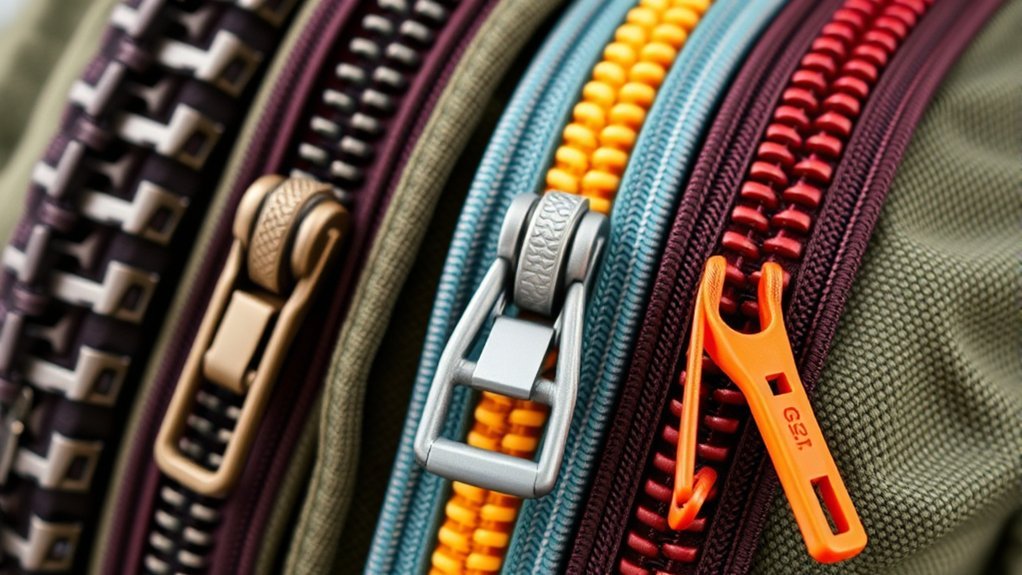
Understanding backpack zippers is essential for your gear’s performance and longevity. Different materials—like nylon, metal, and resin—offer unique benefits, such as lightweight flexibility or durability against corrosion. Zipper sizes also play a key role; for example, #5 zippers are ideal for backpacks while larger ones suit heavy-duty needs. Quality and weather resistance affect functionality, ensuring your zippers operate smoothly even in extreme conditions. Keep exploring to discover tips for selecting the perfect zipper for your adventures.
Understanding Zipper Materials

When it comes to choosing the right zipper for your backpack, understanding the materials involved is crucial. Zippers are primarily made from resin, nylon, and metal, each with unique durability, weight, and aesthetic properties. Resin zippers are tough, wear-resistant, and corrosion-resistant, making them perfect for extreme weather and allowing for decorative inlays. If you prefer something lightweight and flexible, nylon zippers come in vibrant colors but may not handle extreme temperatures as well as resin or metal. On the other hand, metal zippers offer an elegant look and impressive durability but can be heavier and prone to corrosion. Your choice of zipper material greatly impacts your backpack’s longevity, functionality, and style. So, think carefully about your needs and the conditions your backpack will face; making an informed decision will guarantee you enjoy your gear for years to come.
Types of Zippers for Backpacks
Choosing the right zipper type for your backpack can greatly enhance its performance and longevity. Nylon zippers are lightweight and flexible, perfect for smooth operation and vibrant colors, though they may falter in extreme weather. Metal zippers provide a durable, elegant look for high-end backpacks, but they can corrode and are generally heavier. If you seek toughness, resin zippers are corrosion-resistant and offer decorative options, making them ideal for rugged environments. Coil zippers, made of nylon with flexible teeth, allow for unique backpack designs and are less prone to breaking than metal options. Finally, molded-tooth zippers stand strong against weather elements, ensuring your outdoor adventures remain hassle-free. Each type suits different needs, so choosing wisely can elevate your backpack game, allowing you to explore without limitations.
Products Worth Considering
Size: Zipper pulls Length 1-2/5 inch(36mm), Wide is 2/5 inch(10mm), Set of 6(Black).
REPAIR IN 30 SECONDS. NO SEWING, NO WASTE: Avoid replacing the entire zipper or throwing away items just because the slider broke. ZlideOn lets you repair your plastic zipper in under 30 seconds. Open, clip on, and close and the zipper works again instantly. Repairing instead of replacing saves time, money, and avoids unnecessary waste, making this a cost-effective and environmentally friendly solution for everyday use.
✅ 6-Piece Comprehensive Kit - Includes 3 sizes (Small 1-4, Medium 5-7, Large 8-10) with 3 sliders each for complete coverage. Durable Resin moulded construction ensures lifetime zipper functionality.
The Importance of Zipper Quality
When you’re choosing a backpack, the quality of the zipper plays an essential role in its longevity and overall performance. High-quality zippers not only enhance the aesthetic appeal but also guarantee reliable functionality under various conditions. By selecting the right zipper type, you can prevent issues that compromise your bag’s durability and ease of use.
Products Worth Considering
**Dual-Layer Theft Protection**: Lock both zippers simultaneously with our double-opening carabiner design, creating a physical barrier against pickpockets in crowded airports, buses, or urban areas. Secures backpacks, luggage, duffel bags, messenger bags, and camping gear,Especially as travel safety essentials for women
20PCS Universal Fit: This set includes 20PCS nylon zipper pull replacements compatible with nike elite zippers, and works for most standard zippers on luggage, jackets, coats, pants and suitcases. The zipper pulls easily replace broken or hard-to-grip original tabs, quickly restoring smooth zipper operation for daily use on all zippered gear and apparel.
Package include: 10 PCS zipper pulls, Orange color help you recognize your bag easily and meet your needs for many clothes
Longevity of Backpacks
Although you might not think about it at first, the quality of zippers plays an essential role in the longevity of your backpack. High-quality zippers prevent common issues like separation and jamming, ensuring your gear stays secure. When you choose zippers from reputable brands like YKK, you benefit from smoother operation and reduced wear and tear. Opting for robust materials, such as molded tooth or metal, enhances durability in harsh conditions, extending your backpack’s lifespan. Weather-resistant zippers further bolster your backpack’s ability to withstand environmental challenges. Finally, selecting zippers that align with your backpack’s intended use and design is critical for maintaining its structural integrity and performance, empowering you to explore freely without worry.
Aesthetic Appeal Matters
The quality of zippers can markedly enhance a backpack’s aesthetic appeal, making it not just a functional accessory but also a stylish one. High-quality zippers from reputable brands like YKK elevate your backpack’s look, while the choice between resin, nylon, or metal zippers can dramatically influence its visual style. Resin zippers offer vibrant colors, and metal zippers exude elegance. Additionally, unique designs with decorative inlays can act as focal points, adding personality to your bag. A durable zipper not only maintains its appearance over time but also enhances your overall user experience. A smooth zipping action makes your backpack practical, ensuring it’s as attractive as it is functional for your everyday adventures.
Performance Reliability Factors
While you might not think about zippers often, their quality can make or break your backpack’s performance and reliability. High-quality brands like YKK offer durability that stands the test of time. A smooth zipping experience not only heightens your satisfaction but also reduces zipper failures during everyday use. Choosing the right zipper type—whether resin, nylon, or metal—based on your environment and intended use is crucial for peak performance. Larger, reinforced teeth increase durability, making them resistant to wear and tear in high-stress areas. Additionally, proper installation and maintenance can greatly extend zipper lifespan, minimizing common issues like separation or stuck sliders. Prioritizing zipper quality guarantees your backpack serves you well on all your adventures.
Weather Resistance and Durability
When choosing a backpack zipper, you need to contemplate both the material and the environments you’ll encounter. Resin zippers offer exceptional toughness against corrosion, while waterproof nylon options can keep moisture at bay. Understanding how different materials perform under various weather conditions can greatly enhance your backpack’s durability and functionality.
Zipper Material Selection
Choosing the right zipper material can considerably impact your backpack’s performance, especially regarding weather resistance and durability. Here’s a quick overview of common zipper materials:
| Zipper Type | Key Features |
|---|---|
| Resin | Highly durable, weather-resistant |
| Nylon | Lightweight, limited temperature range |
| Metal | Elegant, durable but prone to corrosion |
| Molded Tooth | Strong DuPont Delrin®, UV-resistant |
| Coil | Versatile, strength, and flexibility |
When selecting a zipper, consider your backpack’s intended use. Resin zippers excel in extreme conditions, while molded tooth zippers are perfect for marine environments. Although nylon zippers are lightweight, they can degrade in harsh climates. Metal zippers, while durable, may not withstand moisture as well as other options.
Environmental Condition Considerations
Understanding the environmental conditions your backpack will face is key to selecting the right zipper type. For wet climates, consider nylon zippers with waterproof treatments like PVC or TPU, as they’ll keep your gear dry. Molded tooth zippers are excellent for marine environments, offering inherent UV and corrosion resistance. If you need versatility, resin zippers can withstand extreme temperatures without sacrificing durability. While metal zippers provide durability and elegance, they’re prone to corrosion in humid conditions, making them less ideal for the outdoors. Ultimately, choosing high-quality zippers, such as those from YKK, directly influences your backpack’s longevity and performance, ensuring it endures the stresses of your adventures while keeping your gear secure and accessible.
Zipper Sizes and Their Applications
Zipper sizes play an essential role in determining the functionality and durability of your backpack, as each size is tailored for specific applications. Choosing the right zipper size is important for ensuring your backpack can withstand the rigors of your adventures. Here’s a quick breakdown:
- #2 Zippers: Ideal for light-duty applications like pillows; they’re not meant for heavy wear.
- #5 Zippers: Commonly used for medium-sized items like backpacks and jackets, offering a balance of durability and flexibility.
- #10 Zippers: Recommended for backpacks facing substantial stress, ensuring longevity and reliable performance.
- #12 and #15 Zippers: Designed for oversized projects, these zippers provide robust closures that withstand extreme conditions.
Products Worth Considering
Thicker PVC material: Vorspack clear bookbags are made of smell-less thicker clear PVC material, which is sturdy enough for everyday use. And, the transparent backpack is both heavy duty and soft that you can fold it as you need, it would not crack even in cold weather
EXTRA LARGE SIZE: 29" W X 13" H X 14" D - 86 Liters or 24 Gallon. They will safely hold up to 65 lbs. Strong moving storage bags in the market. These bags are made from durable woven 180 gsm coated polypropylene woven material.
Transparent backpack: Vorspack heavy-duty clear backpack is made of durable PVC material, making it perfect for quick security checks at schools, airports, stadiums, and music festivals. Its see-through design ensures your belongings are always visible.
Continuous vs. Finished Zippers
When it comes to backpack design, the type of zipper you select can greatly impact its functionality and ease of use. Understanding the differences between continuous and finished zippers helps you make informed decisions tailored to your needs.
| Feature | Continuous Zippers | Finished Zippers |
|---|---|---|
| Preinstalled Components | No | Yes |
| Custom Lengths | Yes, cut to desired size | Limited, can shorten with stops |
| Separation Types | Non-separating only | Separating and non-separating |
| Application Flexibility | High, sewn into unique designs | Quick applications with preset sizes |
| Ideal Use | Custom projects | Ready-to-use for general applications |
Finished zippers offer convenience, while continuous zippers provide design flexibility. Depending on your backpack’s specific requirements, your choice will affect both its aesthetics and functionality, allowing you to create a truly personalized experience.
Sliders: Locking vs. Non-Locking
Choosing the right slider for your backpack’s zipper is essential for optimizing functionality and ease of access. You’ll find two main types: locking and non-locking sliders. Each serves a unique purpose, and understanding their differences can enhance your packing experience.
- Locking Sliders: Secure your zipper, preventing unintended movement—ideal for jackets or trousers.
- Non-Locking Sliders: Allow quick opening and closing, perfect for backpacks and tents needing frequent access.
- Material Choices: Metal sliders offer strength, while plastic ones resist corrosion, catering to your specific needs.
- Slider Types: Single-pull sliders open from one side, while double-pull sliders provide access from both ends, enhancing versatility.
Selecting the right slider guarantees compatibility and function. For example, YKK sliders have unique identifiers that guide your choice, assuring you get the best fit for your backpack design.
Common Zipper Issues and Solutions
While enjoying your outdoor adventures, you might encounter some common zipper issues that can disrupt your packing experience. Zipper separation, stuck movement, and slider failure often stem from dust accumulation or wear over time. If you notice damaged or missing zipper teeth, it’s typically a sign you’ll need a full zipper replacement, as these components are essential for functionality. Cracked starter pins or boxes also call for complete zipper replacement, a more complex task than simply swapping out a slider. Fortunately, slider replacements are straightforward with the right materials and tools, and plenty of guides exist to assist you in DIY repairs. To prevent these issues, regular maintenance and cleaning are key. By keeping your zippers clean, you’ll guarantee smoother operation and extend their lifespan, allowing you to focus on your adventures without zipper hassles.
Products Worth Considering
HOW TO CHOOSE SIZE: (See Video) Start by checking the back of your broken zipper slider; most zippers have a size number (1-10) embossed on the back of the slider. Once you know your zipper size, our sizing chart below will determine which FixnZip is right for you. If your zipper doesn’t have a number on the back, you can simply measure the width of the zipper teeth in millimeters or inches.
Wide Compatibility: Zipper repair kit is suitable for the most common types of zippers, such as broken zipper tracks, damaged sliders, damaged zipper pulls, and missing teeth for bags, tents, luggage, sleeping bags, and jackets
Versatile Repair Kit : This zipper kit includes zipper pulls , sliders, and installation tools to fix or replace zippers on bags, tents, luggage, sleeping bags, jackets, and other outdoor gear
Tips for Selecting the Right Zipper
How do you guarantee your backpack’s zipper meets your adventure needs? Selecting the right zipper is essential for durability and functionality. Here are four important tips to guide your choice:
- Material Matters: Opt for resin zippers for toughness and corrosion resistance, especially in harsh weather.
- Size It Right: Use larger zippers (#5 or higher) for heavy-duty tasks, while smaller zippers (#2 or #4.5) work well for lighter loads.
- Type Selection: Choose molded tooth zippers for strength and weatherproofing, coil zippers for flexibility, or metal zippers for a stylish touch (but beware of their outdoor limitations).
- Length Check: Verify the zipper length suits your backpack size, remembering that continuous zippers can be tailored, whereas finished ones come in set lengths.
Products Worth Considering
[ Ensure Proper Sizing ]: The oversized PZL (Large) zipper pulls fit onto 10mm or larger zipper sliders e.g. YKK 10. A robust replacement zipper pull for the toughest gear. Suitable for field repair. Check to ensure fit.
HIGH-CAPACITY: These big storage bags are great for storing, transporting and organizing all sorts of items from clothing, toys, shoes, towels, supplies, pillows, bedding, sheets, blankets, laundry, Christmas decor and more! You will be shocked & pleased at the amount you can fit in these jumbo bags. You get 6 bags & when you open them up you immediately realize the awesome buy you made.
EXTRA LARGE CAPACITY: 29"" W X 13"" H X 14"" D, 86 liters (23 gallons) volume; Idea for moving, storage, organization; College dorm room essentials for girls and guys.
Frequently Asked Questions
How Do I Clean and Maintain My Backpack Zippers?
To clean your backpack zippers, use a soft brush to remove debris, then apply a mix of warm water and mild soap. Rinse thoroughly, dry completely, and lubricate with zipper-specific wax for smooth operation.
Can I Replace a Broken Zipper on My Backpack?
Yes, you can replace a broken zipper on your backpack. Remember, “a stitch in time saves nine.” Gather your tools, choose a compatible zipper, and follow a guide to guarantee a smooth, successful replacement process.
What Is the Average Lifespan of a Backpack Zipper?
A backpack zipper typically lasts around 5 to 10 years, depending on usage and maintenance. Regular cleaning and careful handling can extend its life, allowing you to enjoy your gear without frequent replacements.
Are There Zippers Specifically Designed for Waterproof Backpacks?
Yes, there are zippers specifically designed for waterproof backpacks. These zippers feature sealed construction and water-resistant materials, ensuring your gear stays dry during outdoor adventures. Choosing the right zipper enhances your backpack’s performance in wet conditions.
How Do Zipper Colors Affect My Backpack’s Style?
Zipper colors can totally elevate your backpack’s style, or make it look like a neon nightmare. Choose wisely; vibrant hues scream adventure, while muted tones whisper sophistication. Your choice can define your entire vibe, after all!
Conclusion
When it comes to choosing zippers for your backpack, remember that “the devil is in the details.” By understanding the different types, materials, and qualities of zippers, you can guarantee your gear withstands the test of time and outdoor adventures. Prioritize durability and weather resistance to keep your belongings safe and secure. With the right zipper, you won’t just have a functional backpack; you’ll have a reliable companion for all your journeys. Choose wisely!