Last Updated on August 26, 2026 by Caleb Warren
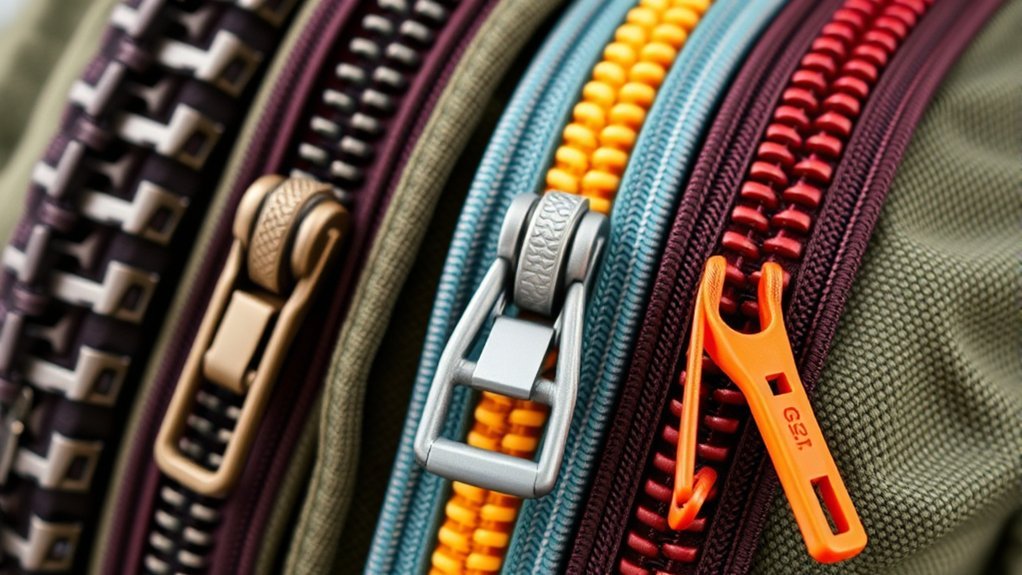
Backpack zippers look simple, but their construction, size, slider, and weather treatment have a major effect on how smoothly a bag opens and how well it holds up. Most backpacks use coil or molded-plastic zippers, while metal zippers are less common on weather-exposed outdoor packs. The right choice depends on the compartment, load, exposure to rain and grit, and the type of access you need.
Quick Answer
For most backpacks, a flexible coil zipper or durable molded-plastic zipper is the practical choice. #5 is a common starting size for general backpack openings, while heavier designs may use #8 or #10. Choose the zipper by construction, size, slider compatibility, weather exposure, and expected load rather than size alone.
Key Takeaways
- The main backpack zipper constructions are coil, molded plastic, and metal.
- A zipper’s size number describes its chain or gauge size; it is not a universal strength rating.
- #5 is common on many bags, while #8 and #10 may suit larger or more highly stressed openings when the backpack design calls for them.
- A coated zipper can improve rain resistance without making the backpack fully waterproof.
- When replacing a slider, match the zipper construction, size, and slider orientation rather than relying on the size number alone.
Disclosure: As an Amazon Associate I earn from qualifying purchases. Some links on this page are affiliate links, at no extra cost to you.
Backpack Zipper Anatomy
Understanding a few zipper terms makes choosing and repairing backpack zippers much easier. A zipper is more than the visible teeth and pull tab.
- Tape: The woven fabric strips sewn into the backpack.
- Elements or chain: The interlocking coil, molded teeth, or metal teeth that close the opening.
- Slider: The moving body that brings the two sides of the zipper together or separates them.
- Pull: The tab, cord, or extension you hold to move the slider.
- Top stops: Small stops that keep the slider from running off the end of the chain.
- Bottom stop: The fixed end of a non-separating zipper.
The zipper’s size number refers to its chain or gauge size. YKK explains that a larger size number generally corresponds to a wider chain, although available sizes and exact dimensions vary by zipper family. See YKK’s zipper size guidance for manufacturer terminology.
Understanding Zipper Materials
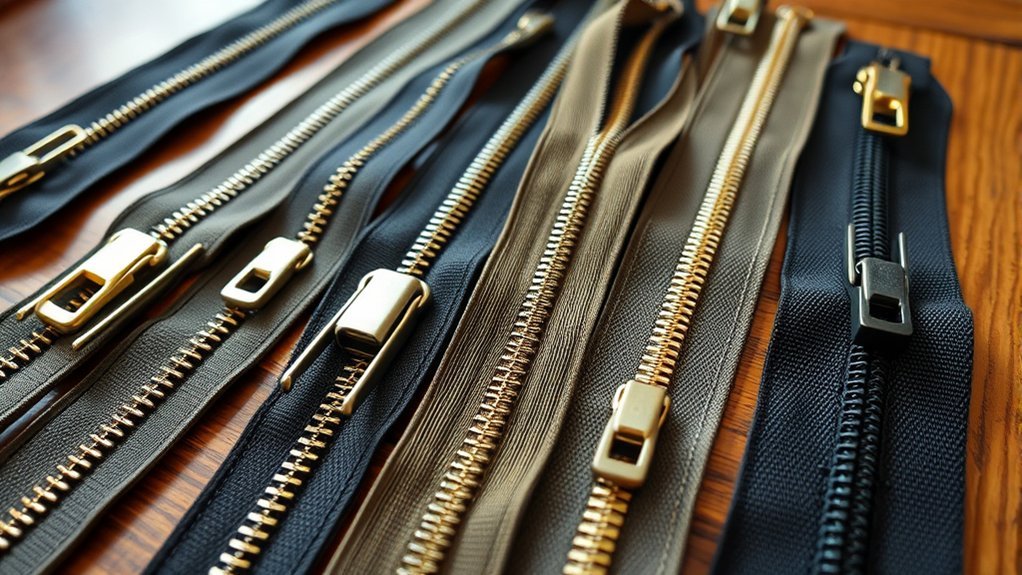
When choosing a zipper for your backpack, it is more useful to think about construction first and material second. The three major families are coil, molded-plastic, and metal zippers.
Coil zippers use a continuous polymer coil attached to the zipper tape. They are flexible, run smoothly around curved openings, and are widely used on packs, pockets, luggage, and outdoor gear. The exact polymer and tape materials depend on the manufacturer and product line, so broad claims about all “nylon zippers” behaving the same in heat, cold, or sunlight should be avoided.
Molded-plastic zippers use individual plastic elements formed directly onto the tape. YKK’s VISLON® line, for example, uses injected plastic elements such as polyacetal resin and is lighter than metal zipper construction of the same size. See YKK VISLON® Standard.
Metal zippers use individual metal elements, commonly made from metal alloys. They can provide a distinctive appearance and good mechanical performance, but exposed metal hardware may need more care around moisture, salt, chemicals, or prolonged humid storage. For many outdoor backpacks, coil or molded-plastic construction is therefore more practical.
Types of Zippers for Backpacks
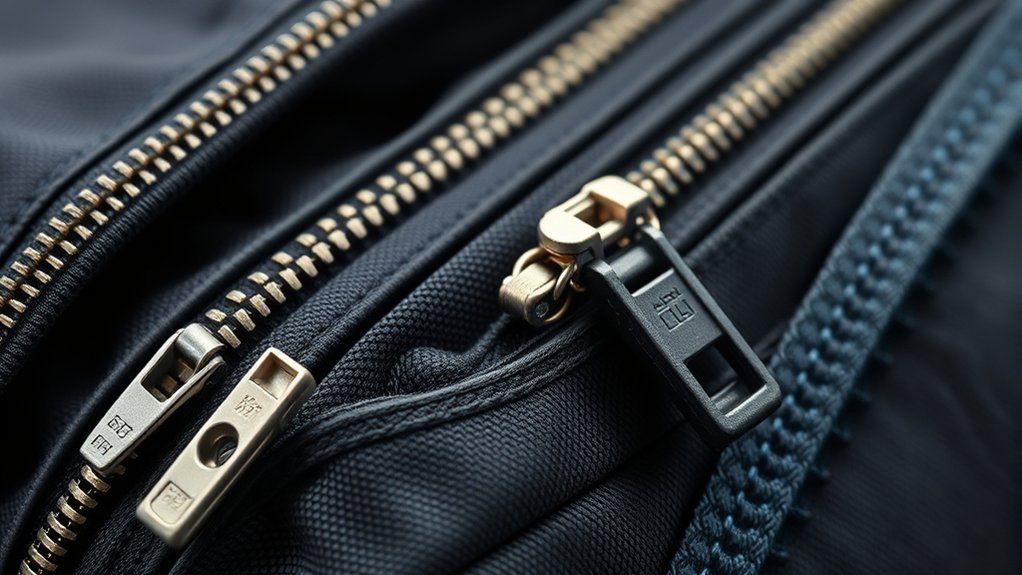
Choosing the right zipper type can improve a backpack’s usability and service life. The best option depends on where the zipper is installed and how much bending, abrasion, rain, dirt, and load it will experience.
Coil Zippers
Coil zippers are flexible and work well on curved backpack openings. That makes them especially useful for main compartments, organizer pockets, laptop compartments, and clamshell-style bags. Manufacturers also offer abrasion-resistant coil constructions specifically intended for luggage and backpacks.
A reverse-coil zipper uses the same basic coil construction but positions the chain toward the inside so the outside has a flatter, cleaner appearance. Reverse-coil construction is common on modern bags, but it should not be confused with waterproofing. A reverse zipper becomes more water resistant only when the tape and construction are specifically designed or coated for that purpose.
Molded-Plastic Zippers
Molded-plastic zippers have separate injected teeth. They are generally stiffer and more visually pronounced than coil zippers. Their larger teeth can work well on outdoor gear and other applications where a substantial closure is appropriate.
Do not assume every molded zipper is made from the same branded resin. Different manufacturers use different formulations, and the material specification should be checked for the exact zipper being considered.
Metal Zippers
Metal zippers can create a premium or traditional appearance and are common on fashion bags, leather goods, and some backpacks. Their disadvantages for outdoor use include added weight and the possibility of discoloration or corrosion under unsuitable environmental or storage conditions.
| Zipper Type | Main Strengths | Main Limitations | Common Backpack Use |
|---|---|---|---|
| Coil | Flexible, smooth around curves, widely available | Performance depends on coil, tape, stitching, and coating | Main compartments, pockets, clamshell openings |
| Molded plastic | Distinct individual teeth, low corrosion concern, substantial feel | Stiffer than coil and less suited to tight curves | Outdoor gear and straighter high-use openings |
| Metal | Distinctive appearance and durable construction when properly specified | Heavier; finish and corrosion concerns may matter outdoors | Fashion, heritage, leather, and premium-style bags |
The Importance of Zipper Quality
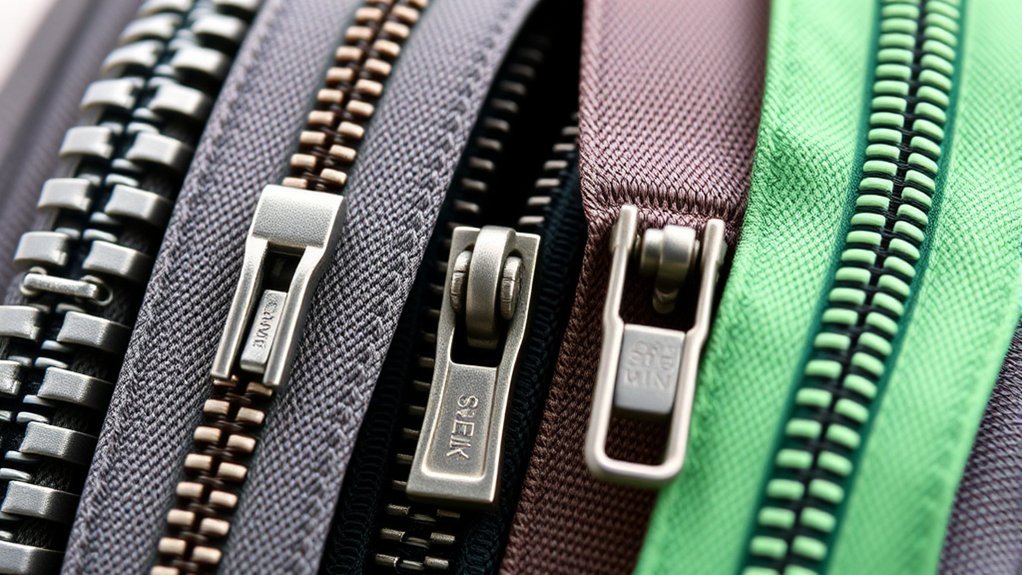
When you’re choosing a backpack, the quality of the zipper plays an important role in its longevity and overall performance. The zipper chain itself matters, but so do the slider, tape, stops, stitching, installation, alignment, and the load placed on the opening.
Longevity of Backpacks
A well-specified zipper should move smoothly without excessive force, stay aligned, and remain securely attached to the backpack fabric. A strong chain cannot compensate for weak stitching, damaged tape, a badly worn slider, or an overpacked compartment that constantly pulls the zipper sideways.
YKK’s published strength guidance emphasizes selecting zipper performance according to the required strength of the intended application rather than assuming that one zipper size is automatically suitable for every use. See YKK zipper strength guidance.
Aesthetic Appeal Matters
Zippers also affect a backpack’s appearance. Coil zippers can provide a low-profile look, especially in reverse-coil construction. Molded teeth create a bolder technical appearance, while metal elements can give a bag a traditional or premium look.
Color choice can either blend the zipper into the fabric or turn it into a design feature. Appearance should come after function, however, because an attractive zipper that is too small, poorly aligned, or unsuitable for the environment will not perform well.
Performance Reliability Factors
Reliable zipper performance depends on the complete system rather than the brand name alone. Check these areas when evaluating a backpack:
- Smooth travel: The slider should move without repeated snagging or excessive force.
- Chain alignment: Both sides should meet evenly without obvious waviness or distortion.
- Slider fit: A worn or oversized slider may allow the chain to separate behind it.
- Tape and stitching: Look for secure stitching and no fraying around the zipper tape.
- Stops: Top and bottom stops should be secure so the slider cannot run off the chain.
- Load management: The closed zipper should not be forced to act as a compression strap for an overfilled compartment.
Pro Tip: Before buying a backpack, fill or gently tension the compartment and operate the zipper around its corners. Smooth movement under light load tells you more than simply looking for the largest zipper teeth.
Weather Resistance and Durability
When choosing a backpack zipper for outdoor use, consider rain, humidity, salt, dust, sand, UV exposure, and repeated flexing. No zipper should be judged only by the material name printed in a product description.
Zipper Material Selection
| Zipper Construction | Useful Characteristics | What to Check |
|---|---|---|
| Coil | Flexible and suitable for curved bag openings | Tape, stitching, abrasion rating, coating, and slider type |
| Molded plastic | Individual plastic elements and low concern about tooth corrosion | Exact resin, UV requirements, chain size, and intended application |
| Metal | Distinctive appearance and strong construction when correctly specified | Moisture exposure, finish, storage conditions, weight, and corrosion risk |
| PU-laminated or coated zipper | Improves resistance to water entering through the zipper area | Whether the manufacturer calls it water-repellent or truly watertight |
Environmental Condition Considerations
For backpacks that regularly face rain, a laminated or coated zipper can reduce water entry. One well-known example is YKK AquaGuard®, which uses a polyurethane-laminated zipper construction. However, YKK specifically describes AquaGuard® as water-repellent rather than waterproof or watertight.
Note: A water-repellent zipper does not make the entire backpack waterproof. Water can still enter through seams, fabric, stitching, zipper ends, or prolonged exposure. True watertight zipper systems are specialized products with different construction and care requirements.
Grit and sand can also accelerate wear by increasing friction around the slider and chain. Salt residue should be removed promptly from outdoor or marine gear. UV exposure, repeated folding, and incompatible cleaners may affect some laminated zipper films, so follow the care instructions for the exact zipper and backpack.
Zipper Sizes and Their Applications
Zipper size affects bulk, flexibility, slider dimensions, and the amount of load a zipper design may be intended to handle. The number generally relates to chain width, but it should not be treated as a universal strength guarantee across every manufacturer and construction.
YKK offers backpack- and luggage-oriented Racquet Coil zipper chain in sizes 5, 8, and 10, illustrating why several gauges can be appropriate for bags depending on the design. See YKK Racquet Coil zipper specifications.
| Size | Practical Backpack Guidance |
|---|---|
| #2 | A very small gauge found in lightweight zipper families. It is generally not the first choice for a highly stressed backpack main opening. |
| #3 | Useful for smaller, lighter-duty pockets when the zipper product and bag design permit it. |
| #5 | A common general-purpose starting point for many backpack compartments because it balances bulk and capability. |
| #8 | May suit larger or more highly stressed openings when supported by the backpack’s overall construction. |
| #10 | Used in heavier bag, luggage, industrial, or large-gear applications where the zipper specification calls for a larger chain. |
| #12 and #15 | Larger gauges exist in some zipper product lines, but they are not automatically better and are uncommon on ordinary daypacks. Use them only when the specific design and manufacturer specification justify the extra bulk. |
A larger zipper can still fail if the tape is poorly sewn, the slider is incorrect, the compartment is overloaded, or the zipper is constantly pulled sideways. Choose the complete closure system rather than selecting by number alone.
Continuous vs. Finished Zippers
Backpack makers and repairers may work with either continuous zipper chain or finished zippers. The difference affects installation, length adjustment, sliders, and end stops.
| Feature | Continuous Zipper Chain | Finished Zipper |
|---|---|---|
| Preinstalled Components | Usually supplied as chain that still needs compatible sliders and stops | Slider and end components are already installed |
| Custom Lengths | Can be cut to the required length during fabrication | Ordered in defined lengths, although some closed-end zippers can be shortened correctly |
| Typical Configuration | Often used to build non-separating bag and pocket openings | Available as closed-end, separating, or two-way configurations depending on product |
| Application Flexibility | High for custom fabrication and long curved bag openings | Convenient when a known finished configuration is needed |
| Ideal Use | Custom bags, repair work, luggage, tents, and production sewing | Applications where the final length and end style are predetermined |
Most backpack compartments use a closed-end zipper, often with two sliders so the opening can be accessed from either direction. Separating zippers are more common on jackets than on ordinary backpack compartments.
Sliders: Locking vs. Non-Locking
Choosing the correct slider is just as important as choosing the zipper chain. Slider terminology can be confusing because a locking slider is not necessarily an anti-theft lock.
- Locking sliders: These use a mechanism that helps hold the slider in position when the pull is released. They are common where unintended slider movement needs to be limited.
- Non-locking sliders: These move freely when force is applied and are widely used on bags, tents, luggage, and other openings that need frequent access.
- Single-pull sliders: Operated primarily from one side of the zipper.
- Double-pull or reversible sliders: Designed for access from both sides in compatible zipper systems.
- Two-slider configurations: Two separate sliders can meet on a backpack opening, allowing the compartment to open from either direction.
YKK currently lists automatic-lock, semi-automatic-lock, and non-lock slider designs across its zipper ranges. More importantly, the slider must match the zipper’s construction and size. A slider intended for a #5 coil zipper should not be assumed to fit a #5 molded-plastic or metal chain merely because the number is the same.
Note: If you want to secure two backpack zipper pulls with a small travel lock, look for pulls specifically shaped with compatible locking holes. A “locking slider” in zipper terminology describes the slider mechanism, not guaranteed theft protection.
Common Zipper Issues and Solutions
Backpack zipper problems are easier to fix when you diagnose the failed component before replacing anything. Dirt, fabric, worn sliders, damaged stops, torn tape, and missing elements require different solutions.
| Symptom | Likely Cause | Best Next Step |
|---|---|---|
| Slider will not move | Dirt, sand, thread, fabric, or another obstruction | Stop pulling, remove the obstruction, clean the chain, and try again gently |
| Zipper closes then opens behind the slider | Worn, damaged, or incompatible slider; chain wear is also possible | Inspect the chain and consider a correctly matched replacement slider |
| Slider comes off the end | Missing or damaged top stop | Refit the correct slider if undamaged and install a suitable new stop |
| Missing or badly damaged teeth/elements | Physical chain damage | A complete zipper replacement is often the durable solution |
| Torn zipper tape | Abrasion, overload, or damaged sewing area | Professional sewing repair or complete zipper replacement may be required |
| Broken pull tab only | Pull failure while slider body remains intact | Fit a replacement pull or cord rather than replacing the entire zipper |
Warning: Do not force a jammed zipper. Pulling harder can damage the slider, chain, tape, coating, or stops. Back the slider away from the obstruction, remove trapped fabric or debris, and try again with the zipper aligned.
Slider replacement can be much simpler than replacing the entire sewn-in zipper, but only when the chain and tape are still sound. If teeth are missing, the coil is badly damaged, the tape has torn away, or the zipper is structurally distorted, replacing the entire zipper is usually more reliable.
Tips for Selecting the Right Zipper
How do you make sure a backpack zipper fits the intended use? Evaluate the complete zipper system instead of focusing on one feature.
- Match the construction to the opening: Coil zippers are useful on curved openings, while molded-plastic zippers provide distinct individual teeth and can suit straighter outdoor-gear applications.
- Choose an appropriate size: #5 is a useful general starting point for many backpack applications, while smaller or larger gauges should be selected according to the compartment and manufacturer’s specifications.
- Consider the environment: For frequent rain exposure, choose a zipper and backpack design specifically intended to resist water rather than assuming all reverse or plastic zippers are weatherproof.
- Choose the right configuration: Decide whether you need a closed-end zipper, two sliders, continuous chain, or another finished construction.
- Match the slider exactly: Confirm zipper type, size, and orientation before ordering a replacement slider.
- Inspect the installation: Strong stitching, intact tape, correct alignment, and secure stops matter as much as the zipper brand.
- Avoid unnecessary oversizing: A very large zipper adds bulk and stiffness and does not compensate for a poorly designed or overloaded backpack opening.
How to Clean and Maintain Backpack Zippers
Routine care helps prevent grit and debris from increasing friction around the slider. Start with the least aggressive method:
- Open the compartment and remove loose dirt with a soft brush or clean cloth.
- If the backpack’s care instructions allow it, use clean water to remove remaining dirt or salt residue.
- Let the zipper and surrounding fabric dry according to the backpack manufacturer’s instructions.
- Operate the slider gently after cleaning and check for snagging, damaged tape, loose stops, or separation.
- Use lubricant only when the zipper or backpack manufacturer recommends a compatible product.
Specialized waterproof zipper systems can have their own maintenance procedures. For example, YKK’s AQUASEAL® technical guidance includes product-specific cleaning and lubrication instructions. Do not assume those instructions apply to every ordinary backpack zipper or coated zipper film.
Frequently Asked Questions
How do I clean and maintain my backpack zippers?
Brush away dry dirt and grit first. If the backpack’s care instructions permit it, remove remaining dirt or salt with clean water and let the zipper dry properly. Never force a jammed slider. Use a zipper lubricant only when it is compatible with that particular zipper, coating, and backpack material.
Can I replace a broken zipper on my backpack?
Yes. If only the slider or pull is damaged, you may be able to replace that component without sewing in a complete zipper. If the chain has missing elements, the coil is badly damaged, or the zipper tape is torn, complete zipper replacement is usually the more durable repair.
What is the average lifespan of a backpack zipper?
There is no reliable universal lifespan such as five or ten years. Service life depends on how often the zipper is used, how heavily the compartment is loaded, the zipper and slider quality, sewing and alignment, exposure to grit or salt, weather, and maintenance. A lightly used pack can therefore outlast a heavily used pack even when both use similar zipper sizes.
Are there zippers specifically designed for waterproof backpacks?
Specialized watertight zipper systems do exist, but many zippers seen on outdoor backpacks are only water-repellent or water-resistant. For example, YKK states that AquaGuard® is water-repellent rather than waterproof or watertight. The zipper, seams, fabric, and overall bag construction all determine how much water protection the backpack provides.
How do zipper colors affect my backpack’s style?
A matching zipper creates a cleaner, understated look, while a contrasting zipper can become a visible design feature. Reverse-coil zippers often look especially streamlined because less of the chain is visible. Color is mainly an aesthetic choice, so construction, size, coating, and slider quality should come first.
What zipper size is best for a backpack?
There is no single best size. #5 is common and works as a useful starting point for many general backpack openings. Smaller pockets may use lighter gauges, while larger or more highly stressed bags may use #8 or #10. The zipper family, stitching, slider, load, and backpack design matter along with the size number.
Why does my backpack zipper close and then split open again?
A worn or damaged slider is a common cause when the chain looks intact but separates immediately behind the slider. Clean and inspect the zipper first. If the elements and tape are sound, replacing the slider with the correct type and size may solve the problem without replacing the complete zipper.
Does a locking zipper slider make a backpack theft-proof?
No. In zipper terminology, a locking slider simply uses a mechanism that helps prevent the slider from moving unintentionally. It is not the same as a security lock. Travel bags designed for small padlocks usually use two compatible zipper pulls with holes or loops that can be secured together.
Conclusion
The best backpack zipper is the one that matches the bag’s actual use. Start by identifying whether you need a flexible coil zipper, molded-plastic teeth, or metal construction. Then consider the chain size, slider, opening configuration, expected load, and exposure to rain, dirt, or salt. A #5 zipper is common on many packs, but size alone does not determine quality or durability.
For long service life, avoid overstuffing compartments, keep dirt out of the chain, never force a jammed slider, and replace worn components before they damage the rest of the zipper. When rain protection matters, also remember that a water-repellent zipper and a truly watertight zipper are not the same thing.
Sources
- YKK — Zipper Size Guidance — explains zipper chain sizing and available gauge terminology.
- YKK — VISLON® Standard — supports molded-plastic construction and polyacetal-resin information.
- YKK — Racquet Coil Zipper — documents abrasion-oriented coil products for backpack and luggage applications in multiple sizes.
- YKK — AquaGuard® Coil — confirms that AquaGuard is water-repellent rather than waterproof or watertight.
- YKK — AQUASEAL® Technical Support — provides guidance for specialized waterproof zipper use, cleaning, and maintenance.
- YKK — Zipper Strength Standards — supports selecting zipper strength according to the intended application.