
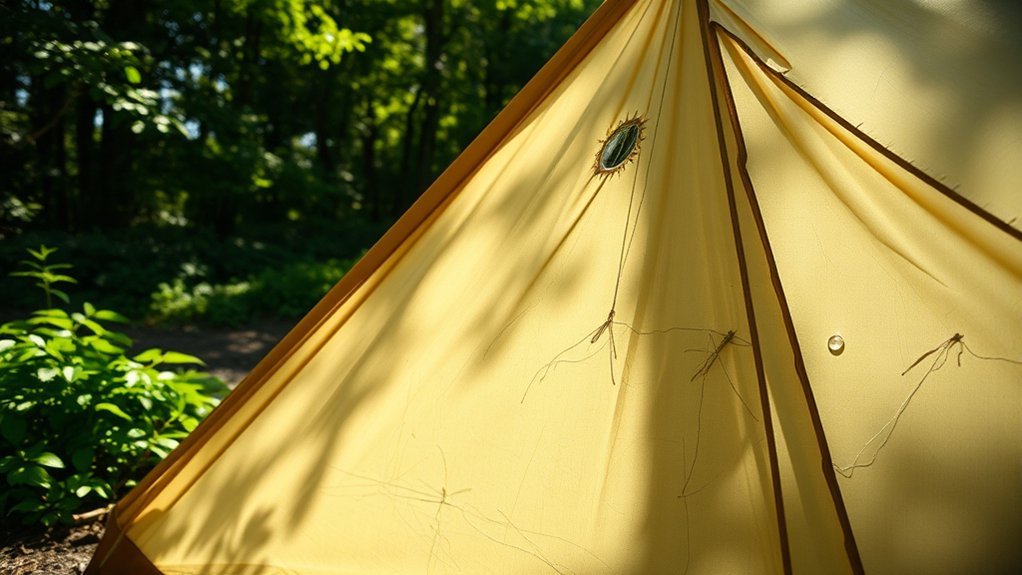
You should replace your tent rainfly if you notice significant signs of wear like cracks, tears, or a sticky texture. If water seeps through during light rain or you see mold, it’s time for a new one. A lifespan of 5 to 10 years is common, so check for frayed seams and discoloration. If repairs can’t fix the issues, consider a replacement. Discover more factors to evaluate for a suitable rainfly upgrade.
Understanding the Importance of a Rainfly

While you might focus on your tent’s structure, understanding the importance of a rainfly is fundamental for guaranteeing a dry and comfortable camping experience. The rainfly serves as your first line of defense against rain, snow, and UV rays, providing essential weather protection for the tent’s interior. Typically crafted from lightweight, water-resistant materials like ripstop nylon or polyester, it’s often coated to enhance waterproofing.
Proper installation and tensioning are key to maximizing rainfly functionality, as they prevent water pooling and promote adequate ventilation, reducing condensation. Over time, factors like UV exposure and abrasion can diminish its effectiveness, leading to potential leaks. To prolong its life, regular maintenance—like cleaning and reapplying waterproof treatments—is significant. However, if you notice stickiness or peeling, it’s time to reflect on a replacement to guarantee your camping adventures remain liberating and enjoyable.
Common Signs of Wear and Tear
When inspecting your tent rainfly, look for visible damage like cracks, tears, or a sticky texture, as these indicate deterioration. Persistent water leakage during use is also a critical sign that the rainfly has lost its waterproof capabilities. Addressing these issues promptly can prevent further damage to your tent and keep you dry on your next adventure.
Visible Damage and Tears
Visible damage and tears are clear indicators that your tent rainfly may need replacement. Conduct a thorough tear assessment; look for rips, holes, or significant fraying that can compromise waterproof capabilities. If you notice thinning fabric or sticky patches, those are signs of coating breakdown, risking leaks during your adventures. Discoloration or peeling of the polyurethane coating suggests deterioration, meaning it might not provide adequate shelter anymore. Even if you’ve cleaned and treated your rainfly multiple times, persistent failure to repel water indicates that its protective qualities are waning. Don’t risk your comfort and safety—if you spot these visible damages, it’s time to evaluate a replacement for peak performance during your outdoor experiences.
Persistent Water Leakage
Persistent water leakage from your tent rainfly is one of the most telling signs that it’s time for a replacement. If you notice water seeping through during heavy rain, the waterproof coatings have likely deteriorated. Check for peeling or tackiness on the rainfly material; these are clear indicators that the protective layer is compromised. Additionally, examine the seams for fraying or separation, as these weak points can lead to leaks. If your rainfly fails to keep the interior dry even after applying waterproofing treatments, it’s time to reflect on a new one. Finally, any sign of mold or mildew, especially if accompanied by an odor, signals irreversible damage necessitating immediate replacement for effective rainfly maintenance.
Assessing Waterproofing Effectiveness
How can you determine if your tent rainfly is still effectively waterproof? Start by inspecting for visible damage, like cracks, tears, or holes, which can compromise the waterproofing. If you notice water seeping through during light rain or condensation forming inside, the waterproof coatings may have deteriorated. Regularly check for discoloration or a sticky feel on the rainfly materials; these are signs of degradation. If your rainfly has lost its water repellency despite reapplying waterproof coatings, it’s likely time for a replacement. Additionally, consider the age of your rainfly—those over five years old, particularly from brands with lower durability ratings, may no longer perform at peak efficiency. By evaluating these factors, you’ll guarantee your rainfly remains a reliable barrier against the elements, allowing you to enjoy your outdoor adventures freely.
Evaluating Fabric Condition
When evaluating the condition of your tent rainfly, it’s important to look for signs of wear that can affect its performance. Start by checking for stickiness on the fabric, which may indicate a deteriorating polyurethane coating and a loss of waterproofing. Keep an eye out for visible mold or mildew growth, as these can compromise your rainfly’s integrity. Frayed edges, tears, or punctures are also critical; they can lead to water ingress during rain, jeopardizing your shelter.
Assess the overall flexibility of the fabric. If it feels stiff or brittle, it likely won’t provide effective protection against the elements. Finally, conduct a water test by spraying the rainfly to identify any leaks. By following these maintenance tips, you can guarantee your rainfly maintains its fabric durability and readiness for your next adventure. If you notice significant damage, it might be time for a replacement.
Checking Seam Integrity
When checking the integrity of your tent rainfly seams, start with a thorough visual inspection for fraying or peeling. Use a flashlight to see if any light shines through the seams, indicating potential leaks. If you find significant wear, you’ll need to decide whether to repair the affected areas or replace the entire rainfly.
Visual Inspection Techniques
To guarantee your tent rainfly remains effective, it’s crucial to regularly perform a visual inspection of its seams. Start by checking for fraying, splitting, or visible wear, as these can compromise the rainfly’s integrity and lead to leaks. Examine the seam tape for peeling or cracking, which diminishes waterproof protection. A practical maintenance tip is to conduct a water test: spray the seams and look for leaks or absorption to identify weak points. Confirm the stitching is tight and intact; loose or missing stitches greatly decrease the rainfly’s effectiveness. Finally, regularly assess the seam sealant for deterioration, as a failing seal can invite moisture ingress during rain, indicating a potential need for repair or replacement.
Replace or Repair?
After completing a thorough visual inspection of your tent rainfly, it’s time to assess whether to replace or repair any damaged seams. Regularly check for signs of fraying, splitting, or peeling, as these can lead to leaks and compromise the waterproofing of your rainfly materials. If you find minor damage, using a seam sealer can effectively restore integrity—just verify the fabric is clean and dry before application for peak adhesion. However, if you notice extensive damage, multiple leaks, or mildew around the seams, it may be more practical to replace the rainfly altogether. Prioritize tent maintenance to verify your gear remains waterproof and reliable for your next adventure.
The Impact of Environmental Factors
Environmental factors greatly influence the lifespan and effectiveness of your tent’s rainfly. Prolonged UV exposure impacts the material, degrading its waterproofing and structural integrity. High humidity effects can lead to mildew growth, making the fabric sticky or tacky, while temperature fluctuations cause materials to expand and contract, resulting in stress fractures or compromised seams.
Additionally, your rainfly’s performance is directly linked to storage conditions. Keeping it in damp or tightly packed spaces accelerates deterioration, undermining its functionality. Frequent use in harsh weather conditions, like heavy storms or strong winds, can also expose your rainfly to damage that may necessitate replacement sooner than expected.
To guarantee your rainfly remains effective, pay attention to these environmental factors. Regularly inspect it for signs of wear and take proactive measures to enhance its weather resilience.
Age and Lifespan Considerations
Understanding the age of your tent rainfly is essential for maintaining its performance. The lifespan of a rainfly typically ranges from 5 to 10 years, influenced by its materials and your maintenance practices. Here’s a quick overview:
| Age Range | Signs of Wear | Suggested Action |
|---|---|---|
| 0-3 years | Minor wear | Regular maintenance |
| 3-5 years | Fraying seams | Inspect and treat |
| 5-10 years | Stickiness, leaks | Consider replacement |
| 10+ years | Severe deterioration | Replace immediately |
Regular exposure to UV rays can accelerate aging, weakening the fabric. To extend your rainfly’s life, store it properly and perform regular checks. If you notice peeling coatings or persistent leaks, it’s time to rethink its usability. Adopting these maintenance tips can save you from unexpected wet nights.
Repair vs. Replacement: Making the Decision
When evaluating whether to repair or replace your tent rainfly, it is crucial to assess the extent of the damage and the fly’s overall condition. If you notice significant stickiness or tackiness, this often means the polyurethane coating has broken down, indicating replacement is necessary. Visible tears, holes, or compromised seams that can’t be effectively patched also signal that repair won’t suffice.
If your rainfly fails to repel water despite using waterproofing treatments, it may be too degraded. Additionally, persistent mildew or odors can hint at irreversible damage, warranting replacement. Consider the age of your rainfly; if it’s over a decade old and shows multiple signs of wear, investing in a new rainfly or tent might be more cost-effective. Explore various material options that fit your needs before making your decision, and weigh the effectiveness of repair techniques against the reliability of a new rainfly.
Choosing the Right Replacement Rainfly
How do you choose the right replacement rainfly for your tent? Start by ensuring tent compatibility; check your tent’s brand and model to find a rainfly that fits properly. Next, consider the rainfly materials. Look for durable, water-resistant options like ripstop nylon or polyester with a waterproof rating of 1500mm or higher. Finally, evaluate additional features that enhance performance:
- UV Resistance: Protects against sun damage.
- Breathability: Reduces condensation inside your tent.
- Design Elements: Reinforced seams and adjustable straps improve stability and ease of setup.
Don’t forget to review customer feedback and expert recommendations to gauge effectiveness and durability in real-world conditions. With these considerations, you’ll find a replacement rainfly that meets your needs and keeps you dry on your adventures.
Frequently Asked Questions
Can I Use a Rainfly From a Different Tent Brand?
You can use a rainfly from a different brand, but confirm tent compatibility for proper fit. Check for adequate weather protection, as mismatched designs might compromise shelter effectiveness during storms or heavy rain.
How Can I Properly Store a Rainfly When Not in Use?
To store your rainfly, clean it properly, ensuring it’s dry. Fold it neatly in ideal conditions, away from direct sunlight. This dance of care prolongs its life, keeping your adventures vibrant and worry-free.
What Materials Are Best for Tent Rainfly Replacements?
For tent rainfly replacements, choose nylon fabrics for durability, polyester coatings for UV resistance, and guarantee waterproof treatments are applied. Opt for breathable materials to prevent condensation, keeping you comfortable during outdoor adventures.
How Often Should I Inspect My Rainfly?
Inspect your rainfly every season, like checking a shield before battle. Regular rainfly maintenance tips suggest quarterly inspections for tears and wear. Staying vigilant guarantees you’re ready for any storm that comes your way.
Can I Repair a Rainfly Instead of Replacing It?
Yes, you can repair a rainfly using various repair techniques, like patching or seam sealing. These methods can extend your rainfly’s longevity, saving you money and keeping you dry on future adventures.
Conclusion
In summary, knowing when to replace your tent rainfly is essential for a dry and comfortable camping experience. If you notice frayed edges or significant water leakage, it’s time to act. For instance, imagine being caught in a sudden downpour with a compromised rainfly, leaving you soaked and uncomfortable. By replacing your rainfly proactively, you guarantee your shelter remains effective against the elements, allowing you to enjoy your outdoor adventures without worry.