
Last Updated on August 23, 2026 by Mason Reed
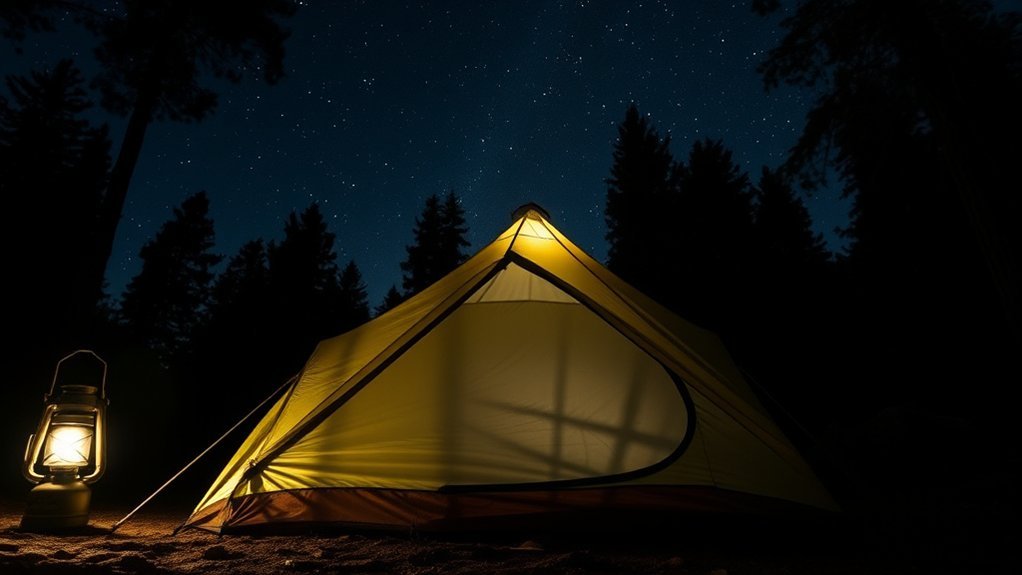
Setting up a tent after sunset does not have to be stressful. The key is to arrive prepared, keep your essential gear easy to reach, create enough light to work safely, and focus on the steps that make your shelter usable first.
Quick Answer
To set up a tent in the dark, prepare before arrival, find a safe level campsite, keep your tent parts organized, use a headlamp or lantern for hands-free lighting, and complete only the essential setup before resting. Add extra comfort items after daylight returns.
Key Takeaways
- Prepare your tent and lighting gear before arriving at camp.
- Set up your shelter first and save nonessential tasks for morning.
- Use hands-free lighting and keep small parts organized.
- Avoid flames, cooking equipment, and unsafe fuel use near your tent.
At a Glance
| Time Required | About 15–45 minutes depending on tent size and experience |
| Difficulty | Easy to moderate |
| Tools Needed | Headlamp, flashlight, tent, stakes, mallet, organized gear bags |
| Cost | No extra cost if you already own camping gear |
Disclosure: As an Amazon Associate I earn from qualifying purchases. Some links on this page are affiliate links, at no extra cost to you.
Do the Bare Minimum First
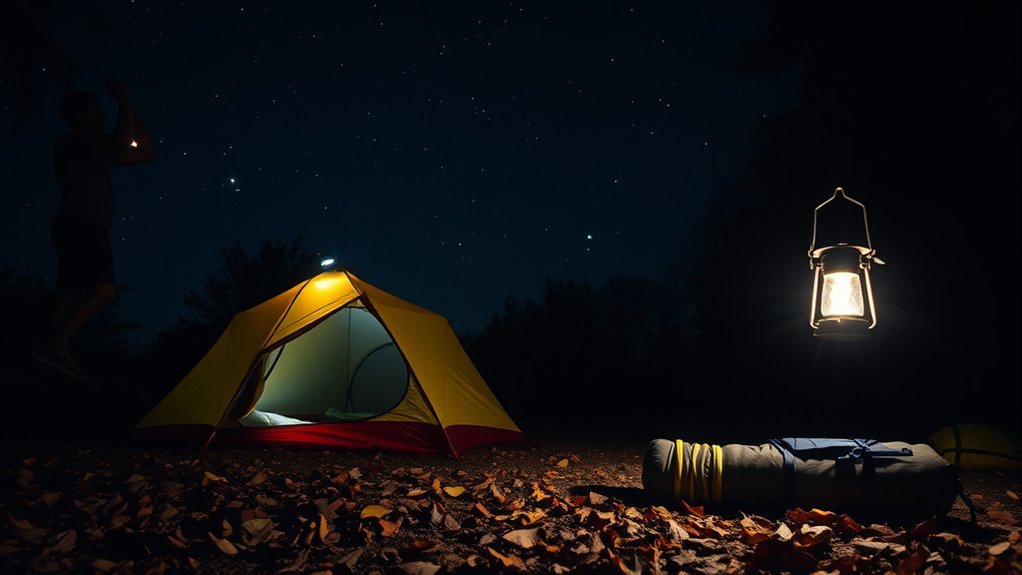
When you arrive at a campsite after dark, focus on making your sleeping area safe and functional before adding comfort items. Choose a flat area without obvious rocks, roots, branches, or drainage problems.
Start with the tent body, poles, rainfly, and sleeping setup. Save chairs, cooking stations, decorations, and other extras until morning when you have better visibility.
Warning: Never use candles, fuel-burning lanterns, stoves, or heaters inside a tent. Camping safety organizations warn that flames and fuel equipment can create serious fire and carbon monoxide risks.
Use Reliable Lighting
Portable lights can make nighttime setup easier by improving visibility around your campsite. Place lights where they illuminate your work area without shining directly into nearby campers’ tents.
A small lantern, flashlight, or motion-activated light can help you find equipment and avoid tripping hazards. However, lighting should be treated as a visibility tool, not a replacement for campsite awareness or safety practices.
Pack With a Plan
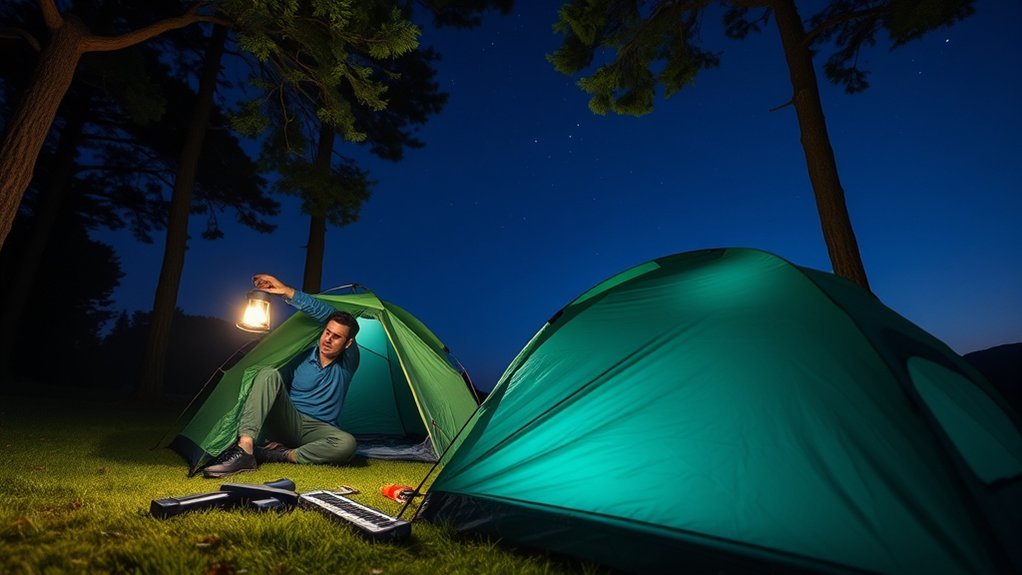
Smart packing makes dark setup much easier. Keep the items you need first near the top of your bag or in a separate setup kit.
- Keep lighting accessible: Store headlamps and flashlights where you can grab them immediately.
- Group tent parts: Keep poles, stakes, and rainfly components together.
- Use simple organization: Color-coded bags can help identify gear quickly.
- Practice at home: A trial setup helps you avoid learning your tent layout in the dark.
A few minutes of preparation before your trip can save a long and frustrating setup after sunset.
Get a Headlamp
A headlamp is one of the most useful tools for nighttime camping because it keeps both hands free while you work. Look for comfortable straps, adjustable brightness, and weather resistance.
A red-light mode can help preserve night vision and reduce glare when you are moving around camp. Carry spare batteries or make sure rechargeable lights are fully charged before leaving.
Know Who Is Doing What
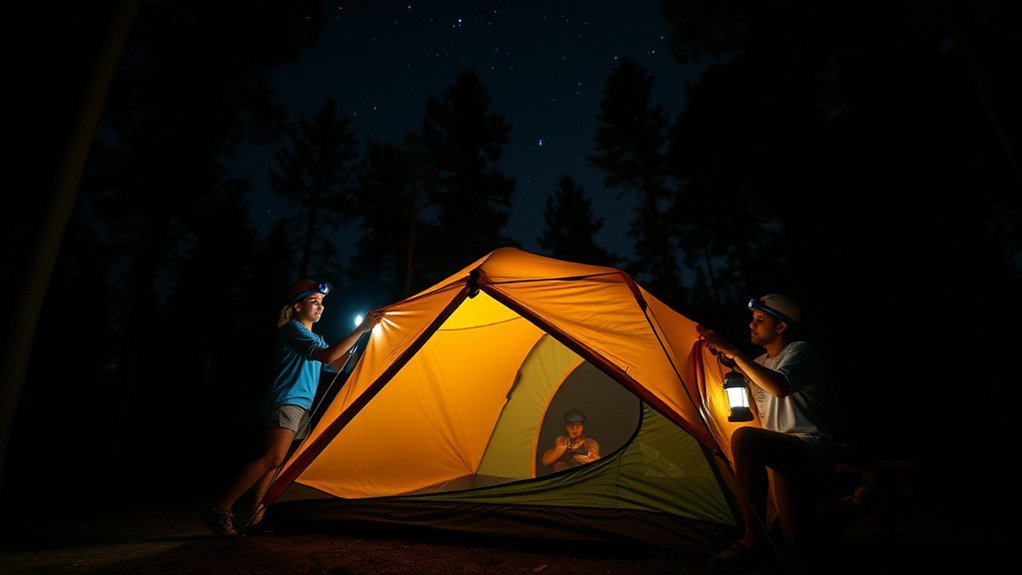
Group camping becomes much easier when everyone has a role. Clear assignments prevent multiple people from searching for the same item while important tasks are ignored.
- Tent assembly: One person handles poles and tent structure.
- Gear organization: Another person prepares sleeping equipment.
- Lighting: One person keeps the work area visible.
- Safety check: Someone checks that stakes, pathways, and surroundings are clear.
Pro Tip: Before leaving home, assemble your tent once. Knowing where every pole, clip, and stake belongs saves valuable time at night.
Step-by-Step Nighttime Tent Setup
- Turn on your headlamp before unpacking.
- Choose a safe, level tent location.
- Clear sharp objects and obvious obstacles.
- Lay out tent parts in one visible area.
- Build the tent frame before organizing personal gear.
- Secure stakes and guylines if weather conditions require them.
- Move sleeping bags and personal items inside.
- Complete comfort tasks after sunrise.
Note: Conditions change quickly outdoors. Check local weather, campsite rules, and fire restrictions before your trip.
Frequently Asked Questions
What type of tent is easiest to set up at night?
Simple tents with fewer poles and familiar designs are usually easier to assemble after dark. Practice setup before your trip whenever possible.
How can I avoid losing tent parts in the dark?
Keep poles, stakes, and accessories together in labeled or color-coded bags. Place small items in one dedicated location during setup.
What should I do if it starts raining while setting up?
Protect your gear first, use a tarp if available, and focus on getting the tent structure and rain protection in place before organizing inside.
Can I use my phone flashlight?
Yes, a phone flashlight can help in an emergency, but a headlamp or dedicated flashlight is usually more practical because it keeps your hands free.
How do I secure a tent in windy conditions?
Use appropriate stakes, tighten guylines, and position the tent according to manufacturer guidance. Recheck anchors if wind increases.
Conclusion
Setting up a tent in the dark becomes much easier when you prepare before arriving and focus on the essentials first. A good light source, organized gear, and clear teamwork can turn a frustrating nighttime arrival into a smooth start to your camping trip.
Sources
- U.S. Consumer Product Safety Commission — camping equipment safety and tent standards.
- Recreation.gov — camping preparation and gear organization guidance.
- REI Expert Advice — beginner camping preparation and lighting tips.
