
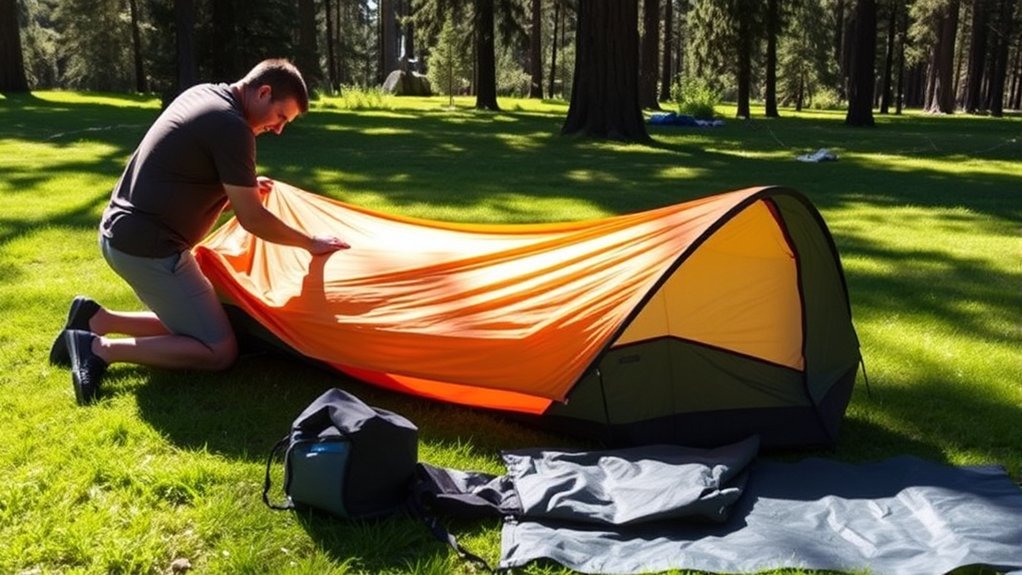
To roll your tent properly and fit it back in the bag, the secret lies in air management and consistent folding. Start by laying it flat and tri-folding to match the width of your storage bag. Fold the sides to the center, place the pole bag along one edge to act as a core, and roll tightly toward you. Apply pressure to expel air—ensure zippers are partially open to let that air escape—and listen for hissing sounds. Once rolled, zip it into the bag for a flawless pack.
Key Takeaways
- Measure First: Use your tent bag as a guide to determine the width of your folds.
- Open Zippers: Always leave doors partially unzipped to allow trapped air to escape while rolling.
- Use the Poles: Rolling your tent around the pole bag creates a tight, solid core and prevents the roll from collapsing.
- Clean & Dry: Never store a wet tent long-term to prevent mold and coating breakdown (hydrolysis).
Importance of Proper Tent Rolling Technique

When you roll your tent properly, you do more than just make packing easier; you extend its lifespan. A well-executed rolling technique guarantees your tent fits snugly back into its bag, preventing the abrasion and stress damage that can occur with improper storage or forceful stuffing. By tightly rolling your tent, you minimize bulk, making it more manageable during transport and boosting your packing efficiency.
Tri-folding your tent while applying consistent pressure keeps it from becoming bulky. Additionally, organizing poles and stakes alongside the rolled tent helps minimize tangling, leading to a quicker setup when you’re ready to camp again. Embracing this proper technique ensures your gear is ready for your next outdoor adventure.
Step-by-Step Folding Process
To roll your tent effectively, you need a system. Start with the tri-folding technique to ensure an even shape, use your body weight to expel air, and secure a clean edge.
1. Preparation and Tri-Folding
The tri-folding technique is the industry standard for fitting tents into cylindrical stuff sacks. Follow these steps:
- Clean the area: Lay the tent flat on a clear patch of ground to avoid picking up pine needles or mud.
- Open the doors: Unzip the tent doors about halfway. This is critical—if the doors are sealed, air gets trapped, creating a balloon effect.
- The Fold: Fold the sides of the tent toward the center. Visually compare the width of the folded tent to the length of your tent bag. If the tent is wider than the bag, fold it again until it matches.
2. The Rolling Technique
Once folded, the goal is to guarantee your tent rolls up as compactly as possible by effectively removing air.
- Create a Core: Place the bag containing your poles (and stakes) at one end of the folded tent. Rolling around the poles gives you a hard structure to push against.
- Roll Tight: Roll the tent toward your body or away from you (whichever gives you better leverage). Press down firmly with your knees or hands as you go.
- Listen for Air: You should hear a hissing sound as air escapes through the open zippers. If the tent balloons, stop, press the air out, and continue.
3. Final Packing Adjustments
As you near the end of the roll, ensure the loose edges are tucked in for a seamless fit.
- Clean the bottom of the floor as it becomes exposed during the roll.
- Slide the finished roll into the bag. If you sized your folds correctly in step one, it should slide in without excessive force.
- Pack the rainfly separately if the main bag is too tight, or roll it together with the tent body if space permits.
Tips for Efficient Packing
Packing your tent efficiently can make all the difference when breaking camp. Start by tri-folding your tent to create a compact shape. Maintain consistent pressure while rolling to expel air. This not only aids in packing organization but also contributes to tent maintenance by preventing hard creases in the exact same spots every time.
Keep your poles and stakes organized in their respective sacks before rolling them inside the tent body. This prevents the metal components from snagging or tearing the tent fabric or mesh. Always double-check that the tent is dry; if you must pack it wet, dry it immediately upon returning home.
Benefits of a Well-Rolled Tent
Proper rolling brings numerous benefits that make your adventures smoother.
- Space optimization: A compact roll fits easily in your backpack or car trunk.
- Gear longevity: Proper rolling reduces abrasion damage to waterproof coatings.
- Quick setup: An organized roll means you can unroll and pitch immediately at the next site.
- Protection: Keeping poles inside the roll protects them from bending and protects other gear from the poles.
Frequently Asked Questions
Can I Roll My Tent Without Removing the Stakes?
No, you should always remove stakes and clean them before rolling. Rolling stakes inside the tent without a protective bag can puncture the floor or mesh. Place them in their designated sack and roll that sack inside the tent.
What Should I Do if the Tent Is Wet?
If you must pack a wet tent, shake off as much water as possible and pack it loosely (or in a mesh exterior pocket) to allow drainage. As soon as you get home, set it up to dry completely. Storing a wet tent leads to mildew and hydrolysis, where the waterproof coating becomes sticky and peels off.
Is There a Specific Order for Packing Tent Accessories?
Yes. Typically, you lay the footprint (if clean) or tent body down first, place the rainfly on top, fold them together, and then roll them around the pole bag. This keeps the heaviest items centered and protected.
Can I Use a Compression Sack Instead of the Original Bag?
Yes, compression sacks are great for reducing volume, especially for backpacking. However, do not store the tent in a compression sack long-term, as the sustained pressure can damage the fabric fibers and coatings over time.
Conclusion
Rolling your tent properly ensures hassle-free packing and protects your investment. By mastering the tri-fold, using the poles as a core, and allowing air to escape through open zippers, you turn a frustrating chore into a quick, simple task. Just as a well-prepared bed ensures a good night’s sleep, a well-rolled tent guarantees you are ready for the next memorable journey as soon as you reach camp.