
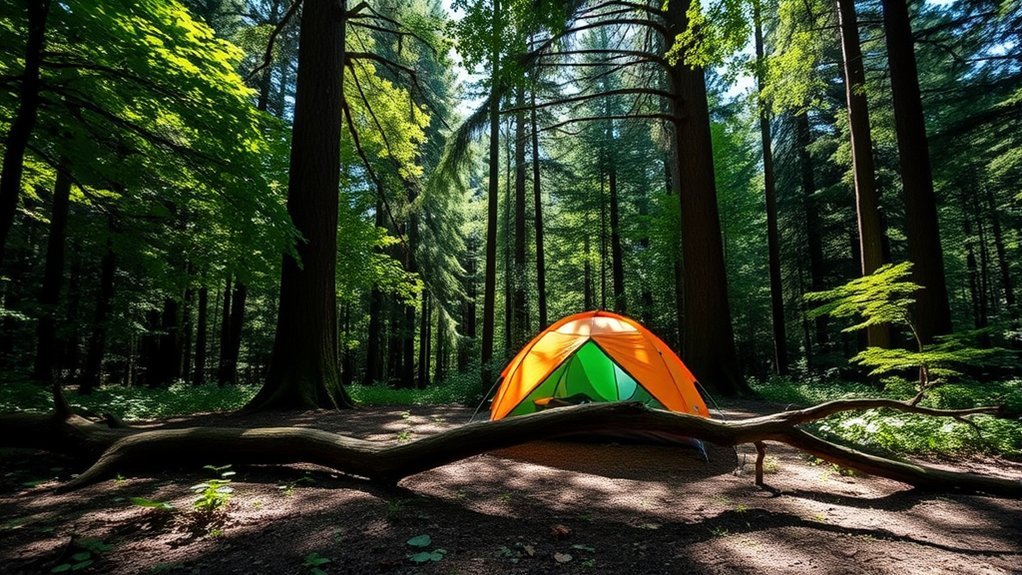
To avoid widowmakers when pitching your tent, inspect trees around your campsite for dead branches or signs of decay. Look for broken tops, jagged edges, and trees lacking vibrant leaves. Always maintain a distance of at least 200 feet from large trees with dead limbs. Choose a clear area free from heavy overhead canopies, and be cautious during windy conditions. Staying aware will help you stay safe, and there’s more to learn about campsite safety practices.
Understanding Widowmakers and Their Risks

When you’re camping in wooded areas, you need to be aware of widowmakers—those dead branches or trees that can unexpectedly fall and cause serious injury. Widowmaker identification is vital for your camping safety. Look for trees with broken branches, stubs, or signs of decay. Healthy trees have intact bark and vibrant foliage, so focus on those when setting up your campsite.
Before pitching your tent, evaluate your surroundings for potential widowmakers, especially after windy conditions. Seasonal observations matter too; winter can hide tree health indicators, making it necessary to spot broken tops or branches.
To reduce risks, establish safe zones within your campsite. Avoid areas directly beneath large, unhealthy trees, as they pose the highest threat. By staying vigilant and informed about widowmakers, you can guarantee a safer, more liberated camping experience.
Identifying Healthy vs. Dead Trees
Identifying healthy versus dead trees is essential for ensuring a safe camping experience. You want to prioritize tree health to avoid widowmakers. Here are key indicators to help you evaluate trees effectively:
Evaluating tree health is crucial for a safe camping experience and avoiding potential hazards like widowmakers.
- Foliage Assessment: Healthy trees boast vibrant leaves and intact bark. Dead trees may lack foliage, have broken tops, or show signs of decay.
- Signs of Decay: Look for trees with jagged edges, broken branches, or those that appear brittle. These could be potential hazards.
- Seasonal Changes: Evaluate trees year-round, as seasonal changes can obscure health indicators.
Before setting up camp, steer clear of trees exhibiting decay or those with a history of storm damage. By carefully evaluating tree health, you can create a safer environment for your camping adventure. Remember, a vigilant eye now can prevent dangerous surprises later.
Seasonal Considerations for Tree Assessment
Evaluating tree health varies considerably with the seasons, impacting your ability to spot potential hazards like widowmakers. Seasonal indicators provide key insights into tree stability, especially during winter assessments when foliage is absent. In winter, you can more easily identify dead trees by their broken tops or lack of branches. This contrasts sharply with summer, when vibrant foliage may hide decay.
| Season | Key Indicators | What to Look For |
|---|---|---|
| Winter | Bare branches | Broken tops, decay signs |
| Spring | New growth | Leaf development, budding issues |
| Summer | Full foliage | Vibrancy, bark integrity |
| Fall | Leaf drop | Structural changes, color shifts |
| Year-Round | Overall tree health | Check for stability and decay |
Choosing the Right Campsite Location
Choosing the right campsite location is essential for ensuring safety while you enjoy the great outdoors. To minimize the risk of widowmakers, consider these key factors:
- Distance from large trees: Stay at least 200 feet away from large trees, especially those with dead branches.
- Assess tree species: Look for healthy trees with vibrant foliage and intact bark. Avoid areas with decaying or dead tree species.
- Campsite elevation and wind: Choose a site with good elevation that’s sheltered from heavy winds, reducing the chance of falling branches.
Before pitching your tent, take a moment to examine the overhead canopy for broken tops or stubs. Open areas or clearings with smaller trees and shrubbery are often safer options, allowing you to enjoy nature without the worry of unexpected hazards. Prioritize your safety and embrace the freedom of the wilderness!
Inspecting Your Surroundings Before Setting Up
Once you’ve picked a suitable campsite location, the next step is to inspect your surroundings carefully before setting up your tent. Start with a thorough tree inspection; look for dead trees or branches that lack bark, as these are clear indicators of widowmakers. Avoid areas beneath trees with broken tops, stubs, or visible decay. Instead, choose a campsite away from large, unhealthy trees, favoring spots with smaller trees or shrubs for added safety.
Conduct a campsite evaluation by regularly monitoring weather conditions, especially high winds that can increase the risk of falling debris. Make sure your sleeping area is clear of any overhead threats, creating a safe zone within your campsite. Taking these precautions will not only enhance your comfort but also liberate you from the anxiety of potential hazards, allowing you to enjoy your outdoor experience fully.
Implementing Safety Measures With Rope
To enhance your campsite safety, using a rope to create a protective barrier can be a game changer when it comes to avoiding widowmakers. A 50-foot rope can effectively catch or deflect falling debris, greatly improving your barrier effectiveness. Here are some essential rope techniques to keep in mind:
Enhance your campsite safety by using a rope barrier to catch or deflect falling debris.
- Layer the Rope: Create multiple layers to strengthen your barrier against falling branches.
- Loose Wrapping: Avoid tightly wrapping the rope around trees; this allows for flexibility and reduces breakage.
- Multifunctionality: Use the rope not just for safety, but also to support bug nets, hang lights, and secure tarps.
Experimenting with these techniques will help you adapt to changing environmental conditions, enhancing your campsite’s overall safety. Remember, a well-implemented rope strategy is crucial for enjoying the great outdoors without fear!
Sharing Knowledge and Building a Camping Community
Building a camping community centered around safety and awareness can greatly enhance your outdoor experiences. Engaging in discussions about widowmakers and tree safety fosters a culture of awareness, making your camping adventures safer for everyone involved. Share your personal experiences and safety tips; this builds a supportive network that prioritizes outdoor safety education.
Consider hosting community workshops that focus on tree identification and health. These gatherings enhance collective knowledge and skills, empowering you and fellow campers. Utilize online platforms or local camping groups to exchange information about safe practices, further strengthening community ties. Encourage feedback and tips from others on identifying and avoiding widowmakers; this collaborative approach creates an environment dedicated to safety in outdoor activities. By sharing knowledge, you not only protect yourself but also contribute to the well-being of your entire camping community. Together, you can explore the great outdoors with confidence and peace of mind.
Frequently Asked Questions
What Are the Best Tools for Assessing Tree Health?
To assess tree health, you’ll want tools like a soil moisture meter, tree probe, and crown health assessment guide. These tools help you identify issues early, ensuring your trees thrive and remain safe for your surroundings.
How Can I Identify Widowmakers in the Dark?
To spot widowmakers in the dark, use nighttime navigation techniques. Observe tree silhouettes carefully; look for broken branches or weak limbs. Trust your instincts, and stay alert to potential hazards that could endanger your safety.
Are There Specific Tree Species More Prone to Widowmakers?
Pine trees and oak trees are often more prone to widowmakers due to their brittle branches. Stay vigilant when camping near them, and always assess your surroundings to guarantee a safer experience in the wilderness.
What Should I Do if a Widowmaker Falls on My Tent?
If a widowmaker falls on your tent, assess injuries and call for emergency response. Apply first aid if needed, and guarantee everyone’s safe before moving the tent. Stay aware of your surroundings for further risks.
Can Camping Near Water Sources Increase Widowmaker Risks?
Camping near water sources might seem idyllic, but it can heighten widowmaker risks due to more trees. Prioritize camping safety by scouting your area and ensuring you’re far from potential hazards. Stay alert!
Conclusion
By staying vigilant and informed, you can greatly reduce the risk of widowmakers while camping. Did you know that falling trees injure around 100 people in the U.S. each year? Choosing the right campsite and inspecting your surroundings are essential steps in ensuring your safety. Remember, it only takes one careless decision to turn a great adventure into a disaster. Prioritize safety, share your knowledge, and enjoy your time in nature without worry.