
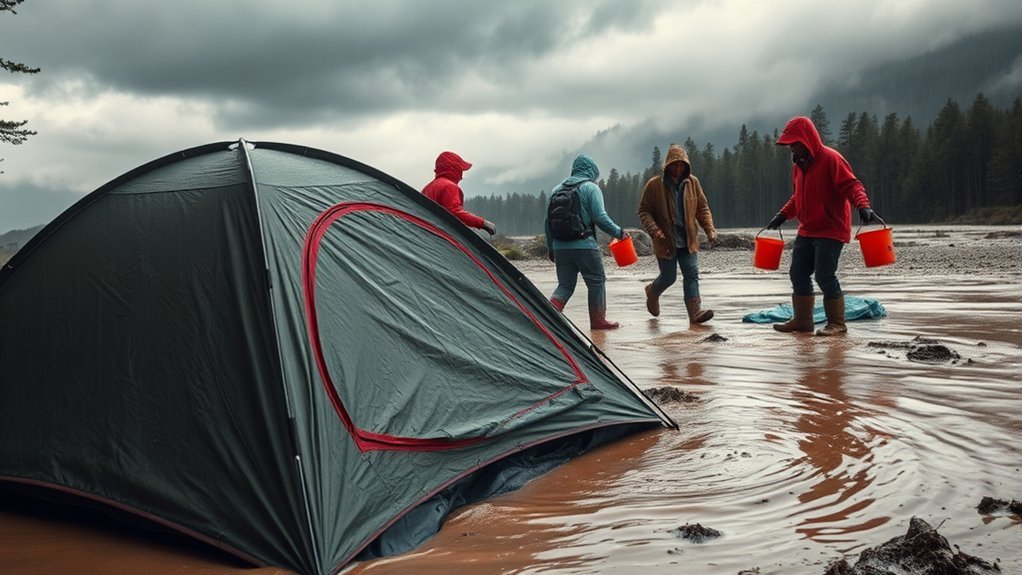
If your tent floods, stay calm and assess the situation. Quickly gather essential belongings, including important documents and electronics. Create a barrier using a waterproof tarp and direct drainage away from the tent. Move to higher ground to find a safe, dry location. Keep an eye on weather updates and stay in touch with fellow campers or park authorities. Reflect on the experience later to better prepare for future trips; there’s always more to learn!
Assess the Situation Calmly

When your tent floods, what should you do first? Stay calm. Panic clouds your judgment, and a clear head is vital for effective decision-making. Start by evaluating the severity of the leak. Is it manageable, or do you need to evacuate? This assessment is important for your safety.
Next, gather your valuables and essential gear quickly to minimize water damage. Your tent maintenance practices will pay off here; check seams and waterproofing regularly to prevent future issues.
After securing your belongings, prioritize finding a dry, safe location for you and your group. If the flooding worsens, you’ll need to act fast. Regularly review the situation and adapt your response accordingly—emergency preparedness is key. Stay aware of changing conditions, and guarantee everyone’s safety and comfort. Remember, your ability to respond effectively can turn a challenging situation into a manageable one.
Gather Essential Belongings
In a flooding situation, your first task is to quickly gather essential belongings to minimize damage. Focus on retrieving items that are irreplaceable or vital for your safety and comfort. Use waterproof bags or containers to protect your belongings from further exposure.
Here’s a quick checklist to help you prioritize:
- Important documents (ID, insurance papers)
- Electronics (phones, chargers)
- Clothing (dry clothes, waterproof gear)
- Food and water supply
- Sensitive items (sleeping bags, tent materials)
Work efficiently and calmly, evaluating each item’s importance. Gather your essential belongings and get them to a dry area. Remember, the sooner you act, the better your chances of preserving your gear and keeping yourself safe.
Create a Barrier Against Rain
To effectively protect your tent from flooding, creating a barrier against rain is essential. Start by using a waterproof tarp installation over your tent, ensuring it extends to the ground to prevent water pooling. Securely stake down the tarp to keep it in place and effectively channel rainwater away from your tent.
Next, pitch your tent on higher ground to minimize water accumulation around the base during heavy rain. Implement drainage techniques by digging trenches around your tent site to redirect water away, reducing the risk of flooding. Finally, regularly inspect your tent’s seams for leaks and apply seam sealer before your trip to enhance water resistance.
| Action | Purpose |
|---|---|
| Tarp Installation | Adds a waterproof layer |
| Stake Down the Tarp | Prevents movement and pooling |
| Dig Drainage Trenches | Redirects water away from tent |
Drain Water From Inside the Tent
After creating a barrier against rain, the next step is to tackle the water that’s made its way inside your tent. Start by evaluating how much water’s inside and identify where it’s coming from. This helps you choose the best course of action for effective water drainage.
- Use towels or spare clothing to soak up smaller amounts of water.
- Create drainage channels with a small shovel or your hands to direct water out of the entrance.
- Hang wet items and gear on a clothesline to allow them to drip-dry.
- Place towels or clothing under leaks or pooled areas to minimize further accumulation.
- Once drained, consider using a tarp or groundsheet as a barrier to prevent future flooding.
Proper tent maintenance is essential, especially in wet conditions. Follow these steps to reclaim your space and keep your camping experience enjoyable.
Find a Safe, Dry Location
When you notice flooding in your tent, act quickly to find a safe, dry location for everyone. Prioritize moving to higher ground, as lower areas are more susceptible to further water accumulation and hazards. If you have a nearby car or designated emergency shelter available, make that your temporary refuge until conditions improve.
Before relocating, guarantee you retrieve all valuables and essential camping gear from the flooded tent. Here are some quick safety tips to keep in mind:
| Action | Importance |
|---|---|
| Move to higher ground | Reduces flood risk |
| Take shelter in a car | Immediate safety |
| Gather gear | Protect your essentials |
Contact Fellow Campers or Park Authorities
When your tent floods, don’t hesitate to reach out to fellow campers for immediate assistance. They might have helpful resources or tips to manage the situation effectively. Additionally, contact park authorities to report the flooding and get guidance on emergency procedures and evacuation routes.
Seek Immediate Assistance
If your tent floods, reaching out to fellow campers or park authorities is essential for a swift response. You need to implement effective communication strategies and have emergency plans in place to address the situation. Here’s what you should do:
- Contact nearby campers for immediate assistance.
- Reach out to park authorities to report the flooding.
- Use walkie-talkies or mobile phones to stay connected.
- Keep a list of emergency contacts handy for quick access.
- Familiarize yourself with the location of emergency services before camping.
Share Resources and Tips
Connecting with fellow campers and park authorities can make a significant difference during a tent flooding situation. Reach out to fellow campers for their experiences and advice on managing tent flooding; their insights can be invaluable. Don’t hesitate to contact park authorities for guidance on safe locations to relocate and to get updates on campground conditions. Utilize park resources, like emergency shelters or communal areas, to guarantee your safety and comfort. Share your situation with others to foster a supportive network that keeps everyone informed and prepared. Keep park contact numbers handy, as they’re essential for timely updates during adverse weather. Effective tent maintenance and proper weather preparation can help minimize future flooding risks, so stay proactive!
Maintain Safety and Comfort
When your tent floods, assess the immediate situation and exit quickly if water’s pouring in. Find a dry, elevated location to regroup and guarantee everyone’s safe. Don’t forget to retrieve your valuables promptly before they get damaged.
Assess Immediate Situation
As rain pours in and water starts to seep into your tent, it’s crucial to quickly assess the situation to guarantee everyone’s safety and comfort. First, determine the severity of the leak. If it’s too risky to stay, activate your emergency evacuation plans and move to higher ground. Confirm everyone exits promptly and finds a dry location.
- Retrieve all valuables and equipment from the flooded tent as quickly as possible.
- Use spare towels and blankets to dry off and stay warm.
- Hang wet items inside the tent to drip-dry, avoiding contact with tent walls.
- Consider tent waterproofing techniques for future protection.
- Stay calm and communicate clearly to maintain morale.
Secure Dry Location
To guarantee everyone’s safety and comfort during a flooding situation, move quickly to a secure, dry location away from rising water. Look for higher ground or a pre-identified safe spot that minimizes flood risk and offers shelter. If available, use a vehicle or nearby structures for extra protection until conditions improve or help arrives.
Keep flood preparedness essentials close, such as first aid kits, flashlights, and dry clothing, to maintain comfort. Regularly check the situation and stay updated on weather conditions and possible evacuation orders. Remember, implementing tent waterproofing techniques beforehand can help reduce the impact of rain, but your immediate priority is ensuring everyone’s safety. Stay alert and prepared to make informed decisions as the situation unfolds.
Retrieve Valuables Promptly
Once you’ve guaranteed everyone’s safety, it’s essential to quickly assess the flooding situation and retrieve your valuables. Start by creating a valuables inventory to keep track of everything you need. Use waterproof storage to protect critical items from water damage.
Focus on gathering:
- Electronics (phones, cameras)
- Food supplies
- Personal items (clothes, toiletries)
- Essential gear (sleeping bags, clothing)
- First aid supplies
Stay calm while you retrieve these items; your composure can help others feel secure and focused. Prioritize those essentials that will keep you warm and safe. By acting swiftly and efficiently, you can minimize loss and maintain comfort during this unexpected situation.
Reflect and Learn for Future Trips
Reflecting on your camping experience is essential for improving future trips, especially after encountering challenges like flooding. Start by documenting what worked well and what didn’t, as this will inform your future preparations. Review your camping gear, focusing particularly on the effectiveness of waterproofing measures. Consider upgrades or repairs based on your experience.
Analyze your site selection, paying close attention to water drainage. Identify areas that are prone to flooding and plan to avoid them in the future. Sharing insights and lessons learned with fellow campers can enhance collective knowledge and improve overall camping practices.
Encourage ongoing learning by staying informed about best practices for camping safety and gear maintenance. This proactive approach will empower you to better prepare for adverse weather conditions and help you enjoy liberating adventures without unnecessary setbacks. Embrace each lesson, and let them guide your future explorations.
Frequently Asked Questions
What Should I Do if My Tent Is Damaged Beyond Repair?
If your tent’s damaged beyond repair, consider tent replacement options like purchasing a new tent or borrowing one. You can also explore tent repair techniques for minor issues, ensuring you’re prepared for your next adventure.
How Can I Prevent My Tent From Flooding in the Future?
To prevent flooding, choose durable tent materials and upgrade your rainfly. Picture a cozy, dry haven as you set up on elevated ground, ensuring water flows away, keeping your adventures blissfully sheltered from the storm.
Is It Safe to Stay in a Flooded Tent?
It’s generally not safe to stay in a flooded tent. Flood risks increase hazards like electrical shock and hypothermia. Prioritize your tent safety by moving to higher ground and evaluating conditions before re-entering.
What Essential Items Should I Always Pack for Emergencies?
“An ounce of prevention is worth a pound of cure.” Always pack an emergency kit, waterproof gear, a first aid kit, flashlight, extra batteries, and non-perishable food. Stay prepared, and you’ll feel liberated in any situation!
How Do I Dry My Tent After It Floods?
To dry your tent, start by extracting excess water with a towel. Set the tent up in a sunny spot, allowing airflow to promote drying. Shake off debris, and guarantee it’s completely dry before packing.
Conclusion
When the rain pours and your tent floods, staying calm is key. By following these steps, you can keep your belongings safe and find a dry spot in no time. Remember, it’s better to learn from this experience than to let it dampen your spirit. Next time, you’ll be better prepared and ready to tackle any weather. So, don’t let a little water wash away your fun—turn it into a lesson for your future adventures!