
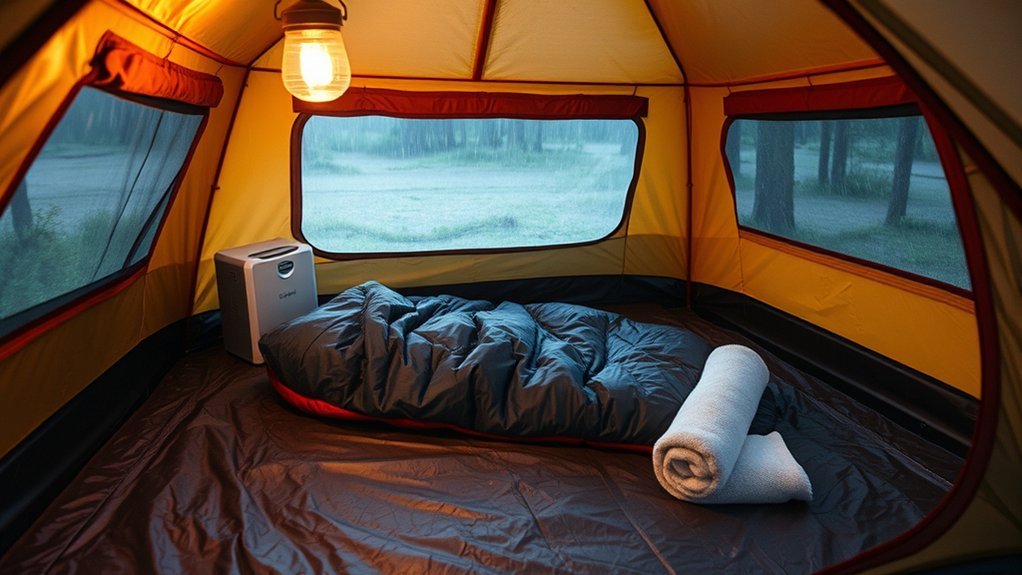
To keep your sleeping bag dry in a tent, invest in a waterproof stuff sack and choose a tent with good ventilation. Elevate your camping spot using logs to reduce moisture exposure. Remember to unzip your sleeping bag in the morning to air it out and drape it over your body for extra warmth. Store your bag away from the tent walls to minimize condensation and utilize sunlight whenever possible. There are more effective techniques to guarantee your sleeping bag stays dry.
Proactive Measures for Dryness

To keep your sleeping bag dry in a tent, it’s essential to take proactive measures that minimize exposure to moisture. Start by investing in a waterproof compression sack for your sleeping bag. This will protect its insulation during transport and when not in use. Choose a tent with a high hydrostatic head rating for its rainfly and floor, as this greatly reduces the risk of water ingress during rainfall.
Additionally, use a tarp or tent footprint beneath your tent to create a moisture barrier, preventing ground moisture from seeping into your sleeping area. Position your sleeping bag away from the tent walls to minimize condensation transfer, since moisture collects on the fabric. Finally, guarantee proper ventilation by utilizing vents and keeping zippers partially open, facilitating airflow and reducing internal moisture buildup. By implementing these moisture prevention techniques, you can safeguard your sleeping bag and enjoy a more comfortable camping experience.
Keeping Down Sleeping Bags Dry
While down sleeping bags offer excellent insulation, keeping them dry is crucial for maintaining their performance. To achieve this, use a water-resistant bivy sack, which serves as an effective moisture barrier while allowing breathability. This added layer can prevent external dampness from infiltrating your sleeping bag.
Inside, utilize absorbent liners to wick away body moisture, reducing the chance of dampness accumulating overnight. After your adventures, always air-dry your down sleeping bag in sunlight whenever possible. This helps evaporate any residual moisture and keeps insulation intact.
However, be cautious of prolonged UV exposure, as it can degrade the fabric. Regularly check for moisture and address any dampness immediately to retain the sleeping bag’s insulating properties. By taking these steps, you can guarantee that your down sleeping bag performs at its best, allowing you to enjoy your outdoor experience fully.
Protecting Sleeping Bags in Wet Weather
To protect your sleeping bag in wet weather, start by elevating your campsite using logs or branches to keep moisture at bay. Make sure to utilize tent ventilation effectively to reduce condensation that can dampen your gear. Additionally, always store your sleeping bag in a waterproof stuff sack to shield it from unexpected moisture.
Elevate Campsite for Dryness
Elevating your campsite is essential for keeping your sleeping bag dry, especially in wet weather. Utilize camp elevation techniques, like using logs or branches, to reduce ground moisture exposure. A raised sleeping area promotes better drainage during rain, preventing moisture from seeping into your sleeping bag. Choose a well-drained surface, such as a slight slope or hard-packed ground, to further enhance ground moisture management. Clear the elevated site of potential water runoff paths to avoid pooling around your tent during heavy rains. Additionally, placing a tarp or footprint beneath your tent adds an extra barrier against dampness, ensuring your sleeping bag stays dry. Prioritizing elevation can make a significant difference in your camping experience.
Utilize Tent Ventilation Effectively
Effective tent ventilation is essential when camping in wet weather, as it helps manage moisture levels inside your tent. To enhance tent airflow, always keep vents open to allow fresh air in and reduce condensation buildup. Position your sleeping bag away from the tent walls to prevent moisture transfer from condensation that may collect on the fabric. Additionally, using a tarp or tent footprint creates a moisture barrier on the ground, limiting dampness entering your tent. Elevating your campsite on logs or branches can further reduce ground moisture, keeping humidity levels down. Regularly monitor and adjust your tent ventilation based on changing weather conditions to maintain an ideal balance of warmth and humidity, ensuring effective condensation control.
Keep Sleeping Bag Protected
Maintaining a dry sleeping bag is essential for a comfortable camping experience, especially in wet conditions where moisture can quickly become an issue. To protect your sleeping bag, consider these practical strategies:
- Elevate your campsite with logs or branches to create barriers against ground moisture.
- Use tent vents properly to minimize condensation buildup inside your tent.
- Store your sleeping bag in a waterproof stuff sack when it’s not in use, safeguarding it from unexpected rain.
- Monitor weather conditions and be prepared with emergency waterproofing gear, like ponchos or tarps.
Additionally, keep your sleeping bag away from tent walls to reduce condensation transfer. Incorporating sleeping bag covers can also serve as effective moisture barriers, ensuring your comfort during rainy nights.
Additional Tips for Sleeping Bag Care
To keep your sleeping bag in top shape, you should regularly inspect it for moisture and damage. Proper storage techniques, like placing it in a well-ventilated area of your tent, can notably reduce the risk of condensation. Additionally, consider using moisture-wicking liners to further protect against dampness while you sleep.
Regular Inspection and Maintenance
Regular inspections and maintenance of your sleeping bag are essential for ensuring its longevity and performance. Establish an inspection frequency that suits your outdoor adventures, and follow this maintenance checklist:
- Inspect for wear and damage: Look for tears, snagged fabric, or moisture accumulation.
- Clean as needed: Adhere to the manufacturer’s instructions, typically after every few trips, to maintain insulation efficiency.
- Check zippers and seams: Regularly verify that zippers function properly and seams are intact to prevent leaks.
- Thorough drying: Always dry your sleeping bag completely after each use to avoid mold and mildew.
Proper Storage Techniques
After ensuring your sleeping bag is in top condition through routine inspections, the next step is proper storage techniques to further protect your gear. For effective sleeping bag organization, designate a corner of your tent for storage, allowing for ventilation while shielding it from moisture on the walls. Utilizing a waterproof stuff sack is essential when you’re not using the bag; it guards against unexpected rain. Elevate the sleeping bag off the ground with logs or branches to prevent moisture wicking from the earth. Avoid compressing the bag for extended periods; keep it loosely packed to maintain insulation loft. Regularly check for dampness and air it out or use body heat to dry it if needed.
Moisture-Wicking Liners Usage
While a sleeping bag provides essential warmth and comfort, using a moisture-wicking liner can greatly enhance your sleeping experience. These liners improve moisture management by absorbing sweat and moisture from your body, keeping your sleeping bag drier. Here are some key liner benefits:
- Enhanced Comfort: They create a dry barrier, improving sleep quality in humid conditions.
- Quick-Drying Materials: Typically made from synthetic fabrics that dry rapidly.
- Protection for Your Bag: They shield your sleeping bag from body oils and dirt, extending its lifespan.
- Lightweight and Compact: Easy to pack without adding bulk to your gear.
Incorporating a moisture-wicking liner into your camping setup elevates both comfort and care, ensuring a more enjoyable night’s sleep.
Morning Moisture Management
To effectively manage morning moisture in your sleeping bag, start by unzipping it upon waking, which allows for better airflow and facilitates moisture escape. Next, turn the sleeping bag inside out to expose the damp outer fabric to the air, promoting faster drying.
While enjoying your breakfast, drape the sleeping bag over yourself to utilize your body heat, helping evaporate any residual moisture. Position it in a well-ventilated area of the tent, avoiding contact with cold walls, which can trap moisture.
If possible, hang or drape the sleeping bag near a heat source or in sunlight to greatly enhance moisture control.
| Action | Purpose | Timing |
|---|---|---|
| Unzip sleeping bag | Enhance airflow | Upon waking |
| Turn inside out | Expose damp fabric | After unzipping |
| Drape over body | Utilize heat for evaporation | During breakfast |
| Hang near heat source | Promote faster drying | Morning routine |
Evening Preparation Techniques
As you prepare for a night in your tent, unzipping your sleeping bag immediately allows it to fluff up and release any trapped moisture, setting the stage for a more comfortable sleep. Integrating evening rituals into your routine can guarantee effective sleeping bag maintenance. Consider these techniques:
- Avoid compression: Don’t keep your sleeping bag compressed for long periods; it can trap moisture that may freeze overnight.
- Choose a safe spot: Store your sleeping bag in a corner of the tent to avoid condensation and enhance ventilation.
- Use sunlight: If available, warm your sleeping bag with sunlight to reduce moisture content before bed.
- Fluff regularly: Periodically fluff your sleeping bag to maintain its loft and minimize moisture accumulation in the insulation.
Body Heat Utilization
Utilizing your body heat effectively can greatly enhance the drying process of your sleeping bag during cold nights in the tent. The warmth your body generates helps evaporate moisture, making it essential for maintaining comfort. Here are some practical strategies to maximize body heat benefits:
| Method | Description | Warmth Retention Effect |
|---|---|---|
| Drape Sleeping Bag | Place your sleeping bag over your body while resting or eating. | Increases heat around the bag. |
| Light Exercise | Engage in light activity before sleeping to elevate body temperature. | Promotes moisture evaporation. |
| Partial Unzipping | Keep the bag partially unzipped to allow airflow. | Enhances moisture escape. |
Layering your clothing while inside the bag also aids warmth retention, ensuring your body heat efficiently dries out any moisture. By incorporating these techniques, you can optimize your sleeping experience and maintain dryness throughout the night.
Frequently Asked Questions
How Often Should I Wash My Sleeping Bag?
You should wash your sleeping bag every three to six months, depending on usage. Regular sleeping bag maintenance keeps it clean and odor-free, while proper washing frequency extends its lifespan and guarantees peak performance during your adventures.
Can I Use a Sleeping Bag in Winter Conditions?
Yes, you can use a sleeping bag in winter conditions. Choose bags with synthetic or down insulation types for maximum warmth. Guarantee proper layering, and consider a sleeping pad to enhance comfort and reduce heat loss.
What Materials Are Best for Sleeping Bags?
For ideal performance, choose down insulation for warmth and compressibility, or synthetic insulation for moisture resistance and durability. Each material offers unique benefits, so consider your specific needs and conditions when selecting your sleeping bag.
How Do I Store My Sleeping Bag Long-Term?
To store your sleeping bag long-term, use breathable storage bags, avoid compressing it tightly, and guarantee moisture control by keeping it in a dry, cool environment. Follow these storage tips for ideal longevity and performance.
Are Sleeping Bag Liners Worth the Investment?
Yes, sleeping bag liners are worth the investment. They enhance insulation benefits, increase comfort, and protect your sleeping bag from moisture and dirt, ultimately extending its lifespan and improving your overall camping experience.
Conclusion
Keeping your sleeping bag dry in a tent is essential for a comfortable night’s sleep. By taking proactive measures and preparing for wet weather, you can guarantee your bag stays dry. Remember, an ounce of prevention is worth a pound of cure. Use proper storage techniques, manage moisture in the morning, and utilize your body heat effectively at night. With these practices, you’ll not only protect your gear but also enhance your overall camping experience.