
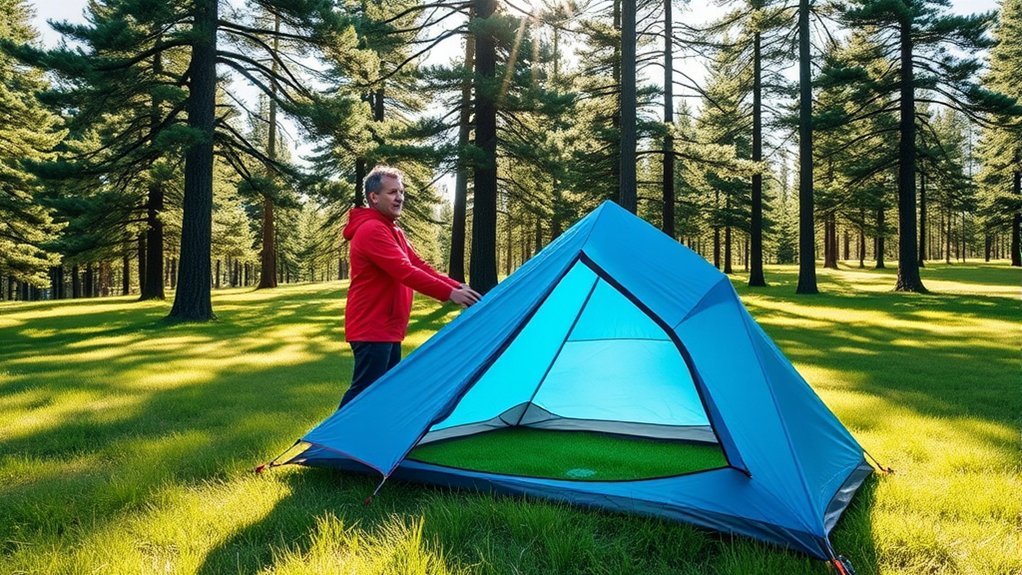
To pitch a trekking pole tent, first choose a flat, dry campsite away from hazards and water sources. Gather your gear and lay out the tent, ensuring it’s free of debris. Stake out the back corners for stability, then create tension by adjusting the peak and guy lines at a 45-degree angle. Secure all guy lines for ideal space and strength. Practice pitching regularly to enhance your skills and troubleshoot issues as they arise, leading to a more enjoyable camping experience.
Choosing the Right Campsite

When choosing the right campsite, it’s essential to inspect the area for flat, dry ground that’s free from rocks and roots to secure a comfortable sleeping surface. Your campsite selection should prioritize safety; check for hazards like dead trees or branches, known as widowmakers, which could pose risks during windy conditions. Look for a sheltered location that offers natural drainage to prevent water pooling during rain.
Additionally, make sure your campsite is at least 200 feet away from water sources to protect the ecosystem and maintain hygiene, thereby respecting environmental considerations. Always familiarize yourself with the forest service guidelines for camping in your area to comply with local regulations and conservation efforts. This knowledge not only enhances your camping experience but also contributes to the preservation of nature, allowing you to enjoy the freedom of the outdoors responsibly.
Preparing the Tent for Setup
Before setting up your trekking pole tent, confirm you’ve chosen a safe campsite free of hazards like dead branches and uneven ground. Gather all necessary equipment, including stakes, and keep them within reach for a smoother setup. Finally, lay out the tent flat with the vestibule doors zipped and check for debris to confirm a stable pitch.
Choosing a Campsite
Choosing the right campsite is crucial for a successful trekking pole tent setup, as it directly impacts your comfort and safety. Start with campsite selection by looking for flat ground, free of debris and potential hazards like falling branches or flooding areas. Stay clear of water sources to minimize moisture and insect issues, but remain within a convenient distance. Always check local forest service guidelines for fire restrictions and camping regulations. Observe your surroundings for wind directions and natural barriers, which can provide necessary shelter from harsh weather considerations. Keep your stakes handy as you prepare for pitching your tent; this guarantees a quicker and more efficient setup process, allowing you to focus on enjoying your outdoor experience.
Gathering Necessary Equipment
Gathering the necessary equipment for your trekking pole tent setup is essential to guarantee a smooth pitching process. Start by ensuring you have all the key items like stakes, trekking poles, and guylines easily accessible. It’s wise to pack additional tent accessories, such as extra stakes for added stability. Lay out your tent flat on the ground with vestibule doors zipped to help maintain its shape, which makes pitching easier. Utilize effective packing techniques to organize your gear, so you can quickly find what you need. Familiarize yourself with specific forest service guidelines for your camping area to stay compliant and maximize your outdoor experience. Being prepared sets the stage for a successful setup and a liberating adventure.
Checking for Hazards
When setting up your trekking pole tent, it’s crucial to inspect the area for potential hazards that could compromise your safety and the tent’s integrity. Start with a hazard assessment by looking up for dead trees or low-hanging limbs that may fall during windy conditions. Next, conduct a thorough ground inspection; check for sharp rocks, animal burrows, or holes that could damage your tent or disrupt your sleep. Remember to choose a campsite at least 200 feet away from water sources to protect both your tent and the surrounding ecosystem. Familiarize yourself with local forest service guidelines to guarantee compliance and minimize environmental impact. Prioritizing these steps will enhance your camping experience and safeguard your setup.
Staking the Tent Corners
When staking the tent corners, start by identifying safe staking spots that provide solid ground. Adjust the tension accordingly to maintain a straight line along the back of the tent, ensuring a uniform setup. This will enhance stability and prevent any sagging or shifting during use.
Identify Safe Staking Spots
Finding safe staking spots is vital for a stable tent setup. Begin with hazard identification by scanning the area for rocks, roots, and water drainage paths. These obstacles can compromise your tent’s integrity, so choosing a clear, flat surface is fundamental. Start by staking out the back two corners to establish a solid base and maintain your tent’s orientation. Verify the back line is straight and aligned with the tent’s peak, promoting an effective pitch. When securing the stakes, leave a few inches of slack in the tightening rope for future adjustments. Finally, use a reinforced pocket for the trekking pole to minimize wear and tear during the staking process, making sure your tent remains secure throughout your adventure.
Adjust Tension Accordingly
To guarantee your trekking pole tent remains secure and stable, it is crucial to adjust the tension of the stakes accordingly. Start by staking out the back two corners first, making sure the back line stays straight. Leave a few inches of slack on the tightening rope for easier tension adjustments later. Create a tight triangle between the back stakes and the peak to enhance stability. Next, stake out the front corners, aligning with the natural tent lines at a 45-degree angle for maximum strength. Regularly check and adjust tension on all guy lines for effective guy line maintenance.
| Action | Purpose |
|---|---|
| Stake back corners | Establish solid foundation |
| Leave slack | Allow for future adjustments |
| Maintain 45-degree | Guarantee maximum strength |
Maintain Straight Line
Maintaining a straight line while staking the tent corners is vital for achieving a stable pitch. Start by staking out the back two corners first to establish a solid foundation and guarantee a straight back line. Leave a few inches of slack on the tightening rope; this makes adjustments easier as you set up. A straight back line is essential for both stability and aesthetics. When you stake the front corners, follow the natural lines of the tent to preserve its shape and structural integrity. Aim for 45-degree angles with your guy lines—this maximizes strength and stability, reducing the risk of collapse or sagging. By focusing on maintaining tension and alignment, you’ll secure a reliable and functional shelter.
Creating Tension in the Tent
Creating tension in your trekking pole tent is essential for ensuring its stability and structural integrity. Start by establishing a tight triangle between the back stakes and the tent peak. This shape enhances peak stability and helps distribute tension evenly. As you make micro adjustments, hold tension on the peak to maintain the desired shape of the tent. Clip and tighten the peak guy line for additional support, securing the structure against wind and other elements. Maintain 45-degree angles for your guy lines to enhance strength and reduce the risk of collapse. If needed, place an extra stake in the back middle for added support. This method not only optimizes tension adjustments but also provides a robust setup, allowing you to enjoy your outdoor experience without worry. Remember, a well-tensioned tent can make all the difference in your trekking adventure.
Adding Additional Guy Lines
While setting up your trekking pole tent, adding additional guy lines can greatly enhance its stability and performance, especially in windy conditions. Start by placing an extra stake in the back middle of the tent to provide additional support. This will considerably improve stability against gusts. Guying out the head and foot ends also helps reduce condensation by maximizing airflow.
When securing your additional guy lines, aim for a 45-degree angle from the trekking pole. This angle is essential for maintaining ideal stability. Avoid pulling lines straight down, as this increases stress on the tent fabric and poles, risking damage. For maximum livable space inside the tent, pull the guy lines straight out rather than at steep angles. By following these guidelines, you’ll guarantee a secure and comfortable camping experience, allowing you to focus on enjoying the wilderness.
Tips for a Successful Pitch
To achieve a successful pitch for your trekking pole tent, start by staking out the back two corners first. This establishes a solid foundation for your setup. Maintain a tight triangle between the back stakes and the tent peak for peak tension, enhancing stability. Use 45-degree angles when staking out guy lines to guarantee maximum strength and reduce the risk of collapse. In windy conditions, incorporate an additional stake in the back middle for extra support, helping to mitigate condensation.
| Step | Purpose |
|---|---|
| Stake back corners | Establishes foundation |
| Tighten triangle | Enhances stability |
| Angle guy lines | Maximizes strength |
| Additional middle stake | Offers extra support in wind |
| Consider tent orientation | Adjusts for weather considerations |
Practice Makes Perfect
Practicing the setup of your trekking pole tent not only builds familiarity with the process but also helps you identify and resolve potential issues before you venture out. Setting up in your backyard or a local park allows you to refine your skills and improve your setup techniques, leading to smoother experiences on the trails.
- Feel the freedom of quickly establishing your campsite.
- Enjoy the confidence that comes from mastering adjustments and tensioning.
- Experience the satisfaction of a weather-resistant pitch.
- Share your triumphs and challenges with fellow adventurers.
- Embrace the journey of skill improvement with each practice session.
Regular practice reduces the time it takes to set up in the field and enhances your ability to secure stakes and manage angles effectively. Engage in discussions with others to gain insights, further boosting your expertise and confidence in pitching your trekking pole tent.
Frequently Asked Questions
What Materials Are Best for Trekking Pole Tent Construction?
For trekking pole tents, nylon fabric with waterproof coatings is ideal. This combination offers durability, lightweight properties, and reliable weather protection, ensuring you stay dry and comfortable during your outdoor adventures.
How Do I Clean and Maintain My Trekking Pole Tent?
Cleaning your trekking pole tent regularly can extend its lifespan by 20%. Use mild soap for tent cleaning, avoid harsh chemicals, and store it dry. Follow maintenance tips like checking seams to guarantee durability on your adventures.
Can I Use Any Poles for My Trekking Pole Tent?
You can’t use just any poles for your trekking pole tent. Verify tent pole compatibility by selecting compatible trekking pole types, typically adjustable or collapsible poles, designed specifically for supporting lightweight tent structures effectively.
What Weather Conditions Are Unsuitable for Pitching My Tent?
You shouldn’t pitch your tent in high winds or heavy rain. These conditions can compromise stability and increase the risk of damage or flooding, making your camping experience uncomfortable and unsafe. Choose better weather for pitching instead.
Is It Safe to Pitch a Tent Near Water Sources?
It’s generally not safe to pitch a tent near water sources due to potential flooding and wildlife encounters. Prioritize water safety by choosing a tent location at least 200 feet away from streams or lakes.
Conclusion
By mastering the art of pitching a trekking pole tent, you enhance your outdoor experience greatly. Did you know that properly pitched tents can reduce the risk of leakage by up to 90%? This means you’ll stay drier and more comfortable in wet conditions. With practice, your setup skills will improve, ensuring you’re ready to tackle any adventure. Remember, a well-pitched tent not only provides shelter but also contributes to a more enjoyable camping experience.