
Last Updated on August 26, 2026 by Mason Reed
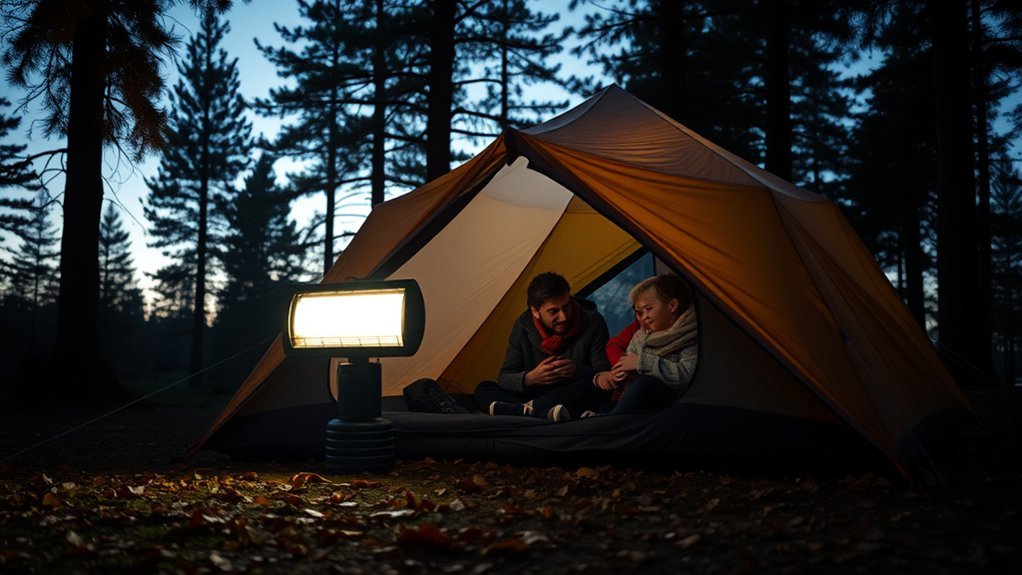
Using a heater in a tent can make cold-weather camping more comfortable, but the wrong heater or setup can create serious carbon monoxide, fire, burn, and fuel-leak hazards. The safest rule is simple: check both your tent instructions and the heater manual before use. If either one prohibits the setup, do not use it inside the tent.
Quick Answer
You should use a heater in a tent only when the exact heater and shelter are designed to allow that use. Never assume that opening a vent makes an outdoor-only heater safe. Avoid running fuel-burning heaters while sleeping, keep combustible materials clear, and use non-combustion warmth whenever practical.
Key Takeaways
- Never use a fuel-burning heater inside a tent unless its manufacturer specifically permits that type of enclosed or recreational-space use.
- Do not operate a portable fuel-burning heater while sleeping in a tent.
- Wood stoves belong only in purpose-built hot tents with a compatible stove jack and the stove-maker’s required clearances.
- A properly configured diesel air heater keeps combustion air and exhaust separated from the air occupants breathe.
- Heated blankets, insulated sleeping pads, suitable sleeping bags, dry layers, and other non-combustion methods avoid carbon monoxide from the heat source.
Warning: The U.S. Consumer Product Safety Commission warns that portable camping heaters and other fuel-burning equipment can cause fatal carbon monoxide poisoning in tents and other enclosed spaces. Never use a heater contrary to its manual, and never rely on ventilation, an oxygen sensor, or a CO alarm as permission to ignore manufacturer restrictions.
Disclosure: As an Amazon Associate I earn from qualifying purchases. Some links on this page are affiliate links, at no extra cost to you.
The Trouble With an Ultralight Wood Burner
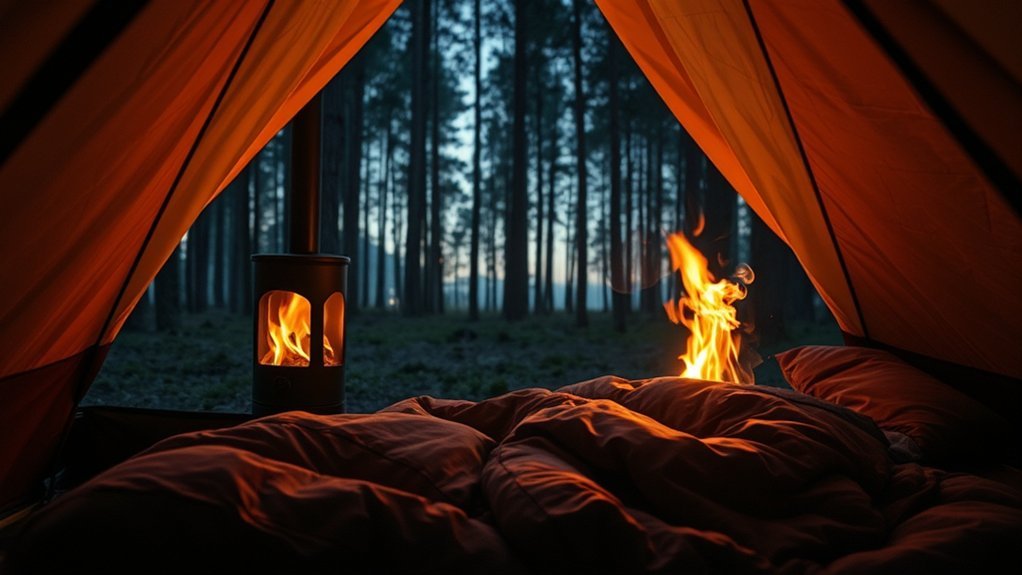
Using an ultralight wood burner in a tent creates challenges that go well beyond preparing enough firewood. Most ordinary backpacking tents are not designed for a wood stove at all. A wood-burning stove should only be used in a purpose-built hot tent when the tent manufacturer permits it and provides a compatible stove jack.
Wood preparation is still part of the workload. Small tent stoves often use short pieces of dry wood and have relatively small fireboxes, so they may need frequent attention. Burn time varies with stove size, wood species, moisture content, draft, and how hard the stove is running. That makes claims such as a fixed 30-minute unattended burn misleading—and a burning tent stove should not be left unattended anyway.
Smoke, sparks, hot stovepipe surfaces, embers, and ash can all create hazards. Keep the stove and pipe at the clearances specified by the tent and stove manufacturers, use the specified stove jack, and use a spark arrestor when required. Never improvise a stovepipe opening through ordinary nylon or polyester tent fabric.
Pro Tip: If your shelter did not come with a stove jack or its manual does not explicitly support a wood stove, treat that as a no-stove tent rather than trying to modify it at camp.
The Trouble With Propane
Propane heaters add convenience, but they also introduce carbon monoxide, oxygen-depletion, burn, fire, and fuel-leak risks. The key question is not simply whether a heater burns propane; it is whether the exact model is certified and instructed for use in the type of enclosure you plan to occupy.
The U.S. Consumer Product Safety Commission advises against using portable fuel-burning camping equipment inside a tent unless the equipment is specifically designed for enclosed-space use and includes instructions for doing so safely. Opening a door or vent does not convert an outdoor-only heater into an indoor-rated one.
Some propane heaters include an oxygen-depletion sensor and an automatic tip-over shutoff. Those features can reduce certain risks, but they do not eliminate the need for the clearances, ventilation openings, fuel-cylinder placement, altitude limits, and operating restrictions in the manual.
Propane combustion also produces water vapor. In cold weather, that moisture can condense on tent walls, clothing, and sleeping gear, leaving the shelter damp even when it feels warmer.
A label such as “indoor safe” is not a blanket approval for every tent, altitude, country, or operating condition. The exact heater manual and the tent manufacturer’s instructions control the decision.
The Trouble With Diesel Heaters
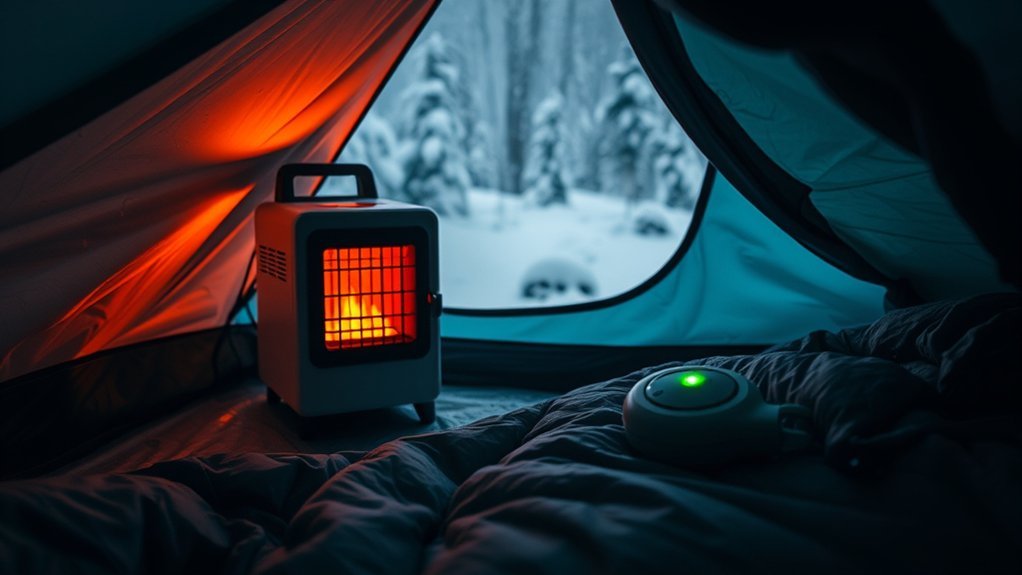
Diesel air heaters can be effective in cold-weather camps, but they need a more involved setup than a heated blanket or sleeping system. You need diesel fuel, electrical power for the heater’s controls, fuel pump and fan, correctly routed ducting, and a safe place for the combustion system.
The important distinction is between heated air and combustion exhaust. A properly installed diesel air heater uses a heat exchanger so that the warm air delivered to the occupied space remains separate from combustion gases. Manufacturer installation guidance for diesel air heaters also requires careful routing of combustion-air intake and exhaust components.
For a portable tent setup, the safest arrangement is generally one in which the combustion unit, exhaust outlet, and fuel system remain outside the occupied shelter while only clean heated air is ducted inside—provided the heater manufacturer permits the configuration. Never place an exhaust outlet where fumes can be drawn into a tent door, vent, window, or fresh-air inlet.
Altitude performance also varies by heater. It is inaccurate to assume that every diesel heater fails at one fixed elevation. Some modern units have automatic altitude compensation, while others require adjustment or have lower operating limits. Check the specifications for your exact model before a high-elevation trip.
Note: A diesel heater’s exhaust system can contain dangerous combustion gases even when the warm-air outlet feels clean and odor-free. Treat the exhaust routing as a critical safety component, not an optional accessory.
The Lux Option: The SnowTrekker Basecamp
The SnowTrekker 9 x 11.5 Basecamp is an example of a shelter specifically designed for cold-weather hot-tenting. Its current design includes a stove jack, 7-ounce cotton canvas, an internal aluminum frame, guy-out ropes, and enough room for three to four people on ground pads or two on cots.
That purpose-built design is very different from putting a wood stove into a normal backpacking tent. SnowTrekker publishes separate stove and fire-safety instructions, so those instructions should be treated as part of the setup rather than optional advice.
Tent Design Benefits
For campers who want a larger winter shelter, the Basecamp combines relatively light canvas construction with more headroom than SnowTrekker’s lower-wall models. Current manufacturer specifications for the 9 x 11.5 version include:
- 7-ounce cotton canvas with water-, mold-, and mildew-repellent treatment
- 18.5-pound tent body
- 10.5-pound standard frame
- 29-pound total weight with the standard frame
- 7-foot ridge height
- 28-inch sidewall height
- Space for three to four sleepers on ground pads or two on cots
- 15–20 minute setup once the user is familiar with the system
- Integrated stove jack for a compatible wood-stove setup
As of August 26, 2026, the manufacturer lists the 9 x 11.5 Basecamp starting at $2,023. Pricing and configuration options can change, so check the current manufacturer page before buying.
Efficient Heating Solutions
The Basecamp’s breathable canvas and stove-jack design make it suitable for a properly configured wood-stove system. SnowTrekker currently recommends its medium stove for this model. That recommendation does not make the stove risk-free: the manufacturer states that its natural canvas can burn if exposed to flame or sustained heat.
SnowTrekker’s published stove and fire-safety guidance says enclosed heat sources should remain at least 20 inches from tent fabric, a spark arrestor should be used on the stovepipe, the stove-jack cover should be completely removed during stove use, and a burning stove should never be left unattended.
Easy Setup Process
The manufacturer says an experienced user can typically set up the 9 x 11.5 Basecamp in about 15–20 minutes. Its internal frame and guy-out system are designed for winter use, but proper staking and site selection still matter.
- Choose firm, level ground or a packed snow platform.
- Stake and guy the tent according to the manufacturer’s layout.
- Keep the stove and stovepipe at the required clearances.
- Use the specified stove jack rather than improvising an opening.
- Practice the full tent-and-stove setup before relying on it in severe weather.
The setup is more involved than a normal three-season tent, but the important advantage is that the shelter was designed around hot-tenting rather than adapted for it after the fact.
The Simple Option: Battery-Powered Heating Sources
Battery-powered personal warming devices avoid the carbon monoxide produced by combustion heaters. A heated blanket or pad paired with a suitable portable power station can therefore be a simpler option when the goal is to warm the sleeper rather than heat all the air inside the tent.
They are not completely risk-free. Follow the heated product’s instructions, inspect cables and connectors, keep the power station dry, and do not cover or operate a battery pack in a way the manufacturer prohibits. Do not sleep with a heated product switched on unless its instructions specifically permit that use.
The original Jackery examples also need updated specifications. The Explorer 500 is a 518 Wh unit, while the older Explorer 1500 is rated at 1,534 Wh. Jackery currently lists both as older or unavailable models in the U.S., so they are best treated as capacity examples rather than current buying recommendations.
| Device | Capacity | Estimated Runtime at Continuous 100W | Best Use | Current Note |
|---|---|---|---|---|
| Jackery Explorer 500 | 518 Wh | About 4.4 hours using Jackery’s 85% estimation factor | Short-duration personal warming | Older model; currently shown out of stock on the U.S. site |
| Jackery Explorer 1500 | 1,534 Wh | About 13 hours at a constant 100W using the same estimation method | Longer off-grid power needs | Older model; currently shown sold out |
Actual runtime may be shorter or longer because a heated blanket may cycle instead of drawing its maximum wattage continuously, inverter losses vary, and cold temperatures can reduce usable battery performance.
Safety Ratings and Usage Guidelines for Tent Heaters
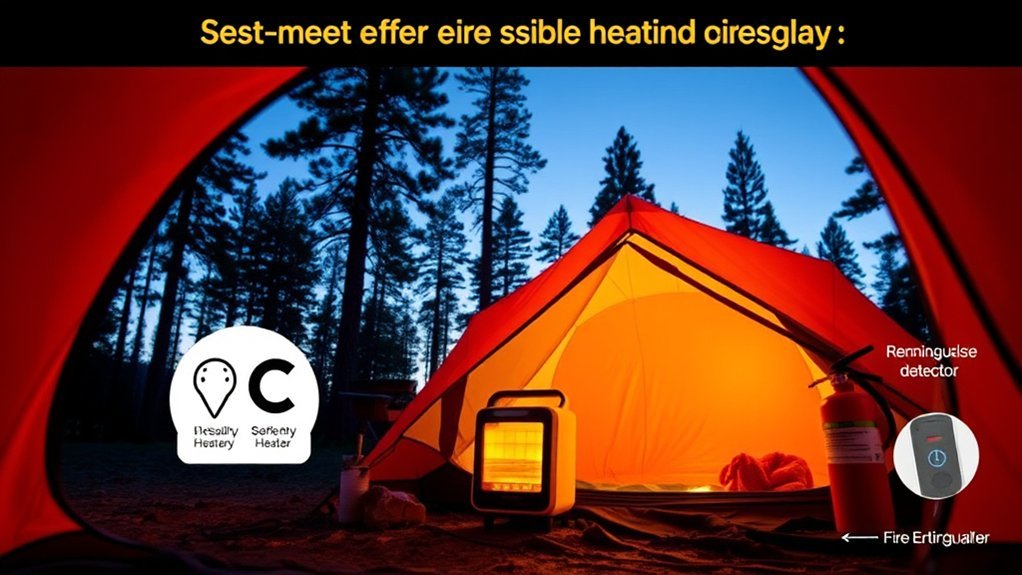
Before putting any heater near a tent, check the heater label, manual, tent instructions, and local restrictions. “Camping heater,” “portable heater,” and even “indoor safe” do not automatically mean the product can be used in every tent.
Indoor Safety Ratings
Look for explicit language describing the environments in which the exact model can operate. Important details include:
- whether tents or recreational enclosures are named as permitted uses;
- minimum ventilation-opening requirements;
- clearance from bedding, walls, clothing, and other combustible materials;
- maximum operating altitude;
- required fuel-cylinder position and size;
- an oxygen-depletion sensor where applicable;
- an automatic tip-over shutoff;
- instructions about unattended use and sleeping.
For example, the current U.S. Mr. Heater Portable Buddy MH9BX lists tents among its intended uses and includes an oxygen-depletion sensor and tip-over shutoff. It also lists a maximum operating elevation of 7,000 feet. Regional versions differ: Mr. Heater’s Massachusetts/Canada version is currently marked outdoor-only.
Flame King products also vary by model. For example, the company’s current ALOGFIRE product page says it may be used in small recreational enclosures such as tents only with the required combustion-air ventilation. That does not establish the same rating for every Flame King heater.
Warning: Never transfer a safety rating from one model to another just because the heaters share a brand name or look similar.
Heater Stability Considerations
A stable base helps reduce tip-over risk, but stability should not replace an automatic tip-over shutoff when that feature is available. Place any permitted heater on a firm, level surface and keep foot traffic, children, pets, bedding, and loose gear away from it.
The older Martin CH3 catalytic heater is sometimes praised for its folding-leg design, but Martin’s published specification chart lists no safety tilt switch for that model. Physical stability and an automatic shutoff are not the same feature.
By comparison, the current U.S. Portable Buddy lists an accidental tip-over safety shutoff. Even with that protection, you must maintain the manufacturer’s clearances and supervise the heater whenever it is operating.
Carbon Monoxide Risks
Carbon monoxide is colorless and odorless, which means you cannot depend on your senses to detect a dangerous buildup. The CDC identifies common symptoms including headache, dizziness, weakness, nausea, vomiting, chest pain, and altered mental status.
- Do not use a fuel-burning device in a tent unless that specific use is permitted.
- Follow the manufacturer’s ventilation instructions exactly.
- Never operate a portable fuel-burning camping heater while sleeping.
- A battery-operated CO alarm can provide an additional warning layer where appropriate, but it cannot make a prohibited heater setup safe.
- If a CO alarm sounds or anyone develops possible CO symptoms, turn off the source only if that can be done safely, get everyone into fresh air immediately, and seek emergency medical help.
Do not use a homemade ppm threshold to decide whether a tent is safe. CO exposure risk depends on both concentration and duration, and safety agencies do not recommend using a handheld reading as permission to continue an otherwise prohibited heater setup.
Check Your Tent and Heater Before You Start
A simple pre-use check can prevent many dangerous setups:
- Read the tent manual. If it prohibits heaters, stoves, or open flames, stop there.
- Read the heater manual. Confirm that your intended enclosure is an approved use.
- Check altitude limits. Oxygen-depletion systems and combustion performance may change at elevation.
- Confirm clearances. Measure the required distance from walls, bedding, packs, clothing, and other combustible items.
- Check fuel and connections. Do not use damaged hoses, cylinders, fittings, cords, or connectors.
- Provide the required ventilation. Use the exact minimum openings specified by the manufacturer.
- Plan for shutdown before sleep. Your sleeping bag and pad should be capable of keeping you warm after the heater is turned off.
Safer Ways to Stay Warm Without Heating the Whole Tent
For many campers, the safest solution is to improve the sleeping system instead of heating all the air inside the shelter. Useful options include:
- a sleeping bag or quilt rated appropriately for the expected temperature;
- a well-insulated sleeping pad with an R-value suited to the conditions;
- dry base layers, socks, and a warm hat reserved for sleeping;
- a properly sealed hot-water bottle wrapped to prevent burns;
- a heated blanket or pad used exactly as its manufacturer directs;
- wind protection and good campsite selection;
- eating enough food and staying hydrated before bed.
Do not compensate for inadequate cold-weather equipment by relying on a combustion heater that must run all night. A safe sleeping system should continue protecting you after the heater is shut off.
Frequently Asked Questions
Can I Use a Regular Home Heater in My Tent?
Do not assume a regular household heater is suitable for a tent. Many household electric heaters require a stable household electrical supply and clearances that are difficult to maintain in a small fabric shelter. Use one only if both the heater instructions and the tent instructions permit the setup and you can meet every electrical and clearance requirement.
What Are the Signs of Carbon Monoxide Poisoning?
Possible symptoms include headache, dizziness, weakness, nausea, vomiting, chest pain, sleepiness, confusion, and other changes in mental status. If symptoms appear around a fuel-burning device, get everyone into fresh air immediately and seek emergency medical help.
How Can I Improve Ventilation in My Tent?
Open the vents or other openings required by your tent and heater manufacturers and keep them clear of snow, clothing, and gear. However, ventilation does not make an outdoor-only heater safe for indoor use. If the heater is not approved for the enclosure, do not use it there.
Are There Any Alternatives to Heating a Tent?
Yes. A warmer sleeping bag, insulated sleeping pad, dry sleep clothing, hot-water bottle, suitable heated blanket, and better wind protection can keep you comfortable without producing carbon monoxide inside the shelter. In many conditions, warming your body and sleeping system is more efficient than heating the entire tent.
What Should I Do if My Heater Tips Over?
Shut the heater off if you can do so safely. If you smell gas, see flames where they should not be, or suspect a fuel leak, evacuate the tent and move away from the fuel source. Do not relight the heater until it has been inspected and the manufacturer’s restart procedure has been followed. Call emergency services for a fire or uncontrolled gas leak.
Can I Sleep With a Propane or Other Fuel-Burning Tent Heater Running?
You should not run a portable fuel-burning camping heater while sleeping in an enclosed tent. CPSC specifically warns against this practice. Warm the shelter while you are awake and supervising the heater, then turn it off before sleeping.
Does a Carbon Monoxide Alarm Make a Tent Heater Safe?
No. A battery-powered CO alarm can add protection, but it does not change a heater’s approved uses, ventilation requirements, clearances, altitude limits, or sleeping restrictions. Never use an alarm as justification for operating an outdoor-only appliance inside a tent.
Is a Wood Stove Safer Than a Propane Heater in a Tent?
Not automatically. A wood stove can be appropriate in a purpose-built hot tent with the correct stove jack, chimney, spark arrestor, clearances, and supervision. Putting a wood stove into an ordinary tent creates severe fire and carbon monoxide risks. The shelter and stove must be designed to work together.
Conclusion
A heater can be used in some tents, but there is no universal “tent-safe heater.” Start with the manuals for your exact shelter and heater. Never put outdoor-only fuel-burning equipment into a tent, never operate a portable fuel-burning heater while sleeping, and treat ventilation, tip-over switches, oxygen sensors, and CO alarms as additional protections rather than substitutes for correct use.
For ordinary tents, a strong sleeping bag, insulated pad, dry layers, and non-combustion personal warming are usually the simplest choices. If you want a wood stove, use a purpose-built hot tent and compatible stove system. If you use propane or diesel heat, follow the exact manufacturer’s enclosure, exhaust, fuel, clearance, and altitude instructions.
Sources
- U.S. Consumer Product Safety Commission — Portable Heaters & Camping Equipment — carbon monoxide risks, sleeping guidance, and camping-heater safety.
- U.S. Consumer Product Safety Commission — Carbon Monoxide Fact Sheet — enclosed-space restrictions and CO-alarm guidance.
- CDC — Carbon Monoxide Poisoning Basics — carbon monoxide hazards and prevention guidance.
- Mr. Heater — Portable Buddy MH9BX — current intended uses, tip-over shutoff, oxygen-depletion sensor, and altitude specification.
- SnowTrekker — 9 x 11.5 Basecamp — current tent dimensions, weight, occupancy, setup time, stove-jack configuration, and price.
- Jackery — Explorer 500 Portable Power Station — current 518 Wh capacity, output specification, and product-status information.
