
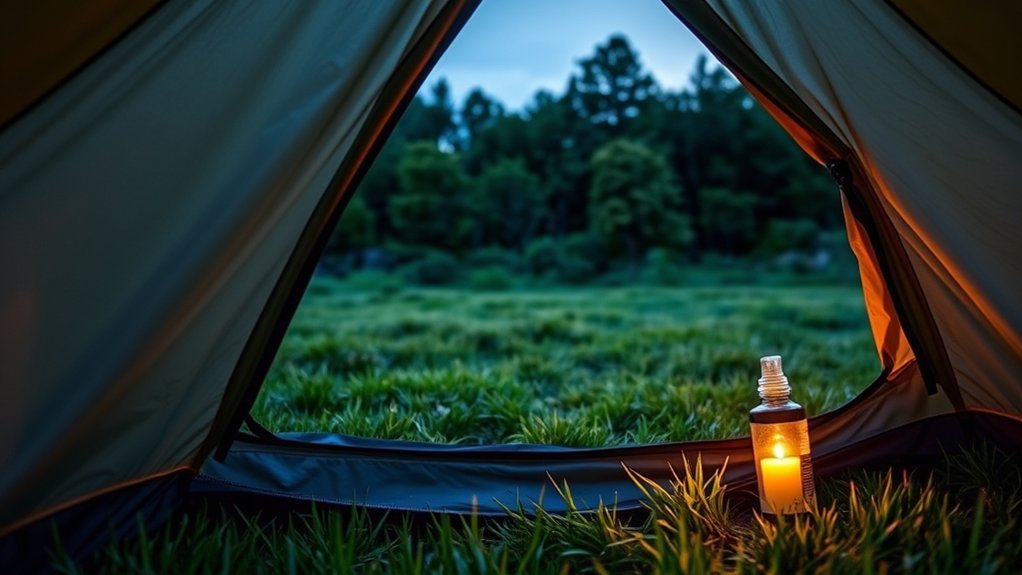
To keep mosquitoes out of your tent, always zip up doors when not in use and check the mesh for holes. Use a tent made from high-quality materials with fine screens and a sealed floor. Apply EPA-registered insect repellent to your skin and treat your clothes with permethrin. Position citronella candles around your campsite for extra protection, and maintain a clean area by securely storing food. Follow these steps, and you’ll discover more effective strategies.
Secure All Openings

To keep mosquitoes at bay, securing all openings in your tent is essential. Always zip up tent doors when you’re not using them. Even a brief opening can let those pesky mosquitoes sneak inside. Consider using a vestibule or awning, which provides an extra barrier when you enter or exit. This simple step reduces the likelihood of unwanted guests.
Check the mesh integrity of your tent windows and doors regularly. Holes, no matter how small, create entry points for mosquitoes, so repair or replace damaged screens promptly. If your tent lacks built-in screens, installing mosquito netting over entry points is a smart move.
Finally, be vigilant about closing the tent flap immediately after entering or exiting. This habit minimizes your exposure to those buzzing nuisances outside, allowing you to enjoy your time in the great outdoors without interruption.
Use Quality Tent Materials
When selecting a tent, opting for quality materials can make a significant difference in keeping mosquitoes out. Look for tents made from high denier fabrics; these durable materials provide better protection against pesky insects compared to lower-denier options. Fine mesh screens on windows and doors are essential, allowing ventilation while effectively blocking mosquitoes.
Additionally, guarantee your tent features a sealed floor design to prevent insects from sneaking in through gaps. A rainfly that extends over the entrances offers an extra barrier, keeping mosquitoes at bay when you enter or exit.
Regularly inspect your tent for holes or tears, as even small openings can become entry points for these annoying bugs. Investing in a well-constructed tent with these features not only enhances your comfort but liberates you from the worry of unwanted pests. Enjoy your outdoor adventures with peace of mind!
Apply Insect Repellent
Applying insect repellent is an essential step in keeping mosquitoes at bay while camping. Choose an EPA-registered insect repellent with active ingredients like DEET, Picaridin, or Oil of Lemon Eucalyptus. Apply it to all exposed skin, following label directions, and remember to reapply every few hours, especially after sweating or swimming.
For maximum effectiveness, layer your bug spray by applying sunscreen first, allowing it to absorb before applying your insect repellent. You can also treat clothing and gear with permethrin for extended protection. If you prefer natural options, essential oil-based repellents are available, but keep in mind they’ll need frequent reapplication.
| Insect Repellent Types | Application Techniques | Frequency of Reapplication |
|---|---|---|
| DEET | Apply evenly on exposed skin | Every 4-6 hours |
| Picaridin | Spray in a sweeping motion | Every 4-8 hours |
| Oil of Lemon Eucalyptus | Rub on skin thoroughly | Every 2-3 hours |
Utilize Citronella Candles
While you’re enjoying the great outdoors, utilizing citronella candles can effectively help keep mosquitoes at bay. These candles mask human scents with their strong aroma and produce smoke that further repels pesky insects. To maximize citronella effectiveness, follow these tips:
- Candle Placement: Position candles around your campsite, ideally within a 5-10 foot radius, to create a protective barrier.
- Multiple Candles: Use several candles for broader coverage, especially in larger areas.
- Wind Considerations: Be aware that windy conditions can reduce their effectiveness; if it’s breezy, consider placing them in sheltered spots.
- Combine with Bug Spray: Pair candles with insect repellent for enhanced protection.
Maintain a Clean Campsite
A clean campsite is essential for keeping mosquitoes away. Start by storing food in secure, pest-proof containers right after use. This prevents attracting not just mosquitoes but other insects too. After meals, promptly clean campsite tables and cooking areas to eliminate any food residues that could lure pests.
When it comes to waste disposal, always use designated receptacles and guarantee you leave no remnants behind. Leftover waste serves as a magnet for mosquitoes and wildlife.
Keep your campsite clutter-free by removing unnecessary items that provide hiding spots for bugs. Regularly wash dishes and utensils right after eating to further reduce potential food sources near your tent.
Create a Physical Barrier
To keep mosquitoes out of your tent, always zip your doors when they’re not in use; even a tiny gap can let them in. Opt for a tent with built-in mosquito netting to block pests while still enjoying fresh air. By securing these barriers, you’ll greatly reduce the chance of unwanted bites during your camping trip.
Secure Tent Doors
Securing your tent doors is essential for keeping mosquitoes out and ensuring a comfortable camping experience. By following these simple practices, you can enhance your defense against pesky intruders:
- Always zip tent doors completely using effective door zipper techniques to create a secure barrier.
- Develop tent entry habits by closing the door immediately after entering or exiting, minimizing exposure.
- Choose tents with screen doors or vestibules to add an extra layer of protection against mosquitoes.
- Consider weighted clips or magnets to keep doors closed, providing an additional safeguard against pests.
Inspect your tent regularly for holes or tears, and repair them promptly to maintain a tight seal. With these measures, you’ll enjoy your outdoor adventures mosquito-free!
Use Mosquito Netting
When you’re camping, using mosquito netting can make a significant difference in keeping those pesky insects at bay. Choose netting with fine mesh types that block even the smallest bugs while allowing airflow and visibility. This guarantees a comfortable, bug-free environment during your outdoor adventures.
For effective installation, cover all tent openings, including doors and windows, and secure the netting tightly to avoid any gaps where mosquitoes can sneak in. Consider treated mosquito netting for added protection against bites. Regularly inspect the netting for holes or tears and repair them promptly to maintain its effectiveness. With these simple installation tips, you can enjoy the great outdoors without the annoyance of unwanted pests.
Regularly Check for Gaps
Even the smallest gaps in your tent can invite mosquitoes in, so it’s crucial to inspect your shelter regularly. Effective tent maintenance starts with thorough gap identification. Here’s how you can guarantee your tent remains a mosquito-free zone:
- Inspect Zippers: Check if zippers close completely and aren’t snagged by fabric.
- Examine Seams and Corners: Look for worn areas where mosquitoes might sneak in.
- Repair Damage: Use a tent repair kit to fix any identified issues promptly, maintaining the tent’s integrity.
- Clear the Entrance: Verify the floor and entrance area are free from debris that could obstruct zippers.
Frequently Asked Questions
What Time of Day Are Mosquitoes Most Active?
Mosquitoes are most active during dawn and dusk, so you’ll want to stay alert during these peak activity times. Understanding mosquito behavior helps you plan your outdoor activities and avoid unwanted bites effectively.
Can Certain Clothing Colors Attract Mosquitoes?
Yes, certain colors can attract mosquitoes. They prefer dark shades like black and blue. Light colors and breathable materials help reduce attraction, so consider wearing light fabrics if you want to keep them at bay.
Do Essential Oils Repel Mosquitoes Effectively?
Yes, essential oils can effectively repel mosquitoes. Oils like citronella, eucalyptus, and lavender serve as natural mosquito repellents. Applying these can help you enjoy the outdoors without the annoyance of pesky bites.
How Do I Choose the Best Insect Repellent?
To choose the best insect repellent, consider its effectiveness against your foes. Look for DEET or picaridin, and follow application tips: spray evenly on skin, avoiding eyes and mouth. Freedom awaits!
Are There Natural Remedies to Keep Mosquitoes Away?
Yes, you can use natural remedies like citronella candles and lavender plants to keep mosquitoes away. Place candles around your area and grow lavender nearby; their scents naturally repel those pesky insects while creating a pleasant atmosphere.
Conclusion
Keeping mosquitoes out of your tent is like building a fortress against an invading army. By securing all openings, using quality materials, and applying insect repellent, you create a strong defense. Don’t forget to light up citronella candles and maintain a clean campsite to further deter these pests. Regularly check for gaps to guarantee your fortress remains impenetrable. With these simple fixes, you can enjoy your outdoor adventure without the annoyance of buzzing intruders.