
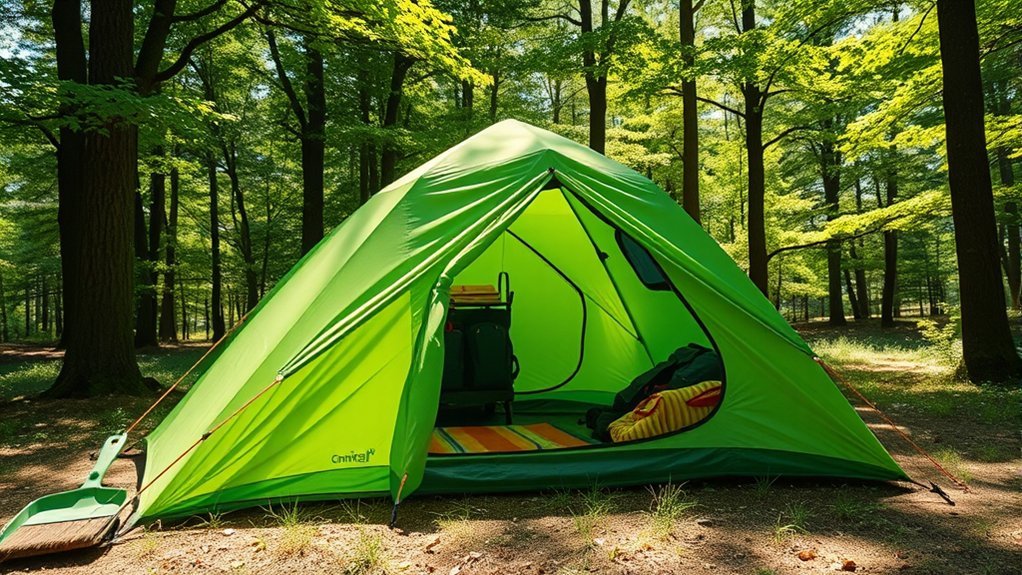
To keep your tent clean on any trip, pack essential cleaning supplies like a small broom and sanitizing wipes. Set up on a flat, dry area, and use a groundsheet to protect from moisture and dirt. Clean the tent regularly by shaking out debris and wiping surfaces with a damp cloth. After each trip, inspect for damage and guarantee the tent is completely dry before packing. With these tips, you’ll enhance your tent’s longevity and readiness for adventure.
Importance of Tent Care

Taking care of your tent is essential if you want it to last through many camping adventures. By regularly maintaining your tent, you can greatly enhance its longevity, allowing high-quality models to serve you for a decade or more. Neglecting proper care, however, can lead to mold, fabric deterioration, and costly replacements.
Routine inspections and cleaning keep your tent waterproof, preventing issues that could ruin your outdoor experience. Proactively sealing seams and applying waterproof coatings stops problems before they arise, ensuring you enjoy your time in nature without worry.
Moreover, maintaining your tent has a positive environmental impact. By extending the life of your gear, you reduce waste associated with manufacturing and disposing of new equipment. Taking these steps not only benefits your adventures but also contributes to a more sustainable camping lifestyle, allowing you to explore the great outdoors with a clear conscience.
Pre-Trip Preparation
Before you head out, choose an appropriate location for your tent that minimizes exposure to dirt and moisture. Packing essential cleaning supplies, like a small cleaning kit and waterproof entry mat, can make a significant difference in maintaining cleanliness. With the right preparation, you’ll set yourself up for a cleaner camping experience.
Choose an Appropriate Location
Choosing the right campsite is essential for keeping your tent clean and secure during your trip. A thorough hazard assessment before setting up can make all the difference. Follow these guidelines for effective campsite selection:
- Distance from Water: Choose a site at least 200 feet from water sources to minimize flooding risks.
- Flat, Dry Area: Look for a flat spot with good drainage to avoid water pooling during rain.
- Avoid Trees: Set your tent away from trees to reduce debris and dripping water from leaves.
- Wind Direction: Orient the tent door away from prevailing winds to protect against rain and dirt.
Pack Essential Cleaning Supplies
Once you’ve selected the ideal campsite, packing the right cleaning supplies can help maintain your tent’s cleanliness throughout your trip. Start with a small broom or hand brush; these essential tools make it easy to sweep out dirt and debris. Include biodegradable soap and a sponge for quick clean-ups of spills, ensuring your cleaning routines are eco-friendly. A lint roller or adhesive tape is perfect for removing dust, sand, or pet hair from the fabric before packing. Carry wet wipes or sanitizing wipes for convenient cleaning of hands and surfaces without water. Finally, don’t forget a trash bag to collect waste, keeping your area tidy and promoting an eco-conscious camping experience.
Setting Up Your Tent
When you set up your tent, selecting a flat, dry area is essential to guarantee a comfortable and clean camping experience. Here are some key steps to facilitate effective site selection and tent orientation:
- Choose wisely: Avoid spots with potential water pooling or heavy foliage that may drip moisture.
- Lay a groundsheet: A footprint or groundsheet adds an extra layer of protection against dirt and moisture from the ground.
- Orient the entrance: Position the entrance away from prevailing winds to minimize rain entry and reduce dust and debris.
- Secure your tent: Stake down your tent firmly to create a taut surface, preventing water accumulation and keeping the fabric from sagging.
Finally, before entering, remove your shoes and place a waterproof mat outside to keep the interior clean and dry. Following these steps will enhance your camping experience and maintain a tidy living space.
Keeping Your Tent Dry in Rainy Conditions
To keep your tent dry in rainy conditions, start by selecting a strategic location away from trees to prevent water from dripping onto your setup. Position the tent’s entrance opposite the wind direction to reduce rain entry and utilize a groundsheet to block moisture from the ground. Additionally, consider using a tarp overhead for extra protection and guarantee proper airflow to minimize condensation inside.
Tent Setup Techniques
Choosing the right setup techniques for your tent can considerably impact your comfort during rainy conditions. To keep your tent dry and stable, follow these key steps:
- Select your site wisely: Avoid pitching your tent under trees to reduce dripping water and falling branches.
- Mind the tent orientation: Position the tent opening away from the prevailing wind to prevent rain from entering.
- Secure with stakes: Use stakes to create a smooth tent floor, minimizing water pooling inside during heavy rainfall.
- Practice beforehand: Set up your tent in dry conditions to master the setup process, ensuring efficiency when rain strikes.
Moisture Management Tips
Keeping your tent dry during rainy conditions hinges on effective moisture management strategies. Start by choosing a tent site away from trees and bodies of water to minimize drips and flooding. Position the tent opening opposite the wind direction to prevent rain intrusion. Secure the tent with stakes to create a smooth floor, reducing water pooling. Use a groundsheet or footprint for added moisture protection. To enhance ventilation strategies and reduce condensation prevention, open tent windows and the rainfly when possible.
| Tip | Purpose | Benefits |
|---|---|---|
| Site selection | Minimize dripping and flooding | Keeps tent dry |
| Tent orientation | Block rain entry | Protects interior |
| Use of groundsheet | Prevent ground moisture | Enhances comfort |
| Secure with stakes | Smooth floor | Reduces pooling |
| Open windows/rainfly | Improve airflow | Decreases condensation |
Managing Moisture Inside the Tent
Managing moisture inside your tent is essential for a comfortable camping experience, especially when you’re dealing with varying weather conditions. Effective moisture control not only enhances comfort but also prolongs the life of your tent. Here are some practical ventilation techniques and tips to manage moisture sources:
Managing moisture is crucial for a comfortable camping experience and extends your tent’s lifespan.
- Open windows and the rainfly: Allow airflow to reduce condensation buildup.
- Remove shoes before entering: This minimizes mud and moisture, keeping the interior drier.
- Store wet clothes and food outside: Limiting moisture sources helps maintain a dry living space.
- Use a groundsheet or footprint: Prevent moisture from seeping up from the ground, contributing to dampness inside.
Cleaning Your Tent After Each Trip
After guaranteeing proper moisture control inside your tent, it’s time to focus on cleaning it thoroughly after each trip. Start by shaking out your tent to eliminate debris and dirt, ensuring both the inner and outer surfaces are clean. Use a damp cloth to wipe down these surfaces and vacuum the zippers to maintain their functionality. If you notice any mildew, treat it with a solution of 1 cup of salt, 1 cup of lemon juice, and 1 gallon of hot water. Always dry your tent completely before packing it away to prevent mold growth, ideally in a well-ventilated area away from direct sunlight. For effective tent maintenance, store your tent loosely in a breathable storage sack instead of a compressed bag. This cleaning schedule not only extends the life of your tent but also guarantees a fresh experience for your next adventure.
Inspecting for Damage and Wear
When you unpack your tent, it’s essential to inspect it for damage and wear to confirm its longevity and performance. Regular checks guarantee your tent remains safe and functional for your adventures. Focus on the following areas:
Inspect your tent for damage and wear upon unpacking to ensure its longevity and performance for safe adventures.
- Fabric Integrity: Look for tears, holes, or abrasions that can compromise waterproofing.
- Seam Inspection: Examine seams for peeling or wear, as these are common leak points needing immediate attention.
- Zipper Functionality: Check zippers for kinks, ensuring they open and close smoothly without snagging.
- Pole Condition: Inspect tent poles for bends or breaks, since damaged poles can lead to structural failure.
Additionally, assess guylines and stakes for wear, replacing any frayed or broken parts. By staying proactive in your inspections, you enhance your tent’s reliability, allowing you to enjoy your trips without worry.
Proper Tent Packing Techniques
To keep your tent in top condition, packing it properly is essential. Start by verifying it’s completely dry to prevent mildew. Sweep out debris and remove pegs and poles before folding. For effective tent folding, fold the tent in half to press out air, then roll it tightly to minimize bulk. This method avoids creasing the fabric, making future setups smoother.
Here are some quick storage tips:
| Step | Action | Purpose |
|---|---|---|
| 1. Drying | Verify the tent is dry | Prevents mildew |
| 2. Cleaning | Sweep out debris | Keeps the tent clean |
| 3. Packing | Fold in half, then roll | Minimizes bulk and creasing |
| 4. Wiping | Clean pegs and ground cover | Maintains cleanliness |
| 5. Storage | Use a breathable bag | Allows ventilation |
Following these techniques not only protects your investment but also guarantees a hassle-free camping experience.
Storing Your Tent for Longevity
Proper packing techniques lay the groundwork for maintaining your tent’s longevity, but how you store it is equally important. Following these storage tips will guarantee effective tent maintenance and prolong its life:
- Dry It Out: Always pack your tent completely dry to prevent mildew and deterioration.
- Cool, Dry Place: Store your tent in an area free from extreme temperatures and humidity.
- Breathable Storage Sack: Use a breathable sack instead of plastic to avoid moisture buildup and allow ventilation.
- Avoid Compression: Loose folding or rolling is best; avoid compressing your tent for extended periods to maintain its shape.
Regularly check your tent for signs of damage or mildew during long-term storage. By implementing these strategies, you can protect your gear and guarantee it’s ready for your next adventure.
Recommended Cleaning Products and Tools
Keeping your tent clean requires the right products and tools, guaranteeing you maintain its integrity and performance. For effective tent cleaning, use Nikwax Tech Wash, specifically formulated to clean outdoor gear without harming waterproof coatings. A soft brush is essential for gently cleaning zippers and fabric; avoid abrasive materials to prevent damage. Keep a pack of sanitizing wipes handy for quick spot cleaning of stains or sap during your trips.
Additionally, invest in a groundsheet or footprint to protect the tent floor from dirt and moisture, simplifying maintenance. Regularly utilize a small broom to tidy the tent’s interior, removing debris and keeping your living space comfortable. By equipping yourself with these essential cleaning tools and products, you can guarantee your tent remains in excellent condition, allowing for enjoyable and liberating camping experiences.
Frequently Asked Questions
Can I Use Regular Soap to Clean My Tent?
You shouldn’t use regular soap for tent maintenance, as it can damage waterproof coatings. Instead, consider soap alternatives specifically designed for tents, ensuring you keep your gear in top shape without compromising its integrity.
How Often Should I Clean My Tent?
You should clean your tent after every trip and establish a cleaning schedule if you camp frequently. Regular tent maintenance prevents mold and damage, ensuring your gear stays in top shape for future adventures.
What Natural Solutions Can I Use for Mildew?
You can use a vinegar solution to tackle mildew, mixing equal parts vinegar and water. For stubborn spots, sprinkle baking soda directly on the area, scrub gently, then rinse thoroughly to restore your tent’s freshness.
Is It Safe to Store My Tent in the Garage?
Isn’t it tempting to store your tent in the garage? While convenient, be cautious of garage humidity; it can promote mold. Instead, opt for a cool, dry place to guarantee proper tent storage.
Can I Wash My Tent in a Washing Machine?
You shouldn’t wash your tent in a washing machine, as it can damage the fabric and waterproofing. Instead, hand wash it with mild soap and water to preserve its integrity and longevity.
Conclusion
By following these tips to keep your tent clean, you’ll enhance its lifespan and your overall camping experience. Did you know that a well-maintained tent can last up to 10 years longer than one that’s neglected? This statistic highlights the importance of proper care. So, take a few moments to clean and inspect your tent regularly. Investing time in maintenance not only protects your gear but also guarantees countless memorable adventures in the great outdoors.