
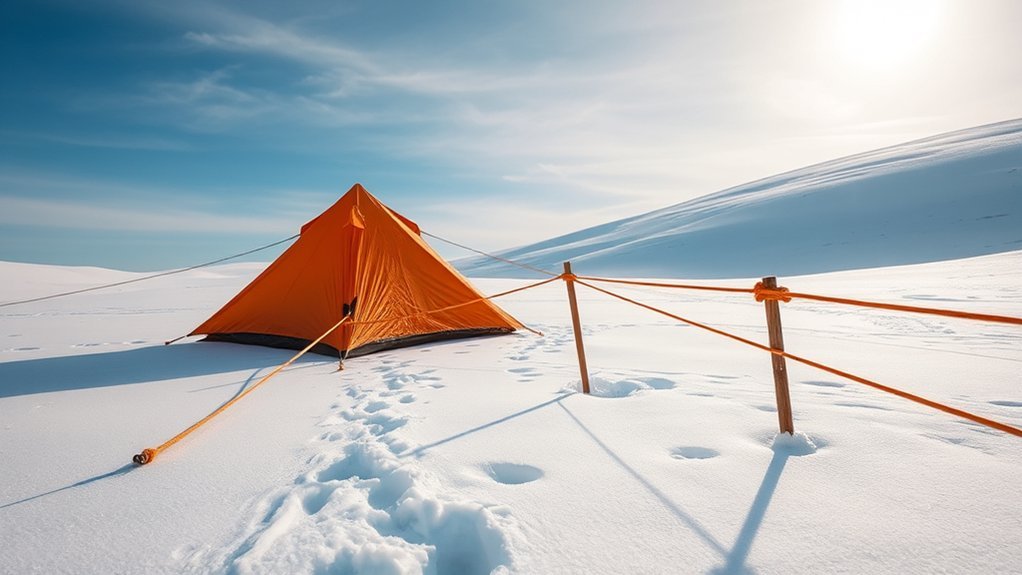
To stake a tent in snow, use the Dead Man’s anchor method: bury a horizontal stick in a trench, cover it with compressed snow for strong support. Leave slack in guy lines initially for adjustments. Consider using filled ziplock bags as anchors or bury trekking poles for added stability. Position your tent behind natural windbreaks, and maintain proper tension to prevent sagging. Discover more techniques and tips to enhance your snow camping experience.
Importance of Proper Tent Anchoring in Snow

When you’re camping in snowy conditions, proper tent anchoring isn’t just important—it’s essential. Without effective anchoring, your freestanding tent can easily be lifted by strong winds, risking the loss of both the tent and your gear. To maintain tent stability, you need to verify it remains anchored during harsh weather, particularly when faced with heavy snowfall and high winds.
Traditional stakes often fail in deep snow, so consider using techniques like Dead Man’s anchors or other creative methods. Buried anchors, like sticks or bags filled with snow, provide strong holds that resist nature’s forces. Additionally, guying out the tent offers extra strength against severe weather. Make certain to secure all sides properly and adjust tension for maximum wind resistance. By prioritizing proper anchoring, you can enjoy the liberating experience of camping in winter without the fear of losing your shelter.
Effective Techniques for Snow Anchoring
To effectively anchor your tent in snow, try the Dead Man’s anchoring method by burying sticks horizontally and compressing the snow over them. This technique uses natural resources to create strong anchor points that withstand harsh conditions. Remember to stomp down the area around your tent for a firmer base before securing your lines.
Dead Man’s Anchoring Method
The Dead Man’s anchor technique is one of the most effective ways to secure your tent in snowy conditions. This method enhances your anchoring efficiency, especially in deep snow. Follow these steps for ideal results:
- Bury a stick horizontally in a trench about 10 to 12 inches deep, ensuring it’s stable.
- Cover the stick with snow and compress it firmly to create a secure anchor point.
- Leave slack in the guy lines until all anchor points are established, allowing for proper tension adjustments once your tent is set up.
For the best stability, position tensioners above the snow level, making it easier to adjust without digging. Embrace these Dead Man’s techniques for a reliable shelter in winter conditions.
Utilizing Natural Resources
How can you make the most of natural resources for anchoring your tent in snow? Utilize natural materials like sticks, rocks, and snow to create effective deadman anchors. Bury 1-gallon ziplock bags filled with snow for added stability, reinforcing them with duct tape. Gather large rocks or multiple smaller ones to secure guy lines, ensuring a solid anchor against the elements. Ski poles or trekking poles can serve as strong anchor points when buried vertically or tied down. Finally, use natural features like tree roots or boulders for reliable anchoring in challenging conditions.
| Resource Type | Technique | Benefit |
|---|---|---|
| Sticks | Deadman anchors | Stability in snow |
| Ziplock bags | Snow-filled anchors | Lightweight & effective |
| Rocks | Guy line anchors | Resistance to wind |
| Ski poles | Vertical anchors | Enhanced tension |
| Natural features | Support structures | Reliable setup |
Dead Man’s Anchor Method Explained
While traditional stakes often struggle to secure tents in deep snow, the Dead Man’s anchor method provides a reliable solution. This technique, rooted in Dead Man’s history, involves burying a stick or similar object horizontally in the snow to create a strong anchor point for your guy lines. Here’s how to set it up:
- Dig a trench: Create a trench about 10 to 12 inches deep.
- Insert the stick: Place the stick horizontally in the trench.
- Cover and compress: Bury it with snow, ensuring it’s well compressed for stability.
This method shines in deep snow where traditional stakes fail, offering you the security you need during winter camping or mountaineering. Plus, you can explore various anchor variations to enhance stability. Embrace this technique, and you’ll enjoy the freedom of a well-secured tent, no matter the conditions.
Adjusting Tension for Stability
Proper tension is key to keeping your tent stable in snowy conditions. Start by leaving some slack in the guy lines until all sides are secured, then systematically tighten them for an even pull. Regularly check your setup, especially after snow falls, to guarantee everything remains secure and stable.
Importance of Proper Tension
Maintaining the right tension on your guy lines is essential for keeping your tent stable, especially when faced with strong winds or deep snow. Proper tension management guarantees your tent remains secure while you enjoy the outdoors. Here are three key points to reflect on for effective tension maintenance:
- Leave Initial Slack: Allow some slack in your lines to make adjustments after all anchors are set, guaranteeing even tension distribution.
- Position Tensioners Wisely: Place tensioners above the snow surface so you can easily adjust them without digging.
- Regularly Check Tension: Periodically check and fine-tune the tension using knots like the tautline hitch or trucker’s hitch to prevent sagging and enhance structural integrity.
Stay liberated and secure on your adventures!
Techniques for Tension Adjustment
Three key techniques can help you adjust tension effectively and stabilize your tent in snowy conditions. First, use the tautline hitch knot to create adjustable tension; this knot variation allows you to modify tension quickly without unfastening the anchor. Second, start with some initial slack in the guy lines until all are secured. This approach prevents strain on the tent fabric during setup, ensuring it can withstand the elements. Finally, position tensioners above the snow surface for easier adjustments after securing the anchors. Once everything’s in place, finalize the setup by tightening the guy lines, enhancing your tent’s stability against wind and snow load. Implementing these tension techniques can provide the liberation you need for a secure shelter.
Final Tightening Steps
Once you’ve anchored your tent and adjusted the initial slack in the guy lines, it’s time to focus on final tightening steps to enhance stability. Use these final tensioning techniques to guarantee your setup is secure:
- Gradually tighten each guy line, checking that tension is uniform across all sides.
- Confirm that tensioners aren’t buried in snow, allowing for easy adjustments.
- Make sure the lines are taut but not overly tight to prevent damage to the tent or anchors.
Regularly check your adjustments, especially after snowfall or heavy winds, as conditions can change quickly. By carefully adjusting guylines, you’ll maintain stability and enjoy a liberating outdoor experience.
Additional Anchoring Options
While traditional stakes can be effective, exploring additional anchoring options can greatly enhance your tent’s stability in snowy conditions. Consider using buried trekking poles or sturdy sticks as alternative materials; they can provide reliable support against strong winds. For a DIY solution, fill 1-gallon ziplock freezer bags with snow, seal them, and bury them for bombproof anchors. Pickets, often used in climbing, can also be effective if placed correctly in the snow.
If you’re in rocky terrain, wrap guy lines around large rocks for extra stability. These creative solutions can adapt to various environments and enhance your tent’s security. Remember to keep tensioning devices, like tautline hitches or trucker’s hitches, accessible and not buried under snow for ideal performance. With these methods, you can confidently secure your shelter and enjoy the freedom of winter camping.
Tips for Windy Conditions
When setting up your tent in snowy conditions, keep in mind that high winds can pose a significant threat to your shelter. To maximize wind resistance, choose your location wisely. Here are some essential tips for windy conditions:
When camping in snow, prioritize wind resistance by choosing a strategic location for your tent setup.
- Select a sheltered spot: Position your tent behind natural windbreaks like trees or rocks to minimize exposure to gusts.
- Lay it flat: If winds are severe, consider removing the poles and lying the tent flat on the ground. This prevents it from being lifted.
- Secure with rocks: Gently place rocks on top of the flat tent for stability when precipitation isn’t expected.
Additionally, use multiple anchoring techniques like dead-man anchors or buried trekking poles. Don’t forget to regularly check and adjust the tension of your guy lines to keep everything secure. With the right shelter selection and these strategies, you’ll stay protected from the elements.
Community Innovations and DIY Solutions
As you venture into snowy terrains, it’s essential to tap into the creativity of the outdoor community for innovative anchoring solutions. Community collaboration has sparked inventive ideas to secure your tent effectively. For instance, lightweight plastic lids from cans or Tupperware can serve as excellent anchors, providing stability without adding excess weight.
Consider using CDs as parachute-style anchors; their added weight enhances your guy lines’ effectiveness in harsh conditions. If you’re looking for a DIY option, try creating bombproof anchors with 1-gallon ziplock freezer bags filled with snow, reinforced with duct tape, and buried for extra support.
These practical solutions highlight how outdoor enthusiasts share knowledge and techniques, turning challenges into opportunities. By embracing these innovative solutions, you can confidently stake your tent, ensuring a secure and enjoyable experience in the snow.
Frequently Asked Questions
Can I Use Regular Tent Stakes in Deep Snow?
You can’t rely on regular tent stakes in deep snow. Instead, use specialized tent stake types designed for winter camping techniques, like snow stakes or deadman anchors, to guarantee your tent stays secure in winter conditions.
How Do I Know if My Anchor Is Secure?
To know your anchor’s secure, perform anchor testing by applying force in different directions. If it holds firm despite varying snow conditions, you’re good to go. Trust your instincts and adjust if necessary.
What Materials Work Best for Dead Man’s Anchors?
For effective deadmen setups, use materials like snow blocks, buried backpacks, or large rocks. These snow anchor materials distribute weight well, ensuring your tent remains secure against harsh conditions. Always test your anchors before relying on them.
How Do Temperature Changes Affect My Tent’s Stability?
Temperature fluctuations can weaken your tent’s stability. As the material expands and contracts, it may lose tension. Choose durable fabrics that handle these changes well to keep your shelter secure and reliable in varying conditions.
Can I Use Rocks Instead of Sticks for Anchoring?
Rocks can provide reliable rock weight for anchoring your tent, enhancing anchor stability. Just make certain they’re securely placed and heavy enough to withstand wind. Embrace nature’s resources for a sturdy, stable setup!
Conclusion
Staking a tent in snow may seem intimidating, but with the right techniques, you can create a sturdy shelter against the elements. Picture your tent as a ship anchored firmly in a sea of white; with proper dead man’s anchors and tension adjustments, it’ll weather any storm. Don’t forget to take into account the wind and explore innovative solutions from the community. By mastering these skills, you’ll guarantee a safe and comfortable camping experience in winter’s embrace.