
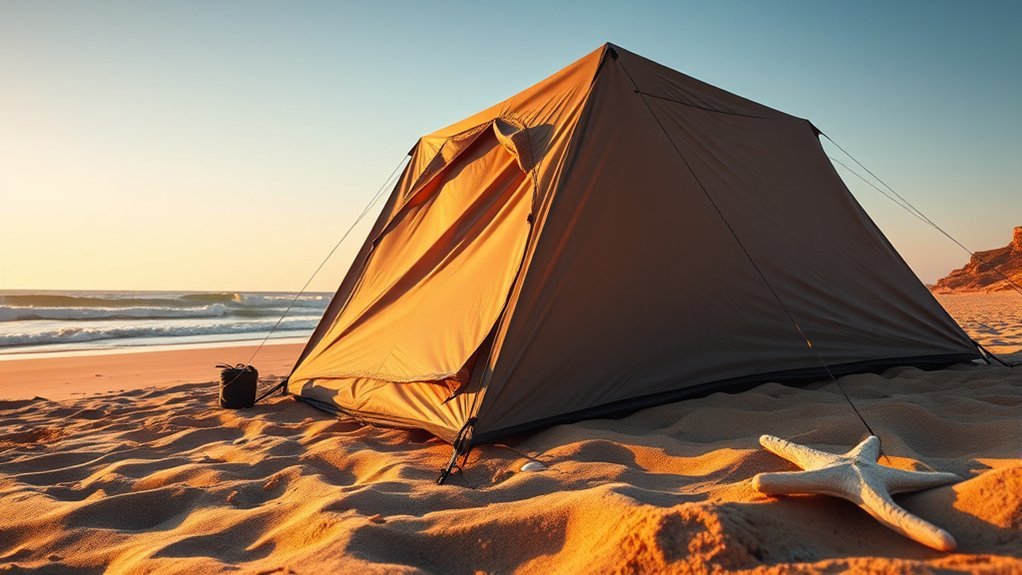
To stake a tent in sand and keep it secure, use corkscrew stakes or bury longer aluminum stakes horizontally for extra grip. Anchor with sandbags, weighing at least 20 pounds, on each corner. Make sure to use long guylines secured at a 45-degree angle to minimize pull-out risks. Regularly check the tension and adjust as needed, especially in windy conditions. You’ll find additional tips for choosing the right tent type and anchoring techniques ahead.
Effective Anchoring Techniques for Sandy Terrain

When you’re setting up a tent on sandy ground, using the right anchoring techniques is crucial for stability. Start by choosing beach tent stakes with a corkscrew shape; they grip better in sand conditions than standard metal pegs. For added security, bury longer aluminum stakes horizontally in holes 6-8 inches deep, mixing water with sand to create a firmer hold around them.
Implement deadman anchors by burying a stick or rock horizontally in the sand, attaching guylines to it, and covering it with more sand for extra protection against wind. Additionally, consider using sandbags weighing at least 20 pounds on each corner of your tent. This helps weigh it down and enhances tent stability during blustery days. Don’t forget to regularly check the tension on guylines and the stability of your anchors to guarantee your tent remains securely staked throughout your camping adventure.
Recommended Tent Stakes for Sand
Choosing the right tent stakes for sandy terrain is essential for ensuring a secure setup. Here are some top recommendations to keep your tent anchored:
- MSR Groundhog Stakes: Lightweight with a Y-shaped design for superior grip.
- Beach-specific Corkscrew Stakes: Their spiral shape increases surface area, providing better hold in loose sand.
- Longer Aluminum Stakes: Opt for 9-inch or 12-inch stakes, buried horizontally in a hole for enhanced anchoring.
- Wide-head Sand Stakes: Perfect for distributing tension and preventing pull-out, especially in windy conditions.
When selecting tent stake materials, prioritize durability and effectiveness. For best results, follow these stake installation tips: regularly check stability, and consider adding sandbags or rocks for extra weight during strong winds. This way, you can enjoy the freedom of camping in sandy areas without worrying about your tent blowing away.
Best Practices for Using Guylines
After securing your tent with the right stakes, using guylines becomes the next step in guaranteeing a stable setup in sandy conditions. Opt for long guylines, ideally 36 inches, as they provide better tension and stability against wind. Secure them to the tent corners and stake them at a 45-degree angle to reduce pull-out risk. For effective knot tying, use the taut-line hitch knot; this allows for easy adjustments and keeps tension consistent as conditions shift.
Consider enhancing stability by incorporating deadman anchors. Bury a stick or rock wrapped in the guylines in the sand for added support. Don’t forget guylines maintenance—regularly check and adjust them after setup, especially during windy weather. This proactive approach guarantees your tent remains secure and allows you to enjoy your outdoor adventures with peace of mind.
Choosing the Right Tent Type for Windy Conditions
Selecting the right tent type for windy conditions is crucial for a successful outdoor experience. Here are some key factors to take into account:
- Freestanding dome tents: Easy to set up but need anchoring in strong winds.
- Non-freestanding shelters: Rectangular tarps and tents offer better stability as they require staking.
- Reinforced designs: Look for tents with enhanced structures and multiple anchoring points for better wind resistance.
- Special sandy terrain tents: Models with sand pockets or heavy-duty stakes maintain stability against gusts.
When choosing tent materials, prioritize durability to withstand wind. Pop-up tents might be lightweight and convenient for quick setups, but they must be secured properly to endure windy environments. Overall, make sure your tent choice balances portability with the wind resistance necessary for a safe, enjoyable adventure on sandy shores.
Environmental Considerations When Camping on Sand
Camping on sandy terrain presents unique environmental considerations that every camper should keep in mind. First, avoid disturbing deeply embedded rocks as they may house essential habitats, protecting the ecological balance of sandy ecosystems. Instead, use loose rocks found in dry washes for tent anchoring, ensuring you return them to their original spots afterward. This practice supports the natural landscape and aligns with Leave No Trace principles.
You can also utilize driftwood and logs as tent anchors, which are typically abundant along beaches and won’t harm the environment. By maintaining a clean campsite, you contribute to the preservation of the sandy ecosystem, ensuring future campers can enjoy the same beauty you did. Remember, every step you take to minimize your impact makes a difference in preserving these delicate environments. So, embrace the freedom of camping while being a responsible steward of nature.
Frequently Asked Questions
Can I Use Regular Tent Stakes in Sand?
You can use regular tent stakes in sand, but they may not hold well. Consider using heavier tent stake materials or sand-specific options for better stability. Follow sand camping tips to guarantee your tent stays secure.
How Deep Should I Bury the Stakes in Sand?
Bury your stakes at least 12 inches deep in compact sand for stability. If the sand’s loose, consider going deeper. Proper stake depth guarantees your tent stays grounded, even during strong winds.
What Type of Sand Is Best for Tent Stability?
For tent stability, coarse grains with higher moisture content work best. Imagine a beach trip where your tent stands firm against winds, letting you relax. Choose sand that’s damp, ensuring your setup stays secure and enjoyable.
How Can I Prevent Sand From Blowing Into My Tent?
To prevent sand from blowing into your tent, create sand barriers around the perimeter. Use windbreak techniques like tarps or natural features to shield your space, ensuring a more comfortable and enjoyable camping experience.
Is It Safe to Camp on a Beach With High Winds?
Yes, it’s safe to camp on a beach with high winds, but you need to prioritize wind safety. Choose a sheltered spot, secure your gear, and stay alert to changing weather conditions for a successful beach camping experience.
Conclusion
By using the right techniques and tools, you can guarantee your tent stays put even in sandy conditions. Remember to choose appropriate stakes, utilize guylines effectively, and select a tent designed for wind resistance. Just as sailors of old secured their ships against the elements, you can anchor your campsite against the breezy challenges of the shore. With these strategies in mind, you’ll enjoy a stable and secure camping experience, no matter how strong the winds blow.