
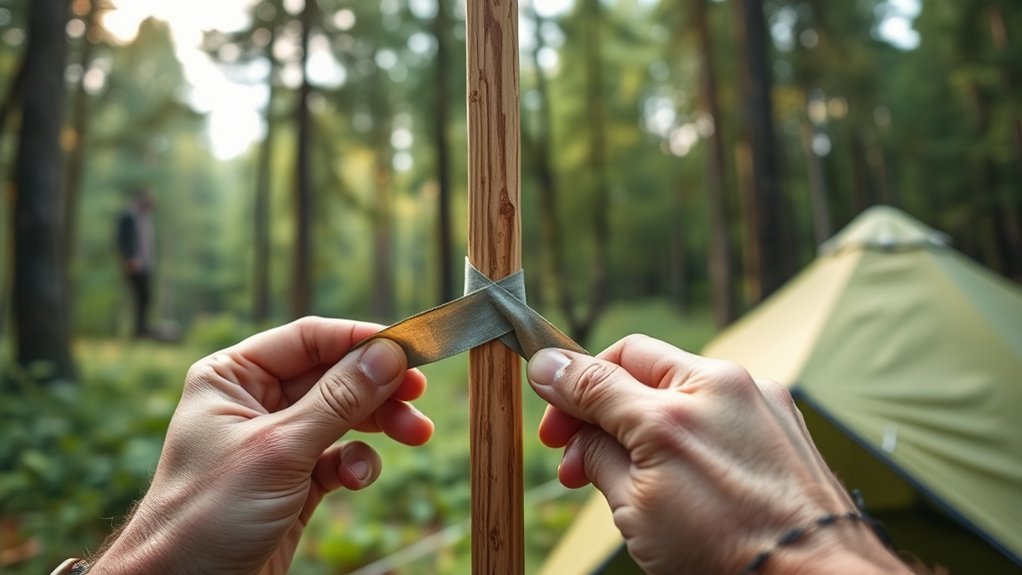
To splint a broken tent pole in the field, slide a pole splint over the damaged segment. Use duct tape or rope for added stability, securing everything tightly. Make sure the splint aligns correctly and check it periodically during your trip. If the break is hard to reach, remove the segments for easier access. For future prevention, inspect your poles regularly and handle them with care. Learn more about enhancing your camping experience with these practical tips.
Understanding the Importance of a Pole Splint

When you’re out in the wilderness, a broken tent pole can quickly turn your camping trip into a frustrating experience. That’s where understanding the importance of a pole splint comes in. A pole splint serves as an essential tool for repairing broken tent poles, allowing you to maintain stability in your shelter. This temporary solution prevents disruptions, so you can focus on enjoying nature instead of stressing over gear failure.
Using a pole splint enhances camping safety by reducing the risk of further damage to your tent caused by instability. Regular maintenance checks during your trip guarantee the splint remains effective, giving you peace of mind, especially in adverse weather conditions. By familiarizing yourself with the pole splint benefits, you greatly improve your preparedness, making outdoor adventures more liberating and enjoyable. Embrace the freedom of the wilderness, knowing you can tackle unforeseen challenges with confidence.
Tools Needed for Splinting a Tent Pole
Having the right tools on hand makes splinting a broken tent pole much easier and more effective. Start with your primary tool: the pole splint itself, which is vital for effectively coupling broken segments. You’ll also need splint materials like duct tape or rope for added support and security during repairs. A knife or scissors is important for cutting these materials to the right length, guaranteeing a snug fit.
To achieve precision, bring a measuring tape to confirm your splint covers the damaged area properly. Finally, consider a mallet or hammer; it’ll be useful for securing tent stakes after you’ve applied the splint, making sure your tent remains stable. These tools will empower you to tackle the repair confidently and get back to enjoying your outdoor experience without delay. With the right equipment and repair techniques, you can restore your tent pole and reclaim your camping adventure.
Step-by-Step Guide to Applying a Pole Splint
Applying a pole splint involves a few straightforward steps that can quickly restore your tent’s structural integrity. First, slide the splint over the broken segment of the tent pole, guaranteeing a secure fit. If the break is in a hard-to-reach area, carefully remove individual segments to access the damaged section. Once you can see the break, pull on the tip ends or hub anchors as necessary to make sure the splint fits snugly and holds the pole together.
Next, confirm the splint is properly aligned with the pole, maintaining tension to keep it in position during use. It’s essential to periodically check the stability of the splint throughout your trip to make sure it continues to provide support for your tent structure. With these steps, you can effectively manage your camping gear and enjoy your outdoor experience without worrying about a broken tent pole.
Tips for Securing Your Splint Effectively
To secure your splint effectively, use additional materials like duct tape or rope to wrap around the splint and pole. It’s also essential to check the stability of your splint periodically during your trip. Make sure the splint is aligned properly with the pole to evenly distribute tension and prevent further damage.
Use Additional Materials
When securing your splint, consider using additional materials to enhance stability and support. Duct tape or strong adhesive tape can reinforce the splint around the broken area, providing extra security. Employ zip ties or cordage to tightly secure the splint to the broken pole, especially during windy conditions. If you’ve got a sturdy stick or branch, place it alongside the splint to distribute pressure and bolster support. For added cushioning, wrap a piece of fabric or an old tent footprint around the splint. These alternative materials and innovative techniques will help guarantee your quick fix holds up against the elements, giving you peace of mind while you enjoy your outdoor adventure.
Check Periodic Stability
While you’re out camping, regularly checking the stability of your splint is essential for preventing unexpected collapses. Make it a habit to inspect the splint and guarantee it remains securely attached. Environmental factors like wind and rain can affect its integrity, so don’t underestimate their impact. Gently apply pressure to the pole to test the splint’s stability; it should bear weight without shifting. Reinforce the splint with duct tape or rope if needed, especially in challenging weather conditions. Always prioritize safety precautions—keeping an eye on the splint throughout your trip guarantees it won’t compromise your shelter. By staying vigilant, you can enjoy your camping experience without worrying about structural failures.
Ensure Proper Alignment
Checking the stability of your splint is important, but ensuring proper alignment is just as essential for maintaining your tent’s structure. Misalignment can lead to further damage, so follow these alignment techniques for effective splint positioning:
- Slide the splint onto the broken pole segment straight, checking for any misalignment before securing it.
- Use tension to hold the splint in place, preventing it from slipping during use.
- Periodically check the alignment throughout your trip, especially after movement or stress on the tent.
- Remove individual pole segments if necessary for easier access, allowing better alignment of the splint.
With these steps, you’ll keep your tent stable, ensuring you enjoy your time outdoors without worry.
Common Challenges and Solutions
Splinting a broken tent pole can present several challenges, but most can be overcome with a few practical solutions. One issue is making sure the splint aligns correctly; you can resolve this by making precise pole adjustments before applying the splint. If you struggle to access hard-to-reach areas, consider temporarily removing individual segments to simplify the process. Maintaining proper tension on the splint is vital—if it loosens, it won’t support the pole effectively. Regularly check the tightness while using it. Additionally, using sturdy splint materials like duct tape or rope can enhance the splint’s security, especially in windy conditions. Finally, to prevent further damage to your tent, make sure the splint is staked down well and that your tent is set up correctly. This helps maintain stability, allowing you to enjoy your outdoor experience without worry.
Maintaining Tent Stability During Repairs
When you’re repairing a broken tent pole, proper staking techniques are essential to keep your tent stable. Make certain to regularly check the tension on your splint; this helps prevent any accidental collapse during the process. By maintaining these practices, you guarantee your tent remains secure despite the repairs.
Proper Staking Techniques
To keep your tent stable during repairs, it’s essential to use proper staking techniques. Follow these steps to guarantee tent stability:
- Drive stakes into the ground at a 45-degree angle away from the tent for enhanced resistance against wind uplift.
- Make sure your tent’s guylines are taut and securely attached to the stakes to prevent movement.
- Choose the right stake length based on ground type: use longer stakes for soft or sandy soil, and shorter ones for hard or rocky surfaces.
- Regularly check guylines’ tension and stake integrity, especially after wind or rain, to maintain stability throughout your stay.
Regular Maintenance Checks
Maintaining the stability of your tent during repairs hinges on regular maintenance checks of the poles and splints. Conduct tent pole maintenance to catch potential weaknesses before they lead to breakage. Periodically inspect the integrity of the pole segments and splints, looking for cracks or bends that could compromise stability. Address any signs of wear promptly to keep your tent secure. Verify all connections, including splints and anchors, are tightly secured and properly aligned to prevent structural failure. Don’t forget to check the tension of the splint, especially after adverse weather conditions. A thorough wear inspection can make all the difference in your camping experience, allowing you to focus on enjoying the great outdoors rather than worrying about your shelter’s stability.
Preventive Measures to Avoid Future Breaks
While it’s easy to overlook the condition of your tent poles, taking proactive steps can greatly reduce the risk of future breaks. By prioritizing quality and care, you can guarantee your camping experience remains liberating and enjoyable. Here are some preventive measures:
- Choose durable pole materials: Opt for high-quality aluminum or fiberglass poles that enhance tent durability.
- Inspect regularly: Before each trip, check for cracks or splintering and replace any damaged segments.
- Handle with care: Avoid excessive force when setting up or taking down the tent to prevent unnecessary stress on the poles.
- Store wisely: Keep tent poles in a protective sleeve or case during transport to shield them from impacts and environmental damage.
Enhancing Your Camping Experience With Proper Repairs
Even with the best preventive measures in place, accidents can happen, and knowing how to repair a broken tent pole can save your camping trip. Utilizing a pole splint serves as one of your essential camping essentials, allowing for quick and effective field repairs. This technique empowers you to address issues on the spot, enhancing your overall outdoor enjoyment.
Regularly checking the stability of your splints during your trip is vital; it prevents further damage and maintains your tent’s integrity. Properly staking your tent also enhances stability, especially in adverse weather, reducing the likelihood of pole breakage.
Incorporating additional materials for securing splints adds extra peace of mind, ensuring your tent remains stable throughout your adventure. By focusing on outdoor preparedness, you can tackle unexpected challenges confidently, making your camping experience more enjoyable and worry-free.
Frequently Asked Questions
Can I Use Duct Tape Instead of a Splint?
Yes, you can use duct tape as a splint alternative. Its durability provides temporary support, but guarantee you reinforce the pole properly for stability. Always consider other options if you need a more robust solution.
How Long Can a Splint Hold up a Tent?
A splint can hold up a tent for days, depending on materials and conditions. Make certain your splint’s secure and strong to maintain tent stability. Regularly check it for wear to maximize splint longevity.
What Materials Are Best for Making a DIY Splint?
For a DIY splint, you’ll want sturdy materials like wooden dowels or aluminum rods. Both options provide strength and flexibility, ensuring your splint supports the tent effectively while you enjoy your outdoor adventure.
Is It Safe to Sleep in the Tent After a Repair?
Yes, it’s safe to sleep in the tent after a repair, provided you guaranteed tent safety and nighttime stability. Check your splint’s strength and the pole’s position to prevent further damage during the night.
How Can I Prevent Future Tent Pole Breaks?
To prevent future tent pole breaks, prioritize regular tent maintenance and proper pole storage. Always store poles in a protective case, avoid extreme weather, and inspect them for wear before each trip to guarantee durability.
Conclusion
Now that you know how to splint a broken tent pole, imagine the relief of watching your tent stand tall again, just as the sun sets and the stars begin to twinkle overhead. With your tools in hand and the steps fresh in your mind, don’t let a break ruin your adventure. By securing that splint, you’ll not only restore your shelter but also guarantee a cozy night under the vast, beautiful sky. Ready to get started?